

 Français (France)
  Nederlands (nl-NL)
 00:00 • intro | 00:04 • On the Mekong River | 00:40 • Tham Ting, lower cave | 04:57 • To Tham Theung | 06:04 • Tham Theung, upper cave
Personal creation from visual material collected during my trip Laos and Bangkok (2022)
• Use the markers to explore the content •
Pak Ou Caves, a River Sanctuary Between Cliffs and the Mekong
A sacred site shaped by water and stone
The Pak Ou Caves rank among the most distinctive religious places in Laos. Located north of Luang Prabang at the meeting point of the Nam Ou River and the Mekong, they occupy a limestone cliff rising above the water. For centuries, pilgrims, local communities and travellers have approached this site by boat to visit a Buddhist sanctuary set within a dramatic natural landscape.
This video offers a gradual discovery of the caves. It begins on the Mekong, the great river that has long structured transport and daily life in the region, then reaches Tham Ting, the lower cave, before continuing upward toward Tham Theung, the upper cave. This sequence helps explain that Pak Ou is not simply a geological curiosity. It is a place where river travel, spiritual practice and natural topography are closely connected.
The value of the site lies precisely in that combination. The cliff, the caves and the river are not merely scenery: they form the physical setting that gives the sanctuary much of its meaning.
Tham Ting and Tham Theung, two complementary spaces
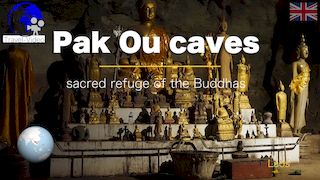
Tham Ting, the lower cave, is the first chamber usually encountered after landing. It opens broadly toward the Mekong and receives natural light from the riverfront entrance. Inside stand numerous Buddha images placed there over generations. Some are small and simple, others more elaborate or larger in scale. Together they create a dense and remarkable devotional environment.
The upper cave, Tham Theung, lies higher in the cliff and is reached by a staircase ascending from the lower level. The climb introduces a sense of separation from the river below and gives the visit a more deliberate rhythm. Inside, the atmosphere changes noticeably. The cave is darker, deeper and more enclosed, with irregular chambers where statues emerge from shadowed interiors.
These two caves do not duplicate one another. Tham Ting is linked to openness, light and immediate contact with the river. Tham Theung is associated with height, darkness and introspection. The video highlights this contrast effectively by moving from one environment to the other.
A sanctuary in the religious history of Laos
The Pak Ou Caves are connected to long-standing spiritual traditions in Laos. Before the spread of Theravāda Buddhism, many natural sites in the region were associated with local spirit beliefs tied to rivers, mountains and caves. Pak Ou likely held significance within that older worldview before later becoming an established Buddhist shrine.
As Lao kingdoms developed, especially during the period when Luang Prabang served as a royal centre, the caves gained wider importance. Kings, monks and lay communities are known to have visited the site, bringing Buddha statues or making offerings. The thousands of images preserved there today reflect centuries of devotional practice rather than a single moment of foundation.
The caves were also associated with the Lao New Year period, when ritual journeys and acts of merit-making formed part of annual observances. Travelling by boat to Pak Ou combined pilgrimage, ceremony and communal gathering.
Today the site remains sacred while also welcoming international visitors. It therefore occupies a dual role as living religious place and major cultural destination.
River landscape, geology and preservation
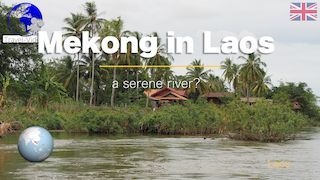
The Mekong is essential to understanding Pak Ou. For much of its history, the river was the principal route of access. Approaching by boat reveals the limestone cliff gradually, then the entrance of the lower cave above the waterline. This arrival sequence gives the sanctuary a natural ceremonial presence.
The caves themselves result from long geological processes affecting tropical limestone. Water erosion and dissolution slowly created chambers and openings within the rock mass. Religious use was therefore added to a pre-existing natural structure, adapting caves that had formed over immense spans of time.
Modern tourism has brought new economic opportunities to nearby communities, but it also creates preservation challenges. Protecting fragile statues, managing visitor numbers, maintaining stairways and respecting the sacred atmosphere of the caves are now important concerns.
Pak Ou should therefore be understood as more than a scenic stop. It is simultaneously a monument, a natural site and an active part of Lao heritage.
What the site’s videos make especially clear
The videos of travel-video.info, often created from carefully selected and animated photographs, are particularly well suited to a place such as Pak Ou. They allow viewers to follow the river approach calmly, understand the scale of the cliffs and see how the caves are positioned above the Mekong.
Inside the caverns, this format is equally useful. It gives time to observe rows of Buddha images, niches in the stone, changes in light and the irregular volumes of the chambers. In spaces that can feel dark or crowded during a quick visit, details become easier to appreciate.
Transitions between images also make the movement through the site more understandable: landing stage, lower cave, staircase, upper cave. The viewer sees that the visit is structured as a progression through space and atmosphere.
This measured visual rhythm often communicates more clearly than a hurried on-site passage.
A major spiritual landmark on the Mekong
The Pak Ou Caves unite river scenery, dramatic geology and centuries of Buddhist devotion in a single remarkable setting. Between the open lower cave of Tham Ting and the more secluded upper cave of Tham Theung, the site offers several layers of discovery. For those wishing to go further, the detailed pages linked to this monument provide additional insight into its history, statues and enduring place in the heritage of Laos.










Audio Commentary Transcript
This journey along the Mekong, about 25 kilometers north of Luang Prabang, leads to the Tham Ting and Tham Theung caves in Laos. Accessible only by river, these caves house an impressive collection of Buddha statues, highlighting their spiritual and historical significance.
Tham Ting and Tham Theung caves are located within the same mountainous formation in Laos. Separated by a lengthy staircase, the journey begins at the lower cave, Tham Ting, ascending towards Tham Theung, the upper cave, providing a gradual exploration of this captivating site.
Since the 16th century, pilgrims and Laotian kings have placed Buddha statues in Tham Ting cave. This lower cave, open and lit by natural light, features statues that are more eroded than those in Tham Theung, the upper cave. In Tham Ting, exposure to the elements has weathered some statues, showcasing their age and ongoing veneration through the ages.
The staircase connecting the Tham Ting and Tham Theung caves at Pak Ou consists of several dozen steps worn by pilgrims over the centuries. It symbolizes the transition from the outer world to a deeper spiritual sanctuary. Each step reflects ongoing devotion, leading to the more secluded and mysterious upper cave.
Tham Theung, the upper cave at Pak Ou, is more secluded and darker compared to Tham Ting. Less accessible, it houses better-preserved Buddha statues, protected from the weather by its deep enclosure. For centuries, this cave has served as a place of meditation and prayer, preserving the sacred essence and mystery of Buddhist spiritual practices.

Music :
- - YouTube video library - Darkest Child, (© Darkest Child by Kevin MacLeod is licensed under a Creative Commons Attribution 4.0 license. https://creativecommons.org/licenses/by/4.0/
- Source: http://incompetech.com/music/royalty-free/index.html?isrc=USUAN1100783
- Artist: http://incompetech.com/)
- - YouTube video library - Night Snow - Asher Fulero
Disclaimer: Despite its appropriateness, copyright issues prevent the use of laotian traditional music in "Pak Ou caves, Ban Pak Ou • Tham Ting and Tham Theung caves • Laos", hence the use of royalty-free music. Despite our careful selection, some might regret this decision, which is necessary to avoid potential lawsuits. Although difficult, this decision is the only viable solution.


