

 Français (France)
  Nederlands (nl-NL)
 Map of places or practices featured in a video published on this site
• Use the markers to explore the content •
From Amazigh Kingdoms to the Modern Monarchy: The Historical Development of Morocco Across the Ages
Prehistoric Communities and the Earliest Human Presence
The territory of present-day Morocco possesses one of the oldest records of human occupation in Africa. Archaeological discoveries indicate that humans have inhabited the region for several hundred thousand years. One of the most significant discoveries was made at Jebel Irhoud, northwest of Marrakesh, where fossils dating to approximately 300,000 years ago have been identified as some of the earliest known remains of *Homo sapiens*.
During the Paleolithic and Neolithic periods, human communities gradually evolved from hunting and gathering societies into more sedentary populations engaged in agriculture and animal husbandry. Rock engravings and paintings found in the Atlas Mountains and pre-Saharan regions reveal environments that were often greener and wetter than today and provide valuable information about the lifestyles of early inhabitants.
By the sixth millennium BCE, agricultural communities had become established in various regions of Morocco. Contacts with the Iberian Peninsula, the Mediterranean basin and the Sahara encouraged the exchange of technologies, crops and cultural practices.
Amazigh Peoples and the Formation of Early Kingdoms
The indigenous inhabitants of Morocco are the Amazigh peoples, historically known in European sources as Berbers. For centuries they organized themselves into tribes, confederations and regional kingdoms adapted to the diverse environments of mountains, plains, deserts and coastal areas.
The strategic location of Morocco at the crossroads of the Mediterranean and Atlantic worlds encouraged commercial exchanges with neighboring civilizations. Caravans crossed the Sahara carrying gold, salt and other goods, while maritime trade connected the region to Europe and the eastern Mediterranean.
These interactions contributed to the emergence of early political structures and urban centers long before the arrival of foreign empires.
Phoenician Settlements and Carthaginian Influence
Beginning in the eighth century BCE, Phoenician merchants established trading posts along the Atlantic and Mediterranean coasts of Morocco. These settlements facilitated commerce in metals, fish products, agricultural goods and other resources.
After the decline of the Phoenician cities of the eastern Mediterranean, Carthage became the dominant maritime power in the western Mediterranean and extended its commercial influence over much of the Moroccan coastline.
Despite these external influences, the interior of the country remained largely under Amazigh control, and local populations preserved their languages, customs and political traditions.
The Kingdom of Mauretania and Roman Rule
The Amazigh Kingdom of Mauretania
By the third century BCE, the Amazigh Kingdom of Mauretania had emerged, covering large parts of present-day Morocco and western Algeria.
The kingdom maintained diplomatic and commercial relations with Rome while preserving considerable political autonomy. Urban centers expanded and Mediterranean influences became increasingly visible in architecture, administration and culture.
Under King Juba II, who ruled between the late first century BCE and the early first century CE, Mauretania became an important center of learning and cultural exchange. Greek, Roman, Amazigh and eastern traditions coexisted within the kingdom.
The Roman Province of Mauretania Tingitana
In 40 CE, following the assassination of King Ptolemy of Mauretania, Rome annexed part of the kingdom and established the province of Mauretania Tingitana.
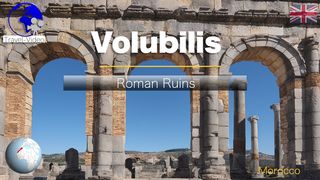
Roman authority was concentrated mainly in northern Morocco, particularly around the cities of Tingis, present-day Tangier, and Volubilis, which developed into one of the principal urban centers of Roman North Africa.
Agriculture flourished during this period, especially olive oil and grain production. Latin became the language of administration, while local Amazigh traditions remained dominant in rural areas.
From the third century onward, Roman influence gradually declined, and by the fifth century much of the territory had returned to local control.
Post-Roman Kingdoms and the Arrival of Islam
Following the Roman withdrawal, several independent Amazigh kingdoms emerged across Morocco.
The Vandals and later the Byzantine Empire exercised limited influence over parts of the coastline, but local rulers controlled most of the interior.
The seventh century brought the expansion of Arab-Muslim armies across North Africa. Initial campaigns encountered strong resistance from Amazigh communities, but over time Islam spread throughout the region.
The adoption of Islam transformed political, religious and cultural life while allowing Amazigh populations to become active participants in the expansion of the Islamic world.
Arabic gradually became an important language of administration, religion and scholarship, although Amazigh languages continued to be widely spoken throughout the countryside and mountainous regions.
The Idrisids and the Emergence of the First Moroccan State
The establishment of the Idrisid dynasty in the late eighth century marks a major turning point in Moroccan history.
Idris I, a descendant of the Prophet Muhammad, fled political conflicts in the Middle East and settled in Morocco with the support of local Amazigh tribes. He established a new political authority in the region around Volubilis.
His son Idris II founded the city of Fez in the early ninth century. The city rapidly developed into an important political, commercial and religious center and would remain one of the leading cities of the Islamic world for centuries.
The Idrisid kingdom contributed significantly to the Islamization of Morocco and to the emergence of a distinct political identity in the western Maghreb.
The Great Amazigh Dynasties and Imperial Expansion
The Almoravid Empire
During the eleventh century, the Almoravids, a religious and political movement originating among Amazigh populations of the western Sahara, unified much of Morocco.
They founded Marrakesh around 1070 and transformed it into their capital. Their empire soon expanded across the Maghreb and into large parts of Muslim Iberia.
The Almoravids played a crucial role in controlling trans-Saharan trade routes linking West Africa with the Mediterranean world. Gold from the Sudan region and other valuable commodities passed through Moroccan cities under their control.
The Almohad Empire
In the twelfth century, the Almohads overthrew the Almoravids and established one of the most powerful empires in the history of North Africa.
At its height, the Almohad Empire extended from present-day Morocco to western Libya and included much of Al-Andalus in the Iberian Peninsula.
The period witnessed remarkable intellectual, scientific and architectural achievements. Several iconic Moroccan monuments, including the Koutoubia Mosque in Marrakesh and the Hassan Tower in Rabat, date from this era.
The Almohad defeat at the Battle of Las Navas de Tolosa in 1212 marked the beginning of their decline in Iberia and eventually within North Africa itself.
The Marinids
The Marinid dynasty rose to power during the thirteenth century and established Fez as one of the major intellectual centers of the Islamic world.
The Marinids constructed numerous madrasas and religious institutions that promoted scholarship and Islamic jurisprudence. Fez became renowned for learning, theology and trade.
Despite these achievements, the kingdom faced increasing pressure from internal rivalries and the growing presence of European powers along the Atlantic coast.
European Expansion and the Sharifian Dynasties
Portuguese and Spanish Coastal Expansion
Beginning in the fifteenth century, Portugal and Spain sought control over strategic Moroccan ports in order to dominate Atlantic trade routes.
Several coastal cities temporarily fell under European control, while Moroccan rulers attempted to preserve political independence and territorial integrity.
These confrontations marked the beginning of centuries of competition between Morocco and European powers.
The Saadian Dynasty
The Saadian dynasty emerged during the sixteenth century and succeeded in reunifying much of Morocco.
One of the defining moments of this period was the Battle of the Three Kings in 1578, in which Moroccan forces defeated the Portuguese army. The battle had profound consequences for both Morocco and Portugal.
Under Sultan Ahmad al-Mansur, Morocco experienced a period of prosperity and international influence. Military campaigns extended Moroccan authority into parts of the western Sahel, including territories formerly controlled by the Songhai Empire.
Trade with Europe and sub-Saharan Africa contributed significantly to the kingdom's wealth.
The Alaouite Dynasty
During the seventeenth century, the Alaouite dynasty gradually established itself as the dominant political force in Morocco.
The Alaouites restored central authority and maintained Moroccan independence despite increasing European ambitions in North Africa.
The dynasty balanced royal authority with the influence of tribal leaders, religious scholars and urban elites. The Alaouite monarchy remains in power today, making it one of the world's oldest continuing dynasties.
Morocco and European Imperialism
During the nineteenth century, Morocco faced growing pressure from France, Spain and Britain.
Economic concessions, foreign loans and diplomatic rivalries weakened Moroccan sovereignty and increased European influence over domestic affairs.
International conferences held during the early twentieth century gradually formalized the division of influence over Morocco among European powers.
The French and Spanish Protectorates
The Treaty of Fez signed in 1912 established the French Protectorate over most of Morocco, while Spain controlled parts of the north and southern coastal regions.
French authorities developed roads, railways, ports and administrative centers, transforming cities such as Casablanca and Rabat into modern urban centers.
At the same time, colonial rule generated significant resistance movements, particularly in mountainous Amazigh regions.
One of the most important anti-colonial struggles was the Rif War during the 1920s, led by Abd el-Krim against Spanish and later French forces. The conflict became internationally known as one of the major anti-colonial movements of the interwar period.
Independence and the Construction of the Modern State
Following the Second World War, nationalist movements gained strength throughout Morocco.
Sultan Mohammed V emerged as a central figure in the independence movement and became a symbol of national unity. His temporary exile by French authorities further increased popular support for independence.
Morocco regained its independence in 1956, ending both the French and Spanish protectorates over most of the territory.
The integration of the former colonial zones played an important role in shaping the borders and institutions of the modern Moroccan state.
The Reign of Hassan II and Territorial Questions
King Hassan II ascended to the throne in 1961 and ruled for nearly four decades.
His reign was characterized by political centralization, economic modernization and periods of political tension known as the Years of Lead.
One of the defining issues of modern Moroccan history became the status of Western Sahara. Following Spain's withdrawal from the territory in 1975, Morocco organized the Green March and established control over much of the region.
The question of sovereignty over Western Sahara remains one of the principal geopolitical issues facing Morocco today.
Morocco in the Twenty-First Century
King Mohammed VI succeeded Hassan II in 1999 and initiated a series of economic, social and institutional reforms.
Large investments have been made in infrastructure, transportation, renewable energy and industrial development. The country has also pursued policies aimed at reducing poverty and improving education and healthcare.
The constitutional reforms introduced in 2011, in the context of wider regional protest movements, expanded the powers of parliament and government while preserving the central role of the monarchy.
Contemporary Morocco occupies a strategic position between Europe, Africa and the Arab world. Its identity reflects the interaction of Amazigh, Arab, Islamic, Mediterranean, Saharan and African influences accumulated over centuries.
This long historical continuity, combined with successive periods of external influence and internal transformation, explains Morocco's distinctive place within North Africa and the broader Mediterranean world.

Between the Atlantic, the Mediterranean and the Sahara: Geography, Society and Economic Development in Contemporary Morocco
A Strategic Crossroads Between Continents
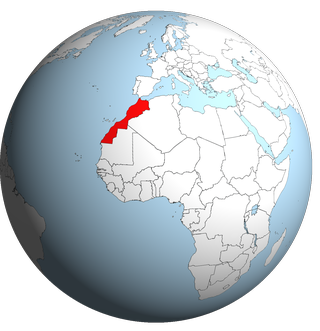
Morocco occupies the northwestern corner of Africa and enjoys one of the most strategic geographical positions in the Mediterranean world. The country borders Algeria to the east and the territory of Western Sahara to the south, while the Mediterranean Sea lies to the north and the Atlantic Ocean stretches along its western coastline for more than 3,000 kilometres.
The Strait of Gibraltar, separating Morocco from Spain by only about fourteen kilometres at its narrowest point, has long made the country a meeting point between Europe and Africa and between the Atlantic and Mediterranean maritime worlds.
This geographical position has shaped Morocco's history and continues to influence its economy, diplomacy and cultural identity.
Diverse Landscapes and Physical Geography
Morocco possesses one of the most varied landscapes in North Africa.
The Rif Mountains dominate the northern regions along the Mediterranean coast, while the Middle Atlas, High Atlas and Anti-Atlas mountain ranges extend across much of the country from northeast to southwest. The High Atlas contains the highest peaks in North Africa, including Mount Toubkal, which rises to 4,167 metres above sea level.
Between these mountain systems lie fertile plains that support much of Morocco's agricultural production and urban development. The Atlantic coastal regions contain some of the country's most productive farmland and host its largest cities.
Further south and southeast, the environment gradually becomes more arid, giving way to pre-Saharan landscapes, rocky plateaus, oases and sand dunes associated with the Sahara Desert.
Several rivers play important roles in agriculture and water management, including the Sebou, Oum Er-Rbia, Moulouya, Bouregreg and Drâa rivers, although their flow varies considerably according to seasonal rainfall.
Climate and Environmental Conditions
Morocco's climate varies significantly according to altitude, latitude and distance from the sea.
The Atlantic coast benefits from relatively moderate temperatures due to oceanic influences, while Mediterranean regions experience warmer summers and wetter winters typical of Mediterranean climates.
Mountain areas can experience cold winters with regular snowfall, particularly in the High Atlas, whereas the southern regions are characterized by high temperatures and limited rainfall.
Water scarcity has become one of Morocco's most important environmental challenges. Repeated droughts, changing rainfall patterns and increasing demand from agriculture and urban areas have placed growing pressure on water resources.
Climate change is expected to intensify these challenges in coming decades, making water management and environmental sustainability major national priorities.
Population and Cultural Diversity
Morocco's population is estimated at approximately 38 million inhabitants in the mid-2020s. The country has become predominantly urban, with most residents living in cities and metropolitan areas.
Moroccan identity reflects centuries of interaction between Amazigh, Arab, Andalusian, Saharan, Mediterranean and sub-Saharan African influences.
The Amazigh population forms an important component of Moroccan society and is present throughout the country, particularly in the Rif Mountains, the Atlas ranges and the Souss region.
Arabic and Amazigh are the country's two official languages, a status formally recognized in the Constitution adopted in 2011.
Modern Standard Arabic is used in administration, education and official communication, while Moroccan Arabic, commonly known as Darija, serves as the principal language of everyday interaction.
Several Amazigh languages continue to be widely spoken, especially in rural and mountainous areas.
French maintains a significant role in business, higher education, science and administration as a legacy of the colonial period. Spanish remains influential in parts of northern Morocco and the southern Atlantic regions, while English has become increasingly important in tourism, international business and education.
Religion and Social Life
Islam occupies a central position in Moroccan society and public life. The vast majority of Moroccans adhere to Sunni Islam following the Maliki school of jurisprudence.
The Moroccan monarchy possesses a unique religious dimension because the king holds the title of Commander of the Faithful, giving him religious as well as political legitimacy.
Religious traditions continue to shape social life through annual celebrations, local customs and the activities of religious institutions and Sufi brotherhoods.
Morocco also maintains small Christian and Jewish communities. The country's Jewish heritage remains visible in many cities through synagogues, cemeteries and historic neighbourhoods that testify to centuries of coexistence.
Major Cities and Urban Development
Rabat serves as Morocco's political and administrative capital and hosts the royal palace, parliament, ministries and diplomatic institutions.
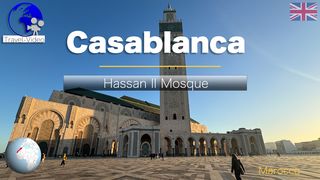
Casablanca is the country's largest city and economic centre. Its port is among the busiest in Africa, and the city concentrates much of Morocco's industrial, financial and commercial activity.
Marrakesh is internationally known for its historical monuments and tourism industry and remains one of the country's principal cultural centres.
Fez continues to occupy an important place as a religious, educational and historical city. The University of Al Quaraouiyine, founded during the ninth century, is frequently regarded as one of the oldest continuously operating institutions of higher learning in the world.
Tangier has undergone rapid economic growth in recent decades thanks to its strategic location near the Strait of Gibraltar and the development of the Tanger Med port complex.
Administrative Organization and Infrastructure
Morocco is a constitutional monarchy in which executive authority is shared between the king, the government and parliament, although the monarchy retains substantial powers in strategic areas.
The country is divided into twelve administrative regions as part of a broader decentralization policy designed to encourage regional development and local governance.
Morocco possesses one of the most developed transportation networks in Africa.
Its motorway system connects the principal urban centres, while the railway network links many of the country's major cities. In 2018 Morocco inaugurated Africa's first high-speed railway line connecting Tangier and Casablanca.
Major international airports operate in Casablanca, Marrakesh, Rabat, Tangier, Agadir and Fez, supporting both tourism and international commerce.
The ports of Tanger Med, Casablanca, Agadir and Nador play a crucial role in Morocco's external trade and regional connectivity.
Economic Structure and Key Industries
Morocco has developed one of the most diversified economies in North Africa.
Agriculture remains an important sector despite its vulnerability to climatic conditions. Major agricultural products include cereals, olives, citrus fruits, vegetables and livestock.
The country possesses some of the world's largest phosphate reserves and is one of the leading global producers of phosphates and fertilizers.
Industrial activity has expanded considerably during recent decades, particularly in the automotive, aerospace, textile, chemical and food-processing sectors.
The service sector now represents the largest component of the national economy, supported by banking, telecommunications, logistics and trade.
Renewable energy has become a strategic priority, with large-scale solar and wind projects designed to reduce dependence on imported energy resources.
Tourism and Cultural Heritage
Tourism represents one of Morocco's most important economic sectors.
Visitors are attracted by the country's imperial cities, Atlantic and Mediterranean coastlines, mountain landscapes and desert environments.
Historic medinas, archaeological sites and architectural heritage from Amazigh, Islamic and colonial periods contribute to Morocco's international reputation as a cultural destination.
Moroccan culture is also reflected in its cuisine, music, festivals and artisanal traditions.
Traditional crafts such as leatherwork, zellige tile production, carpet weaving, wood carving and metalworking continue to play important economic and cultural roles in many cities.
Education, Research and Contemporary Challenges
Morocco has invested heavily in education and higher learning over recent decades. Major universities operate in Rabat, Casablanca, Fez, Marrakesh and Oujda, while scientific research and technological innovation receive increasing attention.
Despite substantial progress, challenges remain in reducing regional inequalities, improving educational quality and increasing employment opportunities for young people.
Water management, urban growth, environmental sustainability and adaptation to climate change are among the country's most significant long-term concerns.
Morocco's Regional and International Role
Morocco occupies a distinctive geopolitical position between Europe, Africa and the Arab world.
The country maintains close economic and political ties with the European Union while simultaneously strengthening its presence in sub-Saharan Africa through investment, trade and diplomatic initiatives.
Morocco also plays an active role within African and Arab regional organizations and seeks to position itself as a bridge between different regions and markets.
Contemporary Morocco is therefore characterized by a combination of historical continuity and rapid modernization. Its diverse cultural heritage, strategic location and economic transformation continue to shape the country's evolving role within Africa, the Mediterranean and the wider international community.