

 Français (France)
  Nederlands (nl-NL)
 Map of places or practices featured in a video published on this site
• Use the markers to explore the content •
From Uninhabited Island to Multicultural Nation: The Historical Formation of Mauritius
An Uninhabited Island in the Indian Ocean
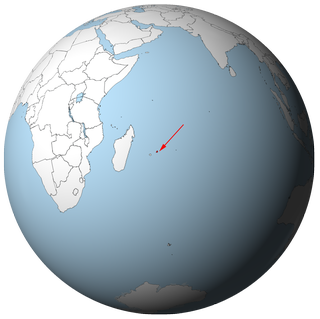
Unlike many regions of the world, the history of Mauritius does not begin with indigenous civilizations, kingdoms or ancient states. Located in the southwestern Indian Ocean, approximately 900 kilometres east of Madagascar, the island remained uninhabited for most of its natural history.
Archaeological and historical research has found no evidence of permanent human settlement prior to the arrival of foreign navigators during the medieval period. Mauritius was isolated from major continental landmasses and lay outside the normal routes of prehistoric migrations that populated Africa, Asia and the Pacific islands.
Nevertheless, the island occupied a strategic position near the maritime routes linking East Africa, the Arabian Peninsula, India and Southeast Asia. It is possible that Austronesian sailors involved in the settlement of Madagascar may have reached or observed Mauritius during the first millennium CE, although no lasting settlements have been identified.
Arab and Persian navigators who crossed the Indian Ocean during the Middle Ages were probably aware of the island's existence. Medieval Arab maps mention islands in the southwestern Indian Ocean that may correspond to Mauritius and the neighbouring Mascarene Islands.
European Exploration and the Portuguese Discovery
The arrival of Europeans in the Indian Ocean transformed regional trade networks and initiated a new phase in the history of Mauritius.
Portuguese navigators were likely the first Europeans to discover the island in the early sixteenth century, probably around 1507. At the time, Portugal was rapidly establishing a maritime empire extending from East Africa to India and Southeast Asia.
The Portuguese used Mauritius as an occasional stopping point during voyages to Asia but never established a permanent settlement. The absence of immediately exploitable resources and the lack of a naturally sheltered harbour reduced the island's attractiveness compared with other strategic locations in the Indian Ocean.
Although the Portuguese left few permanent traces, they contributed to placing Mauritius on European maps and introducing the island to other colonial powers.
Dutch Colonization and the Birth of Mauritius
Permanent settlement began with the Dutch Republic. In 1598, a Dutch fleet commanded by Admiral Wybrand van Warwyck landed on the island and named it Mauritius in honour of Prince Maurice of Nassau, the Stadtholder of the Dutch Republic.
The Dutch East India Company established the first permanent colony in 1638. The island was intended to serve as a replenishment station on the long maritime route connecting Europe with the Dutch East Indies.
Difficult Conditions for Settlement
Life on Mauritius proved difficult for the settlers. Tropical cyclones, droughts, crop failures and invasions of rats introduced by ships repeatedly threatened the colony's survival.
The Dutch exploited several natural resources, particularly ebony wood, which was highly valued in international markets. They also introduced numerous plants and animals that would permanently transform the island's ecosystem.
Among these introductions were sugar cane, deer from Java, monkeys and domesticated animals intended to support agricultural activities.
The Extinction of the Dodo
The Dutch period is closely associated with one of the world's most famous extinctions: that of the dodo.
This large flightless bird was endemic to Mauritius and had evolved in the absence of natural predators. Hunting by sailors and settlers, habitat destruction and the introduction of invasive species such as rats, pigs and monkeys led to its disappearance during the late seventeenth century.
The dodo later became an international symbol of species extinction caused by human activity and remains one of Mauritius's most recognizable historical emblems.
Unable to overcome the colony's economic difficulties and environmental challenges, the Dutch abandoned Mauritius permanently in 1710.
French Rule and the Creation of Isle de France
France took possession of the abandoned island in 1715 and renamed it Isle de France.
Large-scale development began after 1721 under the administration of the French East India Company. The island occupied a highly strategic position on the maritime routes connecting Europe with India and Southeast Asia.
Port Louis and Economic Development
French authorities invested heavily in infrastructure and urban development. Port Louis was established as the administrative capital and quickly developed into one of France's most important naval and commercial centres in the Indian Ocean.
Plantation agriculture expanded rapidly, particularly through the cultivation of sugar cane. To meet growing labour demands, French settlers imported large numbers of enslaved people from East Africa and Madagascar.
This marked the beginning of the multicultural society that characterizes Mauritius today, although colonial society remained highly hierarchical and unequal.
Mahé de La Bourdonnais and Colonial Administration
One of the most important figures of the French period was Governor Bertrand-François Mahé de La Bourdonnais, who governed the colony between 1735 and 1746.
Under his administration, roads, fortifications, warehouses and port facilities were constructed, transforming Isle de France into a major French base in the Indian Ocean.
The island also became an important centre for French privateers who targeted British merchant vessels during European conflicts.
Religion, Language and Cultural Formation
Roman Catholicism became the dominant religion under French rule, while enslaved African and Malagasy populations preserved elements of their own religious traditions.
French became the language of administration, commerce and elite society. At the same time, daily interaction between Europeans, Africans and Malagasy communities led to the emergence of a French-based creole language that would eventually evolve into modern Mauritian Creole.
British Conquest and Nineteenth-Century Transformation
The Napoleonic Wars fundamentally altered the balance of power in the Indian Ocean. Because of its strategic importance to French naval operations, Britain sought to capture Isle de France.
Following several naval engagements, British forces invaded and occupied the island in 1810.
The Treaty of Paris of 1814 formally transferred sovereignty to Britain, which restored the island's original Dutch name, Mauritius.
A British Colony with a French Character
Unlike many other British colonies, Mauritius retained much of its French cultural heritage.
British authorities allowed the continuation of French civil law and tolerated the widespread use of French in daily life and commercial affairs. Many institutions inherited from the French period remained intact.
This unusual combination of British political institutions and French cultural influence remains one of the defining characteristics of Mauritius.
The Abolition of Slavery and Indian Indentured Labour
The abolition of slavery throughout the British Empire in 1835 transformed Mauritian society.
To replace enslaved labour on sugar plantations, colonial authorities organized the arrival of large numbers of indentured labourers from British India.
Between the mid-nineteenth century and the early twentieth century, hundreds of thousands of Indian workers arrived from regions corresponding to present-day Bihar, Uttar Pradesh, Tamil Nadu and Maharashtra.
The Aapravasi Ghat in Port Louis, where many of these migrants first arrived, is today recognized as a UNESCO World Heritage Site.
The Emergence of a Multicultural Society
Indian migrants brought with them their religions, languages and cultural traditions.
Hinduism gradually became the island's largest religion, while Islam also became established among sections of the Indo-Mauritian population.
Languages such as Bhojpuri, Tamil, Urdu and Hindi enriched the island's linguistic landscape.
Alongside these communities lived descendants of African slaves, Franco-Mauritians of European origin and a smaller but economically influential Chinese community.
Mauritius thus developed into one of the most ethnically and culturally diverse societies in the world.
Political Reform and the Rise of National Movements
During the twentieth century, social and political demands for reform grew steadily.
Workers on sugar plantations demanded improved conditions and greater political representation. Trade unions and political parties became increasingly influential in public life.
The impact of the Second World War accelerated constitutional changes throughout the British Empire, including Mauritius.
The gradual extension of voting rights allowed broader participation in colonial institutions and encouraged the development of democratic politics.
The Road to Independence
Political debates intensified during the 1950s and 1960s as questions regarding self-government and independence became increasingly important.
The leading figure of the independence movement was Sir Seewoosagur Ramgoolam, who advocated a peaceful transition to self-government while attempting to preserve harmony among the island's various communities.
Negotiations with Britain eventually led to independence on 12 March 1968.
Building the Modern Mauritian State
Independence did not involve a complete break with colonial institutions. Mauritius retained the Westminster parliamentary model and remained a member of the Commonwealth.
The country adopted a democratic political system based on multiparty elections, parliamentary government and the rule of law.
In 1992, Mauritius formally became a republic while continuing to participate in the Commonwealth of Nations.
Economic Diversification
At independence, Mauritius remained heavily dependent on sugar exports.
Successive governments pursued policies aimed at diversifying the economy through the development of textile manufacturing, financial services, tourism and information technology.
These policies transformed Mauritius into one of Africa's most successful and diversified economies.
Territorial Questions and International Relations
One of the most important geopolitical issues in modern Mauritian history concerns the Chagos Archipelago.
Prior to Mauritian independence, Britain separated the Chagos Islands from Mauritius to create the British Indian Ocean Territory and facilitate the establishment of the American military base on Diego Garcia.
Mauritius has consistently claimed sovereignty over the archipelago, arguing that the separation violated international law.
Several international legal decisions and diplomatic initiatives in recent years have supported the Mauritian position, although the dispute has not yet been fully resolved.
Historical Legacies and National Identity
The history of Mauritius is unique because of the absence of an indigenous population and the succession of migrations that created the modern nation.
Dutch influence survives primarily through the country's name, French influence through language and culture, British influence through political institutions, and African, Malagasy, Indian and Chinese influences through religion, cuisine, music and social traditions.
This remarkable diversity has become one of the country's greatest strengths and one of the central elements of Mauritian national identity.
Modern Mauritius therefore represents the result of centuries of migration, colonialism and cultural interaction rather than the evolution of a single indigenous civilization. Its history illustrates how populations from multiple continents contributed to the creation of a stable and multicultural island nation in the heart of the Indian Ocean.
Mauritius in the Twenty-First Century: A Multicultural Island Nation in the Indian Ocean
A Strategic Island State in the Southwestern Indian Ocean
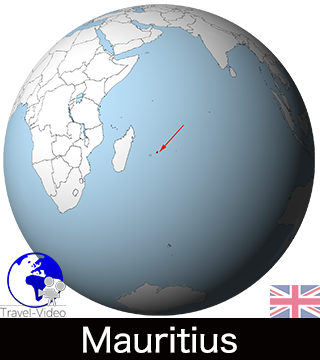
Mauritius is an island nation located in the southwestern Indian Ocean, approximately 900 kilometres east of Madagascar and more than 2,000 kilometres from the eastern coast of Africa. The country forms part of the Mascarene Islands, together with Réunion and Rodrigues, and occupies an important position along maritime routes linking Africa, Asia and the Middle East.
The Republic of Mauritius consists not only of the main island of Mauritius but also of Rodrigues, the Agaléga Islands, Saint Brandon and several smaller islands and islets scattered across the Indian Ocean. The country also claims sovereignty over the Chagos Archipelago, which remains under British administration as the British Indian Ocean Territory.
Mauritius possesses no land borders with other states, but its maritime position gives it a large exclusive economic zone that significantly exceeds its land area and provides important marine resources and economic opportunities.
Volcanic Landscapes and Coastal Ecosystems
Mauritius is of volcanic origin and displays a diverse landscape despite its relatively small size. The island's central plateau rises between 400 and 600 metres above sea level and is surrounded by remnants of ancient volcanic mountain ranges.
The country's highest point is Piton de la Petite Rivière Noire, which reaches an elevation of 828 metres. Other well-known mountains include Pieter Both, famous for its distinctive rock formation, and Le Morne Brabant, a mountain of considerable historical and cultural importance.
Numerous short rivers cross the island, including the Grande Rivière Sud-Est, the Rivière Noire and the Rivière du Rempart. Although none of these rivers are navigable, they play an important role in freshwater supply and agriculture.
Most of the coastline is protected by coral reefs that create extensive lagoons and sheltered beaches. These ecosystems support marine biodiversity and form the foundation of the country's tourism industry.
Protected natural areas include Black River Gorges National Park, forest reserves and marine conservation zones that preserve endemic species and fragile ecosystems.
Climate and Environmental Challenges
Mauritius experiences a tropical maritime climate moderated by trade winds from the southeast. The year is generally divided into a warm and humid season from November to April and a cooler and drier season from May to October.
Temperatures vary according to altitude and proximity to the coast. Coastal regions are generally warmer, while the central plateau benefits from milder conditions throughout the year.
The island lies within the cyclone belt of the southwestern Indian Ocean and occasionally experiences severe tropical storms during the austral summer. These events can cause significant damage to infrastructure, agriculture and tourism facilities.
Climate change has become an increasingly important concern for Mauritius. Rising sea levels, coastal erosion, coral bleaching and changing rainfall patterns represent major environmental challenges for the coming decades.
A Population Shaped by Migration
Mauritius is home to approximately 1.3 million inhabitants and is one of the most densely populated countries in Africa. Unlike most nations, Mauritius has no indigenous population. Its entire society is the result of successive waves of migration linked to colonization and economic development.
The largest segment of the population descends from Indian indentured labourers who arrived during the nineteenth century following the abolition of slavery. Indo-Mauritians therefore constitute the majority of the population.
Alongside them live Creole communities descended largely from African and Malagasy slaves, Franco-Mauritians whose ancestors were European settlers and a smaller but influential Sino-Mauritian community.
This demographic diversity has created one of the world's most multicultural societies and remains one of the defining characteristics of contemporary Mauritius.
Languages and Religious Diversity
Mauritius presents a particularly complex linguistic landscape that reflects its colonial history and multicultural composition.
English serves as the official language of government administration, legislation and parliamentary proceedings. French occupies an important role in the media, business sector and cultural life and is widely understood throughout the country.
The most commonly spoken language in everyday life is Mauritian Creole, a French-based creole language that developed during the colonial period through interaction between European settlers, African slaves and later immigrant communities.
Several Indian languages continue to be used in religious and cultural contexts, including Bhojpuri, Hindi, Urdu and Tamil.
Religious diversity is equally remarkable. Hinduism is the largest religion and makes Mauritius one of the few countries outside South Asia where Hindus form a majority of the population.
Christianity, particularly Roman Catholicism, is also widely practiced, while Islam and Buddhism maintain important communities within the national population.
Religious coexistence and mutual tolerance are often regarded as central elements of Mauritian society and political stability.
Urban Centres and Administrative Organization
Port Louis, located on the northwestern coast, serves as the political, administrative and economic capital of Mauritius. Its port remains one of the principal commercial gateways of the southwestern Indian Ocean and supports much of the country's international trade.
The city hosts government institutions, financial companies, universities and cultural centres, making it the country's primary urban hub.
Other important towns include Curepipe, known for its cooler climate and residential character, Vacoas-Phoenix, Beau Bassin-Rose Hill and Quatre Bornes. Mahébourg, located in the southeast, retains important historical significance linked to the colonial period.
Administratively, Mauritius is divided into districts and municipalities, while Rodrigues benefits from a degree of regional autonomy through its own local institutions.
Transport and Modern Infrastructure
Mauritius possesses one of the most developed transport infrastructures in the region. An extensive road network connects the island's principal urban centres, industrial areas and tourist destinations.
The country no longer maintains a traditional railway network, but a modern light rail system known as Metro Express has been introduced to improve public transportation between Port Louis and several major towns on the central plateau.
Air transport plays a crucial role in connecting Mauritius to the rest of the world. Sir Seewoosagur Ramgoolam International Airport serves as the country's main international gateway and offers regular connections with Europe, Africa, Asia and the Middle East.
The Port of Port Louis remains essential for imports, exports and regional maritime trade.
A Diversified and Service-Oriented Economy
At the time of independence, Mauritius depended heavily on sugar production. Since then, the country has successfully diversified its economy and transformed itself into one of Africa's most prosperous nations.
Tourism is one of the main pillars of the economy. Beaches, lagoons, coral reefs and luxury resorts attract visitors from around the world and contribute significantly to national income and employment.
Although sugar cane cultivation occupies a smaller role than in previous decades, it continues to represent an important agricultural activity. Sugar, rum and other sugar-based products remain important exports.
The textile industry developed rapidly during the late twentieth century and continues to provide employment, while financial services have emerged as another major economic sector.
Mauritius has also positioned itself as an international financial centre and a gateway for investment into Africa and Asia. Information technology, business outsourcing and digital services are increasingly important components of the national economy.
Education, Research and Healthcare
Education plays a central role in national development policies. Literacy rates are among the highest in Africa, and access to education is widespread throughout the country.
The University of Mauritius and several specialized institutions contribute to higher education and scientific research, particularly in fields relevant to the country's economic development.
Healthcare services are relatively advanced compared with many other African countries and combine public and private institutions to provide medical care for the population.
Cultural Life and National Identity
Mauritian culture reflects centuries of interaction between African, European, Indian, Chinese and Malagasy traditions. This cultural diversity is visible in architecture, cuisine, music and everyday customs.
One of the most emblematic cultural expressions is sega music, which originated among enslaved populations during the colonial period and has evolved into a symbol of national identity.
Religious festivals from multiple traditions are celebrated throughout the country. Hindu celebrations such as Maha Shivaratri, Christian holidays such as Christmas, Muslim festivals including Eid and Chinese New Year all form part of the national cultural calendar.
Cuisine similarly reflects the country's multicultural character, combining influences from Indian, French, African and Chinese culinary traditions.
Contemporary Challenges and International Position
Despite its economic success, Mauritius faces several important challenges. Climate change threatens coastal areas and coral reefs, while demographic ageing and urban expansion require long-term planning.
The economy remains vulnerable to international economic fluctuations because of its dependence on tourism and global financial services.
Mauritius also continues to pursue its claim over the Chagos Archipelago, which remains an important issue in its foreign policy.
At the same time, the country has developed a reputation for political stability, democratic governance and economic openness. Mauritius consistently ranks among the most prosperous and best-governed countries in Africa.
Contemporary Mauritius therefore represents a distinctive example of a multicultural island society that has successfully transformed its colonial inheritance into a modern, diversified and internationally connected state in the heart of the Indian Ocean.