

 Français (France)
  Nederlands (nl-NL)
 The Kaylasson Temple, located in Port Louis on the island of Mauritius, is one of the most significant Hindu places of worship in the country. Also known as Kaylasson Kovil, this temple is dedicated to the god Shiva and serves as a spiritual center for the Tamil community of Mauritius. The temple is renowned for its vibrant architecture and intricately detailed sculptures depicting various deities and mythological scenes. Kaylasson Temple is not only a place of prayer and devotion but also a cultural site where numerous religious festivals, including Cavadee, one of the island's most important Hindu celebrations, are held. Each year, the temple draws many visitors, both locals and tourists, who come to admire its architectural beauty and partake in the spiritual rituals.
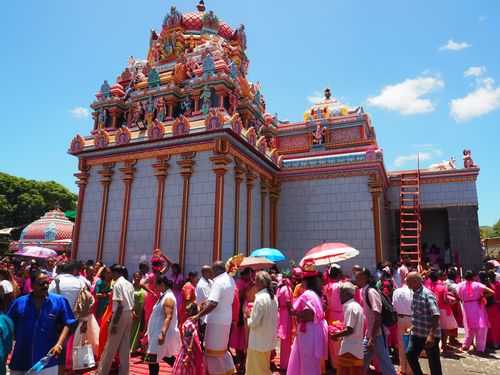
Port Louis • Kaylasson Temple
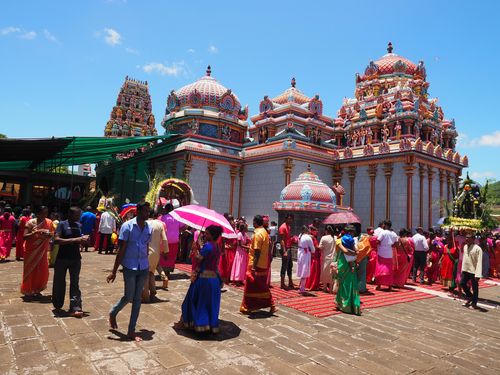
Port Louis • Kaylasson Temple
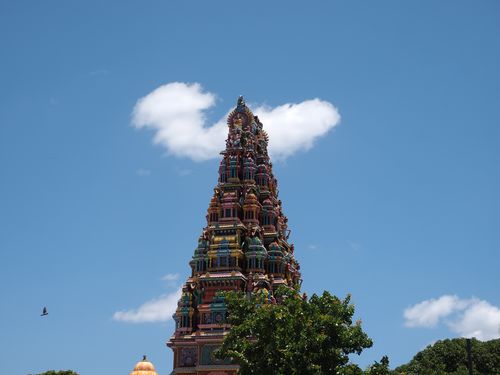
Port Louis • Kaylasson Temple
Monument profile
Kaylasson Temple
Monument category: Hindu Temple
Monument family: Temple
Monument genre: Religious
Cultural heritage: Hindu
Geographic location: Port Louis • Rodrigues • Mauritius
Construction period: 19th century AD
• Links to •
• List of videos about Port Louis on this site •
Thaipoosam Cavadee (Kavadi) 2020, Port-Louis • Mauritius (EN)
The Kaylasson Temple: Political and Social Motivations, Historical Impact, and Modern Challenges
The Kaylasson Temple (Arulmigu Sockalingum Meenatchee Ammen Tirukkovi), located in Port Louis, Mauritius, stands as a significant cultural and religious monument, reflecting the complex history and socio-political evolution of the region. Constructed between 1854 and 1867, this Hindu temple was built by the Tamil community, primarily composed of indentured laborers who were brought to Mauritius after the abolition of slavery in 1835. The temple’s construction was driven by deep social and political motivations, making it a powerful symbol of cultural resilience and community identity.
Political and Social Motivations Behind the Construction
The construction of the Kaylasson Temple was primarily motivated by the need to preserve and assert the cultural and religious identity of the Tamil community in Mauritius. After the abolition of slavery, British colonial authorities sought a new labor force for the sugar plantations, leading to the importation of Indian indentured laborers. These laborers, many of whom were Tamil Hindus, faced harsh working conditions and a lack of social recognition. The establishment of a temple served not only as a place of worship but also as a communal center where the Tamil population could maintain their traditions and social bonds.
The temple symbolized resistance against cultural assimilation and provided the Tamil community with a sense of pride and unity. It was also a political statement, asserting the community’s presence and their right to practice their religion freely in a foreign land. The Kaylasson Temple thus became a cornerstone of Tamil identity in Mauritius, playing a crucial role in the preservation of cultural heritage amid the pressures of colonial rule.
Historical Events and Their Impact on the Region
Throughout its history, the Kaylasson Temple has been at the center of significant social and political movements in Mauritius. In the early 20th century, the temple was a focal point for gatherings that supported the rights of the indentured laborers and their descendants. These movements sought better living and working conditions, and the temple provided a safe space for the community to organize and express their grievances.
The period between the World Wars saw a rise in nationalist and anti-colonial movements worldwide, including in Mauritius. The temple, as a cultural and religious hub, became intertwined with these movements, reflecting the broader struggles for independence and self-determination that were occurring across the globe. In 1968, when Mauritius gained independence, the Kaylasson Temple stood as a testament to the resilience and unity of the Tamil community, contributing to the shaping of a multicultural national identity.
Transformations and Cultural Significance
Over the centuries, the Kaylasson Temple has undergone several transformations, both architecturally and culturally. Renovations and expansions of the temple complex have often mirrored the community's growing economic power and social status in Mauritius. The incorporation of new architectural elements, influenced by Tamil Nadu temple designs, reflects the continuous cultural exchange between Mauritius and India, despite the geographical distance.
The temple’s evolving structure also mirrors the shifts in political power and cultural influences. For example, as the Tamil community gained more recognition and influence in post-independence Mauritius, the temple was further embellished, reinforcing its status as a major cultural landmark.
Current State of Conservation and Challenges
Today, the Kaylasson Temple remains in good condition, thanks to ongoing efforts by the local community to preserve its structural and spiritual integrity. However, it faces several modern challenges. Urbanization around Port Louis, environmental degradation, and the effects of climate change pose significant threats to the temple's physical structure. Additionally, there is the challenge of maintaining the temple's historical authenticity while accommodating the needs of a growing and evolving community.
The preservation of the temple's integrity requires a careful balance between maintaining traditional construction methods and incorporating modern conservation techniques. Community involvement, along with support from cultural heritage organizations, is crucial in ensuring that the temple continues to serve as a symbol of cultural pride and spiritual significance for future generations.
Conclusion
The Kaylasson Temple in Port Louis is more than just a religious monument; it is a symbol of the Tamil community's resilience and their contribution to the cultural fabric of Mauritius. Built in response to the social and political challenges of the 19th century, the temple has witnessed and adapted to the changing dynamics of Mauritian society. Its architectural transformations reflect the community's evolving status, while the challenges it faces today underscore the ongoing struggle to preserve cultural heritage in a rapidly changing world. The Kaylasson Temple stands as a testament to the enduring strength of cultural identity and the importance of preserving historical monuments in the face of modern threats.
Architectural Significance and Technological Innovation of the Kaylasson Temple in Port Louis
The Kaylasson Temple, located in Port Louis, Mauritius, is a masterpiece of religious architecture that illustrates both the technological advancements and innovations of its time. Built between 1854 and 1867, this Hindu temple is primarily dedicated to the goddess Meenatchee and her consort Sokalingum, a form of the god Shiva. Although Meenatchee is the main deity worshipped here, the temple is sometimes associated with Shiva due to this connection, further emphasized by the name "Kaylasson," which refers to Mount Kailash, Shiva's mythological abode. This temple is not only a central place of worship for the Tamil community but also a testament to the skill and creativity of the artisans and builders of the era.
Technological Innovation and Materials Used
The construction of the Kaylasson Temple involved advanced technological methods and the use of durable materials that were innovative for the time. The primary material used in the temple’s construction is stone, specifically chosen for its resilience against the tropical climate of Mauritius. The stone was meticulously carved and assembled by skilled artisans, many of whom were brought from Tamil Nadu in India. These artisans employed traditional stone masonry techniques, which required a deep understanding of both the material and the intricate designs that were to be carved into it.
One of the notable technological advancements evident in the temple is the precision with which the stone blocks were cut and placed, ensuring the structural integrity of the temple over time. The use of interlocking stone techniques, without the need for mortar, reflects a sophisticated knowledge of engineering principles that were practiced in temple construction in India and adapted to the local conditions in Mauritius.
Architectural Features and Cultural Influences
The architecture of the Kaylasson Temple is a vibrant representation of the Dravidian style, which is characteristic of South Indian temple architecture. This style is marked by towering gopurams (gateway towers), intricately carved vimanas (sanctum towers), and expansive mandapas (pillared halls). The temple’s gopuram, adorned with colorful sculptures of deities, mythological figures, and animals, serves as a visual focal point, drawing the eye upward and symbolizing the connection between the earthly and the divine.
What sets the Kaylasson Temple apart is the fusion of traditional Dravidian elements with local Mauritian influences. The vivid color palette used in the temple’s decoration, for example, reflects not only South Indian traditions but also the vibrant cultural expressions found in the broader Indian Ocean region. The integration of local craftsmanship and materials into the construction process resulted in a temple that is uniquely Mauritian while remaining true to its Tamil roots.
The temple’s layout follows a traditional Hindu temple plan, with a central sanctum sanctorum (garbhagriha) that houses the main deity, Shiva. This sanctum is surrounded by a series of mandapas that serve as spaces for prayer, meditation, and community gatherings. The axial alignment of the temple, from the entrance through the mandapas to the sanctum, is designed to guide worshippers on a spiritual journey, symbolizing the path from the mundane to the sacred.
Notable Statistics and Anecdotes
One of the remarkable aspects of the Kaylasson Temple’s construction is the involvement of a large number of artisans and laborers, many of whom traveled from India to Mauritius specifically for this project. It is estimated that over 100 skilled workers were involved in the temple’s construction, bringing with them the techniques and traditions of temple building that had been perfected over centuries in South India.
An interesting anecdote about the temple is that it has withstood numerous cyclones and natural disasters over the years, a testament to the robustness of its construction. The temple’s ability to endure such events has contributed to its status as a symbol of resilience for the Tamil community in Mauritius.
Architectural Recognition and Preservation Efforts
Although the Kaylasson Temple has not been inscribed as a UNESCO World Heritage site, it is recognized as one of the most significant cultural landmarks in Mauritius. Its architectural beauty and historical importance have attracted visitors from around the world, contributing to its international recognition. The temple’s design, which harmoniously blends traditional Tamil architecture with local influences, has been praised as a model of cultural adaptation and resilience.
The lack of UNESCO recognition has not diminished the temple’s importance or the efforts to preserve it. The local community, along with cultural heritage organizations in Mauritius, has taken proactive steps to maintain the temple’s structure and artistry. Regular restoration work is carried out to ensure that the temple’s intricate carvings and colorful decorations are preserved for future generations.
Conclusion
The Kaylasson Temple in Port Louis stands as a testament to the technological innovation and artistic vision of the Tamil community in Mauritius. Its construction, using advanced techniques and durable materials, reflects the grandeur of the era in which it was built. The architectural features of the temple, which blend regional traditions with foreign influences, illustrate the unique cultural synthesis that defines Mauritius. While the temple continues to face challenges related to preservation, it remains a powerful symbol of cultural identity and resilience, celebrated both locally and internationally for its architectural significance.