Français (France)
  Nederlands (nl-NL)
 The market of Port Mathurin represents one of the main places of exchange and social interaction on Rodrigues Island, an autonomous region of the Republic of Mauritius. Located in the island’s administrative center, it regularly brings together farmers, traders, and residents who come to sell or purchase agricultural products, food, and locally produced goods. The market plays an important role in distributing local resources and supporting everyday economic activity. It also reflects the diversity of rural livelihoods on Rodrigues, where agriculture, fishing, and small-scale production remain central to the island’s economy. Through its regular activity, the market contributes to maintaining commercial exchanges and social connections within the community.
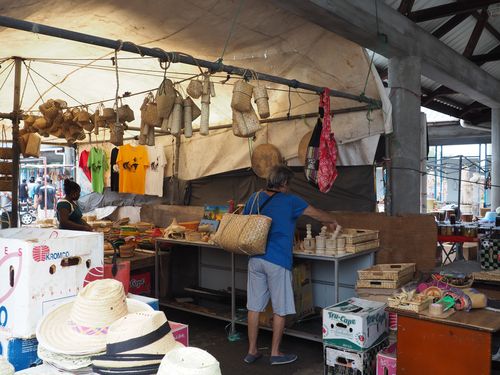
Port Mathurin • The Market
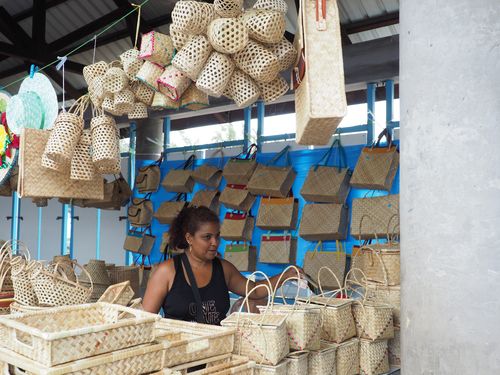
Port Mathurin • The Market
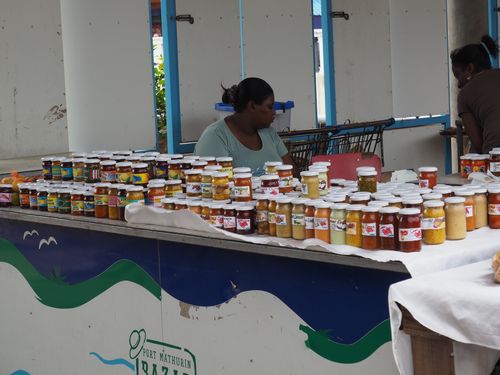
Port Mathurin • The Market
Tradition profile
The Market
Tradition category: Local market
Tradition family: Traditional markets and fairs
Tradition genre: Trade and Local Creativity
Geographic location: Port Mathurin, Saint Gabriel, Camp Pintade • Rodrigues • Mauritius
• Links to •
• List of videos about Port Mathurin on this site •
Rodrigues, the runaway ibex • Rodrigues, Mauritius
Rodrigues • Indian Ocean island
History of the market tradition in Port Mathurin
Origins and early development
The tradition of the market in Port Mathurin is rooted in the historical development of Rodrigues Island, a territory in the Indian Ocean that is today administratively part of the Republic of Mauritius. The emergence of organized market activity can be traced back to the period of colonial expansion in the eighteenth century, when the island became integrated into regional maritime and economic networks.
Initially used as a provisioning point within French colonial systems, Rodrigues developed a subsistence-based economy centered on agriculture, livestock rearing, and fishing. Under these conditions, the need for structured exchange mechanisms became increasingly evident. Markets provided a practical solution by concentrating trade within a defined space, allowing producers and consumers to interact efficiently.
Port Mathurin gradually established itself as the island’s main administrative and logistical center. Its role as a port and focal point for governance made it a natural location for regular commercial gatherings. Colonial authorities supported the development of such markets, as they facilitated taxation, supply regulation, and economic stability.
The formation of the market was also shaped by the island’s evolving social composition. Populations of diverse origins—including settlers, formerly enslaved individuals, and later laboring communities—participated in local economic life. The market became a shared environment where these groups interacted, contributing to the consolidation of a local economic culture.
Major historical transformations
During the nineteenth century, significant political and social changes influenced the evolution of the market tradition in Port Mathurin. The abolition of slavery in the British Empire in 1835 marked a turning point in the island’s social structure. Formerly enslaved individuals gained greater autonomy and became active participants in agricultural and commercial activities.
This transformation expanded the number of small-scale producers who relied on markets to sell their goods. As a result, the market grew in both scale and importance, reinforcing its role as a central institution within the island’s economy.
Throughout the nineteenth and early twentieth centuries, Rodrigues remained relatively isolated compared to other colonial territories. This isolation strengthened the importance of local exchange systems, as imported goods were limited and internal distribution networks were underdeveloped. The market in Port Mathurin functioned as a critical node linking rural production with urban consumption.
Colonial administrations maintained a degree of oversight over market activity. Regulations concerning trading spaces, schedules, and pricing practices were sometimes introduced to ensure order and stability. However, informal practices and customary arrangements continued to shape daily operations.
Global context and comparative perspective
The development of the Port Mathurin market can be understood within a broader global context of market traditions in agrarian and colonial societies. Across Africa, Asia, and island regions of the Indian Ocean, markets emerged as key institutions linking local production to broader economic systems.
In many of these contexts, markets functioned not only as economic spaces but also as social arenas where information, cultural practices, and community relationships were maintained. The Port Mathurin market shares these characteristics, reflecting a wider pattern of localized trade systems adapted to specific environmental and social conditions.
At the same time, the relatively small scale of Rodrigues and its geographic isolation created a distinct configuration. Unlike larger colonial centers, where markets were integrated into extensive commercial networks, the market in Port Mathurin remained primarily oriented toward local exchange.
Changes during the twentieth century
The twentieth century brought gradual changes to the island’s economic structure. Improvements in maritime connections and, later, in local infrastructure facilitated greater movement of goods and people. Imported products began to appear more regularly in the market, diversifying the range of available items.
Despite these developments, the fundamental structure of the market remained largely intact. It continued to serve as the primary venue for the distribution of locally produced food and goods. The persistence of this system highlights the adaptability of traditional market practices in the face of changing economic conditions.
The period following the independence of Mauritius in 1968 introduced new dynamics. Policies aimed at regional development and integration led to improvements in transportation and public services. These changes influenced the functioning of the market by increasing accessibility and expanding participation.
Transformations and contemporary adaptations
In recent decades, the market tradition in Port Mathurin has undergone further adaptations in response to broader social and economic transformations. The introduction of modern retail formats, including small supermarkets and shops, has altered patterns of consumption.
Nevertheless, the market has retained its relevance by continuing to offer fresh, locally sourced products and by maintaining direct connections between producers and consumers. This direct exchange remains a defining characteristic of the market tradition.
Technological changes have also had an indirect impact. Improved communication and transportation networks have facilitated coordination between rural producers and market vendors. At the same time, these developments have exposed the local economy to external influences, including imported goods and changing consumer preferences.
Role in contemporary society
Today, the market of Port Mathurin continues to play a central role in the economic and social life of Rodrigues. It functions as a primary distribution center for agricultural produce, fish, and locally manufactured goods, supporting the livelihoods of many residents.
Beyond its economic function, the market serves as an important space for social interaction. It provides opportunities for residents from different parts of the island to meet, exchange information, and maintain community ties. In this sense, the market contributes to social cohesion and reinforces a shared sense of identity.
The market also reflects the continuity of local practices within a changing environment. It embodies a balance between tradition and adaptation, illustrating how long-standing systems of exchange can coexist with modern forms of commerce.
Preservation and current challenges
Despite its resilience, the market tradition in Port Mathurin faces several challenges. Urban development, changes in consumer behavior, and the expansion of formal retail networks may gradually reduce its centrality.
Younger generations may also be less inclined to engage in traditional forms of market trade, leading to concerns about the transmission of knowledge and practices. Additionally, increased exposure to global economic trends can influence local production and consumption patterns.
At the same time, the market benefits from recognition at the local level as an important component of cultural heritage. While it may not be formally listed as a protected tradition, it is widely acknowledged as a significant aspect of Rodrigues’ identity.
Efforts to maintain and enhance market infrastructure, as well as initiatives supporting local producers, contribute to its continued vitality. The preservation of the market is therefore closely linked to broader strategies for sustaining local economies and cultural practices.
Through its historical continuity and capacity for adaptation, the market of Port Mathurin remains a key institution that illustrates the long-term interaction between economic necessity, social organization, and cultural identity in Rodrigues.
Characteristics of the market tradition in Port Mathurin
Origins and historical context
The tradition of the market in Port Mathurin developed within the economic and social structure of Rodrigues Island, an autonomous region of the Republic of Mauritius located in the southwestern Indian Ocean. In a territory historically characterized by dispersed rural settlements and a largely subsistence-based economy, organized marketplaces played an essential role in facilitating exchanges between producers and consumers.
The emergence of the Port Mathurin market is closely linked to the formation of the town itself as the administrative and economic center of the island. As agricultural and fishing communities expanded across Rodrigues, the need for a regular place where goods could be exchanged became increasingly important. Markets provided a practical framework for the distribution of food and everyday goods in a region where commercial infrastructure remained limited for long periods.
Initially, the market functioned primarily as a meeting point for farmers, fishermen, and small-scale traders. It enabled rural producers to sell their surplus products while ensuring that the population of the town had access to fresh food and essential supplies. In this sense, the market formed part of a broader system of local exchange that sustained the island’s economy.
The tradition also reflects the cultural diversity of Rodrigues, whose population developed through the interaction of African, European, and Asian influences during the colonial period. The market gradually became a shared social environment where these cultural traditions interacted in daily life.
Elements and practices
The daily functioning of the Port Mathurin market follows rhythms that correspond to the agricultural and maritime activities of the island. Vendors generally begin preparing their stalls early in the morning, arranging goods on tables, counters, or simple platforms within the market area.
The products sold reflect the local economy and environment. Fresh vegetables, fruits, spices, fish, and seafood are commonly displayed alongside locally produced items such as herbs, preserved foods, and traditional dishes. In addition to food products, certain stalls offer handmade objects or basic household goods.
The act of selling involves a set of gestures and interactions that are typical of traditional markets. Vendors arrange their products in visible and orderly displays designed to attract customers. Conversations between buyers and sellers are an integral part of the transaction, and price negotiation may occur in a friendly and informal atmosphere.
Different categories of participants contribute to the life of the market. Farmers and fishermen bring their goods directly from production sites, while other vendors operate as retailers or intermediaries. Women frequently play a central role in market activity, managing stalls, organizing goods, and maintaining relationships with customers.
The knowledge required to operate a market stall is often transmitted informally within families. Younger generations learn how to select products, organize displays, and interact with customers through observation and participation over time.
Symbolism and meanings
Beyond its economic role, the market of Port Mathurin holds symbolic significance within the social life of Rodrigues. Markets often represent spaces where the everyday life of a community becomes visible, bringing together different aspects of local culture.
The visual diversity of the products on display contributes to this symbolic dimension. The colors and textures of fruits, vegetables, spices, and fish create an environment that reflects the productivity of the island’s land and sea resources. This abundance serves as a visible expression of the relationship between the population and its natural environment.
Social interaction also forms an important aspect of the market’s meaning. Conversations between vendors and customers frequently extend beyond commercial exchanges. People discuss local events, agricultural conditions, or community matters, reinforcing social connections.
In certain cases, the market can also reveal elements of cultural identity. Differences in language, clothing, or culinary traditions among vendors and customers illustrate the variety of cultural influences present in Rodriguan society.
Evolution and external influences
Over time, the market tradition in Port Mathurin has adapted to changes in economic and social conditions. Improvements in transportation infrastructure have made it easier for producers from different parts of the island to bring their goods to the market.
The gradual opening of Rodrigues to external trade has also introduced new products and commercial practices. Imported goods sometimes appear alongside locally produced items, reflecting the island’s integration into broader economic networks.
Tourism has also influenced the perception of the market. Visitors often regard it as an opportunity to observe everyday life and discover local food products. As a result, some vendors have adapted their stalls to attract tourists by highlighting regional specialties.
Markets similar to that of Port Mathurin exist in many parts of the world, particularly in regions where agriculture and fishing remain important economic activities. In parts of Africa, Southeast Asia, and Latin America, traditional markets continue to play a comparable role in linking rural production with urban consumption.
Social organization and community impact
The Port Mathurin market plays a central role in the organization of social life on Rodrigues Island. It functions as a regular meeting point where residents from different villages and neighborhoods gather.
This gathering function encourages the circulation of information and strengthens social ties. In a relatively small island society, such encounters help maintain connections between communities that might otherwise remain geographically separated.
The market also contributes to the local economy by providing income opportunities for many families. Small-scale vendors, farmers, and fishermen rely on market activity to supplement their livelihoods. The accessibility of the market makes it possible for individuals with limited resources to participate in economic exchange.
During certain periods of the year, such as holidays or community celebrations, market activity may increase significantly. These moments illustrate the relationship between economic exchange and the broader social rhythms of the island.
Statistics, anecdotes, and notable aspects
Although precise statistics are not always available, the significance of the Port Mathurin market can be measured by its regular attendance and the number of participants involved. Dozens of vendors typically operate within the market space, while a steady flow of customers visits throughout the day.
Some stalls have been maintained by the same families for several generations. This continuity illustrates how commercial knowledge and social relationships are transmitted within the community.
Local anecdotes often emphasize the personal connections between vendors and customers. Regular buyers frequently return to the same stalls, developing relationships based on familiarity and trust.
Recognition and preservation challenges
Today, the Port Mathurin market remains an important feature of Rodriguan cultural and economic life. It continues to support local agriculture and fishing while offering residents access to fresh products.
However, the tradition faces several challenges associated with modernization and economic change. The growth of supermarkets and formal retail outlets has introduced alternative ways of purchasing food and household goods.
Urban development and shifting consumer habits may gradually alter the role of traditional markets. Younger generations may also show less interest in continuing family-based trading activities.
Despite these challenges, the market retains advantages that contribute to its resilience. The direct relationship between producers and consumers ensures the availability of fresh products and supports local economic networks.
Local authorities and community organizations often recognize the cultural value of the market. Even without formal international recognition, it represents an important form of living heritage within Rodrigues.
Through its continuity and adaptability, the Port Mathurin market illustrates how traditional commercial practices can remain relevant while responding to the changing social and economic environment of a modern island society.
 Links to the main sections of the site