Français (France)
  Nederlands (nl-NL)
 Of Hindu then Buddhist tradition, (with additional Jain influence), the Maurya dynasty ruled for approximately 137 years, ± between -322 and -185 over all or part of Central India, East India, North India, South India, the Himalayan region and West India, during the Ancient Period.
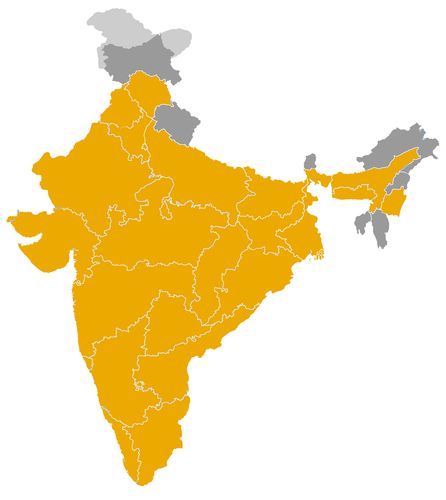
This map illustrates the maximum territory that the Maurya Dynasty had reached at its height, covering the current regions of Andhra Pradesh, Assam, Bihar, Chhattisgarh, Delhi (NTC), Goa, Gujarat, Haryana, Himachal Pradesh, Jharkand, Karnataka, Kerala, Madhya Pradesh, Maharashtra, Manipur, Meghalaya, Odisha, Punjab, Rajasthan, Tamil Nadu, Telangana, Uttar Pradesh and Uttarakhand in India. Its main purpose is to provide a visual aid to understand the geographical extent of this dynasty. However, it's important to note that the contemporary borders of these regions may not necessarily coincide with the historical territories.
The Maurya Dynasty and the Formation of Imperial India
A foundational dynasty in ancient Indian history
The Maurya dynasty occupies a central place in the history of India because it created the first major empire to unite a large part of the subcontinent under one political authority. Founded by Chandragupta Maurya in the late fourth century BCE, the dynasty rose from the Magadha region, with its capital at Pataliputra. This area, located in the Ganges plain, had already been important under earlier kingdoms, but the Mauryas transformed it into the administrative centre of a vast imperial state.
The dynasty emerged after the decline of the Nanda kingdom and in the wider context of political change following Alexander’s campaigns in north western India. Chandragupta established a strong monarchy, expanded into the north west, and confronted the Hellenistic world represented by Seleucus I. Under Bindusara and Ashoka, the Maurya Empire reached a scale previously unknown in Indian political history. Its importance lies not only in conquest, but also in administration, economic integration, diplomatic contact and the use of royal ideology across a very large territory.
Chandragupta Maurya and the creation of imperial authority
Chandragupta Maurya was the architect of Maurya power. By overthrowing the Nandas, he gained control of Magadha and its resources. From this base, he extended his authority over much of northern India and into the north west. His conflict and later treaty with Seleucus I gave the Mauryas control over frontier regions and placed the empire in diplomatic contact with the Hellenistic kingdoms.
His reign established the main foundations of Maurya government. The empire depended on a strong capital, provincial administration, taxation, military organisation and control of roads and strategic centres. Pataliputra became one of the great cities of ancient India, serving as the political and administrative heart of the empire. Chandragupta’s achievement was therefore not simply the creation of a kingdom, but the formation of a state able to govern across regions with different languages, economies and political traditions.
Bindusara and the consolidation of Maurya rule
Bindusara inherited a powerful empire and appears to have preserved its unity while extending Maurya authority farther south. His reign is less richly documented than those of Chandragupta and Ashoka, but it was essential for continuity. Under him, the Maurya state remained stable enough for later expansion and ideological development.
The empire’s reach into the Deccan helped integrate central and southern routes into the imperial system, even though the far south remained outside direct Maurya control. This southward extension gave the dynasty access to new resources and communication networks. It also demonstrated the ability of the Maurya administration to maintain authority beyond the original Ganges base.
Ashoka and the moral transformation of kingship
Ashoka is the most famous Maurya ruler and one of the most significant figures in Indian history. His reign marked the empire’s greatest territorial extent, especially after the conquest of Kalinga on the eastern coast. The violence of that war had a profound effect on his royal ideology. Ashoka presented himself thereafter as a ruler committed to dhamma, a moral and political principle associated with restraint, welfare, respect for life, religious tolerance and good conduct.
His inscriptions, engraved on rocks and pillars across the empire, represent a major development in political communication. They show a ruler addressing his subjects directly across different regions. These edicts provide evidence of an imperial government concerned not only with conquest and taxation, but also with ethical governance, social harmony and administrative responsibility.
Ashoka also played an important role in the spread of Buddhism. He supported Buddhist institutions and helped extend Buddhist influence beyond India, especially toward Sri Lanka and Central Asia. His patronage did not make the Maurya state exclusively Buddhist, but it gave Buddhism unprecedented imperial visibility.
Cultural expression through inscriptions, pillars and religious patronage
The cultural impact of the Mauryas was considerable. Their period saw an important use of stone architecture, polished pillars, sculpted capitals and royal inscriptions. The Ashokan pillars became symbols of imperial authority and moral kingship. Their technical refinement and monumental character suggest a court culture open to various artistic influences, including local Indian traditions and possible contacts with Achaemenid and Hellenistic forms.
The Maurya age also contributed to the development of Buddhist monuments, including stupas and monastic sites. At the same time, Brahmanical, Jain and other religious traditions continued to exist within the empire. The dynasty’s cultural significance therefore lies in the creation of a broad imperial environment in which multiple traditions operated under a powerful royal framework.
Economic organisation across a vast imperial space
The Maurya economy rested on agriculture, taxation, trade, craft production, forests, mines and long distance routes. Control of the fertile Ganges plain gave the dynasty a strong agrarian base. Expansion into other regions brought access to metals, timber, elephants, ports, inland trade routes and regional markets.
The state depended on organised revenue collection and administrative supervision. Roads and provincial centres allowed officials, soldiers and messages to move across the empire. This infrastructure supported military power, commerce and political control. The Mauryas did not administer every region with equal intensity, but they created one of the earliest large scale systems of economic integration in South Asian history.
A lasting model after imperial decline
After Ashoka, the empire weakened under his successors. Provincial autonomy increased, regional powers reappeared, and the last Maurya ruler, Brihadratha, was overthrown by Pushyamitra Shunga around 185 BCE. The political unity created by the Mauryas did not survive permanently.
Yet their historical role remained fundamental. They demonstrated that much of the Indian subcontinent could be governed from a single imperial centre. They established models of administration, diplomacy, taxation, royal communication and moral kingship that shaped later political memory. The Maurya dynasty therefore represents one of the great formative moments in Indian history, standing between the regional kingdoms of early ancient India and the later imperial traditions of the subcontinent.
The Maurya Dynasty and the Formation of Imperial India
A foundational dynasty in ancient Indian history
The Maurya dynasty occupies a central place in the history of India because it created the first major empire to unite a large part of the subcontinent under one political authority. Founded by Chandragupta Maurya in the late fourth century BCE, the dynasty rose from the Magadha region, with its capital at Pataliputra. This area, located in the Ganges plain, had already been important under earlier kingdoms, but the Mauryas transformed it into the administrative centre of a vast imperial state.
The dynasty emerged after the decline of the Nanda kingdom and in the wider context of political change following Alexander’s campaigns in north western India. Chandragupta established a strong monarchy, expanded into the north west, and confronted the Hellenistic world represented by Seleucus I. Under Bindusara and Ashoka, the Maurya Empire reached a scale previously unknown in Indian political history. Its importance lies not only in conquest, but also in administration, economic integration, diplomatic contact and the use of royal ideology across a very large territory.
Chandragupta Maurya and the creation of imperial authority
Chandragupta Maurya was the architect of Maurya power. By overthrowing the Nandas, he gained control of Magadha and its resources. From this base, he extended his authority over much of northern India and into the north west. His conflict and later treaty with Seleucus I gave the Mauryas control over frontier regions and placed the empire in diplomatic contact with the Hellenistic kingdoms.
His reign established the main foundations of Maurya government. The empire depended on a strong capital, provincial administration, taxation, military organisation and control of roads and strategic centres. Pataliputra became one of the great cities of ancient India, serving as the political and administrative heart of the empire. Chandragupta’s achievement was therefore not simply the creation of a kingdom, but the formation of a state able to govern across regions with different languages, economies and political traditions.
Bindusara and the consolidation of Maurya rule
Bindusara inherited a powerful empire and appears to have preserved its unity while extending Maurya authority farther south. His reign is less richly documented than those of Chandragupta and Ashoka, but it was essential for continuity. Under him, the Maurya state remained stable enough for later expansion and ideological development.
The empire’s reach into the Deccan helped integrate central and southern routes into the imperial system, even though the far south remained outside direct Maurya control. This southward extension gave the dynasty access to new resources and communication networks. It also demonstrated the ability of the Maurya administration to maintain authority beyond the original Ganges base.
Ashoka and the moral transformation of kingship
Ashoka is the most famous Maurya ruler and one of the most significant figures in Indian history. His reign marked the empire’s greatest territorial extent, especially after the conquest of Kalinga on the eastern coast. The violence of that war had a profound effect on his royal ideology. Ashoka presented himself thereafter as a ruler committed to dhamma, a moral and political principle associated with restraint, welfare, respect for life, religious tolerance and good conduct.
His inscriptions, engraved on rocks and pillars across the empire, represent a major development in political communication. They show a ruler addressing his subjects directly across different regions. These edicts provide evidence of an imperial government concerned not only with conquest and taxation, but also with ethical governance, social harmony and administrative responsibility.
Ashoka also played an important role in the spread of Buddhism. He supported Buddhist institutions and helped extend Buddhist influence beyond India, especially toward Sri Lanka and Central Asia. His patronage did not make the Maurya state exclusively Buddhist, but it gave Buddhism unprecedented imperial visibility.
Cultural expression through inscriptions, pillars and religious patronage
The cultural impact of the Mauryas was considerable. Their period saw an important use of stone architecture, polished pillars, sculpted capitals and royal inscriptions. The Ashokan pillars became symbols of imperial authority and moral kingship. Their technical refinement and monumental character suggest a court culture open to various artistic influences, including local Indian traditions and possible contacts with Achaemenid and Hellenistic forms.
The Maurya age also contributed to the development of Buddhist monuments, including stupas and monastic sites. At the same time, Brahmanical, Jain and other religious traditions continued to exist within the empire. The dynasty’s cultural significance therefore lies in the creation of a broad imperial environment in which multiple traditions operated under a powerful royal framework.
Economic organisation across a vast imperial space
The Maurya economy rested on agriculture, taxation, trade, craft production, forests, mines and long distance routes. Control of the fertile Ganges plain gave the dynasty a strong agrarian base. Expansion into other regions brought access to metals, timber, elephants, ports, inland trade routes and regional markets.
The state depended on organised revenue collection and administrative supervision. Roads and provincial centres allowed officials, soldiers and messages to move across the empire. This infrastructure supported military power, commerce and political control. The Mauryas did not administer every region with equal intensity, but they created one of the earliest large scale systems of economic integration in South Asian history.
A lasting model after imperial decline
After Ashoka, the empire weakened under his successors. Provincial autonomy increased, regional powers reappeared, and the last Maurya ruler, Brihadratha, was overthrown by Pushyamitra Shunga around 185 BCE. The political unity created by the Mauryas did not survive permanently.
Yet their historical role remained fundamental. They demonstrated that much of the Indian subcontinent could be governed from a single imperial centre. They established models of administration, diplomacy, taxation, royal communication and moral kingship that shaped later political memory. The Maurya dynasty therefore represents one of the great formative moments in Indian history, standing between the regional kingdoms of early ancient India and the later imperial traditions of the subcontinent.
The Maurya rulers are generally described as emperors because of the extent of their authority over the Indian subcontinent. The reign dates remain approximate, especially for Ashoka’s successors, whose order and duration vary across Puranic, Buddhist and modern historical reconstructions.
- Chandragupta Maurya (c. 321–297 BCE) • Founder of the Maurya Empire, he overthrew the Nandas and established an imperial power centred on Pataliputra. His reign marked the unification of much of northern India.
- Bindusara (c. 297–273 BCE) • Son of Chandragupta Maurya, he preserved and extended the empire toward the Deccan. His reign ensured the administrative continuity of Maurya power.
- Ashoka (c. 268–232 BCE) • Grandson of Chandragupta, he brought the empire to its greatest territorial extent. After the Kalinga war, he promoted dhamma through edicts carved across the empire.
- Dasharatha (c. 232–224 BCE) • Grandson of Ashoka, he ruled part of the empire after his predecessor’s death. His reign illustrates the beginning of the fragmentation of Maurya power.
- Samprati (c. 224–215 BCE) • Maurya ruler associated in some traditions with major patronage of Jainism. His authority appears to have been more limited than that of the earlier great emperors.
- Shalishuka (c. 215–202 BCE) • Successor of Samprati in the most common dynastic lists. His reign belongs to the phase of decline and territorial contraction of the empire.
- Devavarman (c. 202–195 BCE) • Late emperor of the Maurya dynasty, he ruled a state already weakened. The sources provide little precise information about his political activity.
- Shatadhanvan (c. 195–187 BCE) • Penultimate Maurya ruler according to the commonly accepted chronology. His reign falls in a period of retreat before regional powers.
- Brihadratha Maurya (c. 187–185 BCE) • Last Maurya emperor, he was overthrown and killed by his general Pushyamitra Shunga. His fall marked the end of the Maurya Empire and the rise of the Shunga dynasty.
 Links to the main sections of the site