

 Français (France)
  Nederlands (nl-NL)
 00:00 • intro | 00:42 • Works by Martha Jimenez | 01:53 • the city
Personal creation from visual material collected during my trip Cuba (2015)
• Use the markers to explore the content •
Camagüey, Historic Streets and Contemporary Art in Cuba
An Inland Cuban City with a Distinct Identity
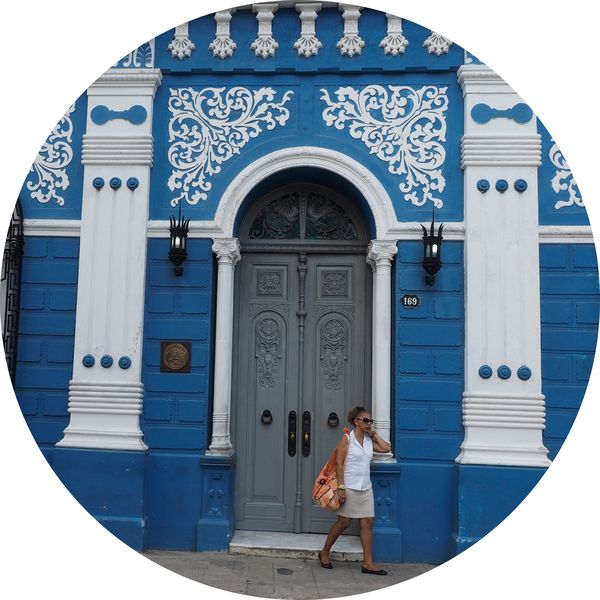
Located in central Cuba, Camagüey has a character that sets it apart from many of the country’s better-known coastal cities. Developed inland as an administrative, religious and commercial centre, it grew into one of Cuba’s most important historic urban settlements. Its old town is known for winding streets, irregular squares, pastel façades and churches that appear unexpectedly at the turn of a lane.
The video approaches Camagüey through two complementary themes: the public artworks of Martha Jiménez and the atmosphere of the city itself. In doing so, it shows how architectural heritage and contemporary creativity can coexist naturally within a living historic environment. This dialogue between colonial-era urban form and present-day artistic expression is one of Camagüey’s most appealing features.
The Works of Martha Jiménez and the Urban Landscape
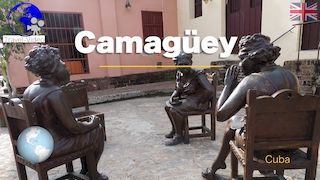
The sculptures of Martha Jiménez play an important role in Camagüey’s modern identity. Known for figurative works often placed in public spaces, she depicts everyday characters, family scenes and moments of humour or quiet humanity. These creations bring an immediate artistic presence to plazas and streets.
In the video, the sculptures are not presented as isolated museum pieces. They are integrated into the life of the city, where residents and visitors encounter them naturally during a walk. This creates a form of public art that enriches urban space rather than standing apart from it.
The city scenes then reveal Camagüey’s discreet architectural richness: low houses, inner courtyards, short perspectives, shaded squares and bell towers rising above the roofs. Unlike some Spanish colonial cities designed on a strict grid, Camagüey developed a more irregular layout, often explained by gradual adaptation to the site and by older defensive concerns.
The Convent of La Merced recalls the importance of religious institutions in shaping the historic centre. Like several churches and conventual buildings in the city, it contributes to an urban skyline marked by towers, cloisters and ecclesiastical spaces.
A City Inherited from the Colonial Era
Camagüey was founded during the Spanish colonial period and relocated during its early history before becoming established on its present site. Over time it became a major centre for the interior of Cuba, linked to cattle raising, regional trade and administrative functions.
Its urban development differs from the rigid grid plans common in many colonial foundations. In Camagüey, winding streets, multiple plazas and less predictable routes create a more labyrinthine setting. This singular form is now one of the city’s strongest heritage qualities.
Local architecture combines Spanish colonial influences, climatic adaptation and later transformations. Patio houses, thick walls, sheltered openings and arcaded spaces respond to tropical heat while preserving privacy and ventilation.
A City Where Art Remains Present
The integration of contemporary artworks within an old urban centre demonstrates that Camagüey is not a frozen historical setting. The city continues to generate new cultural forms while preserving its built heritage. This coexistence of memory and creativity gives the place a distinctive tone.
The sculptures of Martha Jiménez illustrate this especially well. They bring art close to everyday life, humanise public squares and provide a living counterpart to historic façades and religious monuments.
What These Videos Make Especially Clear
Videos built from carefully selected and animated photographs are particularly effective for a city like Camagüey. They allow viewers to follow narrow streets, discover a square gradually and move naturally from a sculpture to a church tower or a historic façade.
This format also highlights details that can easily be missed during a quick visit: wall colours, aged textures, shadows under arcades, expressions in sculpted figures or the proportions of intimate plazas. Through calm visual progression, the relationship between artwork and urban space becomes clearer.
The variety of atmospheres within the city is therefore easier to appreciate.
Another Face of Urban Cuba
Camagüey reveals a more inland and nuanced image of Cuba, far from the country’s better-known coastal clichés. It combines colonial heritage, intimate streets and contemporary artistic life. The video offers an authentic introduction to this distinctive city, while the related detailed pages allow further exploration of its monuments and urban history.







Audio Commentary Transcript
Camagüey is an important city in central Cuba with a population of around 320,000. Camagüey is the name of an Indian village Taino (tribe which inhabited Cuba before the arrival of the conquistadors) which was at the place where the Spaniards built this city, which bore the name of Santa Maria del Puerto del Principe.
Music :
- - YouTube video library - Ignosi, (© Ignosi by Kevin MacLeod is licensed under a Creative Commons Attribution 4.0 license. https://creativecommons.org/licenses/by/4.0/
- Source: http://incompetech.com/music/royalty-free/index.html?isrc=USUAN1100450
- Artist: http://incompetech.com/)
- - YouTube video library - Vacation Casual
Disclaimer: Despite its appropriateness, copyright issues prevent the use of cuban traditional music in "Camagüey • small town in Cuba", hence the use of royalty-free music. Despite our careful selection, some might regret this decision, which is necessary to avoid potential lawsuits. Although difficult, this decision is the only viable solution.


