Français (France)
  Nederlands (nl-NL)
 00:00 • intro | 00:20 • the Bapa Sitaram temple | 03:29 • Bhojanshala – Free meal for everyone
Personal creation from visual material collected during my trip India • Gujarat & Mumbai (2024)
Map of places or practices in Bagdana on this site
• Use the markers to explore the content •
Bagdana, Pilgrimage, Community Meals and Living Devotion in Gujarat
A sacred place shaped by faith and hospitality
Bagdana, located in the Indian state of Gujarat, is known as a popular pilgrimage destination closely associated with Bapa Sitaram, a revered spiritual figure remembered for values of compassion, humility and service. Unlike some pilgrimage centres defined mainly by monumental antiquity or royal patronage, Bagdana is especially notable for its active devotional life and its culture of welcome. The video reveals a place where religious practice is expressed not only through prayer and ritual, but also through hospitality offered to visitors.
Pilgrims come here for worship, reflection, thanksgiving or spiritual comfort. Alongside the temple itself, the site includes gathering areas, circulation spaces and facilities dedicated to feeding visitors. This combination of sacred architecture and continuous charitable service gives Bagdana a distinctive identity within India’s religious landscape.
The result is a pilgrimage centre where spirituality is inseparable from daily acts of generosity.
The Bapa Sitaram Temple as the heart of the site
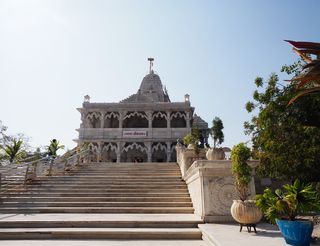
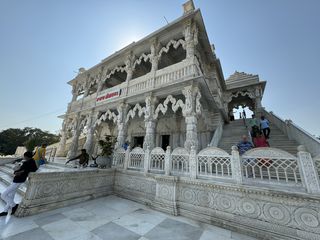
One of the main locations shown in the video is the Bapa Sitaram Temple, the spiritual focus of Bagdana. For devotees, it is a place of prayer and remembrance, where visitors honour a figure whose reputation rests not on political power, but on moral example and compassionate service.
The temple also shapes the organisation of the wider complex. Like many Indian shrines receiving large numbers of visitors, it is designed to guide movement through entrances, courtyards, covered halls and waiting areas before reaching the principal sacred spaces. Architecture here serves both symbolic and practical purposes.
The atmosphere of the temple is often defined by continuous activity rather than silence alone. Visitors arrive throughout the day, families gather, offerings are made, and ceremonies may take place according to the calendar or local customs. This rhythm gives the site an energy that differs from that of a museum monument or abandoned sanctuary.
The video helps make this living dimension visible, showing Bagdana as an active centre of devotion rather than a static religious structure.
Bhojanshala, the offered meal as a form of service
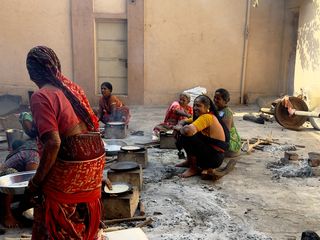
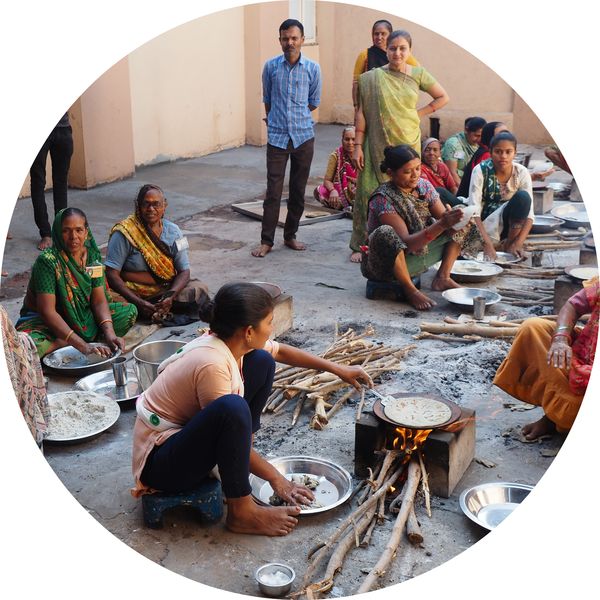
The second major theme of the video is the Bhojanshala, the dining facility where free meals are served. In many South Asian traditions, feeding others is considered a meritorious act linked to charity, equality and spiritual duty. At Bagdana, this practice is not occasional but continuous, forming an essential part of the identity of the site.
Visitors may receive a meal regardless of background, status or origin. In this sense, the Bhojanshala transforms pilgrimage into a shared social experience. Devotion is accompanied by practical care for those who arrive.
Such a system requires considerable organisation. Kitchens must function efficiently, ingredients must be supplied, spaces cleaned, food prepared and served, and large numbers of people welcomed in orderly conditions. Much of this work depends on staff, volunteers or devotees contributing time and labour.
The free meal therefore represents more than generosity alone. It is also an example of disciplined collective organisation rooted in religious values.
Historical and cultural context of Bagdana
Gujarat has a long tradition of pilgrimage centres linked to saints, teachers, ascetics and local holy figures whose influence continued through oral memory and devotional communities. Bagdana belongs to this wider cultural world, where reverence is often centred on lived example rather than ancient dynastic history.
In such places, visitors may come to fulfil vows, seek blessings, express gratitude or simply participate in the atmosphere of the shrine. The emotional relationship between pilgrims and the sacred place is often as important as formal theology.
Sites like Bagdana also tend to evolve over time. As visitor numbers grow, buildings may be expanded, circulation improved, halls enlarged and service areas modernised. Their heritage value therefore lies not only in age, but in continuity of use.
Architecturally, these complexes often combine devotional spaces with practical infrastructure: shaded areas, water points, kitchens, storage zones and dining halls. This reflects a specifically Indian understanding of sacred places as centres of both worship and social support.
Bagdana demonstrates how religion can structure everyday life through service, organisation and community participation.
What the videos on this site make especially clear
The videos on travel-video.info, often created from carefully selected and animated photographs, are particularly well suited to places such as Bagdana. They allow viewers to observe both architectural details and the broader functioning of the site in a calm, progressive way.
At a busy pilgrimage centre, an on-site visit can be visually intense, with constant movement and large numbers of people. A structured visual presentation helps clarify the layout: the temple, gathering zones, meal halls and the routes followed by visitors.
This format also gives time to notice meaningful everyday scenes: orderly queues, volunteers serving food, moments of prayer, family visits and the coexistence of ritual and practical activity. Such elements are central to understanding the character of Bagdana.
By moving gradually between close views and wider perspectives, the video shows how faith, architecture and social organisation operate together as one coherent whole.
A pilgrimage centre where generosity is part of worship
Bagdana offers a distinctive image of religious India: a place where devotion is expressed through prayer, hospitality and constant service. Between the Bapa Sitaram Temple and the Bhojanshala, the site unites sacred practice with everyday generosity. Visitors wishing to explore further can turn to the detailed pages devoted to the temple and the tradition of free communal meals, where the deeper meaning of this living pilgrimage centre becomes even clearer.
Links to related pages





Audio Commentary Transcript
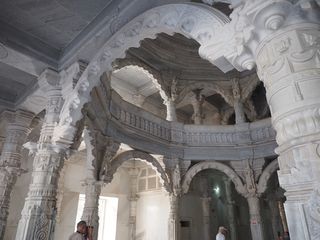
Located in the small village of Bagdana, in Gujarat, the Bapa Sitaram temple was built in 1992 in honour of Bapa Sitaram Maharaj, a contemporary saint revered for his message of peace and devotion within the Hindu tradition. Though recently built, the sanctuary recalls the great classical temples through its rich white marble architecture: finely carved columns, majestic arches, and ornate balconies. Every day, devotees from across the region gather here in an atmosphere of popular fervour and living spirituality.
The temple of Bagdana stands out not only for the elegance of its architecture or the devotion it inspires. True to the teachings of Bapa Sitaram Maharaj, it also embodies a living tradition of solidarity and service. Among the practices that continue the master’s spirit is the daily preparation of free meals offered to all devotees, without distinction. This simple gesture, deeply rooted in the temple’s values, adds a human dimension to this place of spiritual reflection. It is in this context that the Bhojanshala, the temple’s community dining hall, takes its place.
Music:
- - YouTube video library - Raag Hamsadhwani - Sandeep Das, Mayank Raina, Biva
- - YouTube video library - Raag Pahadi - Sandeep Das, Mayank Raina, Bivakar Chaudhuri
Disclaimer: Despite its appropriateness, copyright issues prevent the use of indian traditional music in "Bagdana • Pilgrimage Site and Continuous Community Meals", hence the use of royalty-free music. Despite our careful selection, some might regret this decision, which is necessary to avoid potential lawsuits. Although difficult, this decision is the only viable solution.