

 Français (France)
  Nederlands (nl-NL)
 The Bapa Sitaram temple is a Hindu religious structure located in Bagdana, in the Indian state of Gujarat. Dedicated to Bajarangdas Bapa, a revered spiritual figure, it serves as a significant pilgrimage site. The temple welcomes a steady flow of visitors who come to pay their respects and participate in communal practices. Known for its atmosphere of devotion and active community involvement, the temple holds a central place in the spiritual life of the region and attracts devotees from various parts of the country.
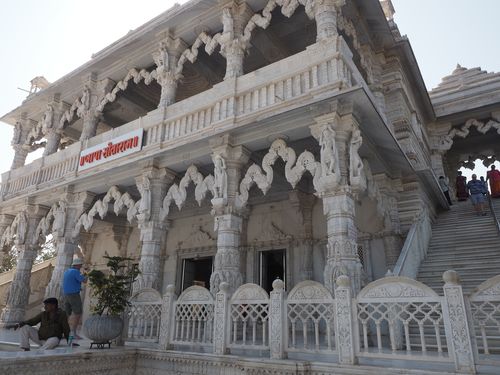
Bagdana • Bapa Sitaram temple
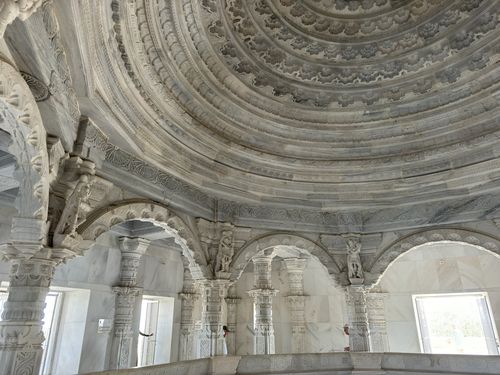
Bagdana • Bapa Sitaram temple
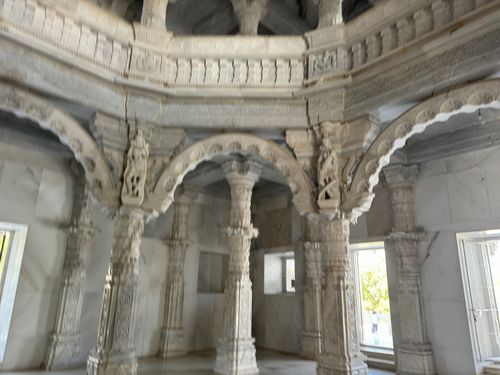
Bagdana • Bapa Sitaram temple
Monument profile
Bapa Sitaram temple
Monument categories: Hindu Temple, Pilgrimage site
Monument families: Temple • Pilgrimage site or memorial
Monument genres: Religious
Cultural heritage: Hindu
Geographic location: Bagdana • Gujarat • India
Construction period: 20th century AD
• Links to •
• List of videos about Bagdana on this site •
Bagdana • Pilgrimage Site and Continuous Community Meals
Historical Analysis of the Bapa Sitaram Temple in Bagdana (Gujarat, India)
The Bapa Sitaram Temple, located in the village of Bagdana in the Bhavnagar district of Gujarat, India, is a significant modern religious site dedicated to the spiritual figure Bajarangdas Bapa. Unlike ancient temples linked to royal patronage or dynastic authority, the Bapa Sitaram temple emerged from a grassroots devotional movement. Its history reflects broader currents in Indian society during the 20th century, including anti-colonial resistance, spiritual revivalism, and the social emphasis on service (seva) and equality. Though relatively recent in construction, the temple holds deep historical and cultural meaning and serves as a lens through which to examine the intersection of faith, community, and national identity.
Political and Social Context of the Temple’s Construction
The temple owes its origin to the life and legacy of Bajarangdas Bapa, a revered ascetic and saint who arrived in Bagdana in 1941, a time of political upheaval and spiritual transformation in India. The country was still under British colonial rule, but the independence movement was gaining momentum, particularly in Gujarat, a region that was both a political hotbed and a stronghold of devotional Hinduism.
Bajarangdas Bapa settled in Bagdana not as a political leader, but as a seeker of spiritual retreat. Living in a modest hut called Madhuli, he gained recognition for his self-discipline, compassion, and spiritual insight. His life became a symbol of renunciation and social engagement, attracting followers from rural Gujarat and beyond.
By the time India achieved independence in 1947, Bajarangdas Bapa’s influence had grown significantly. He did not establish the temple himself, but he laid the foundations of its spiritual and social ethos. After his passing in 1977, his devotees initiated the construction of the current temple complex as a tribute. It was not driven by royal ambition or state agenda but rather by collective devotion and volunteerism, making it emblematic of a postcolonial religious resurgence rooted in community rather than hierarchy.
Major Historical Events Affecting the Site
Unlike older temples shaped by cycles of conquest and restoration, the Bapa Sitaram temple has been spared the violence of historical invasions, sieges, or destruction. However, its development reflects a different kind of historical narrative — one of expansion through peaceful community mobilization.
After 1977, the temple underwent incremental expansions to accommodate a growing number of pilgrims. Several key components were added:
• A bhojanshala (community dining hall) offering free meals,
• Guest accommodations for pilgrims,
• A gaushala (cow shelter),
• Ancillary shrines and meditation spaces.
There have been no dramatic interruptions to its use, and the site has never fallen into disuse or ruin. Instead, its significance has steadily increased, sustained by the memory of the saint and the participation of the faithful. The lack of dynastic involvement or change has provided a continuity rare in many other religious sites in India.
Global Historical Context of the Period
The creation of the temple in the late 1970s coincides with a global wave of postcolonial cultural affirmation, wherein newly independent nations sought to reclaim and redefine their spiritual and cultural landscapes. Across Africa, Southeast Asia, and Latin America, communities built monuments, memorials, and religious centers not imposed by colonial powers but reflecting local values and aspirations.
In India, this period saw a revival of vernacular religious traditions and popular saints’ cults, which offered alternatives to rigid institutional religion. The Bapa Sitaram temple is part of this broader phenomenon. Like other saint-based temples such as those dedicated to Sai Baba or Swaminarayan, it emphasizes accessibility, equality, and direct spiritual experience over formal ritualism or caste exclusivity.
This movement can be seen as a counterpoint to the elite preservation of ancient heritage sites: it reflects the democratization of sacred space in post-independence India.
Transformations and Structural Evolution
Since its inception, the Bapa Sitaram temple has undergone several modifications in form and function. What began as a humble memorial to a spiritual figure has become a functional pilgrimage complex, serving both religious and social roles.
Key transformations include:
• Architectural expansions to the prayer halls,
• Addition of ventilation systems and sanitation facilities,
• Introduction of organizational structures to manage festivals and large-scale food distribution.
The temple has adjusted to urban development pressures and growing footfall by implementing regulated access during festivals, upgrading facilities, and integrating security and health measures. Despite these changes, the core of the temple — the sanctum preserving the memory of Bajarangdas Bapa — remains untouched, maintaining spiritual continuity.
Cultural Significance and Contemporary Role
Today, the temple stands as a beacon of popular Hindu spirituality. It draws thousands of visitors, not only from Gujarat but from across India and the diaspora. The temple is widely known for its uninterrupted food service, which operates 24 hours a day, 365 days a year, and reflects the value of seva (selfless service).
Religious observances such as Guru Purnima and Bhadrapad Amavasya draw massive crowds and reaffirm the temple’s importance in the annual ritual calendar. Pilgrims view the site not merely as a place of worship but as a spiritual refuge and social institution, embodying values of humility, generosity, and inclusivity.
The temple’s presence has become part of the regional identity of Bhavnagar district. Its reputation enhances the cultural visibility of Bagdana, transforming the once-remote village into a spiritual landmark. Locally, the temple also plays a role in supporting the poor, hosting medical camps, and providing emergency relief during natural disasters.
State of Conservation and Preservation Challenges
From a conservation standpoint, the Bapa Sitaram temple faces challenges typical of high-traffic religious sites:
• Wear and tear from daily use and large gatherings,
• Environmental exposure due to extreme summer heat and seasonal monsoons,
• Waste management related to mass meal distribution.
As the temple expands, the need for infrastructure planning becomes more pressing. Despite these concerns, the temple is maintained primarily through donations and community involvement, which ensures its upkeep without significant state intervention.
Currently, the site is not listed as a UNESCO World Heritage Site, nor does it enjoy formal heritage protection under the Archaeological Survey of India. However, its intangible cultural value — through practices like continuous food service and the collective memory of the saint — arguably exceeds its material attributes.
Efforts have been made to document its legacy through oral histories, local publications, and devotional literature. Given its enduring popularity and grassroots support, there is potential for future conservation initiatives that recognize its living heritage status.
Architectural Analysis of the Bapa Sitaram Temple in Bagdana (Gujarat, India)
The Bapa Sitaram Temple in Bagdana, Gujarat, stands as a distinct example of contemporary religious architecture shaped by community devotion rather than dynastic ambition or state-driven initiatives. Constructed in the late 20th century in memory of the spiritual leader Bajarangdas Bapa, the temple reflects a hybrid architectural language that blends regional traditions with modern functionality. Though modest in scale compared to ancient Hindu temples, its design reveals significant architectural choices aimed at sustainability, spiritual symbolism, and practical utility. This analysis explores the structural features, materials, stylistic influences, and conservation challenges that define the temple’s unique architectural identity.
Technological and Architectural Innovations
Constructed primarily in the post-1977 period, the Bapa Sitaram Temple emerged in a technological context that allowed for the use of reinforced concrete, prefabricated elements, and climate-responsive design. One of the temple’s architectural strengths lies in its integration of passive cooling techniques, particularly important in the semi-arid environment of the Saurashtra region. Wide verandas, elevated roofs, and cross-ventilation pathways have been incorporated to manage the high temperatures typical of Gujarat.
The temple’s design was driven not by architects of royal courts but by local engineers and artisans familiar with both modern construction practices and traditional temple design. Reinforced concrete was used as the primary structural material, chosen for its cost-effectiveness, seismic resistance, and versatility in form. Although not a monumental edifice in the classical sense, the structure displays a careful consideration of load distribution, resilience to monsoon stress, and ease of expansion—a practical innovation, considering the temple’s continuous growth due to increasing pilgrimage.
In terms of urban planning, the temple complex was designed with modular expansion in mind. This allowed for the addition of various facilities—such as dining halls, sleeping quarters, and storage areas—without disrupting the central sanctum. Walkways are wide and accessible, ensuring a smooth flow of visitors during peak religious events.
Materials and Construction Methods
The Bapa Sitaram Temple utilizes a pragmatic palette of materials, balancing spiritual symbolism with structural practicality. The base structure is composed of reinforced concrete, providing foundational integrity and long-term durability. Local stone, particularly grey limestone, is employed in flooring, base moldings, and some ornamental elements, contributing to the structure’s regional identity and offering a tactile connection to its geographic setting.
White marble slabs are used selectively, particularly in the sanctum and spaces intended for meditation. This material choice reflects not only a desire for aesthetic purity but also serves a functional role by maintaining cooler interior surfaces during the summer months. Ceramic tiles are used in service areas and corridors, providing easy maintenance and hygienic surfaces, especially important for communal facilities such as the Bhojanshala (dining hall).
The construction process involved a blend of traditional craftsmanship and newer techniques, such as in-situ concrete casting, steel bar reinforcement, and load-bearing wall systems. Though these methods are commonplace today, their use in a devotional rural context at the time of construction was relatively progressive, marking the temple as a pioneering structure within its milieu.
Architectural and Artistic Influences
Architecturally, the temple does not conform strictly to classical Hindu temple typologies such as Nagara or Dravidian styles. Instead, it draws upon vernacular Saurashtrian motifs and introduces functional design over formal hierarchy. The low domes, broad pillars, and simple friezes echo local building traditions, while avoiding ostentation in keeping with the values of its namesake saint.
The temple’s ornamentation is minimal, aligned with the austerity and humility promoted by Bajarangdas Bapa. Where present, decorative motifs are executed in shallow relief and often include religious symbols such as the lotus, trishul (trident), and the Om sign. Some influences from Jain temple symmetry can be observed in the layout’s geometric balance and restrained ornamentation.
Artistic expressions are more prominent in the murals and paintings found in the community halls and auxiliary structures. These depict scenes from the life of Bajarangdas Bapa in a folk-art style, focusing on accessibility and moral narrative rather than technical sophistication. This visual approach aligns with the temple’s inclusive ethos and didactic function within the community.
Spatial Organization and Structural Features
The spatial organization of the Bapa Sitaram Temple reflects a functional tripartite layout:
1. The central sanctum (garbhagriha), which houses the main image and is slightly elevated.
2. The prayer and gathering area, open on multiple sides and covered by a simple flat or low-domed roof.
3. The auxiliary facilities, including dining halls, residential rooms for pilgrims, and animal shelters.
The central sanctum is aligned eastward, adhering to traditional Vastu Shastra principles. Unlike many ancient temples with towering shikharas (spires), the temple features a modest dome that reflects the egalitarian values of its community rather than divine hierarchy. Supporting pillars are thick and square, emphasizing durability over decoration.
Other notable features include:
• A large Bhojanshala capable of feeding thousands of visitors daily.
• Peripheral walkways lined with shaded arcades.
• Open courtyards for gathering and processions.
• Simple balustrades and grilled windows that allow airflow and daylight.
This layout is not only practical but spiritually inclusive, allowing for uninterrupted movement and egalitarian access to sacred and service areas alike.
Notable Statistics and Anecdotes
The total area of the Bapa Sitaram Temple complex spans approximately 3 hectares, with indoor space covering over 1,500 square meters. The Bhojanshala alone is capable of accommodating 2,000 individuals at once, with reports of 150,000 meals served in a single day during major festivals.
An often-cited anecdote holds that the blueprint of the temple was inspired by a vision experienced by one of Bajarangdas Bapa’s closest disciples shortly after the saint’s death. This vision supposedly dictated the sanctum’s orientation and simplicity, anchoring the architectural choices in a spiritual narrative rather than formal design theory.
Recognition and Conservation Challenges
Although the temple is not protected under formal heritage programs nor listed as a UNESCO site, it holds significant cultural and architectural value within the region. Its sustained popularity places pressure on its infrastructure, particularly in terms of:
• Material fatigue due to constant foot traffic,
• Maintenance of public areas, such as toilets, water systems, and kitchens,
• Preservation of murals, vulnerable to humidity and human contact.
Preservation efforts are conducted largely through community-based initiatives, including volunteer-led maintenance drives and periodic donations for restoration. The temple’s architecture, with its low-maintenance materials and modular design, supports these efforts by enabling phased renovations without disrupting daily activity.
While the temple may not possess monumental scale or intricate stone carvings of historical Hindu shrines, it represents a contemporary architectural legacy rooted in lived spirituality, social utility, and vernacular aesthetics. It serves not only as a site of worship but as a functional civic space, echoing a tradition where architecture and community coalesce in service of the divine.