

 Français (France)
  Nederlands (nl-NL)
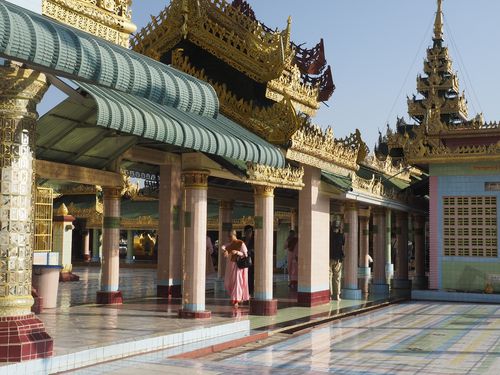
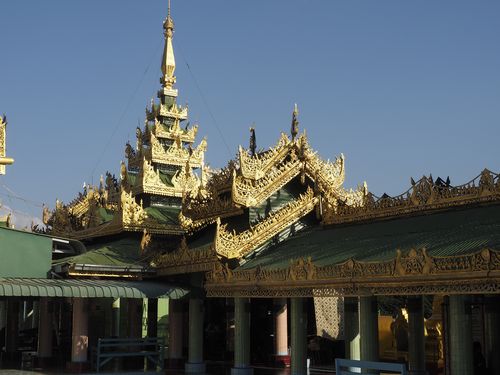
 Su Taung Pyae Pagoda is a Buddhist sanctuary located on Mandalay Hill in the city of Mandalay, Myanmar. It is one of the most visited religious sites in the region and attracts numerous pilgrims as well as travelers. The site is associated with prayer rituals and offerings within the Theravada Buddhist tradition. The pagoda forms part of the group of shrines and devotional structures situated on Mandalay Hill, an area known for its spiritual significance. Its presence contributes to the religious identity of the city and reflects the continuing importance of Buddhist practices in contemporary Myanmar.

Monument profile
Su Taung Pyae Pagoda
Monument categories: Pagoda, Pilgrimage site
Monument families: Pilgrimage site or memorial • Pagoda or stupa
Monument genres: Religious
Cultural heritage: Buddhist
Geographic location: Mandalay, Amarapura • Myanmar
Construction period: 19th century AD
• Links to •
• List of videos about Mandalay on this site •
Mandalay, scenes from everyday life • Myanmar
Mandalay, Bagaya, wooden monastery • Myanmar
Mandalay, Su Taung Pyae Pagoda • Myanmar
Mandalay, Kuthodaw Pagoda • Myanmar
Mandalay, Mingun Pahtodawgyi Pagoda • Myanmar
Mandalay, Maha Aung Mye Bom San monastery • Myanmar
Mandalay, Mahamuni Buddha temple • Myanmar
Mandalay, Shwenandaw monastery • Myanmar
Mandalay, U Bein bridge in Amarapura • Myanmar
History of Su Taung Pyae Pagoda in Mandalay
Su Taung Pyae Pagoda, located on Mandalay Hill in Mandalay, Myanmar, forms one of the most prominent religious landmarks in the city. The sanctuary occupies a strategic and symbolic position within the broader sacred landscape of the hill, an area long associated with Buddhist devotion and pilgrimage. The history of the pagoda is closely connected with the founding of Mandalay as a royal capital in the nineteenth century and reflects the wider political, religious, and social transformations that shaped Myanmar from the late royal period to the modern era.
Political and social context of the construction
The development of religious monuments on Mandalay Hill must be understood within the context of the founding of Mandalay by King Mindon Min in 1857. The king, ruler of the Konbaung dynasty, decided to relocate the royal capital from Amarapura to a newly planned city at the foot of the hill. This decision had both strategic and symbolic significance.
Mandalay was designed as a sacred royal city structured according to Buddhist cosmological principles. The location of Mandalay Hill played a key role in this vision. According to long-standing traditions, the Buddha himself was believed to have visited the hill and predicted that a great Buddhist city would one day arise nearby. By establishing the new capital at this location, the Konbaung rulers sought to reinforce the spiritual legitimacy of their rule.
Within this framework, the construction and development of religious sites on Mandalay Hill became an important expression of royal patronage. Pagodas, shrines, and monasteries were sponsored by members of the royal family, court officials, and wealthy patrons. These acts of patronage were considered meritorious deeds in Buddhist belief, strengthening the religious prestige of donors while contributing to the propagation of the Buddhist faith.
The Su Taung Pyae Pagoda emerged within this environment of religious devotion and royal sponsorship. Its name, often interpreted as “the place where prayers are fulfilled,” reflects the strong devotional function associated with the site. Pilgrims visited the sanctuary to offer prayers, make vows, and seek blessings, reinforcing the hill’s reputation as a center of spiritual power.
Major historical events affecting the site
The late nineteenth century marked a turning point in the history of Mandalay and its religious institutions. In 1885 the Third Anglo-Burmese War resulted in the defeat of the Konbaung dynasty and the annexation of the Burmese kingdom by the British Empire. King Thibaw, the last Burmese monarch, was deposed and exiled, bringing an end to the royal system that had traditionally supported many religious establishments.
The loss of royal patronage altered the economic and social foundations of religious sites in Mandalay. However, pagodas and monasteries continued to function through the support of local communities. Lay devotees maintained the tradition of offering donations and organizing religious ceremonies.
During the twentieth century Mandalay experienced additional upheavals. The city became a major battleground during the Second World War, particularly during the campaigns of 1944 and 1945. Heavy fighting between Japanese forces and Allied troops caused significant damage to many parts of the city.
Although Mandalay Hill remained an important religious location, some structures required repair or reconstruction following wartime destruction. Restoration work carried out in the decades after the war ensured that pilgrimage activities could continue.
In the period following Myanmar’s independence in 1948, religious sites across the country experienced renewed attention. Local communities and religious organizations invested in the maintenance and expansion of pilgrimage sites, including the pagodas on Mandalay Hill.
Global context during the period of development
The emergence and expansion of religious monuments in Mandalay during the nineteenth century took place within a wider global context of political and cultural transformation. Across Asia, many traditional kingdoms were confronted with increasing pressure from European colonial powers.
In response, rulers often reinforced religious and cultural institutions that embodied their political legitimacy. In Buddhist kingdoms such as Siam, rulers sponsored temple construction and monastic reforms as part of efforts to strengthen national identity and spiritual authority.
Similar patterns could be observed in other regions of the world. In Europe, the nineteenth century witnessed renewed interest in church construction and restoration, reflecting religious revival movements and national identity building. In Islamic societies, mosques and religious schools continued to function as central institutions of community life and education.
The development of religious monuments in Mandalay can therefore be seen as part of a broader global phenomenon in which sacred architecture served as a visible expression of cultural continuity during periods of political change.
Transformations of the monument over time
Su Taung Pyae Pagoda has undergone several phases of modification and expansion since its establishment. As Mandalay developed into a major urban center, the hilltop sanctuary adapted to the increasing number of pilgrims and visitors.
Access routes to the pagoda were gradually improved through the construction of stairways, covered walkways, and roads leading to the summit of the hill. These developments facilitated the movement of pilgrims and strengthened the site’s role as a destination for religious devotion.
Architectural additions were also introduced to accommodate growing numbers of visitors. Prayer halls, terraces, and viewing platforms were constructed around the pagoda to provide space for worshippers and to enhance the experience of pilgrimage.
Urban expansion in Mandalay has significantly altered the surroundings of the hill. What was once a landscape dominated by natural terrain and scattered religious structures has become integrated into a large modern city. Despite these changes, Mandalay Hill remains a distinctive landmark and a focal point of religious life.
Contemporary role and cultural significance
Today Su Taung Pyae Pagoda is one of the most visited religious sites in Mandalay. Pilgrims from across Myanmar travel to the hill to perform devotional acts such as prayer, meditation, and the offering of gifts.
The pagoda is particularly associated with the practice of making wishes and expressing gratitude for fulfilled prayers. This devotional tradition attracts visitors who believe that sincere prayers offered at the site may bring positive outcomes in personal or spiritual matters.
The monument also plays an important role in the cultural identity of Mandalay. The hill has become a symbol of the city and a location where religious tradition and civic pride intersect.
Festivals and religious observances held at the pagoda attract large gatherings of devotees. These events reinforce the connection between the site and the everyday spiritual life of the population.
For many residents of Mandalay, the pagoda and the surrounding hill represent a link between the city’s royal past and its contemporary religious culture.
Preservation and modern challenges
The preservation of Su Taung Pyae Pagoda presents several challenges related to both environmental and human factors. The tropical climate of central Myanmar exposes buildings to heavy rainfall, humidity, and temperature fluctuations that can gradually affect construction materials.
The increasing number of visitors to Mandalay Hill has also placed pressure on the site’s infrastructure. Managing large flows of pilgrims and tourists requires continuous maintenance of pathways, terraces, and structural elements.
Conservation efforts are typically supported by donations from devotees and by initiatives undertaken by local religious authorities. Restoration projects aim to maintain the traditional appearance of the pagoda while ensuring the safety and durability of the structures.
Although the pagoda itself is not individually listed as a UNESCO World Heritage site, it forms part of the broader historical and cultural landscape of Mandalay. The city remains one of the most important centers of Buddhist culture in Myanmar.
Through its historical development, Su Taung Pyae Pagoda illustrates the enduring role of sacred architecture in Burmese society. It stands as a testament to the interaction between religious devotion, political authority, and community participation that has shaped the cultural heritage of Mandalay for more than a century.
Architecture of Su Taung Pyae Pagoda in Mandalay
Su Taung Pyae Pagoda, located on Mandalay Hill in Mandalay, Myanmar, forms part of a complex religious landscape that combines sacred architecture, pilgrimage routes, and panoramic terraces overlooking the surrounding plains. The architecture of the pagoda reflects the broader traditions of Burmese Buddhist construction while also responding to the specific conditions imposed by its elevated location. The monument illustrates how religious structures in Myanmar integrate symbolic design, environmental adaptation, and ceremonial spatial organization.
Technological and architectural innovations
The architectural development of Su Taung Pyae Pagoda reflects techniques that evolved over centuries in Burmese religious architecture. Pagodas in Myanmar are typically designed to emphasize verticality and symbolic elevation, representing spiritual ascent within Buddhist cosmology. In the case of Su Taung Pyae, this symbolism is reinforced by its location near the summit of Mandalay Hill.
Architects working on the site adapted traditional building techniques to the steep topography of the hill. A system of terraces and retaining platforms stabilizes the structures and distributes the weight of the buildings across the slope. These platforms serve both structural and functional purposes, creating level areas where worshippers can gather and circulate.
One of the most notable architectural strategies is the integration of stairways, covered corridors, and ascending pathways that guide visitors progressively toward the pagoda. This movement through space creates a ritualized ascent that corresponds with the spiritual significance of the site.
Climatic adaptation also played an important role in the design. Wide roof overhangs protect the walls from heavy seasonal rainfall, while open galleries and shaded passageways promote ventilation. These elements reduce heat accumulation and provide comfortable conditions for pilgrims even during the hot season.
The orientation of the structures allows natural air circulation along the hillside. Elevated terraces capture cooling breezes while minimizing exposure to direct sunlight.
Materials and construction methods
The materials used in Su Taung Pyae Pagoda reflect common construction practices found throughout Myanmar. The primary structural components combine masonry foundations with lighter superstructures, creating buildings that are both stable and adaptable to environmental conditions.
The lower platforms and retaining walls are typically constructed from brick and stone. These materials provide the structural strength required to stabilize buildings on the hillside. The use of masonry also protects the foundations from erosion caused by seasonal rainfall.
Upper architectural elements, including pavilions and gallery structures, often incorporate timber. Wood has historically played a central role in Burmese architecture because it is lightweight, durable, and suitable for intricate carving.
Teak, widely available in Myanmar, has traditionally been used for structural beams and decorative elements. Its natural resistance to insects and humidity makes it well suited to tropical conditions. Timber components are assembled using traditional joinery techniques such as mortise-and-tenon joints and wooden pegs, allowing structures to retain a degree of flexibility.
Roof coverings are designed to shed rainwater efficiently during the monsoon season. The layered roofing system reduces the impact of heavy rainfall while protecting the decorative elements beneath.
In certain sections of the pagoda complex, surfaces are covered with plaster, paint, or gold leaf. These finishes enhance the sacred appearance of the monument and reflect the devotional contributions of donors.
Architectural and artistic influences
The artistic character of Su Taung Pyae Pagoda reflects the decorative traditions developed in the royal cities of central Myanmar. Mandalay in particular became an important center for religious art during the Konbaung dynasty.
Ornamental elements within the pagoda complex often include stylized floral patterns, mythical creatures, and symbolic motifs drawn from Buddhist cosmology. These decorative features appear on roof brackets, stairway balustrades, and pavilion façades.
Among the common motifs are naga serpents, celestial beings, and lotus patterns, all of which carry symbolic meaning in Buddhist art. Such motifs reinforce the spiritual significance of the architecture while adding visual richness to the structures.
Although the architectural framework remains distinctly Burmese, the decorative vocabulary reflects centuries of cultural exchange across mainland Southeast Asia. Artistic influences from neighboring regions have been incorporated into local traditions without altering the fundamental structure of Burmese pagoda design.
The overall visual impression of the site results from the interplay between ornamentation, light, and elevation. Decorative surfaces reflect sunlight during the day and create a luminous appearance that enhances the monument’s spiritual atmosphere.
Spatial organization and structural layout
The spatial organization of Su Taung Pyae Pagoda is closely linked to its position on Mandalay Hill. The complex consists of several interconnected terraces, stairways, and pavilion structures arranged along the slope.
Visitors typically reach the pagoda by ascending a sequence of staircases or access paths that lead upward through a series of intermediate platforms. These platforms function as resting points where pilgrims can pause, pray, or admire the surrounding landscape.
At the upper level, the pagoda itself forms the focal point of the complex. Surrounding structures provide sheltered spaces for worshippers and accommodate the large number of visitors who gather at the site.
Observation terraces form another important element of the layout. These areas allow visitors to view Mandalay and the surrounding plains, reinforcing the symbolic association between elevation and spiritual contemplation.
The central pagoda follows the general structural principles of Burmese stupas. A solid base supports the rising form of the monument, culminating in an ornamental finial that marks the highest point of the structure.
Dimensions and notable characteristics
Although the precise measurements of the pagoda vary due to successive renovations and additions, the monument occupies one of the most prominent positions on Mandalay Hill. Its elevated location contributes significantly to its visual presence within the cityscape.
The complex includes multiple terraces designed to accommodate the continuous flow of pilgrims and visitors. These terraces also serve as viewing platforms from which large portions of the city and surrounding countryside can be seen.
One of the most distinctive characteristics of the site is its association with prayer rituals related to the fulfillment of wishes. The name “Su Taung Pyae” itself refers to the belief that prayers offered at the pagoda may be granted.
The architectural layout supports these devotional practices by providing numerous spaces for offerings, meditation, and quiet reflection.
Local traditions sometimes recount stories associated with the development of the pagoda, emphasizing the contributions of donors and the spiritual importance attributed to the site.
International significance and conservation challenges
Su Taung Pyae Pagoda forms part of the broader religious landscape of Mandalay Hill, which remains one of the most important pilgrimage destinations in Myanmar. Although the pagoda is not individually listed as a UNESCO World Heritage site, it contributes to the cultural and spiritual identity of Mandalay.
The preservation of the monument faces several challenges. Tropical climate conditions, including intense rainfall and high humidity, can gradually affect structural materials and decorative surfaces.
The popularity of the site also brings large numbers of visitors, requiring careful management of access routes and maintenance of architectural elements.
Regular restoration work is therefore essential to preserve the structures. These projects often rely on traditional construction techniques to ensure that repairs remain consistent with the original architectural character.
Urban expansion around Mandalay has also altered the context in which the pagoda exists. Despite these changes, the monument continues to function as an active religious site and a prominent landmark within the city.
Through its architectural composition, adaptation to topography, and integration of symbolic elements, Su Taung Pyae Pagoda illustrates the principles that define Burmese religious architecture. The monument demonstrates how sacred structures can combine spiritual meaning, environmental adaptation, and artistic craftsmanship within a unified architectural form.