

 Français (France)
  Nederlands (nl-NL)
 Cave 32, known as Indra Sabha, is part of the Ellora complex in Maharashtra, India. This Jain temple, one of the most impressive on the site, is dedicated to Lord Indra, a significant deity in Jainism. Indra Sabha is notable for its intricate carvings and multi-tiered structure. The temple includes shrines, sculpted pillars, and statues of Tirthankaras, embodying Jain traditions of purity and asceticism. Indra Sabha, along with other Jain caves, highlights the cultural importance of Jainism at Ellora and underscores the coexistence of multiple religions in the region.
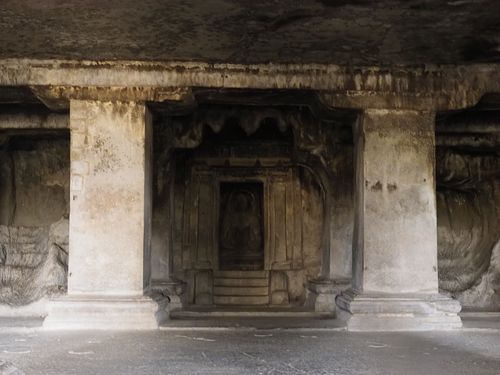
Ellora • Cave 32, Indra Sabha
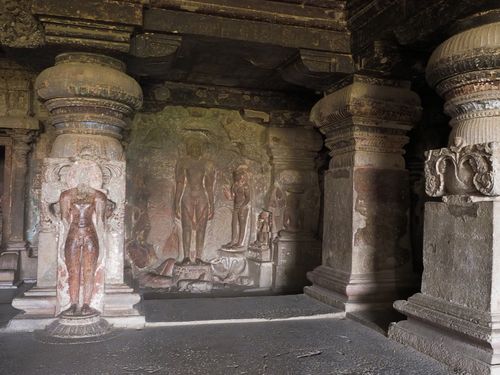
Ellora • Cave 32, Indra Sabha
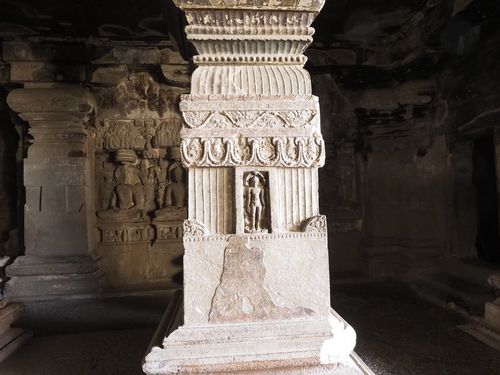
Ellora • Cave 32, Indra Sabha
Monument profile
Cave 32, Indra Sabha
Monument categories: Rock Sanctuary, Jain temple
Monument families: Temple • Rock Sanctuary and Monumental Bas-reliefs
Monument genres: Religious
Cultural heritage: Jain
Geographic location: Ellora • Maharashtra • India
Construction period: 9th century AD
This monument in Ellora is inscribed on the UNESCO World Heritage List since 1983 and is part of the serial property "Ellora Caves".See the UNESCO monuments featured on this site
• Links to •
• Dynasties that contributed to the construction of the monument •

• This monument illustrates the following theme •
Architecture • Rock-cut monuments : Rock-cut temples and caves in India
• List of videos about Ellora on this site •
Ellora Caves, troglodyte treasure • Maharashtra, India
• References •
UNESCO: Ellora Caves
Political and Social Motivations Behind the Construction of Cave 32, Indra Sabha at Ellora: Historical Context, Transformations, and Conservation Challenges
Political and Social Motivations for Construction
Cave 32, known as Indra Sabha, is one of the most prominent Jain temples at the Ellora complex in Maharashtra, India. Built during the 9th century, under the reign of the Rashtrakuta dynasty, its construction reflects the political and social dynamics of the time. The Rashtrakutas were known for supporting multiple religious communities, including Hindus, Buddhists, and Jains. The construction of a Jain temple within the larger Ellora complex was a strategic decision aimed at consolidating political power by gaining the favor and loyalty of the wealthy Jain merchant class, who were influential in the region’s economy and trade.
The political motivations behind Indra Sabha’s construction can be seen as part of the Rashtrakutas’ broader policy of religious tolerance and patronage. By supporting religious diversity and allowing communities like the Jains to build monumental structures, the rulers secured economic support and maintained social harmony. At the same time, the temple served to showcase the spiritual and cultural influence of the Jain community, enhancing its prestige within the Rashtrakuta empire.
Historical Events and Their Impact on Regional Development
The construction of Indra Sabha took place during a period of intense cultural and religious flourishing in India. The Rashtrakutas were in competition with other powerful dynasties such as the Pallavas and Chalukyas, and each sought to outdo the other in terms of monumental architecture and religious patronage. Ellora itself was a center of religious convergence, with caves and temples dedicated to Hinduism, Buddhism, and Jainism, reflecting the region's complex cultural landscape.
The presence of a Jain temple like Indra Sabha within this setting not only highlights the importance of the Jain community but also underscores the inclusive religious policies of the Rashtrakutas. Jainism, with its emphasis on non-violence and ethical living, appealed to the merchant class, who were crucial to the economic prosperity of the empire. By constructing this temple, the Rashtrakutas sought to strengthen their ties with the Jain community, which in turn contributed to the economic stability of the region.
Global Context and Comparisons with Other Regions
The 9th century was a time of significant architectural developments worldwide. In Europe, the Carolingian Renaissance was underway under the rule of Charlemagne, who commissioned the construction of cathedrals and abbeys to consolidate his Christian empire. Similarly, in the Islamic world, the Abbasid Caliphate was building grand mosques and palaces, such as the Great Mosque of Samarra in Iraq, to assert the power and influence of Islam.
Compared to these global developments, the construction of Indra Sabha at Ellora represented a similar effort to demonstrate political authority through religious architecture. However, the unique aspect of Ellora is its religious pluralism. While many regions of the world were experiencing religious conflicts, Ellora stood as a symbol of coexistence. The construction of Jain, Hindu, and Buddhist temples side by side illustrates the Rashtrakutas’ commitment to supporting various religious communities, creating a harmonious and prosperous society.
Major Transformations Over the Centuries
Over the centuries, Indra Sabha has undergone several transformations as different powers controlled the region. After the decline of the Rashtrakuta dynasty, the region came under the control of the Yadava dynasty and later the Delhi Sultanate. Despite these political changes, the temple survived largely intact, although it likely experienced periods of neglect during times of Muslim rule, when Islamic rulers often showed less interest in preserving non-Islamic religious monuments.
During the colonial period, European explorers and archaeologists rediscovered the Ellora caves, sparking renewed interest in the site. This led to early documentation and efforts to preserve the intricate carvings and architectural features of the temple. In the 20th century, more systematic conservation efforts began, particularly after India gained independence.
Cultural Importance and Current Conservation Status
Today, Cave 32, Indra Sabha, is part of the UNESCO World Heritage-listed Ellora complex. Its cultural and historical significance extends beyond its religious function, as it serves as a testament to the religious tolerance and artistic achievements of ancient India. The temple’s architecture, with its detailed carvings, multi-level structure, and symbolic representations of Jain spiritual beliefs, continues to attract visitors from around the world.
However, the preservation of Indra Sabha faces several challenges. The basalt rock from which the temple is carved is susceptible to erosion due to the heavy monsoon rains that the region experiences. This natural weathering has led to the gradual degradation of the intricate carvings that adorn the temple. Additionally, the increasing number of tourists visiting the Ellora complex has put additional pressure on the site, raising concerns about the long-term sustainability of the monument.
Preservation Challenges and Modern Threats
The conservation of Indra Sabha requires ongoing efforts to address the threats posed by both natural and human factors. Erosion, exacerbated by climate change and fluctuating temperatures, continues to wear away the temple’s carvings and structural elements. At the same time, the impact of tourism, while essential for the local economy, has led to wear and tear on the temple’s surfaces, necessitating restrictions on access to certain areas to protect the monument from further damage.
The Indian government and UNESCO have collaborated on various preservation projects, including restoration of damaged sections and the implementation of barriers to protect fragile sculptures. Modern technologies, such as 3D scanning, have also been employed to create digital records of the temple’s intricate details, which can be used for future restoration efforts if needed.
Conclusion
Indra Sabha, Cave 32 at Ellora, stands as a remarkable example of architectural innovation and religious harmony during the Rashtrakuta period. Its construction was driven by political and social motivations aimed at securing the loyalty of the Jain community while promoting a diverse and inclusive society. Over the centuries, the temple has survived various political changes and has become a symbol of the cultural richness of the Ellora complex.
Today, the UNESCO World Heritage status of Ellora has helped to raise global awareness of Indra Sabha’s significance and ensure that preservation efforts continue. However, challenges related to natural erosion and the impact of tourism require ongoing attention to protect this extraordinary monument for future generations.
Indra Sabha at Ellora: A Testament to Technological Advancements and Artistic Syncretism
The Indra Sabha, also known as Cave 32 at Ellora, stands as a monumental example of technological innovation and artistic brilliance from the Rashtrakuta period. Carved from solid rock during the 8th century, this Jain cave temple embodies the architectural and cultural prowess of the time. With its intricate carvings, unique layout, and use of innovative construction techniques, the Indra Sabha is a symbol of India's ancient engineering mastery and artistic fusion. This article delves into the architectural significance of the cave, the materials and methods used, and its unique blend of regional and foreign influences.
Technological Advancements and Construction Techniques
The Rashtrakutas, under whose reign the cave was constructed, were known for their patronage of the arts and architecture. Indra Sabha reflects their advanced understanding of rock-cut architecture. The cave, like many others at Ellora, was meticulously hewn from basalt rock, a material chosen for its durability. The sheer scale of the excavation, combined with the precision required to carve detailed reliefs directly into the stone, showcases a remarkable technological achievement of the time.
One of the most notable aspects of the cave is its monolithic design. The entire structure, including columns, sculptures, and the main shrine, was carved out of a single piece of rock. This method required careful planning, as any mistake in the carving process could not be corrected. Artisans would have used basic tools such as chisels, hammers, and possibly rudimentary measuring instruments, yet they achieved astounding symmetry and detail, indicating their profound knowledge of geometry and structural integrity.
Architectural Grandeur and Iconography
The architectural plan of Indra Sabha follows a traditional Jain temple layout, with a courtyard, an assembly hall, and a sanctum housing a statue of the Tirthankara. What sets the cave apart is its grand scale and intricate decoration. The courtyard is surrounded by intricately carved pillars that support a richly decorated ceiling. Sculptures of deities, celestial beings, and mythical creatures adorn the walls, each depicting scenes from Jain mythology.
The cave's central shrine is topped with a pyramidal roof, a design influenced by regional temple styles. This pyramidal structure is not just a testament to the regional architectural language but also highlights the connection between religious architecture and cosmology, representing Mount Meru, a sacred mountain in both Jain and Hindu cosmology.
A Unique Blend of Regional and Foreign Influences
The Indra Sabha’s design is a confluence of regional artistic traditions and external influences. The cave's decorative motifs draw inspiration from earlier Indian artistic traditions, particularly those of the Gupta period, known for its refined sculptural style. However, it also incorporates elements seen in Buddhist and Hindu structures, reflecting the syncretic nature of religious and cultural life during the Rashtrakuta era.
For instance, while the cave is a Jain structure, some of its carvings and layouts are reminiscent of the nearby Hindu and Buddhist caves at Ellora, showcasing the exchange of artistic techniques among religious communities. This blending of artistic traditions illustrates the pluralistic nature of Indian society during this period, where religious tolerance and cultural exchange were encouraged.
Notable Architectural Features
One of the most remarkable features of Indra Sabha is the monolithic elephant statue that greets visitors at the entrance. This massive sculpture, carved from the same rock as the cave itself, represents strength and wisdom, central themes in both Jainism and Hinduism. Additionally, the cave contains finely detailed carvings of yakshas and yakshinis (attendant deities), whose fluid and graceful forms are considered masterpieces of Jain art.
The upper level of the cave houses smaller shrines dedicated to other Tirthankaras, indicating the importance of multi-level worship spaces in Jain temple architecture. The division of space within the cave allows for both individual meditation and communal gatherings, highlighting the cave’s multifunctional purpose.
Anecdotes and Statistics
The construction of Indra Sabha, like many of the caves at Ellora, is shrouded in mystery. It is believed that thousands of laborers and artisans worked for decades to complete the site. Though no exact figures exist, the scale of the project suggests a massive investment of resources by the Rashtrakuta rulers, reflecting the importance of religious patronage during their reign.
A well-known anecdote associated with Ellora is that the caves, including Indra Sabha, were carved from the top down, starting from the roof and working toward the base. This method ensured that debris from the carving process would not obstruct the work as it progressed downward, demonstrating a sophisticated understanding of construction logistics.
Recognition and Conservation Efforts
Indra Sabha, along with the entire Ellora complex, was inscribed as a UNESCO World Heritage site in 1983. This recognition has not only helped preserve the site but has also brought international attention to the architectural and cultural heritage of India. The UNESCO status has prompted conservation efforts, ensuring that the delicate carvings and structural integrity of the cave remain intact for future generations.
The global recognition of Ellora has increased its reception as a symbol of India’s rich and diverse cultural history. It attracts scholars, historians, and tourists from around the world, contributing to the site’s ongoing significance in the study of ancient architecture and religious art.
Conclusion
Indra Sabha at Ellora stands as a testament to the technological advancements and artistic innovation of the Rashtrakuta period. Its monolithic design, intricate carvings, and blending of artistic traditions make it a masterpiece of Indian rock-cut architecture. The cave's recognition as a UNESCO World Heritage site ensures its continued preservation and highlights its global significance. As one explores the grandeur of Indra Sabha, it becomes evident that this architectural marvel is not just a reflection of its time but also a timeless symbol of human creativity and devotion.