Français (France)
  Nederlands (nl-NL)
 00:00 • intro | 00:31 • the fire | 03:05 • the water | 05:05 • the Ghats | 10:08 • nocturnal ceremonies | 12:25 • the flower market | 13:43 • the city
Personal creation from visual material collected during my trip India • Rajasthan and Varanasi (2015)
Map of places or practices in Varanasi on this site
• Use the markers to explore the content •
Varanasi, India’s Sacred City Between River, Ritual and Urban Life
A city where spirituality shapes the landscape
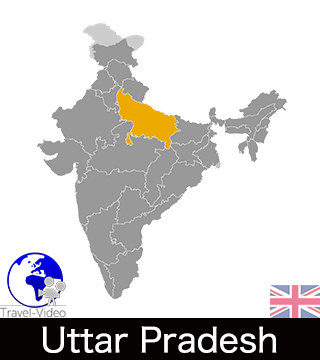
Varanasi, long known in the West as Benares, is one of the oldest continuously inhabited cities in the world and one of the most revered places in India. Located on the banks of the Ganges in the state of Uttar Pradesh, it holds a central place in Hindu tradition and has attracted pilgrims, scholars and travellers for centuries. More than a historic city, Varanasi is a living religious landscape where water, fire, prayer and daily life remain closely connected.
The video explores this distinctive atmosphere through several essential themes: fire, water, the ghats, evening ceremonies, the flower market and the city itself. Together, these elements reveal a place where sacred practice and urban activity are not separated, but woven into the same environment.
Varanasi is often described through symbols, yet its true identity lies in movement: worshippers descending to the river, boats crossing the water, priests preparing rituals, merchants opening their shops and residents moving through the maze of lanes behind the riverfront. The city is both ancient and immediate, ceremonial and practical.
The main places and themes visible in the video
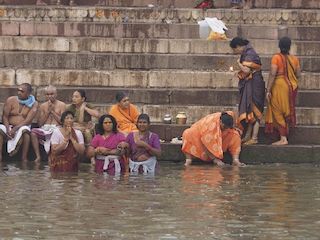
The ghats are the most recognisable feature of Varanasi. These long flights of stone steps descend directly to the Ganges and extend for several kilometres along the riverbank. Some are used for ritual bathing, others for gathering, prayer, washing, cremation or simple observation of river life. Together they form a monumental riverfront unlike any other in India.
Water is naturally at the heart of the city. The Ganges is not only a major river but a sacred presence. Pilgrims bathe at dawn, devotees offer flowers and lamps to the current, and boats carry visitors along the waterfront. The relationship between city and river is continuous, shaping both daily routine and spiritual meaning.
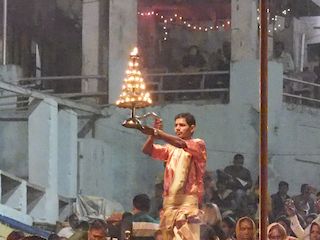
Fire appears in several forms. It is present in small devotional lamps, in the large evening ceremonies performed on selected ghats, and in funeral rites at cremation sites. In Varanasi, fire can represent purification, offering, transformation and passage. Its presence gives the city a powerful symbolic dimension, especially after sunset.
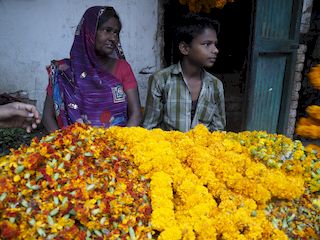
The flower market introduces another important aspect of urban life. Garlands, loose petals and ritual offerings are prepared for temples, household shrines and ceremonies by the river. The market connects devotion with craftsmanship, trade and colour.
The city itself, beyond the riverfront, is a dense network of lanes, courtyards, shrines and houses. This urban fabric is essential to understanding Varanasi, because the famous ghats are only one face of a much larger living settlement.
Historical, cultural and urban context
Varanasi has been an important centre since ancient times. It is associated with learning, philosophy, music, craftsmanship and religious practice across many centuries. Hindu traditions grant it exceptional spiritual status, while Buddhists and Jains also maintain historical links to the wider region.
Its urban form developed in close relationship with the river. Buildings rise behind the ghats in tightly packed layers, connected by narrow streets that repeatedly open toward the Ganges. This pattern reflects the practical and symbolic importance of river access. Palaces, monasteries, temples and residences were gradually added over generations, creating a complex historical waterfront.
The city is also widely known for rites connected with death and remembrance. For many believers, dying or being cremated in Varanasi carries profound spiritual meaning. Yet the city should not be reduced to funerary associations alone. It is equally a place of education, commerce, artistic production and ordinary domestic life.
The Bharat Mata Mandir, linked to this page, represents a different chapter of Varanasi’s identity. Built in the twentieth century, it reflects civic and national ideals rather than traditional temple worship. Its presence shows that Varanasi has also participated in modern political and cultural history.
What the videos on this site make especially clear
Videos created from carefully selected and animated photographs are particularly effective for a place as layered as Varanasi. They allow viewers to observe details that are often missed in the intensity of a real visit.
Successive views of the ghats make the scale of the riverfront easier to understand. Seen gradually, the steps, terraces, shrines and buildings form a coherent urban façade rather than a series of isolated scenes.
Changing viewpoints from boats, river level or elevated terraces reveal how architecture and landscape interact. The city appears differently from the water than from its inner streets, and this contrast is one of Varanasi’s defining qualities.
Evening ceremonies benefit especially from this visual approach. The progression of images captures flames, smoke, gestures, reflections and crowd movement with clarity. Rather than a brief spectacle, the ritual becomes readable as a structured sequence.
Closer images of the flower market and urban lanes highlight textures, colours and human activity. Garlands, baskets, stone walls, shopfronts and narrow passages help convey the everyday reality behind the city’s sacred reputation.
This method also respects the pace of observation. Varanasi is not a place understood instantly. It reveals itself through accumulated impressions, and carefully composed visual sequences are well suited to that experience.
A city where symbols remain alive
Varanasi is more than one of India’s best-known destinations. It is a city where river, ritual, commerce and memory continue to shape one another every day. Fire and water, prayer and movement, ancient traditions and modern life coexist within the same urban space.
The detailed pages linked to this video offer further insight into the ghats, Bharat Mata Mandir, local traditions and the many layers that make Varanasi one of the most compelling cities in India.
Links to related pages
• Main dynasties that ruled the region • •


Audio Commentary Transcript
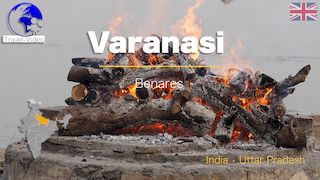
Fire • With the exception of babies, pregnant women, lepers,cobra bite deaths and sadhus, the dead are burned and their ashes thrown into the Ganges.
Those which are not burned are directly thrown into the Ganges.
Holy city of Hinduism on the banks of the Ganges, Varanasi (Benares) is the place chosen by Hindus who can to die. Dying in Varanasi breaks the cycle of reincarnation and enables the attainment of Moksha.
Water • The Ganges (Mother Ganga) is the most sacred river of the Hindus. The scattering of ashes in the Ganges frees the soul of the deceased.
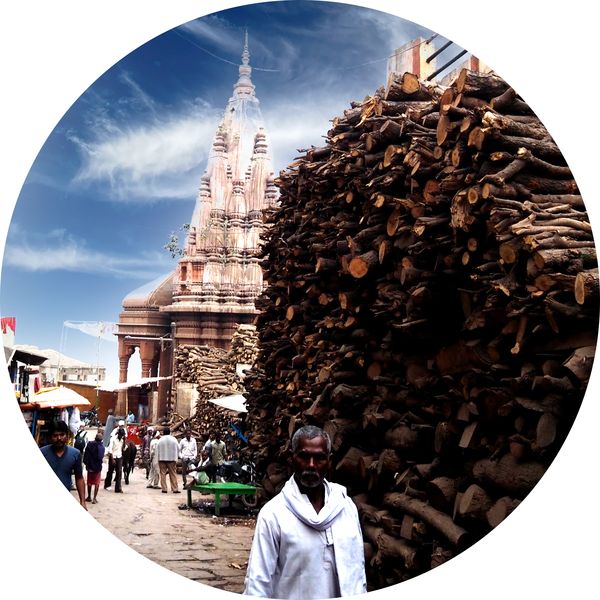
The market • A city that has such a large number of daily cremations must have a flower market worthy of the name.
Music:
- - YouTube video library - Anamalie, (© Anamalie by Kevin MacLeod is licensed under a Creative Commons Attribution 4.0 license. https://creativecommons.org/licenses/by/4.0/
- Source: http://incompetech.com/music/royalty-free/index.html?isrc=USUAN1500007
- Artist: http://incompetech.com/)
- - YouTube video library - Black Vortex - Scoring Action , (© Black Vortex - Scoring Action by Kevin MacLeod is licensed under a Creative Commons Attribution 4.0 license. https://creativecommons.org/licenses/by/4.0/
- Source: http://incompetech.com/music/royalty-free/index.html?isrc=USUAN1300037
- Artist: http://incompetech.com/)
- - YouTube video library - Brain Trust
- - YouTube video library - Calcutta Sunset - E's Jimmy Jams
- - YouTube video library - Central Park
- - YouTube video library - Constancy Part 1 - The Descent, (© Constancy Part 1 - The Descent by Kevin MacLeod is licensed under a Creative Commons Attribution 4.0 license. https://creativecommons.org/licenses/by/4.0/
- Source: http://incompetech.com/music/royalty-free/index.html?isrc=USUAN1100775
- Artist: http://incompetech.com/)
- - YouTube video library - Constancy Part 2 - The Descent, (© Constancy Part 2 - The Descent by Kevin MacLeod is licensed under a Creative Commons Attribution 4.0 license. https://creativecommons.org/licenses/by/4.0/
- Source: http://incompetech.com/music/royalty-free/index.html?isrc=USUAN1100774
- Artist: http://incompetech.com/)
- - YouTube video library - Constancy Part 3 - The Descent, (© Constancy Part 3 - The Descent by Kevin MacLeod is licensed under a Creative Commons Attribution 4.0 license. https://creativecommons.org/licenses/by/4.0/
- Source: http://incompetech.com/music/royalty-free/index.html?isrc=USUAN1100774
- Artist: http://incompetech.com/)
- - YouTube video library - Downtown Metropolis Chase
Disclaimer: Despite its appropriateness, copyright issues prevent the use of indian traditional music in "Varanasi (Benares), India's holiest city • Uttar Pradesh, India", hence the use of royalty-free music. Despite our careful selection, some might regret this decision, which is necessary to avoid potential lawsuits. Although difficult, this decision is the only viable solution.