Français (France)
  Nederlands (nl-NL)
 The flower market in Varanasi, located in Uttar Pradesh, India, is a bustling hub where traders and buyers gather daily to trade an impressive variety of flowers. Renowned for its vibrant colors and captivating fragrances, this market serves as both an economic and cultural center. Flowers hold significant importance in local religious practices and celebrations, being used in rituals and to honor deities. This lively space highlights the essential role of floral traditions and commerce in the daily life of Varanasi.
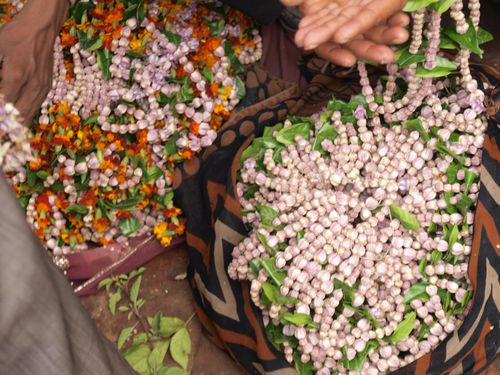
Varanasi • Flower market
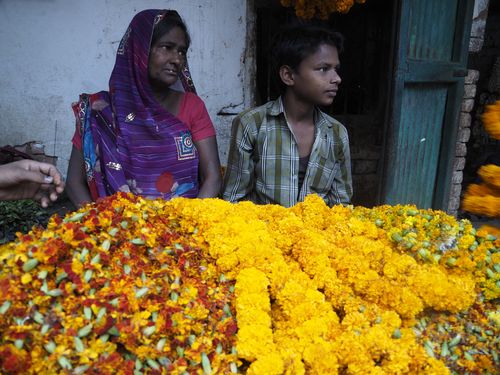
Varanasi • Flower market
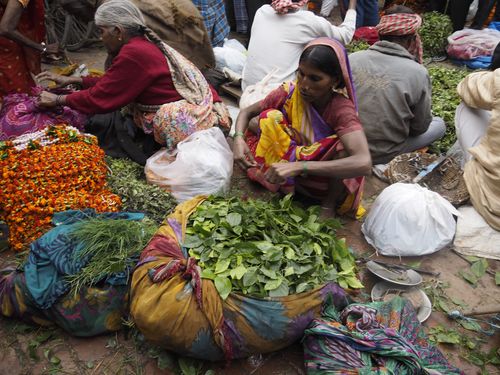
Varanasi • Flower market
Tradition profile
Flower market
Tradition category: Flower market
Tradition family: Traditional markets and fairs
Tradition genre: Trade and Local Creativity
Geographic location: Varanasi • Uttar Pradesh •
• Links to •
• List of videos about Varanasi on this site •
Varanasi (Benares), India's holiest city • Uttar Pradesh, India
The Flower Market of Varanasi: A Tradition Rooted in Social and Political Evolution
The flower market of Varanasi, located in Uttar Pradesh, India, is a vibrant tradition that intertwines the cultural, social, and economic fabric of the city. Emerging centuries ago, it reflects the dynamic interplay of local values, spiritual practices, and external influences. This article examines the political and social motivations behind its origins, key historical events that shaped its evolution, and the challenges it faces in contemporary times.
Political and Social Motivations Behind Its Emergence
The emergence of the flower market in Varanasi can be traced back to the medieval period, when the city rose to prominence as a major religious and cultural hub. Key motivations include:
Religious Significance: Flowers have long been essential to Hindu rituals, serving as offerings to deities and playing a central role in festivals and ceremonies.
Economic Development: The market provided a livelihood for farmers and traders, fostering a thriving local economy.
Community Cohesion: The marketplace became a space for social interaction and collective engagement, bringing together diverse groups within the city.
Historical Milestones and Their Impact
Several key events have shaped the evolution of the flower market:
Rise of Varanasi as a Spiritual Center: As temples and pilgrimage routes gained prominence, the demand for flowers increased, establishing the market as a vital part of the city's religious ecosystem.
Mughal Era Influences: During the Mughal period, new cultural practices, such as the use of flowers in weddings and royal celebrations, were introduced, enriching local traditions.
British Colonial Period: The introduction of modern agricultural practices and transportation systems during colonial rule expanded the reach of the market, allowing flowers to be traded beyond local boundaries.
Global Context and Comparisons
When the flower market in Varanasi began to flourish, similar practices could be observed worldwide:
In Europe: Flower markets were integral to Christian festivals and secular celebrations, particularly during the Renaissance period.
In East Asia: The Chinese and Japanese traditions of flower arrangement (ikebana in Japan) reflected deep aesthetic and spiritual values.
In the Middle East: Flowers were central to traditional bazaars, often used for perfumes and medicinal purposes.
The Varanasi flower market stands out for its deeply intertwined relationship with daily religious practices and its centrality to life in the city.
Transformations Over the Centuries
The flower market has undergone significant changes, reflecting broader social, political, and cultural shifts:
Adaptations to Urbanization: As Varanasi grew, the market expanded to accommodate a larger population and diversified demands.
Cultural Integration: Practices introduced during the Mughal and British periods were absorbed into the local tradition, creating a unique blend of influences.
Technological Advances: The introduction of hybrid flower varieties and modern farming techniques revolutionized the supply chain, meeting increasing demands for elaborate floral decorations.
Cultural Importance and Current Popularity
Today, the flower market remains a vital part of Varanasi’s identity, serving both locals and the growing number of international visitors. Its vibrant atmosphere and cultural significance make it a prominent tourist attraction and a testament to the city’s enduring spiritual and social traditions.
Challenges and Preservation
Despite its enduring popularity, the flower market faces significant challenges:
Environmental Threats: Pollution and climate change impact flower production and quality.
Urban Encroachment: The expansion of Varanasi threatens the traditional spaces of the market.
Commercial Competition: The rise of supermarkets and online platforms undermines small-scale vendors.
Efforts to preserve this tradition include promoting organic farming, establishing cooperative societies, and integrating the market into cultural heritage initiatives.
Conclusion
The flower market of Varanasi is more than a trading hub; it is a living symbol of the city’s cultural and spiritual heritage. While it has adapted to the challenges of modernity, its preservation is vital to maintaining the unique identity of Varanasi. Safeguarding this tradition ensures its role as a cultural cornerstone for generations to come.
The Flower Market of Varanasi: A Beacon of Social and Cultural Innovation
The flower market in Varanasi, Uttar Pradesh, stands as a vibrant tradition that reflects the social and cultural ingenuity of its time. Rooted in centuries-old practices, it embodies the spiritual essence of the city while showcasing a unique blend of regional customs and external influences. This article explores the innovative aspects of the market, its symbolic elements, and its significance in the local and global cultural landscape.
Social and Cultural Innovation at Its Emergence
The flower market of Varanasi emerged during a period when the city was establishing itself as a major religious and cultural hub. The tradition was innovative in several ways:
Integration of Rituals and Economy: The market connected the spiritual needs of the population with economic opportunities, creating a symbiotic relationship between worshippers and traders.
Community Engagement: The market became a gathering place where people from diverse backgrounds could interact, fostering social cohesion and a sense of community.
Sustainability Practices: Early iterations of the market relied on locally grown flowers, promoting sustainable agricultural practices long before the concept gained modern traction.
Symbolic Elements and Societal Values
The flower market is imbued with rituals, objects, and symbols that reflect the grandeur and core values of the society:
Offerings to the Divine: Flowers are central to Hindu worship, symbolizing purity, devotion, and the transience of life. Marigolds, lotus flowers, and jasmine are among the most commonly used offerings.
Vivid Colors and Fragrances: The market’s vibrant colors and aromatic environment evoke the spiritual vitality of the region, representing the celebration of life and faith.
Notable Rituals: One of the most famous practices associated with the market is the preparation of garlands and floral arrangements for ceremonies along the ghats of the Ganges, emphasizing the interconnectedness of nature, spirituality, and daily life.
A Unique Blend of Regional and External Influences
The tradition of the flower market illustrates the confluence of local and external influences that shaped Varanasi’s cultural fabric:
Regional Customs: The use of marigolds, an indigenous flower, highlights the deep connection between local agriculture and religious practices.
Mughal Contributions: During the Mughal period, the practice of using flowers in elaborate decorations and royal ceremonies enriched the market’s traditions.
Colonial Impact: The British introduced modern farming techniques and expanded transportation networks, allowing the market to flourish and cater to a wider audience.
Anecdotes and Statistics
Daily Activity: The market operates from the early hours of the morning, with hundreds of vendors selling fresh flowers to temple-goers, hoteliers, and tourists.
Economic Impact: It is estimated that the flower trade in Varanasi supports thousands of livelihoods, from farmers and wholesalers to artisans creating intricate garlands.
Cultural Anecdote: A famous legend suggests that the flower offerings on the Ganges are believed to carry prayers directly to the divine, making this practice spiritually significant for devotees.
Global Recognition and UNESCO Potential
Although deeply rooted in local traditions, the flower market of Varanasi has gained international attention for its vibrant representation of Indian culture. Its potential inscription on UNESCO’s list of intangible cultural heritage would:
Preserve Traditional Practices: Recognition would encourage efforts to protect local farming methods and artisanal techniques.
Enhance Global Awareness: UNESCO status would highlight the market as a symbol of India’s rich spiritual and cultural heritage, attracting more tourists and scholars.
Support Sustainable Tourism: The market could become a model for integrating cultural preservation with economic development.
Challenges and Preservation Efforts
The flower market faces modern threats that endanger its continuity:
Environmental Concerns: Pollution in the Ganges and the use of non-biodegradable materials in rituals pose challenges to the ecological balance.
Urbanization: Expanding infrastructure in Varanasi has put pressure on traditional market spaces.
Global Competition: The rise of commercialized flower imports affects the livelihood of local growers and vendors.
To address these issues, initiatives such as promoting organic farming, establishing fair trade practices, and raising awareness about sustainable rituals are crucial.
Conclusion
The flower market of Varanasi is a living testament to the city’s cultural and spiritual vibrancy. Its innovative integration of tradition, economy, and community engagement has sustained its relevance over centuries. Safeguarding this heritage ensures that it continues to inspire and enrich future generations, reinforcing its role as a cornerstone of Indian culture on the global stage.
 Links to the main sections of the site