

 Français (France)
  Nederlands (nl-NL)
 The Cathedral of Saint Peter Apostle is located in Modica, a town in the Sicilian region of Italy. This religious building is a prominent example of the area's Baroque architecture that emerged after the earthquake of 1693. The cathedral features a striking facade and elaborate interior decorations that signify the artistic revival of the period. It forms an integral part of the Val di Noto towns, listed as a UNESCO World Heritage site. The cathedral serves not only as a place of worship but also as a significant attraction for visitors to Modica.


Monument profile
Cathedral of Saint Peter the Apostle
Monument category: Cathedral
Monument family: Church, cathedral, basilica, chapel
Monument genre: Religious
Cultural heritage: Christian
Geographic location: Modica • Sicily • Italy
Construction period: 17th century AD
This monument in Modica is inscribed on the UNESCO World Heritage List since 2002 and is part of the serial property "Late Baroque Towns of the Val di Noto (South-Eastern Sicily)".See the UNESCO monuments featured on this site
• Links to •
• List of videos about Modica on this site •
Modica, two cathedrals, one unique heritage • Sicily
• Sources •
UNESCO World Heritage Centre - Late Baroque Towns of the Val di Noto "Baroque Architecture in Sicily" - Giovanni Bonanno Modica Historical Archives Publications from the Sicilian Department of Cultural Heritage and Identity
The Cathedral of Saint Peter the Apostle in Modica: A Testament to Political Power, Social Change, and Cultural Resilience
The Cathedral of Saint Peter the Apostle in Modica, Sicily, stands as an emblematic monument reflecting the region's complex history of political shifts, social transformations, and cultural influences. While the original structure dates back to the 14th century, the cathedral’s current Baroque appearance is largely the result of extensive reconstruction following the devastating 1693 earthquake that reshaped much of southeastern Sicily. This article explores the political and social motivations behind its construction, the historical events that have marked its evolution, and the challenges faced in preserving its heritage in the modern era.
Political and Social Motivations Behind Its Construction
The initial construction of the cathedral in the early 1300s occurred during a period when Sicily was under Aragonese rule, following the Sicilian Vespers uprising against the Angevin dynasty in 1282. The establishment of such a grand religious edifice served multiple purposes:
- Religious Authority: As a major Catholic center, the cathedral symbolized the Church’s dominance in both spiritual and civic matters, reinforcing its influence over the local population.
- Political Power: The ruling elites of Modica, including influential feudal lords and aristocratic families, supported the cathedral’s construction to showcase their prestige and strengthen ties with the Church, a key player in medieval politics.
- Social Cohesion: In a region marked by diverse cultural legacies—Norman, Arab, Byzantine, and Spanish—the cathedral acted as a unifying structure, embodying a shared identity anchored in Catholicism.
Major Historical Events and Their Impact
The 1693 earthquake, one of the most catastrophic seismic events in European history, profoundly affected Modica and the surrounding Val di Noto region. The disaster necessitated not only the reconstruction of the cathedral but also the redesign of the entire cityscape in line with the Baroque style that had become dominant across Europe.
- Post-Earthquake Reconstruction (1697 onwards): Under architects Mario Spata and Rosario Boscarino, the cathedral was rebuilt with a focus on both grandeur and resilience. The reconstruction served as a statement of recovery and continuity, symbolizing the triumph of faith over natural calamities.
- Political Context: The rebuilding occurred during the Spanish Bourbon rule in Sicily, a period marked by centralized administration and increased efforts to control local governance through religious institutions.
- Modern Restorations: In the 19th century, the addition of monumental staircases (completed in 1876) reflected changing urban aesthetics and the influence of neoclassical trends.
Global Context and Comparisons
The cathedral’s reconstruction in the late 17th and early 18th centuries coincided with significant global transformations:
- Europe: This was the era of absolutist monarchies, with figures like Louis XIV of France embodying the Baroque ideal of power and splendor. The architectural developments in Modica paralleled the construction of monumental Baroque structures across Europe, such as St. Paul’s Cathedral in London and the Palace of Versailles in France.
- Asia: The same period witnessed the zenith of the Qing dynasty in China and the cultural flourishing of the Mughal Empire in India, with architectural masterpieces like the Taj Mahal emphasizing symmetry, grandeur, and intricate detail.
- Americas: In contrast, the Spanish and Portuguese colonies in Latin America were experiencing a Baroque explosion of their own, with churches and cathedrals in places like Mexico and Peru blending European styles with indigenous influences.
Architectural Transformations Over the Centuries
The Cathedral of Saint Peter the Apostle underwent several transformations reflecting shifts in political power and artistic trends:
- Medieval Foundations (14th century): The original Gothic structure likely featured simpler lines, with an emphasis on verticality typical of the period.
- Baroque Rebuilding (1697–18th century): The post-earthquake design introduced dramatic Baroque elements—curved facades, ornate decorations, and dynamic spatial compositions designed to inspire awe.
- 19th-century Additions: The grand staircase, consisting of 26 steps, added a theatrical dimension to the approach, enhancing the visual impact from Modica’s lower quarters.
Each phase of transformation integrated new cultural influences, from Spanish decorative motifs to Neoclassical structural principles, reflecting Sicily’s role as a crossroads of Mediterranean civilizations.
Cultural Significance and Current Conservation Status
The cathedral’s architectural grandeur and historical significance contributed to Modica’s inclusion in the UNESCO World Heritage List in 2002 as part of the “Late Baroque Towns of the Val di Noto.” This recognition has amplified the cathedral’s cultural importance both locally and internationally, transforming it into a key heritage site.
Cultural Identity: The cathedral remains a focal point for local religious celebrations and a symbol of Modica’s resilience through centuries of change.
State of Preservation: Ongoing conservation efforts focus on maintaining the structural integrity of the façade, the Baroque interiors, and the delicate stucco and fresco decorations. Restoration projects have been supported by both Italian government agencies and international heritage organizations.
Modern Challenges in Preservation
Despite its well-maintained appearance, the Cathedral of Saint Peter faces several contemporary challenges:
- Seismic Risk: Sicily remains an earthquake-prone region, requiring continuous monitoring and reinforcement of the cathedral’s structural elements.
- Environmental Degradation: The limestone façade, while aesthetically striking, is susceptible to erosion due to air pollution, acid rain, and fluctuations in humidity and temperature.
- Tourism Pressure: As an increasingly popular destination, Modica experiences the double-edged sword of tourism. While it brings economic benefits, high visitor traffic can accelerate wear and tear on historical sites.
- Funding and Resource Allocation: Securing consistent financial support for long-term preservation projects is an ongoing struggle, especially amidst competing priorities at national and regional levels.
Conclusion
The Cathedral of Saint Peter the Apostle in Modica is more than just a religious building; it is a living testament to Sicily’s layered history, a marker of resilience in the face of natural and political upheavals, and a masterpiece of Baroque art and architecture. Its story reflects broader global trends, from European absolutism to Mediterranean cross-cultural exchanges. Today, as both a place of worship and a UNESCO World Heritage site, the cathedral continues to inspire awe while posing complex questions about the preservation of cultural heritage in the modern world.
The Architectural Brilliance of the Cathedral of Saint Peter the Apostle in Modica: A Testament to Innovation and Cultural Synthesis
The Cathedral of Saint Peter the Apostle in Modica, Sicily, stands as a remarkable representation of Baroque architecture, reflecting both the technological advancements and artistic innovations of its time. Reconstructed after the catastrophic 1693 earthquake, which devastated much of southeastern Sicily, the cathedral embodies the resilience of Sicilian society and the fusion of diverse cultural influences that have shaped the island throughout its history. This article delves into the architectural features, construction techniques, materials used, and the cathedral’s evolving role as a cultural landmark recognized on a global scale.
Technological Advancements and Construction Innovations
The reconstruction of the cathedral, initiated around 1697, showcases the significant technological progress in architecture during the late Baroque period. In the aftermath of the earthquake, architects like Mario Spata and Rosario Boscarino introduced anti-seismic construction techniques to enhance the building’s stability. This marked an important shift in architectural design across Sicily, where lessons learned from the disaster were incorporated into new urban planning and construction methods.
Key innovations include:
- Seismic-Resistant Structures: The cathedral was designed with reinforced vaults and strategically placed buttresses to distribute weight evenly, reducing the risk of collapse during seismic events. The walls were thickened, and load-bearing structures were strengthened with interlocking masonry techniques.
- Vertical Emphasis with Structural Integrity: The towering façade, reaching approximately 62 meters at its peak, features a sophisticated system of superimposed orders (Corinthian columns and pilasters), which not only enhance verticality but also distribute the structural load effectively.
- Architectural Symmetry and Dynamic Spaces: The dynamic interplay of concave and convex forms in the façade, typical of Sicilian Baroque, required precise engineering to achieve both aesthetic fluidity and structural soundness.
Materials and Construction Techniques Reflecting Grandeur
The primary material used in the construction of the cathedral is local limestone, quarried from the surrounding Modica region. This stone was favored for its workability and aesthetic appeal, as it acquires a warm, golden hue under sunlight, enhancing the dramatic effect of the Baroque façade.
- Stone Masonry: The limestone blocks were meticulously carved to create intricate decorative elements, such as floral motifs, angelic figures, and elaborate friezes. The fine detailing in the stonework demonstrates the high level of craftsmanship achieved through advanced stonemasonry techniques.
- Stucco Work: The interior boasts ornate stucco decorations, crafted from a mixture of lime, marble dust, and gypsum. This allowed for delicate, detailed reliefs and sculptural elements that added depth and texture to the cathedral’s interior spaces.
- Fresco Painting: The ceilings and chapels were adorned with frescoes, employing pigments mixed with water on wet plaster, a technique that ensured the longevity and vibrancy of the artwork.
- Metalwork: The cathedral’s large bronze doors and decorative iron railings reflect the influence of Spanish craftsmanship, showcasing detailed reliefs and ornamental patterns.
A Fusion of Regional Traditions and Foreign Influences
The Cathedral of Saint Peter the Apostle is a melting pot of artistic traditions, blending local Sicilian motifs with Mediterranean and European influences. This synthesis reflects Sicily’s historical role as a crossroads of civilizations, including Greek, Roman, Arab, Norman, Spanish, and Byzantine cultures.
- Baroque Influence: The dominant Baroque style, characterized by theatricality and opulence, was introduced under Spanish rule. The cathedral’s façade, with its dynamic curves, ornate sculptures, and dramatic staircases, exemplifies this influence.
- Arab-Norman Legacy: While Baroque dominates, subtle decorative patterns in the geometric designs of the stone balustrades hint at earlier Arab-Norman artistic traditions, a hallmark of Sicilian architecture.
- Byzantine and Classical Echoes: The use of domes and large arches reflects Byzantine architectural principles, while the symmetrical layout and classical column orders draw from Greco-Roman traditions.
Notable Architectural Features and Anecdotes
- Grand Staircase: One of the cathedral’s most iconic features is its monumental staircase of 26 steps, added in the 19th century. This staircase enhances the cathedral’s imposing presence, creating a visual axis that draws attention from the lower town.
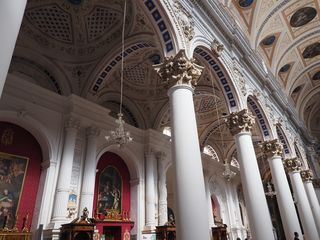
- Interior Layout: The cathedral follows a basilica plan with three naves, separated by imposing Corinthian columns. The central nave is crowned by a large barrel vault, while side chapels house precious artworks and religious relics.
- Anecdote: Local legends claim that the cathedral was built with the collective effort of artisans from across Sicily, each contributing their regional techniques. This collaborative approach is often cited as a reason for the eclectic mix of styles and influences found in the cathedral’s design.
International Recognition and UNESCO World Heritage Status
The cathedral’s inclusion in the UNESCO World Heritage List in 2002, as part of the “Late Baroque Towns of the Val di Noto,” significantly boosted its international profile. This recognition acknowledges the cathedral not only as an architectural masterpiece but also as a symbol of Sicily’s cultural and historical resilience.
- Cultural Impact: The UNESCO designation has increased global awareness of the cathedral’s historical significance, attracting scholars, architects, and tourists from around the world.
- Conservation Efforts: UNESCO status has facilitated funding and technical support for restoration projects, focusing on preserving the structural integrity of the building and safeguarding its artistic heritage from environmental degradation and seismic risks.
Challenges in Preserving Historical Integrity
Despite ongoing conservation efforts, the cathedral faces several modern threats that jeopardize its historical integrity:
- Seismic Activity: Sicily remains seismically active, posing a continuous risk to historical structures. Modern restoration techniques must balance the need for seismic reinforcement with the preservation of original materials and designs.
- Environmental Degradation: The limestone façade is vulnerable to weathering, pollution, and acid rain, which accelerate the erosion of intricate carvings and structural details.
- Tourism Pressures: While tourism supports the local economy, increased foot traffic contributes to wear and tear, particularly on delicate floor mosaics and frescoes.
- Climate Change: Rising humidity levels and temperature fluctuations have been linked to the deterioration of stucco work and frescoes, requiring innovative conservation strategies.
Conclusion
The Cathedral of Saint Peter the Apostle in Modica stands as a testament to Sicily’s rich architectural heritage and cultural diversity. Its technological innovations, artistic synthesis, and resilience through centuries of change reflect the island’s dynamic history. As a UNESCO World Heritage site, the cathedral continues to inspire awe while facing the dual challenges of preservation and adaptation in a rapidly changing world.