Français (France)
  Nederlands (nl-NL)
 The lacquerware art of Bagan, Myanmar, represents a refined craftsmanship that has been passed down through generations. This technique involves applying multiple layers of lacquer onto various materials, such as bamboo and wood, to create objects that are both functional and decorative. The production process, requiring patience and precision, includes stages of drying, polishing, and meticulous decoration featuring intricate patterns often inspired by local culture. The artisans of Bagan possess exceptional skills in this craft, producing a wide range of items from tableware to religious objects. These works, highly valued in both local and international markets, reflect a strong commitment to preserving a deeply rooted artisanal tradition in Myanmar's culture.
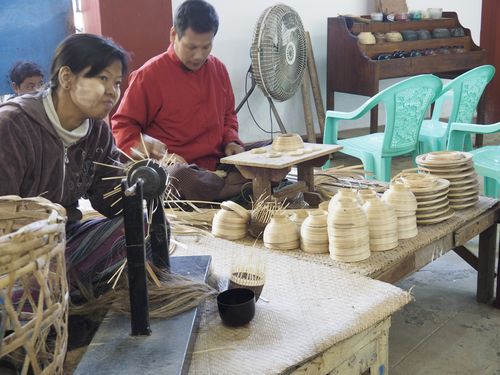
Bagan • Lacquer art

Bagan • Lacquer art

Bagan • Lacquer art
Tradition profile
Lacquer art
Tradition category: Craftsmanship
Tradition family: Crafts and professions
Tradition genre: Trade and Local Creativity
Geographic location: Bagan • Myanmar
• Links to •
• List of videos about Bagan on this site •
Bagan, the gods • Myanmar
Bagan, the people • Myanmar
Bagan, the craftsmen • Myanmar
Bagan, a palm liquor distillery • Myanmar
• Sources •
- Myanmar Ministry of Culture and Tourism
- Studies on Southeast Asian Art and Crafts
- UNESCO Reports on Intangible Cultural Heritage
The Art of Lacquerware in Bagan: Historical Significance, Evolution, and Modern Challenges
The art of lacquerware in Bagan, Myanmar, is a centuries-old tradition that showcases the region’s artistic sophistication and cultural heritage. Emerging during the height of the Bagan Empire (9th–13th centuries CE), this craft was shaped by political ambitions, social structures, and economic dynamics that contributed to its growth and significance. Over the centuries, the lacquerware tradition has adapted to changing influences and power dynamics, reflecting both the resilience and adaptability of the local artisans. Today, it stands as a vital element of Myanmar’s cultural identity while facing challenges in the modern world.
Political and Social Motivations Behind the Emergence of Lacquerware
The emergence of lacquerware in Bagan was driven by a combination of political and social motivations. Politically, the rulers of the Bagan Empire sought to establish the city as a center of culture and religious devotion. The production of finely crafted lacquerware served as a means of demonstrating the kingdom’s wealth and artistic excellence, reinforcing its position as a regional power in Southeast Asia. Intricately designed lacquer objects were offered as tributes to Buddhist monasteries and used as diplomatic gifts to neighboring kingdoms, fostering alliances and trade relations.
On a social level, lacquerware became an integral part of daily and religious life in Bagan. It was used for ritual purposes in Buddhist temples, serving as offering containers and ceremonial utensils. The craft also provided employment opportunities for local artisans, contributing to the region's social cohesion and economic stability. The hierarchical nature of society influenced the complexity of lacquerware pieces, with the ruling elite commissioning elaborate designs, while simpler, functional items were used by commoners.
Historical Evolution and Key Events
The art of lacquerware in Bagan dates back to the 11th century during the reign of King Anawrahta, who established Theravāda Buddhism as the dominant faith. The patronage of the monarchy and the Buddhist clergy played a crucial role in the proliferation of lacquer craftsmanship, with artisans developing increasingly intricate designs inspired by religious motifs and mythological themes.
Several historical events have shaped the evolution of lacquerware in Bagan:
- The Mongol Invasion (1287): The decline of the Bagan Empire following Mongol incursions led to the dispersion of artisans to other regions of Myanmar, facilitating the spread of lacquerware techniques across the country.
- Colonial Period (19th–20th centuries): During British rule, the demand for lacquerware increased as it gained popularity among European collectors. The influence of Western tastes led to the introduction of new designs and adaptations in production methods.
- Post-Independence and Modern Era: In the latter half of the 20th century, lacquerware production saw a revival as the government and cultural organizations recognized its value in preserving national heritage and attracting tourism.
Cultural, Social, and Economic Influence
Lacquerware has significantly influenced the cultural and social fabric of Bagan. The intricate designs and labor-intensive production process have become synonymous with Myanmar’s dedication to craftsmanship and devotion to Buddhist traditions. Socially, lacquerware workshops provided a sense of community and intergenerational continuity, with knowledge passed down through families of artisans.
Economically, the lacquerware industry has contributed to local livelihoods through domestic sales and exports. Artisans benefited from trade with neighboring countries such as China, Thailand, and India, making lacquerware an essential commodity in regional markets. Today, Bagan remains a hub for lacquer production, attracting both tourists and collectors interested in traditional Burmese crafts.
Global Context and Comparisons with Other Regions
Lacquerware production in Bagan can be compared with similar traditions in other parts of Asia, such as:
- China: The Chinese lacquer tradition, dating back to the Han Dynasty, focused on high-gloss finishes and elaborate pictorial decorations, often using carved lacquer techniques.
- Japan: In Japan, lacquerware evolved into an art form known as urushi, incorporating gold and silver inlays to create intricate designs.
- Vietnam and Thailand: These regions developed their own distinct lacquerware styles, with Vietnam incorporating mother-of-pearl inlays and Thailand blending lacquer with gold leaf decorations.
While Bagan’s lacquerware shares common techniques with these traditions, it distinguishes itself through its unique engraved designs, Buddhist iconography, and a deep connection to religious practices.
Major Transformations Over the Centuries
The evolution of lacquerware in Bagan reflects broader social and political changes, including:
- Technological Innovations: Advances in production techniques allowed artisans to experiment with different materials, colors, and surface treatments, enhancing the aesthetic appeal of lacquer items.
- Cultural Adaptations: Over time, motifs and styles have evolved to incorporate influences from neighboring cultures and changing consumer preferences.
- Market Demand: The rise of tourism in Myanmar has led to mass production of lower-quality lacquerware, raising concerns about the preservation of traditional craftsmanship.
Cultural Significance and Current Popularity
Lacquerware remains a highly valued cultural asset in Myanmar, recognized for its artistic and historical importance. Tourists visiting Bagan are drawn to the lacquer workshops where artisans demonstrate their skills, showcasing centuries-old techniques. Despite modern challenges, the craft continues to thrive as a symbol of Myanmar’s heritage.
Challenges to Preservation
The lacquerware tradition in Bagan faces several challenges that threaten its survival:
- Declining Artisan Numbers: Younger generations are less inclined to pursue traditional crafts due to economic pressures and the lure of more lucrative careers.
- Competition from Mass Production: The influx of cheaply produced lacquerware undermines the value of authentic handmade pieces.
- Environmental Factors: The sustainability of raw materials, such as the lacquer tree resin, is under threat due to deforestation and climate change.
- Lack of International Recognition: Although admired globally, Bagan’s lacquerware has yet to receive official recognition from UNESCO, which could provide financial and technical support for its preservation.
The Role of UNESCO Recognition
If Bagan’s lacquerware tradition were to be inscribed on UNESCO’s Intangible Cultural Heritage list, it could greatly benefit from:
- Increased global awareness and promotion.
- Financial assistance for artisan training programs.
- Strengthened efforts to protect the authenticity and sustainability of production.
Conclusion
The lacquerware tradition of Bagan stands as a testament to Myanmar’s rich cultural heritage and artistic ingenuity. Its evolution over centuries has reflected the region’s political shifts, cultural exchanges, and economic developments. Despite facing modern challenges, efforts to preserve and promote this craft remain vital to ensuring its legacy continues for future generations. Through international recognition and sustainable practices, Bagan’s lacquerware can maintain its esteemed place in the world of traditional craftsmanship.
The Lacquerware Tradition of
Bagan: A Testament to Social and Cultural Innovation
The lacquerware tradition of Bagan, Myanmar, represents a remarkable example of social and cultural innovation that emerged during the height of the Bagan Empire (9th–13th centuries CE). This intricate craft, rooted in the rich cultural and religious fabric of the region, exemplifies the values of refinement, devotion, and artistic excellence that characterized Bagan’s golden era. The creation of lacquerware was not merely an artistic endeavor but a reflection of the social hierarchy, religious devotion, and cultural exchanges that defined the period.
Social and Cultural Innovation at the Time of Its Emergence
The lacquerware tradition in Bagan was revolutionary in the way it brought together different aspects of society, from artisans and traders to monks and royalty. This innovation can be seen in the establishment of specialized workshops that facilitated a division of labor and the development of a highly organized artisan community. The craft provided a sustainable livelihood to many, fostering economic stability and reinforcing social cohesion.
Culturally, lacquerware served as an essential part of daily life and religious practice. The objects produced were not only utilitarian but also symbolic, representing values such as piety, generosity, and social status. For instance, elaborately decorated offering vessels were used in Buddhist rituals, demonstrating the deep interconnection between craft and spirituality.
The ability of Bagan artisans to innovate by refining their techniques, improving durability, and expanding the variety of products contributed to the enduring legacy of lacquerware. The intricate designs and labor-intensive process reflect a dedication to perfection that mirrored the grandeur of the kingdom.
Symbolism and Reflection of Societal Values
The lacquerware objects produced in Bagan encapsulate the grandeur and values of the society through their form, function, and decoration. Some key elements that reflect these values include:
- Offering Vessels (Hsun-Ok): Used in religious ceremonies to present food and offerings to monks, these vessels symbolize the Buddhist principles of generosity and spiritual merit.
- Ornamental Boxes and Containers: Often used by the royal court and affluent households to store valuables, reflecting wealth, sophistication, and a sense of aesthetics.
- Buddhist Motifs and Symbolism: Many lacquer pieces feature intricate depictions of Jataka tales (stories of the Buddha’s past lives), floral patterns, and mythical creatures, symbolizing the devotion of the society to Buddhist teachings and cosmology.
The meticulous engraving and layering techniques used in producing lacquerware highlight values such as patience, precision, and dedication—qualities revered in Myanmar’s cultural and religious ethos.
Fusion of Regional Traditions and External Influences
The lacquerware tradition of Bagan stands as a testament to the cultural fusion that characterized the region. As a thriving trade hub, Bagan was influenced by neighboring civilizations, including China, India, and Southeast Asian kingdoms such as Ayutthaya (Thailand) and Khmer (Cambodia).
Chinese lacquer techniques introduced sophisticated finishing methods, while Indian influences contributed to the inclusion of symbolic motifs and religious iconography. The integration of these diverse artistic traditions with local Burmese styles resulted in a unique aesthetic that distinguished Bagan lacquerware from other regional varieties.
This cultural synthesis is evident in the stylistic evolution of Bagan lacquerware, which blends local craftsmanship with foreign decorative elements, creating objects that are both distinctly Burmese and reflective of a broader regional identity.
Notable Rituals and Practices
Lacquerware played a central role in several traditional rituals and social customs in Bagan. Some notable practices include:
- Ceremonial Offerings: Lacquerware containers were essential in Buddhist rituals, where they were used to carry offerings to temples and monasteries during major festivals.
- Royal Patronage: Kings and nobles commissioned elaborate lacquer pieces as diplomatic gifts and for temple donations, reinforcing their social and religious standing.
- Craft Apprenticeship: The art of lacquerware was traditionally passed down through generations, with master artisans mentoring young apprentices in dedicated workshops, ensuring the continuation of the craft.
Anecdotes and Interesting Facts
It is said that some of the finest lacquerware pieces created in Bagan required up to 20 layers of lacquer, with each layer taking several days to dry and harden.
The lacquer tree (Thitsee), essential for producing high-quality lacquer, is indigenous to Myanmar, making Bagan an ideal location for the craft’s development.
Historical records indicate that lacquerware was used as a form of tribute to the powerful rulers of neighboring kingdoms, solidifying Bagan’s reputation as a center of cultural excellence.
International Recognition and UNESCO Prospects
Despite its deep cultural significance, Bagan’s lacquerware tradition has yet to receive the formal recognition it deserves on a global scale. If inscribed on UNESCO’s Intangible Cultural Heritage list, the lacquerware tradition could benefit in several ways:
- Enhanced Preservation Efforts: Official recognition could lead to financial support for conservation and training programs aimed at preserving traditional techniques.
- Greater International Awareness: UNESCO status would raise the profile of Bagan lacquerware and attract cultural tourists and scholars interested in traditional crafts.
- Protection Against Commercialization: With rising demand, mass production has led to a decline in quality; UNESCO recognition could help enforce standards and maintain authenticity.
Challenges to Preservation
The lacquerware tradition of Bagan faces several challenges that threaten its continued existence, including:
- Decline in Skilled Artisans: Younger generations are less interested in pursuing traditional crafts due to economic pressures and the availability of alternative careers.
- Raw Material Shortages: The lacquer tree, essential for high-quality production, is becoming scarce due to deforestation and environmental changes.
- Market Competition: The rise of cheaply produced, machine-made lacquerware undermines the value and uniqueness of handcrafted pieces.
- Sustainability Issues: The labor-intensive nature of lacquer production requires time and patience, making it difficult to compete with modern, faster production methods.
Conclusion
The lacquerware tradition of Bagan is a testament to the ingenuity, cultural depth, and resilience of Myanmar’s artisans. It embodies a unique blend of religious devotion, artistic excellence, and social structure that has withstood the test of time. Efforts to preserve and promote this tradition are crucial to ensuring its continued relevance in the modern world.
With strategic conservation initiatives, potential UNESCO recognition, and a renewed appreciation for traditional craftsmanship, the lacquerware of Bagan can continue to inspire and thrive, maintaining its legacy as a symbol of Myanmar’s rich cultural heritage.
 Links to the main sections of the site