Français (France)
  Nederlands (nl-NL)
 A village located along the Irrawaddy River in the Bagan region of Myanmar reflects the settlement patterns and social organization typical of rural riverine communities. Housing, often built with local materials and adapted to seasonal water variations, demonstrates a close relationship with the environment. Daily life is structured around agricultural, domestic, and small-scale economic activities, complemented by the use of river resources. This type of settlement illustrates a way of life shaped by natural constraints, social traditions, and local economic practices, while gradually adapting to broader regional changes.
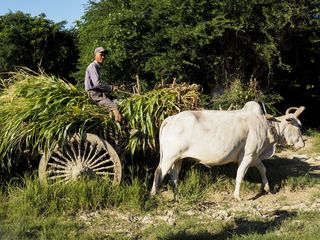
Bagan • a village on the Irrawaddy
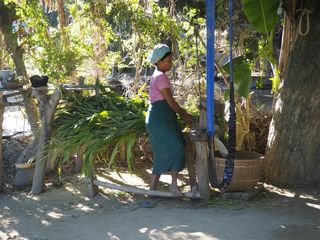
Bagan • a village on the Irrawaddy
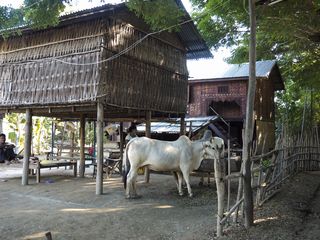
Bagan • a village on the Irrawaddy
Tradition profile
a village on the Irrawaddy
Tradition category: Traditional housing
Tradition family: Traditional practices and lifestyle
Tradition genre: Agricultural and rural traditions
Geographic location: Bagan • Myanmar
• Links to •
• List of videos about Bagan on this site •
Bagan, the gods • Myanmar
Bagan, the people • Myanmar
Bagan, the craftsmen • Myanmar
Bagan, a palm liquor distillery • Myanmar
Historical development of riverine village life along the Irrawaddy near Bagan
The tradition of riverine village life along the Irrawaddy in the Bagan region of Myanmar represents a long-standing adaptation of rural communities to a dynamic fluvial environment. This form of settlement, based on mobility, resource diversification and environmental responsiveness, has evolved over centuries under the influence of political structures, economic systems and religious frameworks that shaped the broader history of the region.
Political and social context of emergence
The emergence of river-based village life in central Myanmar is closely linked to the consolidation of agrarian societies along the Irrawaddy valley, which has historically functioned as the principal axis of settlement and communication. During the period of the Pagan Kingdom between the 9th and 13th centuries, the region around Bagan became a major political and religious centre. The river played a critical role in supporting agricultural production, facilitating trade, and linking dispersed communities.
Within this context, rural populations established settlements on riverbanks and alluvial islands, taking advantage of fertile soils created by seasonal flooding. These communities were typically composed of agricultural households operating within a broader social framework influenced by Buddhist institutions. Monasteries acted as centres of education, social organization and moral authority, shaping local practices and reinforcing communal cohesion.
Power structures at the time were characterized by a combination of royal authority, local elites and religious institutions. While the central state exercised control over land and labour, local communities retained a degree of autonomy in organizing their daily lives. The development of riverine villages was therefore not the result of centralized planning but of gradual adaptation to environmental and economic conditions, supported by a social system that valued stability and continuity.
Major historical events and transformations
The decline of the Pagan Kingdom in the late 13th century led to a redistribution of political power across Upper Myanmar, but it did not fundamentally disrupt river-based settlement patterns. Successive dynasties, including the Toungoo and Konbaung, maintained reliance on the Irrawaddy as a strategic and economic corridor. Riverine communities continued to play a role in agricultural production and local trade networks.
The British colonization of Burma in the 19th century introduced significant changes. Colonial authorities expanded rice cultivation for export, particularly in the lower delta, but also influenced agricultural practices in central regions. Administrative reforms altered land tenure systems and weakened traditional forms of local authority. Despite these transformations, many riverine villages retained their basic structure, as their livelihood strategies remained closely tied to the natural cycles of the river.
Following independence in 1948, Myanmar underwent periods of political centralization and economic restructuring. State policies sometimes sought to regulate agricultural production and rural organization, but riverine communities often adapted these policies to local conditions. In some cases, economic hardship or environmental pressures led to temporary abandonment or relocation of settlements, while in others, traditional practices were maintained with minor adjustments.
Global context and comparative perspectives
The development of riverine village traditions along the Irrawaddy can be understood within a broader global pattern of human adaptation to large river systems. Comparable forms of settlement have been observed along rivers such as the Mekong, the Ganges, and the Nile, where communities developed housing techniques, agricultural practices and social systems suited to fluctuating water levels.
These parallels highlight common responses to environmental constraints, including elevated housing, diversified subsistence strategies and flexible settlement patterns. However, the case of central Myanmar is distinguished by the integration of these practices within a predominantly Buddhist cultural framework. Religious values, including the accumulation of merit and communal responsibility, have influenced not only social organization but also attitudes toward land, labour and the natural environment.
Transformations over time
Over the centuries, riverine village life along the Irrawaddy has undergone gradual transformation rather than abrupt change. Technological developments have introduced new materials and tools, leading to modifications in housing construction and agricultural techniques. Metal roofing, processed timber and manufactured goods have partially replaced traditional materials, although the fundamental layout of settlements has remained consistent.
Economic changes have also influenced local practices. Increased connectivity to regional markets has encouraged some degree of specialization, while others have maintained diversified subsistence strategies. Migration, both seasonal and permanent, has affected demographic structures, sometimes leading to a reduction in the transmission of traditional knowledge.
Periods of decline have occurred when environmental conditions or economic pressures made riverine living less viable. Conversely, phases of renewal have been observed when local communities reasserted traditional practices or adapted them to new circumstances. This continuity reflects the resilience of a system based on flexibility and local knowledge.
Contemporary role and cultural significance
In contemporary Myanmar, riverine villages near Bagan continue to represent a significant aspect of rural life. They embody a way of living that emphasizes close interaction with the natural environment, communal cooperation and continuity of tradition. While Bagan itself is widely known for its monumental heritage, these villages provide insight into the everyday practices that have historically supported the region.
The cultural significance of this tradition lies in its representation of a balanced relationship between human activity and environmental conditions. It also contributes to regional identity, reflecting patterns of settlement and livelihood that have persisted despite political and economic changes. In some cases, these villages are incorporated into local tourism circuits, offering visitors a perspective on rural life distinct from the monumental landscape.
Preservation and modern challenges
The preservation of riverine village traditions faces multiple challenges in the modern context. Urbanization and the expansion of infrastructure have altered settlement patterns, drawing younger generations toward urban centres. The adoption of modern building materials and changing lifestyle aspirations have contributed to the gradual transformation of traditional housing and social organization.
Environmental factors also pose significant risks. Changes in river dynamics, including variations in water levels and sedimentation patterns, can affect the stability of alluvial islands and the viability of settlements. Climate variability further increases uncertainty, requiring continued adaptation.
Efforts to preserve these traditions are generally local in scope. Community-based practices remain the primary means of transmission, supported in some cases by regional development initiatives. Although not formally recognized as a distinct heritage category at the international level, riverine village life is indirectly included in broader cultural landscapes associated with the Bagan region.
Conclusion
The tradition of riverine village life along the Irrawaddy near Bagan reflects a long-term interaction between environmental conditions, social structures and historical developments. Its persistence over centuries demonstrates the adaptability of rural communities and the enduring relevance of locally grounded knowledge systems. Today, it continues to illustrate a mode of life shaped by continuity and change, situated at the intersection of tradition and modernity.
Characteristics of a Traditional Riverine Village on the Irrawaddy in the Bagan Region
The traditional riverine villages located along the Irrawaddy in the Bagan region of Myanmar represent a coherent system of settlement, production, and social organization shaped by a dynamic fluvial environment. This tradition reflects a long-term adaptation to seasonal water variations, combining architectural forms, economic practices, and cultural norms into a unified mode of life sustained through intergenerational transmission.
Origin and Context of Emergence
The emergence of these river-based settlements is closely linked to the development of agrarian societies in the Irrawaddy valley, historically the core region of political authority and agricultural production in Myanmar. The availability of fertile alluvial soils encouraged settlement along riverbanks and on temporary islands, despite the instability of these landscapes.
Politically, the consolidation of power during the Bagan period established a framework in which rural communities contributed to agricultural production and regional exchange networks. Socially, these villages were organized around extended family units engaged in subsistence farming, fishing, and small-scale livestock rearing. Their initial function was therefore both economic and logistical, ensuring food production while maintaining connectivity through river transport.
Religious structures, particularly Theravada Buddhist monasteries, played a central role in shaping community life. They provided education, moral guidance, and social cohesion, embedding the village system within a broader cultural and religious framework that reinforced stability despite environmental uncertainties.
Constituent Elements and Practices
A defining feature of this tradition is the construction of houses on stilts. This architectural solution protects dwellings from seasonal flooding while improving ventilation in a tropical climate. Materials such as wood, bamboo, and thatch are commonly used, reflecting reliance on locally available resources.
Daily practices are structured around seasonal cycles and environmental conditions. Agricultural activities, fishing, and domestic tasks are integrated within a spatial arrangement that extends beyond the interior of the house. The space beneath elevated structures is frequently used for storage, work, or shelter.
Ritual practices are present but remain embedded in everyday life rather than forming elaborate ceremonial systems. Household altars, offerings, and routine religious observances are common, reflecting the integration of spiritual practices into domestic life. Music, costumes, and collective rituals are generally associated with specific occasions such as religious festivals or communal gatherings.
Key skills transmitted across generations include:
- construction techniques adapted to fluctuating water levels,
- knowledge of agricultural cycles and soil management,
- fishing methods and water resource management,
- mall-scale craft production linked to household needs.
These skills are transmitted through observation, participation, and oral instruction, ensuring continuity within the community.
Symbolism and Meanings
The symbolic dimension of this tradition is closely tied to the relationship between humans and the natural environment. Elevated dwellings represent both protection from and adaptation to natural forces, illustrating a balance between vulnerability and resilience.
Within the domestic sphere, religious altars occupy a central position. Buddhist symbols and practices express values such as merit-making, discipline, and respect for social and spiritual hierarchies. These elements contribute to a moral framework that organizes daily life and reinforces communal identity.
Spatial organization within the village also carries meaning. Open layouts and close proximity between households facilitate interaction and cooperation, reflecting values of solidarity and collective responsibility. Variations between villages are generally functional rather than symbolic, influenced by local environmental conditions and material availability.
Evolution and External Influences
Over time, this tradition has undergone gradual transformation in response to broader social, economic, and technological changes. The introduction of industrial materials such as corrugated metal and concrete has modified certain aspects of construction while preserving the fundamental principles of elevated housing.
Colonial and post-colonial economic systems introduced new forms of production and exchange, encouraging some communities to diversify their activities. Increased connectivity has also led to greater exposure to external influences, resulting in shifts in consumption patterns and building techniques.
Comparable forms of riverine settlement can be found in other major river systems such as the Mekong, Ganges, and Nile. These parallels highlight shared adaptive strategies, including raised housing and diversified subsistence practices. However, the integration of these practices within a Buddhist cultural framework distinguishes the Irrawaddy context.
Social Organization and Community Impact
The social structure of these villages is based on kinship networks and mutual dependence. Households function as primary units of production and socialization, while cooperation between families is essential for agricultural work and communal activities.
Roles are distributed according to age, experience, and capability rather than rigid hierarchical systems. Elders play a significant role in decision-making and knowledge transmission, while religious figures influence social norms and collective practices.
This organizational model fosters strong social cohesion. Shared labor, communal rituals, and collective responses to environmental challenges reinforce bonds within the community. The tradition thus contributes to the stability and continuity of rural life in the region.
Statistics, Anecdotes, and Notable Narratives
Riverine villages along the Irrawaddy typically consist of several dozen to around one hundred households, depending on geographic and environmental conditions. Population size and activity levels fluctuate according to seasonal cycles, particularly during periods of agricultural activity or flooding.
Local narratives often emphasize the relationship with the river, recounting experiences of rising waters, shifting landforms, and adaptive responses. These accounts form part of a collective memory that reinforces the importance of resilience and cooperation.
Although formal documentation is limited, the persistence of daily practices and shared knowledge ensures the continuity of the tradition.
Recognition and Preservation Challenges
This form of riverine settlement is not individually recognized as an international cultural heritage element, but it forms part of the broader cultural landscape associated with the Bagan region. Its preservation relies primarily on local communities and informal systems of knowledge transmission.
Contemporary challenges include urbanization, economic transformation, and the migration of younger generations to urban centers. These factors contribute to a decline in traditional skills and changes in settlement patterns. The adoption of modern construction methods also alters the visual and functional characteristics of the villages.
Environmental pressures, including changes in river dynamics and climate variability, present additional challenges. Fluctuations in water levels and sedimentation patterns require continuous adaptation and can affect the long-term viability of settlements.
Local initiatives aimed at preserving traditional practices often focus on maintaining knowledge and adapting it to contemporary conditions. While these efforts are limited in scale, they contribute to sustaining a cultural system that remains closely tied to environmental adaptation and community-based organization.
The traditional villages along the Irrawaddy thus represent a dynamic and adaptive form of human settlement, shaped by historical continuity, environmental constraints, and evolving social conditions.
 Links to the main sections of the site