

 Français (France)
  Nederlands (nl-NL)
 Cave No. 2 at Ajanta, located in the Indian state of Maharashtra, is part of the renowned Ajanta Buddhist cave complex. This cave is famous for its well-preserved murals that depict scenes from the life of the Buddha, along with representations of various divine and symbolic figures. Cave No. 2 serves as a prime example of Mahayana Buddhist art and reflects the significant cultural and artistic influence of this school in India. As a UNESCO World Heritage Site, it draws visitors and researchers from around the globe, captivated by its rich frescoes and sculptures.
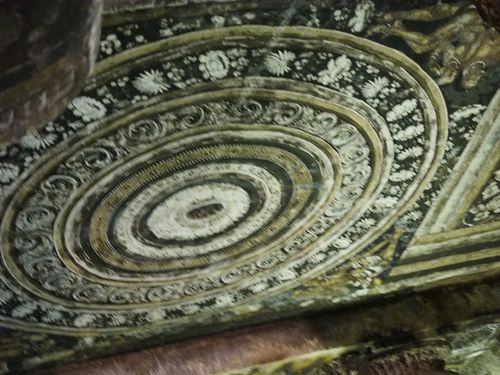
Ajanta • Cave No.2

Ajanta • Cave No.2
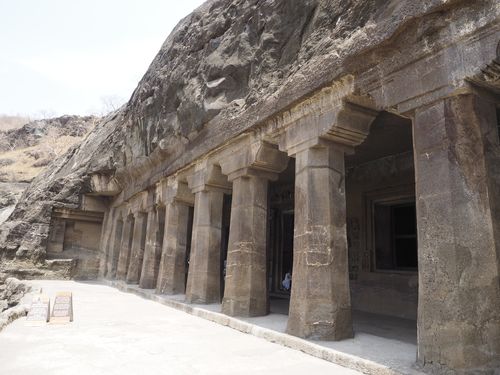
Ajanta • Cave No.2
Monument profile
Cave No.2
Monument categories: Monastery, Rock Sanctuary
Monument families: Monastery • Rock Sanctuary and Monumental Bas-reliefs
Monument genres: Religious
Cultural heritage: Buddhist
Geographic location: Ajanta • Maharashtra • India
Construction period: 5th century AD
This monument in Ajanta is inscribed on the UNESCO World Heritage List since 1983 and is part of the serial property "Ajanta Caves".See the UNESCO monuments featured on this site
• Links to •
• Dynasties that contributed to the construction of the monument •

• List of videos about Ajanta on this site •
Ajanta Caves • Maharashtra, India
• References •
UNESCO: Grottes d'Ajanta
World History Encyclopedia: Grottes d'Ajanta
Political and Social Motivations Behind the Construction of Cave No. 2 at Ajanta: Historical Impact and Global Context
Political and Social Motivations and Construction Period
Cave No. 2 at Ajanta, built during the 5th century under the patronage of the Vakataka dynasty, was constructed with both political and social motivations in mind. The Vakatakas, particularly Emperor Harishena, were strong supporters of Mahayana Buddhism and used the construction of monumental caves like those at Ajanta to solidify their political power and legitimacy. By aligning themselves with the growing influence of Buddhist monasteries, the Vakataka rulers were able to build alliances with the religious elite, promoting stability and social cohesion in a culturally diverse region.
On a social level, the caves of Ajanta, including Cave No. 2, served as centers of religious instruction, meditation, and artistic expression. Monks resided in these caves, practicing and teaching Buddhism to both local communities and visiting pilgrims. The presence of elaborate frescoes and sculptures within Cave No. 2 reflects a desire to create a space for spiritual education and contemplation, helping to propagate Buddhist teachings and moral values.
Historical Events and Their Impact on the Region
The construction of Cave No. 2 occurred during a period of flourishing Mahayana Buddhism in India, with the Vakataka dynasty playing a crucial role in its spread. Ajanta, under their patronage, became a significant religious and cultural center. However, with the fall of the Vakatakas in the late 5th century and the subsequent decline of Buddhism in India due to the resurgence of Hinduism, Ajanta began to lose its prominence. This decline accelerated with the invasions of the Alchon Huns in the region during the 6th century, which destabilized the area politically and socially.
As the region shifted towards Hinduism and other influences, Ajanta, including Cave No. 2, was gradually abandoned. The caves were left to the elements for several centuries, becoming overgrown and forgotten until they were rediscovered in the early 19th century by British officers. This rediscovery marked the beginning of renewed interest in Ajanta, leading to archaeological excavations and restorations that have continued into the present day.
Global Context and Comparisons
During the 5th century, when Cave No. 2 was being constructed, significant changes were happening around the world. The Western Roman Empire was in decline, with its eventual fall in 476 CE marking the beginning of the Middle Ages in Europe. Meanwhile, the Byzantine Empire was solidifying its power in the east under rulers like Emperor Justinian I. In China, the Northern Wei Dynasty was similarly promoting Buddhism, constructing monumental cave complexes like those at Yungang and Longmen, which bear architectural and artistic parallels to Ajanta.
Ajanta’s place in this global context reflects the cross-cultural exchanges taking place along trade routes like the Silk Road, through which Buddhist ideas, art, and culture flowed between India, Central Asia, and China. The art in Cave No. 2, with its rich frescoes and influences from Greco-Buddhist art, is a testament to these cultural interactions. Similar to the Buddhist cave complexes in China, Ajanta represents a spiritual and artistic hub that played a crucial role in the development of religious art.
Major Transformations Over the Centuries
Over the centuries, Cave No. 2 has undergone significant transformations, many of which reflect the political shifts in the region. After its abandonment, the cave fell into disrepair, with natural forces like erosion and overgrowth damaging the frescoes and sculptures. However, the rediscovery of Ajanta in the 19th century led to a revival of interest in its artistic and religious significance. Restoration efforts began, particularly focused on the preservation of the delicate murals, which had suffered from neglect.
During the colonial period, Ajanta became an object of fascination for historians and archaeologists, who were impressed by the sophistication of the Buddhist art. The detailed frescoes in Cave No. 2, which depict episodes from the life of the Buddha as well as figures from local mythology, became central to the academic study of ancient Indian art. Successive restoration campaigns have aimed to preserve these works, despite the damage caused by centuries of exposure to the elements.
Cultural Importance and Current State of Conservation
Today, Cave No. 2 stands as a significant cultural monument, illustrating the artistic and spiritual achievements of 5th-century India. Its intricate frescoes, sculptures, and architectural elements are regarded as some of the finest examples of Mahayana Buddhist art. The cave’s inclusion as part of the UNESCO World Heritage Site designation for Ajanta in 1983 has brought international recognition to its cultural value, ensuring continued efforts to preserve the site for future generations.
Despite these efforts, the state of conservation of Cave No. 2 remains fragile. The murals, in particular, are vulnerable to humidity, temperature fluctuations, and the impact of tourism. Conservation teams have worked to implement climate control measures within the cave, but the preservation of these ancient works of art remains a delicate and ongoing challenge.
Challenges to Preservation
The primary challenge in preserving Cave No. 2 lies in safeguarding its fragile murals, which are susceptible to natural and human-induced damage. Humidity and temperature changes, exacerbated by the region’s monsoon climate, have caused deterioration of the paintings. Additionally, the increasing number of tourists visiting the site has put further strain on its structural integrity.
Modern conservation efforts include the use of climate control systems to regulate humidity and temperature within the cave, as well as measures to limit the number of visitors allowed inside. Restoration work has also focused on stabilizing the frescoes and preventing further erosion of the rock walls. However, continued investment and innovation in preservation techniques are essential to ensure the long-term survival of this invaluable cultural heritage.
Conclusion
Cave No. 2 at Ajanta is a testament to the political and social ambitions of the Vakataka dynasty and the enduring influence of Mahayana Buddhism in ancient India. Its architecture, frescoes, and sculptures reflect the technological innovations and artistic mastery of the time, as well as the cultural exchanges that shaped the region. As a UNESCO World Heritage Site, Cave No. 2 continues to attract global attention, while ongoing conservation efforts are crucial in protecting its delicate history from modern threats.
Architectural features
Technological Advancements and Architectural Innovation of Cave No. 2 at Ajanta: A Masterpiece of the Vakataka Era
Technological Advancements and Innovation During the Vakataka Period
Cave No. 2 at Ajanta, constructed during the 5th century under the patronage of the Vakataka dynasty, showcases the remarkable technological advancements and architectural innovations of its time. The Vakatakas, known for their support of Buddhism, initiated the construction of cave complexes that required advanced engineering techniques to carve large, detailed spaces directly into the basalt cliffs. The method of excavation, which involved chiseling from the top down, allowed artisans to create vast, symmetrical spaces without compromising the structural integrity of the rock.
The architecture of Cave No. 2 reflects this mastery, with its flat ceilings and carefully carved pillars demonstrating a deep understanding of load-bearing and material strength. The cave’s design also integrated sophisticated natural lighting techniques. Openings were strategically placed to allow sunlight to illuminate the detailed frescoes, enhancing their visibility and aesthetic appeal.
Materials and Construction Techniques
The primary material used in the construction of Cave No. 2 was basalt, a hard volcanic rock found abundantly in the Deccan Plateau. Despite the challenges of working with this material, artisans employed iron tools such as chisels and hammers to carve intricate details into the rock. The robustness of basalt ensured the durability of the structure, allowing it to withstand the elements over centuries.
The construction of the cave involved the meticulous planning of its layout, particularly in the placement of columns and doorways to ensure both functional and spiritual coherence. The pillars, symmetrically arranged throughout the cave, not only support the roof but also serve as decorative elements, adorned with carvings that add to the cave’s grandeur. Each element of the construction reflects the technical skill and aesthetic sensibility of the artisans, emphasizing the cave’s role as a religious and artistic center.
Fusion of Regional and Foreign Artistic Traditions
One of the most striking aspects of Cave No. 2’s architecture is its blend of regional artistic traditions with influences from foreign cultures, a reflection of the cultural exchanges taking place along the Silk Road during the Vakataka period. The Mahayana Buddhist art that flourished at Ajanta incorporated elements from Indian and Greco-Buddhist art, evident in the naturalism and detail of the frescoes and sculptures within the cave.
The cave’s walls are adorned with intricate murals depicting scenes from the life of the Buddha, as well as everyday life in ancient India. These frescoes, painted with natural pigments, demonstrate a high level of artistry, particularly in the realistic portrayal of human figures and the dynamic use of color and shading. The decorative motifs, including floral designs and geometric patterns, further illustrate the fusion of local and foreign influences, as similar themes can be found in other ancient art forms across Asia.
Notable Structure and Layout of Cave No. 2
The layout of Cave No. 2 follows the typical vihara (monastic hall) plan, with a large central hall surrounded by cells for monks. At the far end of the hall, a sanctuary houses an imposing statue of the Buddha seated in a teaching posture, symbolizing the central focus of spiritual devotion in the cave. The ceiling is flat and painted with intricate geometric patterns, creating a visually compelling contrast with the richly adorned walls.
The cave’s spatial organization is designed to create a sense of progression, with the pillars drawing visitors' attention towards the sanctum. This architectural harmony between form and function not only facilitates meditation and worship but also enhances the spiritual experience for devotees.
Statistics and Noteworthy Anecdotes
It is believed that the construction of Cave No. 2, along with the entire Ajanta complex, took several decades to complete, involving hundreds of skilled artisans. One particularly noteworthy detail about the cave is the extensive use of natural pigments in the frescoes, some of which have remarkably survived despite centuries of exposure to humidity and other environmental factors. The vibrant colors, derived from minerals and organic materials, have made the murals in Cave No. 2 some of the most celebrated examples of ancient Indian painting.
Another fascinating aspect is the attention to detail in the depiction of the human form. The murals feature realistic expressions, gestures, and body movements, which were groundbreaking for the time and influenced the evolution of art in the region.
International Recognition and UNESCO World Heritage Status
Cave No. 2, as part of the Ajanta Caves complex, was inscribed as a UNESCO World Heritage Site in 1983. This recognition brought international attention to the artistic and historical significance of Ajanta, particularly for its role in the development of Buddhist art and architecture. The UNESCO designation has not only helped preserve the site but has also contributed to scholarly research, tourism, and global appreciation of its cultural value.
The inclusion of Ajanta in the UNESCO list also underscored the importance of protecting the cave's fragile frescoes and sculptures. International collaboration and funding have played a key role in the restoration and conservation efforts, which aim to balance the need for public access with the preservation of the cave’s artistic treasures.
Challenges in Preservation
Despite these efforts, Cave No. 2 faces significant preservation challenges. The murals are particularly vulnerable to damage from humidity, temperature fluctuations, and the impact of tourism. The delicate frescoes, already worn by centuries of exposure, require constant monitoring and conservation to prevent further deterioration.
Modern conservation methods, including climate control systems and restricted visitor access, have been implemented to mitigate these risks. However, ongoing efforts are necessary to ensure the long-term survival of the cave’s art and architecture, particularly in light of environmental changes and the increasing number of visitors.
Conclusion
Cave No. 2 at Ajanta is a testament to the technological and artistic achievements of the Vakataka era. Its architecture, characterized by advanced engineering and aesthetic innovation, reflects the cultural richness of 5th-century India and its interactions with the broader world. The fusion of regional and foreign artistic traditions, coupled with the technical mastery displayed in the cave’s construction, has earned Cave No. 2 international recognition as a masterpiece of ancient art. As a UNESCO World Heritage Site, the ongoing preservation of this cultural treasure remains a priority, ensuring that it continues to inspire and educate future generations.