

 Français (France)
  Nederlands (nl-NL)
 00:00 • intro | 00:20 • the fishermen returning from sea | 01:12 • unloading the catch | 02:29 • remains of the Magha Saptami festival decorations | 02:54 • the fish is waiting
Personal creation from visual material collected during my trip India • Amazing East India: Assam, Odisha, West Bengal (2023)
Map of places or practices in Konark on this site
• Use the markers to explore the content •
Chandrabhaga Beach and the Fishing Traditions of the Odisha Coast
A Coastal Landscape Near Konârak
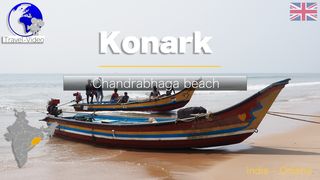
Near Konârak, on the coast of the Bay of Bengal, Chandrabhaga Beach forms part of a shoreline where fishing activities, religious traditions and everyday life remain closely connected to the marine environment. Although the region is internationally associated with the Sun Temple of Konârak, the surrounding coastline also preserves strong local traditions linked to fishing communities that have lived along the shores of Odisha for generations.
This video focuses on the activity of the beach itself, particularly after the return of the fishing boats. The scenes reveal a landscape shaped not only by the sea and the sand, but also by labour, exchange and collective organisation around fishing activities. The remains of decorations linked to the Magha Saptami festival also highlight the religious importance of this coastal environment within the cultural traditions of Odisha.
Returning Boats and Daily Fishing Activity
The return of the fishing boats represents one of the central moments of daily life on Chandrabhaga Beach. Boats come back directly from the Bay of Bengal, often navigating strong waves and changing coastal conditions before reaching the shore. The video captures the unloading of fish and the collective activity that immediately develops around the boats.
The handling and sorting of the catch reveal the organisation of local fishing practices. Fish are carried, grouped and prepared for transport or sale directly on the beach. These scenes illustrate the economic importance of the sea for many coastal communities of Odisha and show how work on the shoreline depends on coordination between fishermen, traders and transport workers.
Moments when the fish remains temporarily arranged on the sand also transform the beach into a working environment rather than simply a maritime landscape. The coastline becomes a place of movement, exchange and preparation linked to the rhythms of the sea.
Magha Saptami and the Religious Importance of Chandrabhaga
The video also shows the remains of decorations associated with the Magha Saptami festival, an important religious celebration connected to the worship of Surya, the Hindu sun god. During this festival, large numbers of pilgrims gather on Chandrabhaga Beach to perform ritual bathing ceremonies at sunrise.
The proximity of the beach to the Sun Temple of Konârak reinforces the symbolic importance of the site. For centuries, this part of the Odisha coastline has been associated with solar worship and religious gatherings linked to regional Hindu traditions. Temporary structures and decorative elements remaining after the festival illustrate the continuing importance of these ceremonies in local cultural life.
Coastal Traditions and Maritime Exchanges
The coast of Odisha historically played an important role in maritime trade across the Bay of Bengal. Fishing communities, landing beaches and small coastal settlements formed part of wider commercial networks connecting eastern India with other regions of South and Southeast Asia. Although modern infrastructure has transformed many aspects of coastal life, traditional fishing methods and collective working practices remain visible in places such as Chandrabhaga.
The natural environment continues to influence daily life along the coast. Tides, seasonal weather conditions and marine resources shape economic activities and patterns of settlement. This close relationship between human activity and the sea contributes to the distinctive cultural identity of the Odisha shoreline.
What the Videos on This Site Make Particularly Clear
The videos on travel-video.info make it easier to observe the details of fishing boats, working gestures and the organisation of activity along the beach. The animated photographic sequences highlight textures, colours and spatial relationships between fishermen, boats and the coastal landscape with unusual clarity.
The gradual transitions between wide views and closer perspectives also help explain the different stages of fishing activity and the atmosphere of the shoreline. This visual approach creates a clearer understanding of the interaction between maritime traditions, religious practices and the natural environment.
Another Perspective on the Konârak Coast
Through the fishermen, the unloading scenes and the traces of the Magha Saptami festival, this video presents a side of the Konârak region that extends beyond its famous monuments. It explores a coastal environment where fishing, religious traditions and everyday labour continue to shape life along the Bay of Bengal. The detailed pages dedicated to Chandrabhaga Beach provide additional context for understanding this important cultural landscape of coastal Odisha.
Links to related pages




Audio Commentary Transcript
Just a few kilometers from the Sun Temple of Konark, on the wide Chandrabhaga Beach, lives a community of fishermen from Odisha’s coast. These families spend most of the year living from small-scale fishing, passing down their craft from one generation to the next. Their lightweight boats and nets drying in the wind reveal a life shaped by the sea — resilient but exposed to seasons and cyclones.
After fishing, the boats are pulled up onto the sand and emptied of their nets. A little further away, sails, nets, and equipment pile up near makeshift shelters.
Every winter, during Magha Saptami, thousands of Hindu pilgrims bathe here at dawn before heading to the nearby Sun Temple. For the fishermen, the festival blends livelihood and faith: they supply fish to visitors, join in sea rituals, and maintain an ancient bond between the ocean that sustains them and the sun worship that defines this coast.

Music:
- - YouTube video library - City Walk - John Patitucci
Disclaimer: Despite its appropriateness, copyright issues prevent the use of traditional music in "Konark • Chandrabhaga Beach, fishermen’s coast in Odisha", hence the use of royalty-free music. Despite our careful selection, some might regret this decision, which is necessary to avoid potential lawsuits. Although difficult, this decision is the only viable solution.


