

 Français (France)
  Nederlands (nl-NL)
 The Pagoda of the Celestial Lady, also known as Thiên Mụ Pagoda, is a prominent Buddhist site located in Hué, Vietnam. This monument is distinguished by its multi-tiered octagonal tower, which stands as a spiritual symbol and landmark visible from afar. The pagoda serves as a significant religious center, attracting numerous visitors due to its cultural importance and serene surroundings. It is also a place of reflection, valued for its peaceful atmosphere and symbolic richness.

Hue • Heavenly Lady Pagoda: 7 story tower

Hue • Heavenly Lady Pagoda: the Perfume River seen from the pagoda
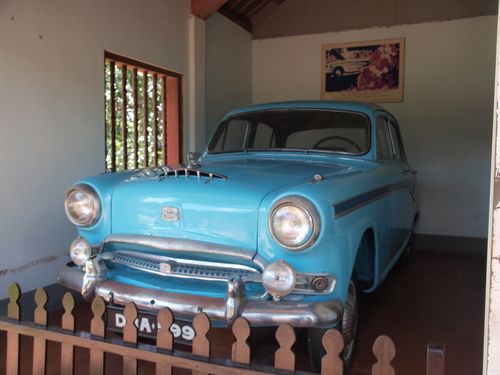
Hue • Heavenly Lady Pagoda: Car of the monk Thich Quang Duc
Monument profile
Heavenly Lady Pagoda
Monument category: Pagoda
Monument family: Pagoda or stupa
Monument genre: Religious
Cultural heritage: Buddhist
Geographic location: Hue • Vietnam
Construction period: 17th century AD
This monument in Hue is inscribed on the UNESCO World Heritage List since 1993 and is part of the serial property "Complex of Hué Monuments".See the UNESCO monuments featured on this site
• Links to •
• List of videos about Hue on this site •
Hue, the mausoleum of Tu Duc • Vietnam
Hue, in the surrounding countryside • Vietnam
Hue, Celestial Lady Pagoda (Tien Mu) • Vietnam
Hue, the forbidden city • Vietnam
• References •
Wikipedia EN: Thiên Mụ Temple
UNESCO: Ensemble de la Dame Céleste (Thien-Mu)
Authentic Vietnam Travel: La pagode de la Dame Céleste
• Sources •
Nguyễn Bá Lăng, The History of Huế Monuments (2005) UNESCO World Heritage Centre, Complex of Huế Monuments Taylor, Keith Weller, The Birth of Vietnam (1991) Reports from the Huế Monuments Conservation Center Vu Hong Lien, Buddhism in Vietnam: History and Architecture (2014)
The Pagoda of the Celestial Lady (Thiên Mụ) in Huế: Political Motivations, Historical Transformations, and Preservation Challenges
1. Political and Social Motivations Behind the Construction
The Pagoda of the Celestial Lady (Thiên Mụ Pagoda), located in Huế, Vietnam, stands as one of the country’s most iconic religious monuments. Its construction dates back to 1601, initiated by Nguyễn Hoàng, a prominent lord of the Nguyễn dynasty, who governed central Vietnam during a time of territorial consolidation and political realignment.
The motivations behind the construction of Thiên Mụ Pagoda were deeply rooted in both political strategy and spiritual influence. Politically, Nguyễn Hoàng sought to assert his authority over the newly established territories along the Perfume River. By commissioning a grand Buddhist pagoda, he aimed to legitimize his rule, foster a sense of unity among the local population, and establish Huế as a significant cultural and political center. Aligning with Buddhism, the dominant religion, provided moral authority and reinforced the image of the Nguyễn lords as protectors of both faith and tradition.
Socially, the pagoda served as a religious center, promoting Buddhist teachings and becoming a hub for community gatherings, education, and cultural activities. It played a key role in shaping the spiritual life of the region, attracting monks, scholars, and pilgrims from across Vietnam.
2. Major Historical Events and Their Impact on the Region
Throughout its history, Thiên Mụ Pagoda has been a silent witness to numerous significant events that influenced both the political landscape and social fabric of Vietnam:
- Expansion During the Nguyễn Dynasty (1802–1945): Under the reign of the Nguyễn emperors, especially Emperor Thiệu Trị, the pagoda was expanded, and the iconic Phước Duyên Tower (constructed in 1844) was added. The pagoda became a symbol of imperial power and religious devotion, closely tied to the Nguyễn court in Huế.
- Colonial Period (1885–1954): During French colonial rule, Thiên Mụ served as a center for nationalist movements. It became a site of resistance against colonial oppression, where monks and intellectuals gathered to discuss strategies for cultural and political preservation.
- Buddhist Crisis (1963): The pagoda played a pivotal role during the Buddhist protests against the South Vietnamese government led by President Ngô Đình Diệm, whose regime favored Catholicism over Buddhism. This period saw large-scale demonstrations originating from the pagoda, culminating in the famous self-immolation of Thích Quảng Đức, a powerful act of protest against religious persecution that garnered international attention.
These events transformed Thiên Mụ from a religious site into a symbol of political resistance, embodying the struggles for religious freedom, national identity, and social justice in Vietnam.
3. Global Context and Comparisons with Other Regions
The construction of Thiên Mụ Pagoda in the early 17th century coincided with significant global transformations marked by the rise of empires, religious reforms, and cultural exchanges:
- In East Asia: The Ming dynasty in China was commissioning grand temples and palaces, reflecting Confucian and Buddhist values. Similarly, in Japan, the Tokugawa shogunate promoted the construction of Buddhist temples during the Edo period to consolidate power and promote social stability.
- In Europe: The early 1600s marked the Counter-Reformation, leading to the construction of Baroque churches like St. Peter's Basilica in Rome, designed to reinforce the authority of the Catholic Church.
- In South Asia: The Mughal Empire in India, under Emperor Shah Jahan, witnessed the creation of architectural masterpieces like the Taj Mahal, blending Persian, Indian, and Islamic influences.
While these structures varied in style and purpose, they shared common themes: legitimizing political power, promoting religious ideologies, and serving as centers of cultural influence. Thiên Mụ Pagoda fits into this global pattern, reflecting how architecture was used as a tool for both spiritual expression and political authority.
4. Major Transformations Over the Centuries
The architectural evolution of Thiên Mụ Pagoda reflects the historical shifts in Vietnam’s political and cultural landscape:
- 17th Century Origins: Initially a modest structure, the pagoda was built on a strategic site overlooking the Perfume River, chosen for its symbolic and geomantic significance.
- 19th Century Expansion: The construction of the Phước Duyên Tower, an octagonal, seven-story structure standing 21 meters tall, marked a major transformation. This tower became the defining feature of the pagoda, symbolizing both religious enlightenment and imperial grandeur.
- Post-Colonial Period: After Vietnam’s independence, the pagoda underwent restoration efforts to repair damage from wars and natural degradation. Despite modernization, the site has retained its traditional architectural integrity.
The transformations reflect Vietnam’s dynamic history—shifting from feudal dynasties to colonial rule, through war and revolution, to the present era of cultural preservation.
5. Cultural Significance and Current State of Conservation
Today, Thiên Mụ Pagoda is not only a sacred Buddhist site but also a cultural landmark representing Vietnam’s historical resilience. It forms part of the Complex of Huế Monuments, which was designated a UNESCO World Heritage Site in 1993. This recognition underscores its architectural, historical, and cultural value.
Current State of Conservation:
The pagoda is well-preserved, thanks to ongoing restoration efforts supported by both the Vietnamese government and international organizations. Conservation focuses on:
- Structural Integrity: Maintaining the stability of ancient brickwork, wooden beams, and the Phước Duyên Tower.
- Artistic Elements: Preserving murals, sculptures, and inscriptions that depict Buddhist teachings and imperial decrees.
- Natural Environment: Managing the surrounding gardens, courtyards, and the scenic riverbank to maintain the site’s aesthetic and spiritual harmony.
Despite these efforts, the pagoda faces challenges that threaten its historical authenticity.
6. Challenges in Preserving Historical Integrity
Environmental Threats:
Flooding and Erosion: Situated along the Perfume River, the pagoda is vulnerable to seasonal floods and soil erosion, which can undermine its foundations.
Climate Change: Increasing temperatures, humidity, and extreme weather events accelerate the deterioration of traditional building materials.
Human-Induced Challenges:
Tourism Pressure: The growing number of visitors, while beneficial for the local economy, risks damaging fragile structures and disrupting the site’s spiritual atmosphere.
Urban Development: Expansion of modern infrastructure in Huế poses potential threats to the cultural landscape surrounding the pagoda.
Conservation Strategies:
Restoration Projects: Regular maintenance using traditional materials and techniques to preserve authenticity.
Sustainable Tourism Management: Implementing visitor guidelines to minimize environmental impact and preserve the sacred ambiance.
Community Involvement: Engaging local communities in conservation efforts to ensure that cultural heritage remains a living part of daily life.
7. Conclusion
The Pagoda of the Celestial Lady (Thiên Mụ) stands as a testament to Vietnam’s rich cultural heritage, reflecting centuries of political change, religious devotion, and architectural ingenuity. Its role as both a spiritual sanctuary and a symbol of national identity highlights the complex interplay between culture, politics, and history. While challenges persist in preserving its integrity, continued efforts at both local and international levels ensure that this iconic monument will endure for future generations to appreciate and revere.
The Pagoda of the Celestial Lady (Thiên Mụ) in Huế: Architectural Innovations, Materials, and Global Recognition
1. Technological Advancements and Construction Techniques
The Pagoda of the Celestial Lady (Thiên Mụ Pagoda), located in Huế, Vietnam, is a remarkable example of Vietnamese Buddhist architecture. Established in 1601 under the directive of Nguyễn Hoàng, the founder of the Nguyễn Lords’ rule in central Vietnam, the pagoda has undergone several transformations that reflect the technological and architectural innovations of its time.
One of the most notable architectural features of the pagoda is the Phước Duyên Tower, an octagonal structure rising to a height of 21 meters with seven tiers, constructed in 1844 under Emperor Thiệu Trị. This tower represents not only religious symbolism but also sophisticated engineering for the era.
Key Construction Techniques:
- Load Distribution and Structural Balance: The octagonal design aids in distributing weight evenly across the structure, enhancing its stability against environmental factors such as strong winds and seismic activities.
- Interlocking Wooden Joinery: The use of traditional mortise and tenon joints—a hallmark of East Asian architecture—allows for flexibility, especially important in Vietnam's earthquake-prone regions.
- Ventilation Design: The strategic placement of windows and openings facilitates natural airflow, preventing moisture accumulation, which helps in preserving the wooden interiors and decorative elements.
These techniques highlight the pagoda’s blend of practical engineering and aesthetic design, ensuring both durability and spiritual ambiance.
2. Specific Materials and Their Symbolism
The materials used in constructing Thiên Mụ Pagoda were carefully selected for their symbolic significance and structural integrity, reflecting the grandeur of the Nguyễn dynasty and the religious importance of the site.
- Baked Brick and Stone: The Phước Duyên Tower is primarily built from red bricks, bound with traditional lime mortar, ensuring resilience against humidity and temperature changes.
- Precious Woods: The interior structures use ironwood (gỗ lim) and jackfruit wood (gỗ mít), prized for their durability and resistance to termites, as well as their cultural significance in Vietnamese spiritual practices.
- Glazed Tiles: The roofs are adorned with green-glazed tiles, representing prosperity and harmony, a design choice influenced by both Chinese and Vietnamese architectural traditions.
- Bronze and Stone Sculptures: The pagoda houses a large bronze bell known as Dai Hồng Chung, cast in 1710, weighing approximately 2 tons. Stone stele mounted on turtle-shaped bases symbolize longevity and stability.
The careful integration of these materials not only enhances the structural integrity of the pagoda but also embodies the Buddhist principles of impermanence, balance, and enlightenment.
3. Architectural Features: A Fusion of Regional and Foreign Influences
Thiên Mụ Pagoda’s architecture represents a harmonious blend of Vietnamese traditions and external influences, particularly from Chinese and Cham cultures, reflecting Vietnam’s historical position as a cultural crossroads in Southeast Asia.
Notable Architectural Elements:
- Octagonal Tower (Phước Duyên): The number eight holds spiritual significance in Buddhism, symbolizing the Noble Eightfold Path, essential for achieving enlightenment. The tower’s octagonal shape also improves structural stability.
- Imperial Aesthetic: The pagoda’s layout, symmetrical design, and decorative motifs reflect influences from Chinese imperial architecture, adapted to Vietnamese aesthetics.
- Cham Artistic Influence: Some ornamental carvings and geometric patterns exhibit similarities to Cham art, showcasing the cultural interactions in central Vietnam.
The pagoda’s spatial design follows the principles of feng shui, strategically positioned overlooking the Perfume River, symbolizing prosperity and spiritual harmony.
4. Notable Statistics and Historical Anecdotes
- Height of Phước Duyên Tower: 21 meters (69 feet), consisting of seven levels, each representing a stage of spiritual ascension.
- Bronze Bell (Dai Hồng Chung): Cast in 1710, weighing around 2,000 kilograms (4,400 lbs), with inscriptions praising Buddhist virtues. Its chime is said to have reached over 10 kilometers during ceremonies.
- Legend of the Pagoda’s Name: According to local folklore, an old woman, known as the Celestial Lady (Thiên Mụ), appeared on the hill where the pagoda now stands. She prophesied the construction of a pagoda that would bring prosperity to the land. Inspired by this legend, Nguyễn Hoàng ordered its construction.
These historical details and legends contribute to the pagoda’s cultural richness and its status as a symbol of Huế’s spiritual heritage.
5. Contribution to International Recognition
Thiên Mụ Pagoda is a significant cultural and religious landmark, contributing to Huế’s global recognition as a center of Vietnam’s imperial and spiritual history. The pagoda is part of the Complex of Huế Monuments, which was inscribed as a UNESCO World Heritage Site in 1993.
Impact of UNESCO Inscription:
- Preservation of Heritage: The UNESCO designation has facilitated conservation projects, ensuring the protection of ancient structures and historical artifacts.
- Global Awareness: The recognition has enhanced the pagoda’s international visibility, attracting scholars, historians, and tourists worldwide.
- Cultural Diplomacy: Thiên Mụ has become a symbol of Vietnam’s rich cultural heritage in global forums, representing the country’s efforts to preserve its historical identity.
However, increased tourism also brings challenges, requiring careful management to maintain the pagoda’s sacred atmosphere and architectural integrity.
6. Challenges in Preserving Historical Integrity
Environmental Threats:
Flooding and Erosion: Located near the Perfume River, the pagoda is susceptible to seasonal floods, which can erode its foundations and cause structural damage.
Climate Change: Rising temperatures, increased humidity, and extreme weather events accelerate the deterioration of traditional materials, especially wood and stone.
Human-Induced Challenges:
Tourism Pressure: The growing number of visitors can lead to wear and tear on ancient floors, steps, and decorative elements.
Urban Development: Expansion of modern infrastructure in Huế poses risks to the pagoda’s historical landscape and visual integrity.
Conservation Strategies:
Regular Restoration: Continuous maintenance using traditional techniques ensures the authenticity of architectural features.
Sustainable Tourism Practices: Implementing visitor management systems to control foot traffic and reduce environmental impact.
Community Involvement: Engaging local communities in preservation efforts fosters a sense of ownership and ensures the transmission of traditional knowledge.
7. Conclusion
The Pagoda of the Celestial Lady (Thiên Mụ) stands as an enduring symbol of Vietnam’s cultural and spiritual legacy. Its architectural elegance, historical significance, and sacred atmosphere reflect the convergence of religious devotion, political authority, and artistic innovation. As part of the UNESCO World Heritage Site of Huế’s monuments, the pagoda continues to inspire awe and reverence, serving as a testament to Vietnam’s rich heritage and its ongoing efforts to preserve its historical treasures for future generations.