

 Français (France)
  Nederlands (nl-NL)
 Wat Phongxay is a Buddhist temple located in Luang Prabang, Laos. This monument is a representative example of the local religious architecture, showcasing cultural influences in its design and decor. The temple serves as a place of worship and meditation for monks and local devotees. It is also a point of interest for visitors eager to explore the spiritual and cultural heritage of Luang Prabang. Wat Phongxay contributes to the serene ambiance of the city, providing a space for spiritual reflection as well as a glimpse into the daily monastic life.
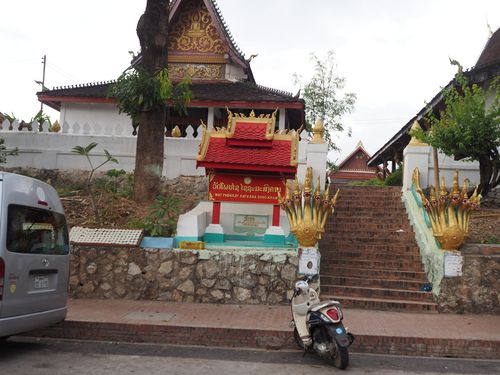
Luang Prabang • Wat Phongxay
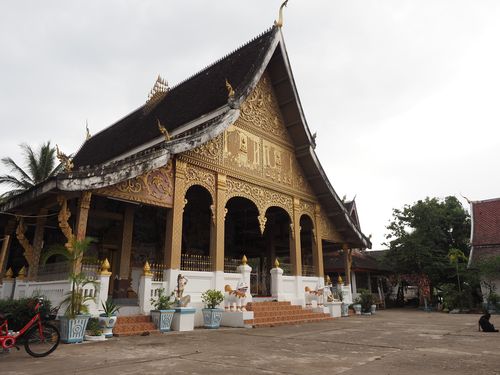
Luang Prabang • Wat Phongxay
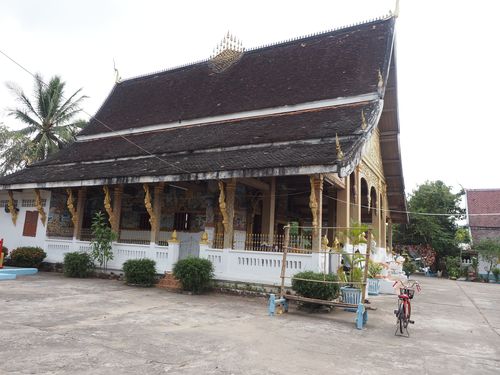
Luang Prabang • Wat Phongxay
Monument profile
Wat Phongxay
Monument category: Buddhist temple
Monument family: Temple
Monument genre: Religious
Cultural heritage: Buddhist
Geographic location: Luang Prabang • Laos
Construction period: 18th century AD
This monument in Luang Prabang is inscribed on the UNESCO World Heritage List since 1995 and is part of the serial property "Town of Luang Prabang".See the UNESCO monuments featured on this site
• Links to •
• List of videos about Luang Prabang on this site •
Luang Prabang, Royal Palace • Laos
Luang Prabang, the markets • Laos
Luang Prabang, Wat Sensoukharam temple • Laos
Luang Prabang, Sunset on Mount Phou Si • Laos
Luang Prabang, Wat Xieng Thong temple • Laos
Luang Prabang, paper making workshop • Laos
Laos • Fabric Arts
Luang Prabang, a City in the Countryside • Laos
Luang Prabang, some temples • Laos
• References •
UNESCO: Town of Luang Prabang
Historical Analysis of Wat Phongxay in Luang Prabang, Laos
Wat Phongxay, a lesser-known but historically significant Buddhist temple in Luang Prabang, Laos, embodies centuries of cultural, political, and spiritual transformation. As part of a city deeply intertwined with Buddhism, this temple has witnessed major historical events, reflecting the broader regional and global trends in religious architecture and governance. This article presents a comprehensive analysis of the temple’s history, including the political and social context of its construction, the major historical events that shaped it, its global significance, the architectural transformations it underwent, its modern role, and the challenges facing its conservation.
Political and Social Context of Its Construction
The construction of Wat Phongxay took place in an era when Luang Prabang was consolidating its identity as the religious and administrative center of the Kingdom of Lan Xang (14th-18th century). The ruling monarchs heavily patronized Buddhism, using temples not only as places of worship but also as symbols of state authority. By constructing religious monuments, rulers sought to legitimize their reign, reinforce spiritual authority, and cultivate diplomatic ties with neighboring Buddhist kingdoms such as Siam (modern-day Thailand) and Burma (Myanmar).
At the time of its founding, Laos was a key player in the intricate power struggles between these regional powers. The Siamese and Burmese frequently clashed over control of trade routes and territories, and Luang Prabang often found itself in a delicate balancing act between the two. The construction of temples like Wat Phongxay was a strategic move by the ruling elites to assert their independence, consolidate national identity, and elevate the prestige of Luang Prabang as a center of Buddhist learning.
In addition to religious and political motives, the social structure of Luang Prabang played a role in the development of temple complexes. Monasteries were educational hubs where monks taught Buddhist scriptures, traditional medicine, and artistic techniques. This allowed temples to function as cultural and intellectual centers, shaping the identity of the local population.
Major Historical Events Impacting the Site
Over the centuries, Wat Phongxay endured several periods of destruction, reconstruction, and adaptation, shaped by conflicts, colonial interventions, and shifting religious practices.
- Burmese Invasions (18th Century): The expansionist policies of the Burmese Kingdom led to multiple invasions of northern Laos, including Luang Prabang, during which numerous temples were plundered or repurposed. This period marked significant damage to the temple structures, followed by rebuilding efforts led by successive Laotian rulers.
- Siamese and Vietnamese Influence (19th Century): As Siam extended its influence over Laos, the temple may have undergone modifications in line with Siamese architectural preferences. During this period, Vietnam also attempted to exert control over Laos, resulting in a power struggle that influenced religious patronage and temple restoration projects.
- French Colonial Period (1893-1953): The transformation of Laos into a French protectorate brought new architectural influences and shifts in religious governance. While Buddhism remained central to society, French administrators introduced urban planning measures that affected temple layouts. Some temples, including Wat Phongxay, saw renovations incorporating European artistic techniques, such as the use of colored glass in temple decoration.
- World War II and Lao Independence (20th Century): The geopolitical turmoil of World War II, followed by Laos’ independence in 1953, led to renewed efforts to reclaim Buddhist heritage. Post-independence, Wat Phongxay, like many other temples, was restored as a symbol of national unity and spiritual resilience.
- Communist Revolution and Religious Reform (1975-Present): The establishment of the Lao People’s Democratic Republic in 1975 led to state oversight of religious institutions. Although the government maintained Buddhism as part of the national identity, certain temples were repurposed for secular use. However, Wat Phongxay retained its religious significance and continues to serve as an active monastic center.
Global Context at the Time of Construction
During the period when Wat Phongxay was built, other major civilizations were also constructing monumental religious sites:
- In Thailand, the Ayutthaya Kingdom was erecting grand temples with similar multi-tiered roofs and elaborate stucco reliefs.
- In Burma, the Konbaung Dynasty was developing pagodas with gold-plated stupas, mirroring artistic exchanges between Buddhist nations.
- In China, the Ming Dynasty was funding large Buddhist monasteries, demonstrating a broader regional commitment to Buddhist architecture.
- In Europe, the Renaissance and Baroque periods influenced church construction, emphasizing grandeur, which echoed the spiritual ambitions seen in Southeast Asian temple-building.
Wat Phongxay, like many religious sites of its time, was not an isolated monument but part of a global trend in sacred architecture, shaped by cultural exchanges and political ambitions.
Transformations and Structural Changes
Over the centuries, Wat Phongxay underwent multiple restorations and modifications, reflecting its resilience and continued significance.
- Expansion of Monastic Quarters: Originally a modest structure, the temple gradually expanded to accommodate a larger monastic community.
- Renovation of Mural Paintings: The temple walls feature traditional Lao frescoes, some of which were repainted during different restoration phases, integrating modern pigments while preserving ancient artistic techniques.
- Structural Reinforcements: Due to exposure to heavy monsoon rains, wooden beams and roof tiles have been periodically replaced to ensure stability.
- Introduction of Electric Lighting: With the rise of tourism and modernization, subtle electrical installations have been introduced to illuminate sacred spaces during ceremonies.
Modern Role and Cultural Importance
Today, Wat Phongxay remains a functioning Buddhist temple, serving both monks and laypeople. It plays an essential role in annual festivals, including:
- Pi Mai Lao (Lao New Year): The temple hosts elaborate ceremonies, water blessings, and parades.
- Kathina (End of Buddhist Lent): A festival where monks receive new robes and alms from the community.
- Full Moon Ceremonies: Regular observances marked by meditation and chanting sessions.
Beyond its spiritual function, the temple attracts scholars, historians, and architects, keen to study its historical layers and preservation methods.
Conservation Challenges and Future Preservation
While Wat Phongxay continues to thrive, it faces serious conservation challenges:
- Urbanization: As Luang Prabang expands, encroaching modern buildings threaten the traditional atmosphere of the temple.
- Climate Change: Increased humidity and seasonal flooding accelerate the degradation of wooden and stucco elements.
- Tourism Management: Unregulated tourism may strain the temple’s physical structure and its sacred environment.
Efforts are ongoing to integrate sustainable conservation strategies, ensuring that Wat Phongxay remains a living monument for generations to come.
Conclusion
Wat Phongxay stands as a testament to the historical depth of Luang Prabang, bridging spiritual devotion, political history, and architectural brilliance. Its evolution from a royal-era temple to a modern-day heritage site underscores its enduring significance in Lao culture. As preservation efforts continue, this sacred site remains a symbol of resilience, identity, and faith, carrying forward the rich legacy of Buddhist architecture in Southeast Asia.
Architectural Analysis of Wat Phongxay in Luang Prabang, Laos
Wat Phongxay, located in Luang Prabang, Laos, is a significant example of Lao Buddhist architecture, embodying the region’s religious traditions, artistic influences, and advanced construction techniques. While it may not be as widely recognized as other temples in the city, its architectural complexity and historical depth make it a valuable subject of study. This article explores the technological and architectural innovations of the time, materials and construction methods, artistic influences, spatial organization, and conservation challenges, offering a detailed and structured analysis of the monument.
Technological and Architectural Innovations of the Period
At the time of its construction, Lao temple architecture was evolving in response to both environmental and cultural needs. The builders of Wat Phongxay incorporated several advanced techniques to ensure the temple’s stability, longevity, and functionality in the tropical climate of northern Laos.
- Structural Stability: The temple was built on a raised platform, a common feature in Lao and Thai Buddhist temples. This elevation serves multiple purposes: it protects the structure from seasonal flooding (a significant concern in monsoon-prone areas) and enhances the temple’s grandeur, symbolizing its spiritual elevation above the material world.
- Ventilation and Climate Control: Given the hot and humid conditions of Luang Prabang, natural ventilation was an essential consideration. The open colonnades and large doorways allow for the free movement of air, reducing heat buildup inside the temple. The use of multi-tiered roofs with overhanging eaves also provides shade, protecting the interior from direct sunlight while maintaining airflow.
- Seismic Resilience: The region is subject to occasional seismic activity, and traditional Lao builders employed flexible wooden joinery techniques that allowed structures to absorb minor tremors without sustaining significant damage. Wooden beams were interlocked using mortise-and-tenon joints, a technique that ensured both strength and flexibility.
- Urban Integration: Wat Phongxay was designed to be a focal point of the local community, surrounded by monastic residences, educational buildings, and public gathering areas. Unlike Western religious architecture, which often emphasizes enclosed spaces, Buddhist temples in Southeast Asia are designed to be open and accessible, reinforcing their role as centers of both spiritual and communal life.
Materials and Construction Methods
The construction of Wat Phongxay relied heavily on locally available materials, which influenced both its aesthetic qualities and structural durability.
- Wood and Brick: The main structure consists of a brick and stucco base, providing a solid foundation, while the roof and interior framework were built using high-quality teak wood, known for its resistance to humidity and termites. The combination of brick and wood is characteristic of Lao temple construction, balancing durability and flexibility.
- Stucco Relief and Gilding: The external walls of the temple feature elaborate stucco reliefs, often gilded with gold leaf. These decorative elements serve both an aesthetic and symbolic purpose, representing Buddhist cosmology, local myths, and protective deities.
- Roofing Techniques: The temple’s multi-tiered roof is covered with overlapping ceramic tiles, which help channel rainwater away from the structure. The highly ornate gables at the roof’s edge are adorned with Naga (serpent) motifs, signifying protection and the transition between earthly and spiritual realms.
- Interior Ornamentation: Inside the temple, elaborate murals depict scenes from the Jataka tales (stories of the Buddha’s past lives). These paintings, executed using natural pigments, highlight local artistic styles while incorporating influences from Siamese and Khmer traditions.
Architectural and Artistic Influences
The architecture of Wat Phongxay is the result of a fusion of indigenous Lao traditions and foreign artistic elements, shaped by centuries of cultural exchange.
- Traditional Lao Architecture: The temple’s multi-tiered roof, curved gables, and stilted base reflect classic Lao temple designs, developed under the Lan Xang Kingdom. This style prioritizes harmony with nature, open spaces, and symbolic ornamentation.
- Siamese and Burmese Influence: Trade and religious exchanges with Siam (Thailand) and Burma (Myanmar) introduced new sculptural techniques, particularly in the depiction of guardian figures and celestial beings. The flame-like finials at the ends of the roof are a direct influence from Ayutthaya-period Thai temples.
- Khmer and Chinese Decorative Elements: Certain floral motifs and geometric patterns used in the stucco reliefs bear similarities to Khmer temple carvings. Additionally, small ceramic inlays and colored glass decorations on the temple’s interior reflect Chinese artistic traditions.
This blending of artistic elements makes Wat Phongxay a distinctive example of regional architectural synthesis, bridging different cultural and religious traditions.
Spatial Organization and Structural Features
Wat Phongxay follows the traditional layout of Theravāda Buddhist temples in Laos, designed to facilitate religious ceremonies, meditation, and community interaction.
- Main Hall (Viharn): The central Viharn (prayer hall) is the focal point of the complex, where monks and devotees gather for chanting, meditation, and teachings. It houses a large Buddha statue, often placed on a raised altar, surrounded by smaller votive figures.
- Stupa (That): Like many Lao temples, Wat Phongxay is likely associated with a stupa (reliquary monument), which serves as a symbolic representation of the Buddha’s teachings and may contain sacred relics.
- Monastic Quarters (Kutis): Adjacent to the temple are modest wooden structures used as living quarters for monks, reflecting the importance of monastic education and ascetic discipline.
- Entrance Gate and Courtyard: The entrance to the temple complex is often flanked by guardian figures, either Nagas (serpents) or Yakshas (protective spirits), marking the transition from the mundane to the sacred.
- Murals and Decorative Panels: The interior and exterior walls feature narrative paintings illustrating Buddhist parables, often incorporating local folklore and historical events.
Notable Statistics and Anecdotes
- Dimensions: Although the precise measurements of Wat Phongxay are not widely documented, it follows the proportions of classic Lao temples, with a rectangular prayer hall, an elevated base, and a roof spanning multiple tiers.
- Symbolism in Design: The temple’s roof structure is divided into three layers, representing the Three Jewels of Buddhism (Buddha, Dharma, Sangha).
- Legends and Folklore: Local stories claim that the temple was built following a vision received by a Buddhist monk, guiding the ruler of Luang Prabang to establish it as a site of spiritual protection for the city.
Architectural Recognition and Conservation Challenges
While Wat Phongxay is not as internationally famous as Wat Xieng Thong, its architectural integrity and cultural value remain significant. However, several challenges threaten its long-term preservation:
- Urban Expansion: The increasing development in Luang Prabang poses a risk to the temple’s surroundings, potentially altering its traditional setting.
- Climate and Environmental Damage: The humid tropical climate, combined with heavy rains, accelerates the deterioration of wooden and stucco elements.
- Tourism Pressure: Growing numbers of visitors require better preservation strategies to balance accessibility and conservation.
Efforts are being made to restore and maintain the temple, often through collaborations between the monastic community and heritage organizations.
Conclusion
Wat Phongxay exemplifies the rich architectural and artistic heritage of Laos, incorporating regional innovations and foreign influences. Through its structural ingenuity, artistic grandeur, and spiritual symbolism, the temple remains an essential part of Luang Prabang’s cultural identity. As efforts to preserve and study its architectural legacy continue, Wat Phongxay stands as a testament to the enduring brilliance of Lao craftsmanship and Buddhist devotion.