

 Français (France)
  Nederlands (nl-NL)
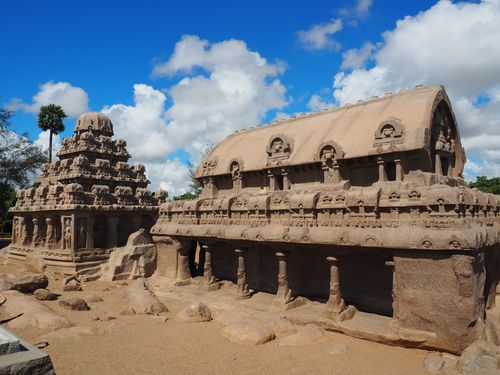
 The monolithic temples of Mahabalipuram, located in Tamil Nadu, India, are a collection of sanctuaries carved from massive granite rocks. Dating back to the 7th century, these structures, also known as Rathas, showcase Dravidian architecture and the artistic and technical skills of the Pallava dynasty. Recognized as a UNESCO World Heritage Site, they are of significant historical and cultural interest to visitors and researchers.

Monument profile
Monolithic Temples
Monument categories: Hindu Temple, Rock Sanctuary, Dravidian temple
Monument families: Temple • Rock Sanctuary and Monumental Bas-reliefs
Monument genres: Religious
Cultural heritage: Hindu
Geographic location: Mahabalipuram • Tamil Nadu • India
Construction period: 6th century AD
This monument in Mahabalipuram is inscribed on the UNESCO World Heritage List since 1984 and is part of the serial property "Group of Monuments at Mahabalipuram".See the UNESCO monuments featured on this site
• Links to •
• Dynasties that contributed to the construction of the monument •

• This monument illustrates the following theme •
Architecture • Rock-cut monuments : Rock-cut temples and caves in India
• List of videos about Mahabalipuram on this site •
Mahabalipuram, excavated temples • Tamil Nadu, India
• References •
UNESCO: Group of Monuments at Mahabalipuram
The Monolithic Temples of Mahabalipuram: Political Vision, Historical Evolution, and Global Context
The monolithic temples of Mahabalipuram, also known as the Panch Rathas, are a collection of granite rock-cut temples located in Tamil Nadu, India. Constructed during the 6th and 7th centuries under the Pallava dynasty, these structures symbolize the political ambitions, religious ideals, and artistic mastery of the era. This article explores the motivations behind their creation, the historical events that shaped their legacy, and their standing in a global architectural context, while highlighting the challenges of preserving this UNESCO World Heritage Site.
Political and Social Motivations
The construction of the monolithic temples reflects the Pallava rulers’ aspirations to consolidate power, reinforce cultural identity, and promote religious unity.
Assertion of Royal Authority:
The Pallava kings, particularly Mahendravarman I and Narasimhavarman I (Mamalla), commissioned these temples to display their sovereignty and to rival other South Indian dynasties, such as the Chalukyas.
By showcasing advanced engineering and artistic skills, the temples served as a testament to the dynasty’s power and its patronage of culture.
Religious and Social Cohesion:
The temples celebrated key Hindu deities, including Shiva, Vishnu, Durga, and Indra, reflecting the growing influence of Hinduism in South India.
They played a unifying role in society, serving as prototypes for subsequent Dravidian temples that became central to community life and religious practices.
Historical Events and Transformations
Pallava Era:
The monolithic temples were created during the reigns of Mahendravarman I (600–630 CE) and his successor Narasimhavarman I (630–668 CE). These rulers transformed Mahabalipuram into a hub of artistic and religious innovation.
Narasimhavarman I, also known as Mamalla (the great wrestler), is credited with the artistic vision behind the Panch Rathas and other monuments in Mahabalipuram.
Decline and Neglect:
After the fall of the Pallavas, Mahabalipuram gradually lost its prominence. The temples, though admired for their artistic value, fell into neglect over centuries.
Colonial Rediscovery:
European travelers and archaeologists in the 18th and 19th centuries brought the site to global attention, sparking interest in its preservation and study.
Global Context and Comparisons
During the 6th and 7th centuries, monumental architecture was flourishing in various parts of the world:
China: The Longmen Grottoes featured intricate Buddhist sculptures carved into rock faces, showcasing a similar emphasis on spiritual and artistic expression.
Byzantine Empire: Structures like the Hagia Sophia emphasized grandeur and innovation in religious architecture.
Mesoamerica: Civilizations such as the Maya were constructing pyramidal temples, reflecting their own blend of spirituality and engineering.
The monolithic temples of Mahabalipuram stand out for their unique approach to carving entire structures from single granite blocks, combining artistic experimentation with religious symbolism.
Architectural Features and Cultural Fusion
Design and Diversity:
Each of the Panch Rathas is carved from a single granite block and varies in size, style, and purpose:
- Draupadi Ratha: Dedicated to Durga, it features a simple hut-like structure with a lion sculpture nearby.
- Arjuna Ratha: A smaller rectangular temple dedicated to Shiva, adorned with intricate carvings.
- Bhima Ratha: Elongated with a curved roof, showcasing a distinctive architectural form.
- Dharmaraja Ratha: The largest, multi-tiered temple with niches housing depictions of Hindu deities.
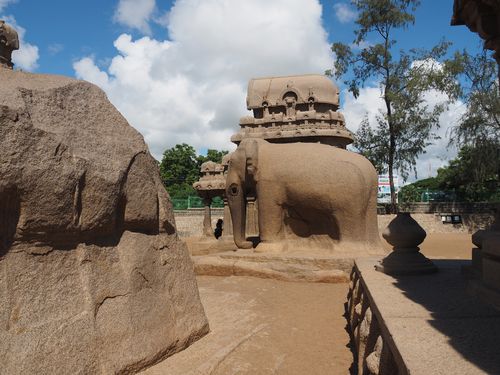
- Nakula-Sahadeva Ratha: Accompanied by life-sized sculptures of an elephant and other animals, illustrating the naturalistic artistry of the Pallava period.
Decorative Motifs:
The temples are adorned with floral patterns, mythological scenes, and inscriptions, reflecting a fusion of local Dravidian traditions and broader cultural influences from Southeast Asia.
Preservation and Current Condition
The monolithic temples of Mahabalipuram face several challenges despite significant conservation efforts.
Environmental Threats: The coastal location exposes the temples to salt-laden winds, moisture, and erosion, leading to gradual wear of the granite surfaces.
Tourism Impact: The site attracts millions of visitors annually, putting physical stress on the monuments and requiring strict management to prevent further degradation.
Urban Development: Encroaching modern infrastructure threatens the historical and natural setting of the site, necessitating careful planning to preserve its surroundings.
UNESCO Recognition and Global Significance
The temples were inscribed as a UNESCO World Heritage Site in 1984, acknowledging their cultural and historical importance.
Cultural Legacy:
The temples continue to inspire contemporary artists and architects and serve as an educational resource for understanding South Indian heritage.
Impact of UNESCO Status:
International recognition has spurred efforts to restore and maintain the site while promoting sustainable tourism practices.
Conclusion
The monolithic temples of Mahabalipuram exemplify the artistic and technological achievements of the Pallava dynasty, offering a glimpse into the political, social, and religious dynamics of their era. Their enduring beauty and global recognition underscore the importance of preserving such treasures for future generations. In the face of modern challenges, sustained conservation efforts are vital to ensuring these monuments remain a testament to human ingenuity and cultural expression.
The Monolithic Temples of Mahabalipuram: Technological Marvels and Artistic Innovation of the Pallava Era
The monolithic temples of Mahabalipuram, also known as the Panch Rathas, are a testament to the architectural ingenuity and artistic vision of the Pallava dynasty. Constructed during the 6th and 7th centuries in Tamil Nadu, India, these rock-cut structures demonstrate the technological advancements and cultural fusion of their time. Recognized as a UNESCO World Heritage Site, these temples reflect the region’s rich history and continue to inspire awe with their intricate designs and innovative construction techniques.
Technological Advancements and Construction Techniques
The monolithic temples of Mahabalipuram exemplify the Pallava dynasty’s mastery in rock-cut architecture, achieved through meticulous planning and skilled craftsmanship.
Materials Used:
Granite: The temples were carved from single blocks of granite, a durable yet challenging material to work with. The local availability of granite made it the ideal choice for these monumental structures.
Iron Tools: Craftsmen employed advanced iron chisels and hammers to carve intricate details into the hard granite, showcasing their technical expertise.
Construction Techniques:
Monolithic Carving: Each temple was sculpted from a single rock, a process that required precision and extensive labor to achieve structural stability and aesthetic perfection.
Prototype Design: The temples were likely intended as prototypes for future stone-built structures, serving as experimental models to refine architectural concepts.
Architectural Features and Decorative Motifs
The Panch Rathas are remarkable for their diversity in design and the fusion of local and foreign influences in their architecture.
Distinct Structures:
- Draupadi Ratha: Dedicated to Durga, this temple resembles a simple hut with a sloping roof and is adorned with floral motifs. A nearby lion sculpture represents Durga’s vahana (vehicle).
- Arjuna Ratha: A smaller, rectangular temple dedicated to Shiva, featuring intricate carvings of deities and mythological figures.
- Bhima Ratha: Long and massive, it features a vaulted roof and minimal decoration, emphasizing its imposing structure.
- Dharmaraja Ratha: The largest and most elaborate of the five, this multi-tiered temple contains niches housing depictions of Hindu gods and is a masterpiece of Dravidian architecture.
- Nakula-Sahadeva Ratha: Accompanied by life-sized sculptures of an elephant and a bull, this temple showcases the Pallavas’ attention to naturalistic details.
Decorative Elements:
The temples incorporate a mix of Dravidian architectural styles and ornamental motifs influenced by Southeast Asian traditions, reflecting the Pallava dynasty’s trade and cultural exchanges.
Historical Context and Global Comparisons
Pallava Era:
Commissioned during the reigns of Mahendravarman I (600–630 CE) and Narasimhavarman I (630–668 CE), the temples symbolize the zenith of Pallava artistic and political power.
Mahabalipuram served as a hub for artistic experimentation, religious devotion, and maritime trade during this period.
Global Architectural Trends:
China: The Longmen Grottoes, carved during a similar period, represent Buddhist rock-cut architecture on a comparable scale.
Mesoamerica: The Maya were constructing pyramids and temples that similarly integrated spirituality with monumental design.
Byzantine Empire: The Hagia Sophia demonstrated innovative dome construction, paralleling the technological ambition seen in the Panch Rathas.
Anecdotes and Statistics
Site Scale: The Panch Rathas are aligned on a 100-meter-long platform, with each temple varying in size and complexity.
Sculptural Realism: The life-sized elephant near the Nakula-Sahadeva Ratha is considered one of the finest examples of naturalistic stone sculpture from ancient India.
Prototypical Purpose: Scholars suggest that these temples were not consecrated for worship but served as models for larger stone temples built in later periods.
UNESCO Recognition and International Significance
The monolithic temples of Mahabalipuram were inscribed as a UNESCO World Heritage Site in 1984, highlighting their cultural and architectural importance.
Global Recognition:
The site is celebrated as an outstanding example of early Dravidian temple architecture and a testament to the Pallava dynasty’s legacy.
Its inclusion in UNESCO’s list has enhanced its visibility and fostered international efforts toward its preservation.
Conservation Efforts:
Restoration projects have focused on mitigating the effects of erosion, safeguarding the intricate carvings, and managing tourism to minimize physical stress on the site.
Challenges to Preservation
Despite its global recognition, the site faces several threats that require ongoing management:
Environmental Factors: The coastal location exposes the granite structures to salt-laden winds, humidity, and seasonal monsoons, which accelerate erosion.
Tourism Pressure: The growing number of visitors necessitates careful regulation to prevent wear and tear on the delicate carvings.
Urbanization: Expanding infrastructure around Mahabalipuram risks altering the historical and natural context of the site.
Conclusion
The monolithic temples of Mahabalipuram stand as a timeless representation of the Pallava dynasty’s artistic vision and technical prowess. Their unique architectural forms and rich cultural significance place them among the world’s most important heritage sites. As modern challenges threaten their preservation, sustained conservation efforts and global awareness are essential to protect these remarkable monuments for future generations.