

 Français (France)
  Nederlands (nl-NL)
 Cave No. 1 at Ajanta, located in the Indian state of Maharashtra, is one of the most renowned among the Ajanta Buddhist caves. As part of a UNESCO World Heritage Site, it stands as a remarkable example of Buddhist art and culture in India, especially through its intricate frescoes and sculptures. Cave No. 1 is notable for its central shrine dedicated to Buddha, surrounded by depictions of various scenes from the Buddha's life. Its complex architecture and well-preserved murals draw numerous visitors from around the globe, providing a unique glimpse into the ancient religious art of the region.
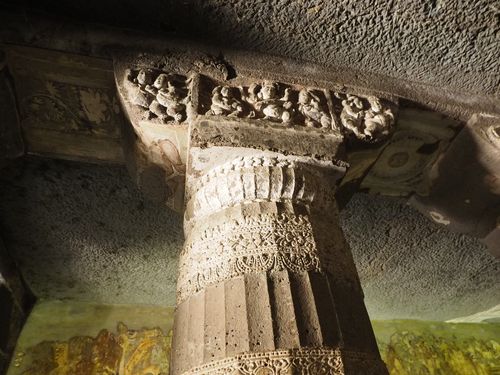
Ajanta • Cave No.1
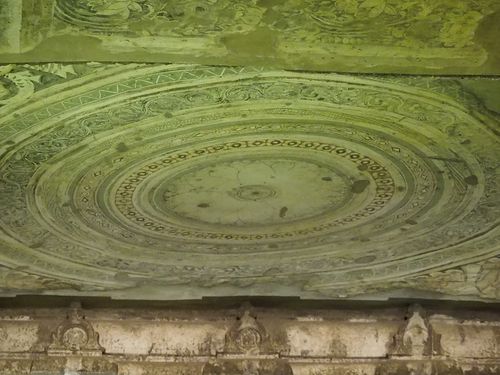
Ajanta • Cave No.1: a ceiling
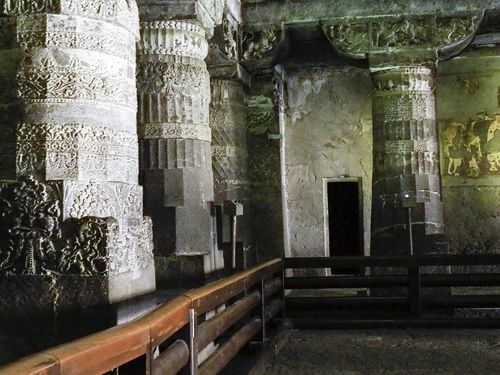
Ajanta • Cave No.1
Monument profile
Cave No.1
Monument categories: Monastery, Rock Sanctuary
Monument families: Monastery • Rock Sanctuary and Monumental Bas-reliefs
Monument genres: Religious
Cultural heritage: Buddhist
Geographic location: Ajanta • Maharashtra • India
Construction period: 7th century AD
This monument in Ajanta is inscribed on the UNESCO World Heritage List since 1983 and is part of the serial property "Ajanta Caves".See the UNESCO monuments featured on this site
• Links to •
• Dynasties that contributed to the construction of the monument •
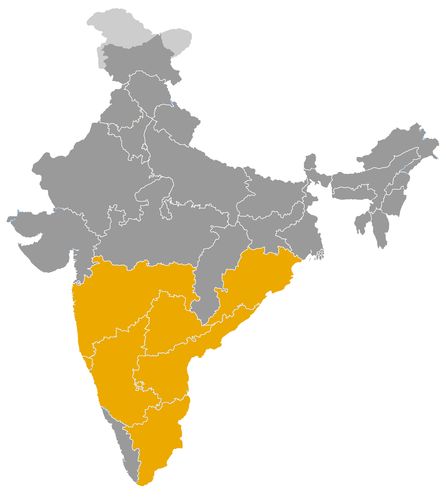

• List of videos about Ajanta on this site •
Ajanta Caves • Maharashtra, India
• References •
UNESCO: Grottes d'Ajanta
Political and Social Motivations Behind the Construction of Cave No. 1 at Ajanta: Historical Impact and Global Context
Construction period and political motivations
Cave No. 1 at Ajanta, carved during the late 5th century CE, reflects the political and social dynamics of the time under the rule of the Vakataka dynasty, specifically during the reign of Emperor Harishena. The Vakataka rulers were ardent patrons of Buddhism, and their sponsorship of cave temples at Ajanta had a dual purpose: religious devotion and political legitimacy. By supporting Buddhist monasteries and carving majestic caves like Cave No. 1, the Vakatakas sought to align themselves with the moral values and spiritual authority of Buddhism, thus consolidating their rule over the Deccan region.
Socially, the construction of such monumental cave complexes served to reinforce the cultural and religious identity of the region. Ajanta became a center for Buddhist learning and artistic expression, attracting monks, pilgrims, and scholars. The caves also played a role in demonstrating the economic power of the Vakataka court, as their construction required significant resources, labor, and skilled artisanship. The creation of these caves was a reflection of the region’s prosperity and social cohesion under the Vakataka dynasty.
Historical events shaping the region
Ajanta’s significance diminished with the decline of the Vakatakas in the 6th century. The caves, including Cave No. 1, were gradually abandoned as Buddhism began to lose influence in India due to the resurgence of Hinduism and the invasion of the Huns in the mid-6th century. This invasion disrupted the political and social order, leading to the fragmentation of the once powerful kingdoms in central India.
Despite the decline of Buddhism in the region, Ajanta continued to influence later dynasties, such as the Chalukyas and Rashtrakutas, who drew inspiration from its architecture and artistic traditions in their own temple-building projects. The caves, though abandoned, remained a symbol of the past glory of Indian Buddhism.
Global context and comparisons
During the period when Cave No. 1 was being carved, the world was experiencing significant transformations. In Europe, the Western Roman Empire had just fallen (476 CE), ushering in the early medieval period, often referred to as the "Dark Ages." In China, the Northern Wei Dynasty (386-534 CE) was flourishing, also patronizing Buddhism and producing cave art in sites like Yungang and Longmen, which share similarities with Ajanta in their religious symbolism and intricate carvings.
In comparison to the upheavals in Europe and the flourishing Buddhist art in East Asia, India during the late 5th century was experiencing a period of cultural and artistic innovation, especially in the Deccan region, where the Vakatakas were prominent. The Ajanta caves, particularly Cave No. 1, are a testament to the Deccan’s contribution to the global Buddhist artistic and religious heritage.
Transformations and external influences
Cave No. 1 has undergone several transformations over the centuries, reflecting changes in political power and external influences. After its abandonment, the cave remained hidden for centuries under dense vegetation until its rediscovery by British officers in the 19th century. This rediscovery sparked an intense interest in India’s ancient heritage and influenced colonial and post-colonial narratives about Indian art and history.
Over time, restoration efforts began, especially focusing on the cave’s murals, which had suffered damage due to natural erosion and neglect. The British-led conservation efforts reflected the growing fascination with Indian antiquities during the colonial period, but they also introduced new challenges in preserving the site.
Cave No. 1's cultural significance and current condition
Cave No. 1, with its magnificent Buddha statues, intricate sculptures, and well-preserved murals, continues to be recognized for its artistic and cultural importance. The cave’s architecture, with a central shrine and a hall of pillars, showcases the blend of Indian and foreign influences, such as Greco-Buddhist art from Gandhara. The wall paintings, depicting scenes from the Buddha’s life, reflect the refinement of Indian painting techniques and narrative art.
The inclusion of Ajanta, including Cave No. 1, in the UNESCO World Heritage list in 1983 was pivotal in raising global awareness of its significance. This recognition has helped secure funding for ongoing conservation work and has cemented Ajanta’s place as one of the world’s greatest cultural treasures. The designation also brought attention to the challenges of preserving ancient art in a modern world.
Preservation challenges and modern threats
Despite its status as a UNESCO site, Cave No. 1 faces numerous preservation challenges. The natural elements, particularly humidity and fluctuating temperatures, threaten the delicate murals, while human-induced damage from the influx of tourists poses additional risks. The vibration from nearby human activities and the wear and tear from foot traffic have put further pressure on the cave’s structural integrity.
Conservators are also grappling with the effects of pollution and environmental degradation in the region, which could accelerate the decay of the cave’s artwork. Modern conservation techniques, including digital documentation and climate control, have been implemented to mitigate these threats, but the balance between preserving the site and allowing public access remains delicate.
Conclusion
Cave No. 1 at Ajanta stands as a masterpiece of Indian rock-cut architecture and Buddhist art, shaped by the political and social dynamics of the Vakataka dynasty. Its artistic grandeur, innovative techniques, and historical significance have made it a beacon of cultural heritage, recognized worldwide. The ongoing preservation efforts, spurred by its UNESCO designation, continue to safeguard this treasure, even as modern threats pose new challenges. Today, Cave No. 1 serves not only as a reminder of India’s rich Buddhist past but also as a symbol of the global exchange of artistic and religious ideas in ancient times.
Architectural Innovation and Technological Advancements of Cave No. 1 at Ajanta: A Testament to the Satavahana Era
Technological advancements and innovations during the Satavahana period
Cave No. 1 at Ajanta, although completed under the Vakataka dynasty in the 5th century CE, showcases architectural and technological innovations that were influenced by earlier traditions from the Satavahana period (circa 1st century BCE to 3rd century CE). The Satavahanas were pioneers in rock-cut architecture, and their innovations in creating monolithic structures from solid rock laid the foundation for the grander cave complexes seen later at Ajanta. The techniques used for carving Cave No. 1 demonstrate a high degree of precision and craftsmanship, reflecting the advancements in engineering and architecture of that era.
The cave was entirely carved from basalt rock, a volcanic material commonly found in the region. The process involved manually chiseling the stone, which required both sophisticated knowledge of structural integrity and painstaking labor. The sheer scale of the cave, including its large hall, columns, and finely detailed sculptures, reflects the advanced skills of the artisans who were able to transform a mountainside into an architectural masterpiece.
Materials and construction techniques
The use of basalt, while presenting significant challenges due to its hardness, allowed for the creation of durable and long-lasting structures. The precision of the work, especially in creating symmetrical columns and large statues of Buddha, showcases an understanding of load distribution and architectural balance. The artisans also used natural lighting techniques, incorporating windows and strategically placed openings that allowed sunlight to illuminate the interior, particularly the central sanctum, highlighting the statue of Buddha at different times of the day.
One of the hallmarks of the construction techniques was the ability to integrate intricate sculptures directly into the rock, as opposed to adding them later. This monolithic style of construction reflects a deep understanding of the material and an advanced level of planning.
Architectural and decorative features: A blend of regional and foreign influences
Cave No. 1 stands as a testament to the fusion of indigenous artistic traditions with foreign influences. The decorative motifs seen in the cave, including floral designs and intricate scrollwork, have roots in local Indian traditions. However, the influence of Greco-Buddhist art from the Gandhara region is also apparent, particularly in the depiction of Buddha and certain sculptural elements. This blending of styles was a result of the extensive trade and cultural exchanges between India and the wider Hellenistic world during the early centuries CE, facilitated by the Silk Road.
The frescoes that adorn the walls of Cave No. 1 depict scenes from the Jataka tales, stories of Buddha’s previous lives. These paintings demonstrate the confluence of various artistic traditions. The use of perspective, attention to facial expressions, and the dynamic portrayal of figures exhibit a sophistication that was unparalleled in Indian art at the time.
Notable structure and layout of Cave No. 1
The layout of Cave No. 1 follows the typical chaitya hall design, which was prevalent in Buddhist architecture. It features a large rectangular hall supported by intricately carved pillars, leading to a central sanctum housing a colossal seated Buddha in dhyana (meditation) posture. The hall is designed to accommodate congregational gatherings, allowing monks and devotees to meditate and perform rituals in a communal setting.
The pillars are not merely functional but are also elaborately decorated with motifs and figures, adding to the aesthetic appeal of the space. The central Buddha figure, with its calm and serene expression, dominates the sanctum, embodying the spiritual atmosphere intended by the architects.
Anecdotes and notable statistics about the construction
It is estimated that the construction of Cave No. 1, along with other caves at Ajanta, took several decades, with skilled artisans working tirelessly to carve out the massive structures. One notable anecdote about Ajanta’s caves is that they were "rediscovered" in 1819 by a British hunting party, who stumbled upon the long-forgotten site, hidden under dense vegetation. This discovery reignited interest in ancient Indian art and led to restoration efforts in the 19th century.
International recognition and the impact of UNESCO inscription
Cave No. 1, along with the other Ajanta caves, was inscribed as a UNESCO World Heritage Site in 1983, bringing international attention to the site’s cultural and historical importance. This recognition has been instrumental in raising awareness about the need for preservation and ensuring that resources are allocated for the conservation of the delicate frescoes and sculptures.
The UNESCO status also elevated Ajanta’s global profile, positioning it as a prime example of Buddhist art and architecture. The influence of the site extends beyond India, as it serves as a vital link in the global history of Buddhism and its spread across Asia.
Challenges in preservation
Preserving the integrity of Cave No. 1 has been a complex challenge due to its exposure to natural elements and the wear from increased tourism. The delicate murals, in particular, are vulnerable to humidity and temperature fluctuations, which can lead to their gradual degradation. Efforts to control the environment within the cave, such as regulating the number of visitors and implementing climate control measures, have been essential in mitigating these threats.
Additionally, pollution from nearby activities and the general erosion of the rock face present ongoing challenges to the site’s preservation. Conservationists must balance the need for public access with the protection of the cave’s fragile interiors, ensuring that the site remains accessible for future generations while maintaining its historical and artistic integrity.
Conclusion
Cave No. 1 at Ajanta is not only an architectural marvel but also a symbol of the technological and artistic advancements of ancient India. Its construction reflects the ingenuity of the Satavahana and Vakataka dynasties, while its blend of regional and foreign influences highlights India’s role in the wider cultural and trade networks of the time. The cave’s recognition as a UNESCO World Heritage Site has secured its place in global history, ensuring that its legacy endures even as modern challenges threaten its preservation. Today, Cave No. 1 stands as a reminder of the rich cultural and spiritual heritage of India, attracting scholars, tourists, and devotees from around the world.