

 Français (France)
  Nederlands (nl-NL)
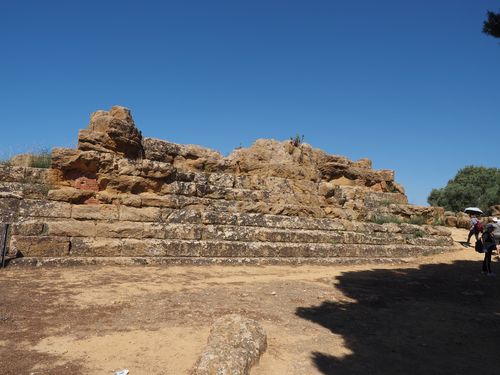
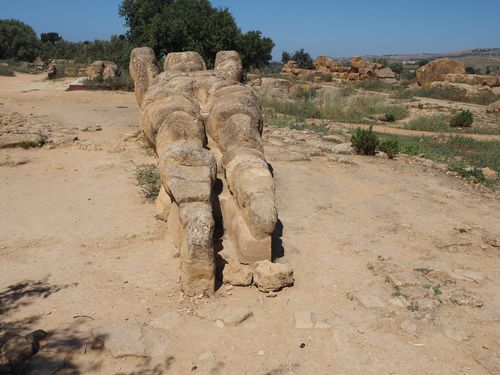
 The Temple of Zeus, located in the Valley of the Temples in Agrigento, Sicily, is one of the largest Doric temples of antiquity. Built in the 5th century BCE, it was dedicated to Zeus Olympian and symbolized the power and prosperity of the city of Akragas. Although now in ruins, its monumental dimensions and unique sculptures, such as the Atlases, reflect the ingenuity and ambition of ancient Greek civilization. The site is part of the UNESCO World Heritage, attracting history and archaeology enthusiasts worldwide.

Monument profile
Temple of Zeus
Monument categories: Ancient, Greek temple
Monument families: Temple • Archaeological
Monument genres: Religious, Archaeological site
Cultural heritage: Greek antiquity
Geographic location: Agrigento • Sicily • Italy
Construction period: 5th century BC
This monument in Agrigento is inscribed on the UNESCO World Heritage List since 1997 and is part of the serial property "Archaeological Area of Agrigento".See the UNESCO monuments featured on this site
• Links to •
• List of videos about Agrigento on this site •
Agrigento, the Valley of the Temples, Sicily • Italy
• References •
Wikipedia FR: Olympéion (Agrigente)
The Temple of Zeus in Agrigento: Political Motivations, Historical Transformations, and Cultural Significance
The Temple of Zeus Olympian, located in Agrigento’s Valley of the Temples, is a monumental representation of the power and ambition of the ancient Greek city of Akragas (modern-day Agrigento). Constructed in the 5th century BCE, this temple was one of the largest Doric temples of antiquity, dedicated to Zeus, the king of the gods. Despite its incomplete state, the temple remains a symbol of the city’s prominence and the cultural achievements of Magna Graecia.
Political and Social Motivations Behind Its Construction
The construction of the Temple of Zeus was driven by both political and social objectives. Politically, it was intended to commemorate the Greeks’ victory over the Carthaginians at the Battle of Himera in 480 BCE. This monumental project was a declaration of Akragas’s dominance and prosperity, showcasing the city’s role as a cultural and political leader in Magna Graecia.
Socially, the temple served as a unifying symbol for the citizens of Akragas, reinforcing their collective identity and devotion to Zeus. The dedication to the king of the gods underscored themes of order, power, and divine protection, aligning the city’s governance and society with the authority of the divine.
Historical Context and Global Comparisons
The 5th century BCE was a period of remarkable cultural and architectural achievements worldwide. In Greece, monumental structures like the Parthenon in Athens symbolized the flourishing of classical art and democracy. In Persia, the palaces of Persepolis were being constructed, reflecting the grandeur of the Achaemenid Empire. Similarly, in China, early developments in statecraft and architecture were shaping the Zhou Dynasty.
In this context, the Temple of Zeus stands out for its unprecedented scale and unique design. Spanning 112 meters in length and 56 meters in width, it was larger than most contemporary temples, including the Parthenon. Its innovative use of massive atlantes (sculpted figures serving as architectural supports) demonstrated the city’s ambition to push the boundaries of traditional Doric architecture.
Major Historical Events and Transformations
The temple’s construction was never fully completed, likely due to financial and political challenges. Over the centuries, the site experienced significant transformations that reflected shifts in power and cultural influences:
- Roman Period: After the Roman conquest of Sicily, parts of the temple were repurposed for new structures, including fortifications and public buildings, indicating its continued importance as a source of materials and inspiration.
- Medieval Era: During the Middle Ages, much of the temple’s stone was quarried for use in other constructions, including the nearby port of Porto Empedocle.
- Modern Era: Archaeological excavations in the 18th and 19th centuries brought renewed interest to the site, highlighting its cultural and historical significance. Fragments of the original atlantes were preserved and are now displayed in the Archaeological Museum of Agrigento.
Cultural Importance and Current Condition
The Temple of Zeus remains a symbol of the grandeur of Akragas and the broader achievements of Magna Graecia. While only fragments of the structure survive today, its dimensions and architectural features continue to fascinate historians and archaeologists. The site, part of the Valley of the Temples, was designated a UNESCO World Heritage Site in 1997, cementing its status as an invaluable cultural monument.
The preserved atlantes, with their imposing size and intricate detailing, provide a glimpse into the temple’s original splendor and the technical skill of its builders. These figures also symbolize the connection between human effort and divine worship in ancient Greek culture.
Challenges to Preservation
The Temple of Zeus faces numerous challenges related to its preservation:
- Environmental Damage: The limestone used in its construction is prone to erosion from wind, rain, and pollution, necessitating continuous conservation efforts.
- Seismic Activity: Earthquakes over the centuries have further destabilized the ruins, complicating restoration efforts.
- Tourism Pressure: The growing popularity of the Valley of the Temples attracts large numbers of visitors, requiring careful management to balance access and preservation.
- Historical Damage: The extensive quarrying and repurposing of materials during the medieval period significantly reduced the temple’s original structure, limiting restoration possibilities.
Conclusion
The Temple of Zeus Olympian is a masterpiece of ancient architecture and a testament to the ambition and ingenuity of the city of Akragas. Its monumental scale, innovative design, and historical significance make it a key cultural landmark. Despite the challenges it faces, ongoing efforts to preserve and study the site ensure its legacy endures, offering a profound insight into the architectural and political achievements of the ancient Greek world. As a UNESCO World Heritage Site, it continues to inspire and educate, symbolizing the enduring impact of classical civilization.
Sources
UNESCO World Heritage Centre - Valley of the Temples inscription and information.
Archaeological and Landscape Park of the Valley of the Temples - Official site.
Hansen, M. H., & Nielsen, T. H. (2004). An Inventory of Archaic and Classical Poleis. Oxford University Press.
Wilson, R. J. A. (1990). Sicily under the Roman Empire: The Archaeology of a Roman Province, 36 BC – AD 535. Oxford University Press.
Architectural Innovation and Technological Mastery: The Temple of Zeus in Agrigento
The Temple of Zeus Olympian, situated in the Valley of the Temples in Agrigento, Sicily, is a monumental testament to ancient Greek architectural ingenuity and ambition. Constructed in the 5th century BCE, this massive temple was one of the largest ever built in the Doric style, reflecting both technological innovation and the cultural grandeur of the era.
Technological Advances and Materials Used
The construction of the Temple of Zeus demonstrates a remarkable level of engineering and craftsmanship.
- Materials:The temple was constructed primarily from local limestone, quarried from nearby sites. This material was chosen for its abundance and ease of use, although it was less durable than marble. The builders employed careful carving and fitting techniques to maximize the limestone’s structural integrity.
- Innovative Techniques:One of the temple’s most striking features was the use of massive atlantes—sculpted figures over 7 meters high that acted as architectural supports for the entablature. This innovation marked a departure from traditional Doric design, blending structural function with dramatic artistic expression. The temple also featured advanced jointing methods using metal clamps to securely connect the stone blocks.
Unique Architectural Features
The Temple of Zeus incorporated a variety of unique elements that distinguished it from other Greek temples of its time.
- Monumental Scale: Measuring 112 meters in length and 56 meters in width, it was among the largest temples in antiquity. Its scale was unmatched, designed to showcase the power and prosperity of Akragas.
- Structural Design: Unlike typical Doric temples, which had free-standing peripheral columns, the Temple of Zeus featured semi-engaged columns incorporated into massive exterior walls. This design innovation enhanced the temple’s monumental appearance and addressed the structural challenges posed by its immense size.
- Decorative Elements: The atlantes were not only structural but also decorative, embodying both Greek ideals of human form and influences from Near Eastern cultures. Their design symbolized human effort in supporting divine power, adding a layer of artistic depth to the temple’s architecture.
Cultural Influences and Regional Traditions
The Temple of Zeus represents a synthesis of Greek architectural principles and local Sicilian adaptations.
The adoption of atlantes, a rarity in Greek architecture, may reflect cross-cultural influences from Egypt or the Near East, where large-scale human figures were used decoratively and symbolically.
The use of limestone instead of marble illustrates the practical adaptation to regional resources while maintaining the grandeur associated with Greek temples.
Anecdotes and Notable Facts
The temple was dedicated to Zeus Olympian to commemorate the Greek victory over the Carthaginians at the Battle of Himera in 480 BCE.
The construction was never completed, possibly due to financial or political constraints.
Fragments of the atlantes, preserved today in the Archaeological Museum of Agrigento, highlight the scale and artistic detail of the original structure.
Recognition and UNESCO Status
The Temple of Zeus is part of the Valley of the Temples, a UNESCO World Heritage Site since 1997. This designation underscores its architectural and cultural significance, ensuring global recognition and support for its conservation. As one of the most ambitious architectural projects of antiquity, the temple serves as a symbol of the ingenuity and ambition of Greek civilization.
Conservation Challenges
Despite its cultural importance, the temple faces significant preservation challenges:
- Environmental Factors: The limestone is highly susceptible to erosion from weathering and pollution, which threatens the remaining structures.
- Historical Damage: Extensive quarrying during the medieval period removed much of the original stonework.
- Visitor Impact: Increased tourism requires careful management to prevent further damage while maintaining accessibility.
Conclusion
The Temple of Zeus in Agrigento is an extraordinary achievement of ancient Greek architecture, blending technological innovation with cultural expression. Its colossal size, unique design, and intricate decorative elements make it a landmark of global heritage. While its ruins evoke the grandeur of its original vision, ongoing conservation efforts and UNESCO recognition ensure that this masterpiece continues to inspire and educate future generations.