

 Français (France)
  Nederlands (nl-NL)
 Preah Khan Temple, located within the Angkor complex in Cambodia, stands as a remarkable example of Khmer art and architecture. Built in the 12th century during the reign of King Jayavarman VII, it functioned as both a Buddhist monastery and a center of learning. This expansive structure, surrounded by forest, features interconnected courtyards and galleries that exemplify a harmonious blend of spirituality and practicality. Although partially overgrown, the temple retains much of its intricate carvings, showcasing the cultural and religious richness of the Angkorian era.
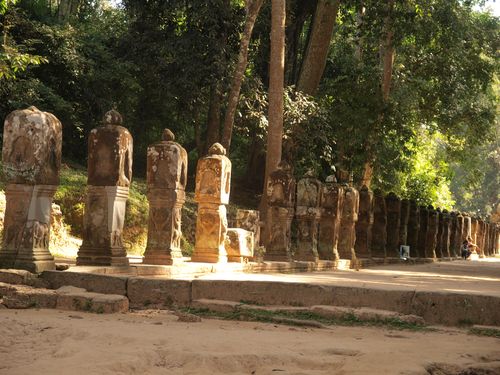
Angkor • Preah Khan temple
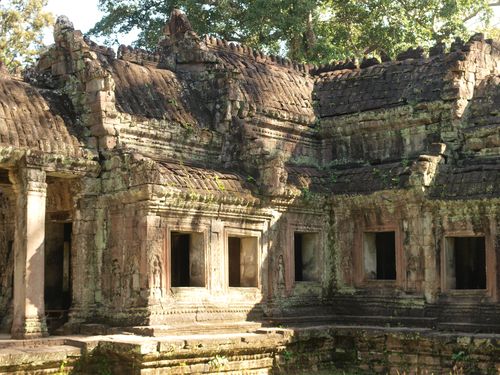
Angkor • Preah Khan temple
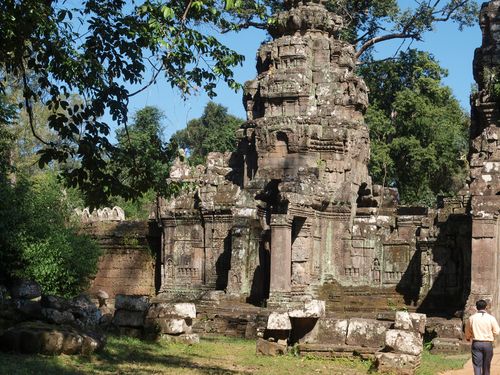
Angkor • Preah Khan temple
Monument profile
Preah Khan temple
Monument categories: Hindu Temple, Monastery, Buddhist temple
Monument families: Temple • Monastery
Monument genres: Religious
Cultural heritages: Hindu, Buddhist
Geographic location: Angkor • Cambodia
Construction period: 12th century AD
This monument in Angkor is inscribed on the UNESCO World Heritage List since 1992 and is part of the serial property "Angkor".See the UNESCO monuments featured on this site
• Links to •
• Dynasties that contributed to the construction of the monument •

• List of videos about Angkor on this site •
Angkor, the Preah Khan temple • Cambodia
Angkor, Ta Prohm temple • Cambodia
Angkor Thom, the Great City • Cambodia
Angkor Wat, masterpiece of Khmer architecture • Cambodia
• References •
Wikipedia EN: Preah Khan
UNESCO: The ancient complex of Preah Khan Kompong Svay
The Preah Khan Temple: Political Motives, Historical Transformations, and Modern Challenges
The Preah Khan Temple, located in the Angkor complex in Cambodia, stands as a testament to the political ambitions, social cohesion, and spiritual aspirations of the Khmer Empire during its zenith. Built in 1191 under King Jayavarman VII, this monumental structure reflects a complex interplay of political strategy, cultural integration, and religious devotion. Its history, transformations, and current state shed light on the challenges of preserving a cultural treasure that holds immense historical and symbolic significance.
Political and Social Motivations Behind Its Construction
The construction of Preah Khan was deeply intertwined with King Jayavarman VII's political and social agenda. Emerging from a period of conflict marked by the invasion of the Cham, the temple symbolized the unification and stabilization of the Khmer Empire. Dedicated to Jayavarman VII’s father, the temple served as both a sacred space and a center of learning, emphasizing the king’s role as a restorer of order and a patron of Buddhism. Its dual function as a Buddhist monastery and administrative hub showcased the integration of spiritual and political life in Khmer society.
By promoting Mahayana Buddhism, the temple also marked a departure from the predominantly Hindu orientation of previous rulers, signaling a shift in religious policy aimed at fostering unity and moral authority across the empire.
Historical Context and Global Comparisons
The construction of Preah Khan occurred during the late 12th century, a time of significant change across the world. While the Khmer Empire flourished in Southeast Asia, Europe was in the midst of the High Middle Ages, characterized by the rise of Gothic cathedrals, the Crusades, and early universities. In the Islamic world, the Abbasid Caliphate continued to serve as a cultural and scientific hub, while China under the Song Dynasty was experiencing a golden age of technological innovation.
The grandeur of Preah Khan reflects the Khmer Empire's advanced engineering and artistic capabilities, comparable to the architectural achievements of Gothic cathedrals in Europe or the intricate craftsmanship of Islamic architecture in the Middle East.
Major Transformations Over the Centuries
Preah Khan has undergone significant transformations over the centuries, reflecting the shifts in power and cultural influences in the region. After the decline of the Khmer Empire in the 15th century, the temple, like much of Angkor, was largely abandoned and gradually reclaimed by the surrounding jungle. The arrival of European explorers and scholars in the 19th century brought the site to international attention, leading to early preservation efforts by the École Française d’Extrême-Orient (EFEO) in the early 20th century.
The temple's partial restoration preserved its unique appearance, with trees and roots intertwining with its stone structures. These natural elements, while striking, also symbolize the loss and rediscovery of Khmer cultural heritage.
Cultural Significance and Current Conservation Status
Today, Preah Khan is celebrated as a symbol of Khmer ingenuity and resilience. Its cultural significance is further enhanced by its dual role as a religious and administrative center, reflecting the integration of spiritual and political life in ancient Khmer society. Its intricate carvings, including depictions of celestial dancers (apsaras) and mythological scenes, continue to draw admiration from visitors and scholars alike.
The temple's inclusion in UNESCO's list of World Heritage Sites in 1992 has helped secure funding and international support for its conservation. Restoration projects have focused on stabilizing the structures while retaining their historical integrity, preserving both the temple's physical form and its cultural essence.
Modern Preservation Challenges
Despite these efforts, Preah Khan faces numerous preservation challenges. The tropical climate, with its humidity and monsoons, accelerates the erosion of the stonework. The encroachment of vegetation, while visually stunning, threatens the structural integrity of the temple. Additionally, the increasing number of tourists puts pressure on the fragile site, requiring careful management to balance accessibility with conservation.
Climate change poses new threats, with more extreme weather patterns potentially exacerbating the degradation of the temple. Limited resources and competing priorities in heritage management further complicate the preservation of this cultural landmark.
Conclusion
The Preah Khan Temple is not only a remarkable architectural achievement but also a reflection of the Khmer Empire’s political ambitions, cultural synthesis, and spiritual devotion. Its history, marked by periods of glory, decline, and rediscovery, illustrates the dynamic interplay between human creativity and the passage of time. As a UNESCO World Heritage Site, it continues to inspire awe and serves as a reminder of the need for sustained efforts to preserve humanity’s shared cultural heritage in the face of modern challenges.
Architectural features
The Architectural Marvel of Preah Khan: Technological Innovation and Cultural Fusion
Preah Khan, a grand temple within the Angkor complex in Cambodia, stands as a masterpiece of Khmer architecture and ingenuity from the 12th century. Built during the reign of King Jayavarman VII, this monumental structure showcases advanced technological achievements, innovative construction techniques, and a unique fusion of regional traditions and foreign influences. Its layout, materials, and intricate decorative motifs reflect the grandeur and sophistication of the Khmer Empire at its peak, securing the temple’s place as an internationally recognized cultural treasure.
Materials and Construction Techniques
The construction of Preah Khan highlights the Khmer Empire's advanced engineering and material mastery. The primary building material was sandstone, valued for its durability and fine grain, which allowed for intricate carvings. Transporting this heavy material required sophisticated logistical systems, including a network of canals and wooden sledges.
The temple’s structural integrity relied on the precise assembly of sandstone blocks without mortar, a hallmark of Khmer engineering. Interlocking stones were meticulously shaped to ensure stability, while lintels and columns were skillfully carved to enhance both structural and aesthetic appeal. Additionally, a drainage system was integrated into the temple’s design, demonstrating an acute understanding of the region’s tropical climate and monsoon patterns.
Architectural Layout and Symbolism
Preah Khan’s layout is both complex and symbolic, reflecting the cosmology and spiritual beliefs of the Khmer Empire. The temple follows a cruciform plan with a central sanctuary surrounded by concentric galleries and courtyards. The design represents the mythical Mount Meru, the axis mundi in Hindu and Buddhist cosmology.
The temple’s orientation aligns with the cardinal points, with grand gopuras (gateways) marking each entrance. Notably, the eastern entrance was dedicated to Buddhism, while the western entrance honored Hindu deities, illustrating the religious duality of the site. The long processional pathways and interconnected spaces symbolize the journey from the earthly realm to the divine.
Decorative Motifs and Cultural Fusion
The decorative elements of Preah Khan illustrate a blend of Khmer artistic traditions and external influences, particularly from India. The temple is adorned with carvings of apsaras (celestial dancers), mythical creatures, and intricate floral patterns. These motifs showcase the high level of craftsmanship and the cultural exchange facilitated by trade and diplomatic relations with neighboring regions.
The presence of both Buddhist and Hindu iconography reflects the religious syncretism of the era. Avalokiteshvara, the bodhisattva of compassion, features prominently, underscoring King Jayavarman VII’s patronage of Mahayana Buddhism. At the same time, Hindu deities like Vishnu and Shiva are also represented, emphasizing continuity with earlier Khmer rulers.
Anecdotes and Notable Statistics
Preah Khan is an expansive complex covering approximately 56 hectares, making it one of the largest temples in the Angkor complex. Historical records suggest that the temple housed nearly 100,000 people, including priests, dancers, and workers, indicating its significance as a spiritual and administrative hub.
One notable anecdote is the discovery of inscriptions detailing the temple’s functions and its extensive resources, including gold and silver objects, livestock, and rice fields, which supported its operations. These records provide valuable insights into the socio-economic organization of the Khmer Empire.
Recognition and UNESCO World Heritage Status
The international recognition of Preah Khan, bolstered by its inclusion in the Angkor World Heritage Site in 1992, has contributed significantly to its preservation and global appreciation. The temple’s architectural and cultural significance has attracted scholars, conservationists, and tourists from around the world.
UNESCO’s involvement has facilitated restoration efforts, focusing on stabilizing the temple’s structures while preserving its unique appearance, including the iconic trees that grow intertwined with its walls. These efforts have also raised awareness of the need to protect Angkor’s heritage from threats such as environmental degradation and the impact of tourism.
Challenges and Global Significance
Despite its protected status, Preah Khan faces modern challenges, including erosion, invasive vegetation, and climate change. The increased flow of tourists has also put strain on the site, necessitating sustainable management practices.
The architectural brilliance and cultural richness of Preah Khan continue to inspire admiration and research. Its recognition as a global heritage site underscores the universal value of preserving such monuments, not only as historical relics but as living testaments to human creativity and cultural exchange.