Français (France)
  Nederlands (nl-NL)
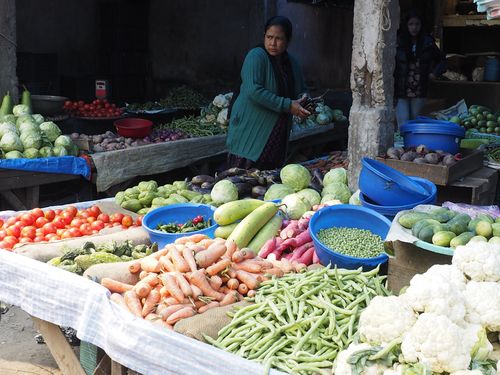
 The market of Kalimpong, located in the Indian state of West Bengal, is a vibrant center of everyday life in this Himalayan region. Vendors, farmers, and craftsmen from surrounding valleys and hills gather here to sell a wide range of goods — from fruits and spices to fabrics, handmade crafts, and local flowers. The market reflects the cultural diversity of West Bengal, shaped by Nepali, Bhutanese, Tibetan, and Bengali influences. Beyond its commercial function, it serves as a social space where culinary traditions and local skills are shared and preserved across generations. Popular with both residents and visitors, Kalimpong Market stands as a living expression of the cultural and economic vitality of eastern India’s highlands.

Kalimpong • The Market
Kalimpong • The Market

Kalimpong • The Market
Tradition profile
The Market
Tradition category: Local market
Tradition family: Traditional markets and fairs
Tradition genre: Trade and Local Creativity
Geographic location: Kalimpong • West Bengal •
• Links to •
• List of videos about Kalimpong on this site •
Kalimpong • West Bengal, India
The Historical Evolution of the Market Tradition in Kalimpong
Political and Social Context of Emergence
The tradition of the Kalimpong market developed within a distinctive political and geographic framework that shaped the social identity of this Himalayan town. Located in the eastern Himalayas, in what is now the Indian state of West Bengal, Kalimpong emerged as a strategic trade hub linking the plains of Bengal with Tibet, Bhutan, and Sikkim. Before British colonization, it was part of the kingdom of Sikkim and later came under Bhutanese control. The Treaty of Sinchula in 1865 transferred the area to British India, marking the beginning of Kalimpong’s rise as a commercial and administrative center.
The creation of the market was driven by both economic necessity and cultural diversity. Its early development coincided with the establishment of trans-Himalayan trade routes that facilitated exchanges between the Tibetan plateau and the Indian subcontinent. The market became the beating heart of these exchanges, where salt, wool, metal, spices, and textiles circulated freely. Under British administration, it was further institutionalized, serving as a regulated center of barter and taxation. The colonial authorities, recognizing its economic importance, encouraged the participation of various ethnic groups—Nepalis, Tibetans, Lepchas, and Bhutias—each bringing their own customs and goods.
The social context of the time reflected a society in flux: the introduction of Christianity by Scottish missionaries, the establishment of schools and hospitals, and the emergence of a local educated elite all contributed to transforming Kalimpong into a cosmopolitan enclave. The market, functioning as both an economic engine and a meeting place, embodied this multicultural synthesis.
Major Historical Developments
Throughout the late nineteenth and early twentieth centuries, the Kalimpong market became one of the most vibrant trading posts in the eastern Himalayas. Caravans from Tibet arrived loaded with wool, salt, and yak tails, while traders from Bengal and Assam brought rice, sugar, and manufactured goods. This exchange sustained a fragile but prosperous local economy, which thrived on interdependence between mountain and plain societies.
However, the mid-twentieth century brought dramatic changes. The Chinese annexation of Tibet in 1950 and the subsequent closure of the Indo-Tibetan border in 1962 ended centuries of caravan trade. Kalimpong, once a transnational crossroads, was suddenly cut off from its northern networks. Many Tibetan traders settled permanently in the area, transforming its demographic and cultural landscape. The market adapted by focusing on local products—fruits, handicrafts, and textiles—while incorporating the artistic and religious influences of the new Tibetan diaspora.
In post-independence India, the market became integrated into the regional economy of the Darjeeling hills. The government promoted agricultural modernization and local entrepreneurship, while the rise of tourism from the 1970s onward offered a new economic lifeline. The market evolved into a hybrid institution: still rooted in traditional barter and community exchange, yet increasingly catering to the expectations of visitors from across India and abroad.
Global Context and Cultural Parallels
When Kalimpong’s market flourished, similar trading centers existed across Asia, each serving as a vital interface between cultures. The bazaars of Central Asia, the weekly markets of Nepal, and the caravan stations of the Silk Road shared comparable social structures—spaces where economic necessity intertwined with diplomacy, religion, and ritual.
Unlike the highly regulated European markets of the same era, which operated under municipal charters, Himalayan markets like Kalimpong relied on customary law and trust-based relationships. The oral negotiation process, still observable today, reflected an ethical code derived from Buddhist and Hindu values emphasizing fairness and mutual respect. Such communal regulation mirrors other traditional markets, such as those of Ladakh or Yunnan, where commerce also functioned as a form of cultural dialogue.
The decline of trans-Himalayan trade after the mid-twentieth century paralleled broader global transformations—decolonization, border closures, and the rise of national economies. Yet, in the face of these shifts, Kalimpong’s market retained a measure of continuity, maintaining a living connection to premodern systems of exchange.
Transformations of the Tradition
The transformation of Kalimpong’s market over the centuries reflects its adaptability to political and technological change. What began as a barter-based gathering gradually became a complex urban institution. During the colonial period, the introduction of coinage, standardized weights, and transport infrastructure altered its scale and rhythm. Later, electrification and road expansion facilitated new forms of trade, linking rural producers to urban consumers.
The market’s physical layout also evolved. Once centered on a single plaza, it expanded into several interconnected lanes, each specializing in particular goods. Agricultural produce dominates the lower sections, while the upper streets feature textiles, jewelry, and religious artifacts. Seasonal fairs—especially those coinciding with Dashain, Losar, and Diwali—bring heightened activity, transforming the space into both a festival ground and an economic hub.
Women have become central to this evolution. Traditionally involved in small-scale farming and weaving, they now make up a majority of vendors, embodying the transmission of commercial skills through matrilineal lines. Their presence reinforces the market’s role not only as an economic structure but also as a medium of social empowerment and continuity.
The Market’s Role and Cultural Significance Today
In modern Kalimpong, the market continues to play a defining role in community life. It operates as a space where rural and urban worlds meet, and where traditions adapt to modern demands without losing their essence. For locals, the market remains a social hub—a place to exchange news, maintain kinship ties, and celebrate collective identity.
The persistence of bargaining rituals, multilingual interactions, and local currencies of trust reflects a form of cultural resilience. Beyond commerce, the market serves as a showcase of regional diversity, where symbols of Buddhism, Hinduism, and indigenous animism coexist harmoniously. Vendors often decorate their stalls with prayer flags, marigolds, or portraits of deities, reaffirming the integration of spiritual and economic life.
For visitors, the market represents a tangible link to a pre-industrial economy based on personal exchange and craftsmanship. It offers an experiential connection to the Himalayan ethos—cooperation, adaptability, and respect for nature. In that sense, it mirrors similar markets in Nepal or Bhutan, where economic activity remains inseparable from the rhythms of communal and ritual life.
Preservation and Contemporary Challenges
Despite its resilience, the Kalimpong market faces mounting challenges. Rapid urbanization, the influx of mass-produced goods, and the decline of traditional crafts threaten its authenticity. Younger generations, drawn to digital commerce and formal employment, show less interest in continuing the family trade. Environmental pressures—land scarcity, waste management, and climate instability—also affect agricultural supply chains.
Local authorities and cultural organizations have launched several initiatives to safeguard the market’s heritage. Projects promoting eco-friendly packaging, organic agriculture, and traditional craftsmanship aim to align economic sustainability with cultural preservation. Efforts are also underway to document oral histories of veteran traders and to include the Kalimpong market tradition in regional inventories of intangible cultural heritage.
Though not yet recognized by UNESCO, the market embodies many of the principles that define world heritage: historical continuity, intercultural dialogue, and social inclusiveness. Its preservation depends on maintaining the balance between tradition and adaptation—a challenge shared by many heritage markets across the world, from Morocco’s souks to Thailand’s floating bazaars.
In this enduring institution, the market of Kalimpong stands as a living witness to centuries of human exchange. It tells the story of a community that, despite the shifting tides of empire, modernity, and globalization, has preserved a space where commerce remains inseparable from culture, memory, and mutual understanding.
The Cultural and Social Characteristics of the Market Tradition in Kalimpong
Origin and Context of Emergence
The market tradition in Kalimpong, located in the eastern Himalayan foothills of India’s West Bengal, emerged from a convergence of geography, trade, and cultural diversity. Its origins are closely tied to the strategic position of the town on the ancient trans-Himalayan trade routes that once connected Tibet, Bhutan, Sikkim, and the Bengal plains. Historically part of Sikkim, later controlled by Bhutan, and ultimately annexed by British India in the nineteenth century, Kalimpong became a vibrant point of interaction between highland and lowland societies.
The market arose as both a necessity and a symbol of coexistence. Isolated mountain communities relied on periodic exchanges of food, textiles, and tools, while merchants from the plains sought access to Himalayan goods such as wool, salt, and herbal medicines. This commercial network was sustained by the political stability of British colonial rule, which introduced formal taxation and infrastructure while preserving local trading customs. The blend of administrative order and social informality allowed Kalimpong’s market to flourish as an inclusive space, transcending ethnic and linguistic barriers.
Religiously and culturally, the market reflected the pluralistic fabric of the region. Buddhists, Hindus, and Christians interacted within a shared economic framework. The Friday and Wednesday markets became more than economic gatherings—they evolved into social rituals that structured community life. The setting of the market, with its terraced hills and narrow lanes, further reinforced its communal rhythm, where commerce blended seamlessly with daily interaction, hospitality, and exchange.
Constituent Elements and Practices
The functioning of Kalimpong’s market is marked by a combination of ritualized behavior and pragmatic efficiency. At dawn, traders—mostly from surrounding villages—arrive carrying baskets filled with fresh produce, dairy products, flowers, and handicrafts. The layout follows a customary pattern: vegetable and fruit vendors occupy the lower sections near the main road, while artisans, spice sellers, and textile merchants set up in the inner alleys.
The gestures and sounds of the market are deeply codified. Bargaining is an essential ritual, carried out with humor and respect rather than confrontation. Verbal formulas in Nepali, Bengali, and Tibetan express not only economic negotiation but also social recognition. Many vendors, especially women, inherit both the physical space of their stalls and the interpersonal etiquette from their mothers, ensuring continuity of the market’s unwritten rules.
Clothing and objects add to the visual identity of the place. Women often wear bright, patterned aprons typical of Himalayan culture, while men don woolen shawls or caps during winter. The stalls are adorned with textiles and prayer flags, combining commercial display with aesthetic expression. Seasonal goods—ginger, cardamom, bamboo baskets, or woven rugs—mark the passage of time, while the faint scent of incense from nearby temples infuses the marketplace with a sense of ritual continuity.
Symbolism and Meanings
The Kalimpong market is not only a space of material exchange but also a social and symbolic microcosm. It embodies the idea of interdependence between human communities and nature, as much of the produce sold originates from small-scale agriculture on terraced fields. The act of selling is perceived as both labor and service—ensuring the circulation of life-sustaining resources within the community.
The colors and sounds of the market hold cultural significance. Bright fabrics symbolize prosperity, while the overlapping calls of vendors represent vitality and collective presence. Many traders perform small gestures of devotion before opening their stalls, such as sprinkling water or offering flowers, invoking blessings for good fortune and honest trade. The market’s organization around the lunar calendar also aligns it with religious festivities such as Diwali or Losar, when special goods are exchanged and the marketplace becomes a stage for celebration.
The inclusivity of the market—where ethnic, religious, and caste boundaries blur—reflects a broader Himalayan ethos of coexistence. It is a space of social equality, where negotiation replaces hierarchy and trust substitutes written contracts. The exchange of goods thus carries moral weight, reinforcing the values of reciprocity, honesty, and respect.
Evolution and External Influences
Over the centuries, the Kalimpong market has evolved in response to political and economic changes. During the British period, it became a vital link in the Indo-Tibetan trade network. After India’s independence and the closure of the Tibet border in the 1960s, the market adapted by shifting its focus from caravan trade to local production and retail commerce. The arrival of Tibetan refugees introduced new crafts, such as carpet weaving and silver jewelry making, enriching the market’s diversity.
Modern influences—urbanization, tourism, and digital connectivity—have transformed both its appearance and rhythm. Plastic packaging has replaced traditional bamboo baskets, and mobile payments coexist with the customary practice of deferred payment among trusted clients. Yet, despite these transformations, the essence of personal interaction remains intact.
Comparable practices exist across Asia—in the souks of Central Asia, the floating markets of Thailand, and the rural bazaars of Nepal—where economic activity doubles as a form of social gathering. Kalimpong’s version, however, retains a distinct mountain character: compact, intimate, and community-driven, shaped by geography and climate as much as by culture.
Social Organization and Community Impact
The market serves as the social nucleus of Kalimpong’s civic life. Beyond its economic role, it functions as a forum for communication, conflict resolution, and cultural continuity. It bridges the gap between urban residents and rural producers, reinforcing regional integration. Women, who form the majority of the vendors, are central to this structure. Their participation provides them with financial autonomy and enhances their status within households and the community.
Intergenerational transmission is another key aspect. Children often assist their parents, learning the art of calculation, persuasion, and customer relations. The market thus doubles as a site of informal education, where knowledge, ethics, and identity are conveyed through everyday practice.
During festivals or public holidays, the market becomes a venue for collective celebration. Temporary stalls for music, food, and performances transform it into a living cultural event. These gatherings strengthen communal bonds and renew the symbolic connection between commerce and festivity that has defined the market since its inception.
Statistics, Anecdotes, and Notable Narratives
Kalimpong’s market operates primarily twice a week, attracting hundreds of vendors and several thousand visitors on peak days. During harvest season, the number of stalls can exceed 400. Some families have maintained their presence in the market for more than a century, tracing their lineage to caravan traders who once crossed the passes of Tibet.
Local lore recounts that during the 1950s, the arrival of the Dalai Lama in India was celebrated in Kalimpong with a special market fair where Tibetan artisans displayed their crafts as a gesture of cultural resilience. More recently, environmental initiatives such as “Plastic-Free Market Days” have become part of its contemporary narrative, aligning tradition with sustainability.
Recognition and Preservation Challenges
While not formally recognized by UNESCO, the Kalimpong market has gained regional acknowledgment as an element of intangible cultural heritage. It is seen as a living institution that reflects the adaptive strength of Himalayan society. However, it faces multiple challenges: modernization, declining interest among youth, and competition from supermarkets and online commerce.
Local authorities and NGOs are working to safeguard the market’s character through initiatives that support organic farming, traditional crafts, and women’s cooperatives. Urban planning projects aim to modernize infrastructure without erasing the market’s human scale. These measures, though modest, highlight a collective awareness of the need to balance progress with cultural continuity.
Today, the Kalimpong market stands as a dynamic synthesis of economy and identity. It is not merely a place of transaction but a microcosm of Himalayan life—resilient, diverse, and profoundly human—where the act of trade remains inseparable from the values of community, reciprocity, and respect for tradition.
 Links to the main sections of the site