Français (France)
  Nederlands (nl-NL)
 Of Hindu tradition, the Bhati dynasty ruled for approximately 791 years, ± between 1156 and 1947 over all or part of North India, during the Medieval Period, the Colonial Period and the Modern Period.
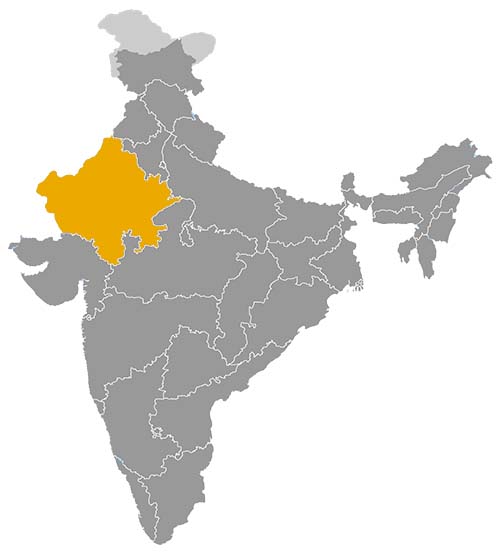
This map illustrates the maximum territory that the Bhati Dynasty had reached at its height, covering the current regions of Rajasthan in India. Its main purpose is to provide a visual aid to understand the geographical extent of this dynasty. However, it's important to note that the contemporary borders of these regions may not necessarily coincide with the historical territories.
The Bhati Dynasty in Indian History: Cultural, Political, and Economic Influence
The Bhati dynasty, a prominent branch of the Rajputs, played a crucial role in shaping the history of Rajasthan, particularly through their control of the Jaisalmer kingdom in northwestern India. Renowned for their military prowess and governance, the Bhati dynasty left a lasting legacy that impacted the cultural, political, and economic fabric of the region. Their influence extended beyond Rajasthan, contributing to the broader narrative of medieval Indian history.
Origins and Foundation of the Kingdom
The Bhati claim descent from the solar dynasty (Suryavanshi) of Rajputs, tracing their ancestry to the Hindu god Rama. Their rise to prominence began with the establishment of the kingdom of Jaisalmer by Rawal Jaisal in 1156. Jaisalmer, often referred to as the "Golden City" due to its iconic sandstone structures, became the center of the Bhati's political power. The city, strategically located in the Thar Desert, played a critical role in regional trade, serving as a junction between India, Central Asia, and the Middle East.
Political and Military Role
Politically, the Bhati dynasty was known for its resilience against external invasions, particularly from Muslim empires such as the Ghorids and the Mughals. The geographical isolation of Jaisalmer in the harsh desert terrain provided a natural defense, and the Jaisalmer Fort, a near-impregnable structure, was a key asset in their defense strategies. The Bhati are celebrated for their bravery in warfare, with numerous stories of heroism emerging from their resistance to repeated attacks. One of the most famous examples is the practice of jauhar, where women and children would commit mass suicide to avoid capture by invading forces, a testament to their unwavering honor and pride.
The Bhati dynasty often balanced their need for independence with strategic alliances. They formed temporary alliances with other Rajput dynasties or external powers, navigating the complex political landscape of medieval India. Though they were forced to acknowledge the suzerainty of the Mughals at certain points, they managed to retain their autonomy and cultural identity throughout much of their history. This delicate balance of loyalty and independence helped them maintain their status as key players in the region.
Economic Impact: The Desert Trade Routes
One of the most notable contributions of the Bhati dynasty was their role in fostering economic prosperity in Rajasthan. Jaisalmer, positioned along ancient caravan routes, became a hub of trade during the Bhati reign. The city facilitated the exchange of silk, spices, and other luxury goods between India and the West, establishing Jaisalmer as a prosperous trade center. This not only brought wealth to the kingdom but also enhanced its strategic importance in regional diplomacy and economic networks.
The Bhati rulers wisely capitalized on this economic activity by investing in infrastructure, particularly in the construction of havelis (traditional merchant houses) and religious structures, including temples. These investments not only elevated the economic stature of Jaisalmer but also laid the foundation for its cultural richness. Furthermore, their ability to maintain stable trade relations with other kingdoms and empires ensured the region’s economic survival even during turbulent times.
Cultural and Architectural Legacy
Culturally, the Bhati dynasty left a profound imprint on Rajasthan, particularly through their patronage of architecture, arts, and literature. The most iconic architectural achievement of the Bhati rulers is the Jaisalmer Fort, also known as the "Golden Fort." Built of yellow sandstone, this fort is a UNESCO World Heritage Site and is considered one of the largest fortifications in the world. Its towers, gates, and palaces stand as a testament to the dynasty’s grandeur and architectural innovation.
In addition to the fort, the Bhati dynasty supported the construction of numerous Jain and Hindu temples, reflecting the religious diversity and tolerance of their reign. These temples, often adorned with intricate carvings and sculptures, remain a highlight of the region’s artistic heritage. The havelis built by wealthy merchants during the Bhati era further illustrate the blending of artistic and economic prosperity. These grand mansions, with their elaborately carved facades and spacious courtyards, represent a unique blend of Rajput and Mughal architectural styles.
The Bhati rulers were also patrons of the arts, encouraging the development of oral traditions, poetry, and epic tales that celebrated their history and valor. Stories of Bhati bravery and sacrifice have been immortalized in the folk songs and legends of Rajasthan, and these traditions continue to be passed down through generations. The cultural identity of the Rajputs, characterized by a deep sense of honor and duty, was greatly influenced by the legacy of the Bhati dynasty.
The Bhati Dynasty under British Rule
Like many Rajput kingdoms, Jaisalmer was eventually incorporated into British India during the 19th century. Although the Bhati rulers maintained a degree of local autonomy under British protection, they could no longer exercise full independence. The kingdom became a princely state under the British Raj, and the Bhati rulers served as intermediaries between the colonial government and the local populace.
Despite the political changes brought by colonialism, the Bhati dynasty managed to preserve much of their cultural and architectural heritage. The city of Jaisalmer, while relatively isolated during the colonial period, experienced a revival following India’s independence in 1947. Today, the legacy of the Bhati rulers is preserved in the monuments, traditions, and stories that continue to define the region.
Conclusion
The Bhati dynasty’s contributions to the political, economic, and cultural history of Rajasthan are undeniable. Their ability to maintain a kingdom in the challenging conditions of the Thar Desert, coupled with their strategic prowess in trade and diplomacy, solidified their position as key players in medieval Indian history. The architectural marvels they left behind, such as the Jaisalmer Fort and the city’s havelis, stand as enduring symbols of their legacy. Moreover, the Bhati dynasty’s role in preserving Rajput traditions of honor, valor, and resistance has had a lasting influence on the cultural identity of the region.
Today, the heritage of the Bhati dynasty continues to be celebrated in Rajasthan, where their stories of courage and leadership are still recounted in folklore and song. Their impact on the region's political, economic, and cultural landscape remains an integral part of India's rich historical tapestry.
The Geographical Expansion of the Bhati Dynasty: Territories and Relations with Neighboring Dynasties
The Bhati dynasty, one of the Rajput clans, played a significant role in the history of Rajasthan, particularly through their control of the kingdom of Jaisalmer. Known for their strategic acumen, military resilience, and ability to govern a desert kingdom, the Bhati Rajputs carved out a notable legacy in the harsh yet strategically important region of the Thar Desert. Their territorial expansion and control had far-reaching implications, influencing their relations with neighboring dynasties and shaping the political landscape of medieval India.
Territories Controlled by the Bhati Dynasty
The Bhati dynasty's power base was the kingdom of Jaisalmer, which they founded in 1156 under the leadership of Rawal Jaisal. Jaisalmer became the epicenter of Bhati rule, with its iconic golden sandstone fort standing as a testament to the dynasty’s strength. Geographically, their territory encompassed a large portion of the Thar Desert, an arid but strategically vital area in the northwest of India, close to the present-day border with Pakistan.
The vast desert, while difficult to traverse, provided a natural defense that protected the kingdom from many invasions. The city of Jaisalmer itself was positioned along important trade routes that connected India with Central Asia and the Middle East. These ancient caravan routes made Jaisalmer a key commercial hub, facilitating the movement of valuable goods such as silk, spices, and other luxury items. As a result, the Bhatis were able to prosper economically despite their kingdom's geographical isolation.
The Bhati dynasty's control extended to the surrounding villages and desert outposts, which depended on the fortified city for protection and economic sustenance. While the Bhatis never expanded into vast territories like some other Rajput dynasties, their control over key routes and their ability to maintain autonomy in a hostile environment made their reign significant in the region.
Political and Military Relationships with Neighboring Dynasties
The Bhati dynasty's geographical position and control of trade routes directly influenced their relationships with neighboring dynasties. Throughout their reign, the Bhatis had to navigate a complex network of alliances, rivalries, and conflicts with other Rajput clans and external powers, particularly Muslim dynasties that sought to expand their influence in the region.
Rajput Alliances and Rivalries
The Rajput clans were fragmented into various kingdoms, each vying for territory, prestige, and dominance. The Bhatis often found themselves in both cooperation and conflict with other Rajput dynasties such as the Rathores of Marwar and the Sisodias of Mewar. Alliances were sometimes formed through marriage or mutual interest, particularly when defending against a common external threat. However, internal rivalries among the Rajput clans were not uncommon, as territorial disputes or ambitions of supremacy sometimes led to open conflict.
While the Bhatis maintained a relatively smaller kingdom compared to some of their Rajput neighbors, their strategic importance as controllers of trade routes made them a valuable ally and a formidable foe. Their ability to balance these relationships helped them maintain their autonomy and survive in the volatile political environment of medieval India.
Relations with Muslim Dynasties
The Bhatis also had to contend with the rise of Muslim dynasties, including the Ghurids, Delhi Sultanate, and later, the Mughal Empire. As early as the 12th century, Muslim armies made repeated attempts to conquer Rajput territories, and Jaisalmer was no exception. The Bhatis are celebrated for their staunch defense of their fort during numerous sieges, though they were often outnumbered by stronger forces. The near-impregnable Jaisalmer Fort became a symbol of Rajput valor and resistance.
One of the most notable strategies the Bhati employed in dealing with larger powers was their willingness to offer nominal allegiance to Muslim rulers while maintaining substantial internal autonomy. This strategy was common among many Rajput dynasties during the Mughal period. While the Bhatis recognized Mughal suzerainty, they retained control over their local affairs, ensuring the continuity of their dynasty and preserving their cultural identity.
The relationship with the Mughal Empire, in particular, was a pragmatic one. Although the Bhatis were initially resistant to Mughal expansion, over time they, like many other Rajput rulers, entered into alliances with the Mughal court. This allowed them to secure their position and protect their kingdom from direct conquest, while the Mughals benefited from having a loyal ally in a strategically important region. The Bhatis thus remained key players in the broader geopolitical landscape, balancing the interests of their own kingdom with the realities of Mughal dominance.
Economic Influence and Diplomatic Leverage
The Bhati dynasty’s control over the desert trade routes not only enriched their kingdom but also gave them significant diplomatic leverage. By controlling the flow of goods between India and the West, the Bhatis were able to engage in economic diplomacy, forming trade agreements and alliances based on mutual benefit. This economic strength allowed them to punch above their weight in terms of regional influence, as neighboring dynasties recognized the importance of maintaining good relations with Jaisalmer for commercial reasons.
The kingdom of Jaisalmer became a melting pot of cultures, as merchants from different regions passed through and brought with them diverse traditions, languages, and artistic influences. The Bhatis were patrons of both Hindu and Jain architecture, reflecting the religious and cultural diversity of their kingdom. Temples and havelis (merchant houses) constructed during the Bhati reign remain architectural treasures, showcasing a fusion of Rajput and Mughal styles.
Conclusion
The geographical expansion of the Bhati dynasty, though focused primarily on the region of Jaisalmer and the surrounding desert, played a crucial role in shaping their interactions with neighboring dynasties. Their strategic control of the desert trade routes made them economically and diplomatically influential, despite the relatively small size of their kingdom. By maintaining a delicate balance between independence and alliances with more powerful neighbors, the Bhatis secured their place in the history of Rajasthan and medieval India.
Their relations with other Rajput dynasties and with external powers like the Mughals were shaped by their geographical isolation, military resilience, and economic importance. The Bhatis left behind a legacy of cultural richness, architectural splendor, and stories of heroic resistance that continue to define their place in Indian history. Today, the golden city of Jaisalmer and its magnificent fort stand as enduring symbols of the Bhati dynasty's historical significance.
The Bhati rulers of Jaisalmer first bore the title of Rawal and later adopted the title of Maharawal from the late sixteenth century onward. The dates of the earliest reigns are approximate and may vary among historical chronologies.
- Rawal Jaisal (c. 1156–c. 1168) • Founded Jaisalmer and established the Bhati ruling line in its new capital.
- Rawal Shalivahan (c. 1168–c. 1200) • Consolidated the young kingdom in the Thar Desert.
- Rawal Kelan (early 13th century) • Maintained dynastic authority amid regional rivalries.
- Rawal Chachak Deo (mid-13th century) • Strengthened the kingdom's defences.
- Rawal Jaitsi (late 13th century) • Ruled before the major campaigns of the Delhi Sultanate.
- Rawal Mularaj (c. 1294–1295) • Defended Jaisalmer during the siege by the Delhi Sultanate.
- Rawal Duda (c. 1295–1308) • Continued the resistance until the fall of Jaisalmer.
- Rawal Garsi (14th century) • Gradually restored Bhati authority after the period of conflict.
- Rawal Lakshman (15th century) • Consolidated the kingdom during a relatively stable period.
- Rawal Harraj (1551–1578) • Allied with the Mughal emperor Akbar; the title of Maharawal came into use at the end of his reign.
- Maharawal Bhim (1578–1624) • First ruler to bear the title of Maharawal on a lasting basis.
- Maharawal Kalyan Das (1624–1634) • Maintained favourable relations with the Mughal Empire.
- Maharawal Manohar Das (1634–1648) • Governed a relatively stable kingdom.
- Maharawal Amar Singh (1648–1702) • Strengthened administration and fortifications.
- Maharawal Akhai Singh (1702–1722) • Preserved the kingdom's autonomy amid changing regional politics.
- Maharawal Mulraj II (1762–1820) • Ruled during the rise of the Marathas and the British.
- Maharawal Gaj Singh (1820–1846) • Reigned after British protection had been established.
- Maharawal Ranjit Singh (1846–1864) • Gradually modernised the administration of the state.
- Maharawal Bairi Sal (1864–1891) • Promoted several public works.
- Maharawal Shalivahan Singh II (1891–1914) • Continued the modernisation of the princely state.
- Maharawal Jawahir Singh (1914–1949) • Last ruling sovereign before Jaisalmer joined the Indian Union in 1949.
 Links to the main sections of the site