

 Français (France)
  Nederlands (nl-NL)
 Zelve Open-Air Museum is one of the most representative heritage sites of Cappadocia in Turkey. The complex brings together former rock-cut dwellings, communal spaces, and carved remains spread across several nearby valleys. The site clearly illustrates the long adaptation of local populations to a distinctive volcanic environment. Today preserved as a public heritage area, Zelve attracts visitors, researchers, and history enthusiasts. It makes an important contribution to understanding former ways of life in Cappadocia and holds a significant place in the international cultural image of the region.
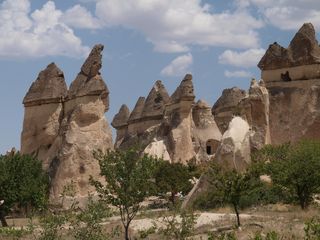
Cappadocia • Zelve
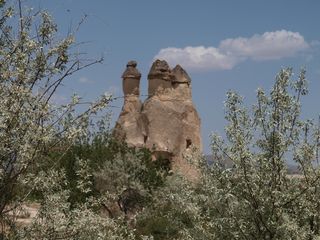
Cappadocia • Zelve
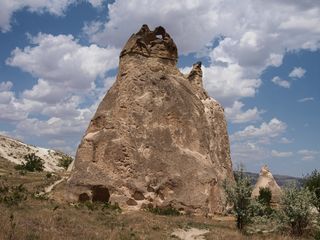
Cappadocia • Zelve
Monument profile
Zelve
Monument category: Rock-Cut Habitats and Halls
Monument family: Archaeological
Monument genre: Archaeological site
Geographic location: Cappadocia • Turkey
Construction period: 5th century AD
This natural site in Cappadocia is inscribed on the UNESCO World Heritage List since 1985 and is part of the serial property "Göreme National Park and the Rock Sites of Cappadocia".See the UNESCO natural sites featured on this site
• Links to •
• List of videos about Cappadocia on this site •
Cappadoce • Göreme, valleys and cave villages Turkey
Zelve Open-Air Museum: Historical Development of a Rock-Cut Settlement in Cappadocia
Origins of the Settlement and Early Occupation
Zelve consists of a network of valleys carved into Cappadocia’s volcanic tuff, where habitation spaces, storage rooms, circulation routes, and places of worship were excavated directly into the rock. The earliest organized occupation is generally associated with the early Byzantine period, probably between the 5th and 6th centuries. During this phase, communities adapted the soft stone landscape into permanent living quarters.
The site was selected for practical reasons. Rock masses could be hollowed rapidly and expanded over time, while the surrounding valleys offered cultivable land and sheltered routes. Elevated points also provided natural surveillance. Rather than being founded as a single planned complex, Zelve developed incrementally through repeated excavation and enlargement of usable rock formations.
Archaeological remains indicate that habitation zones and religious spaces emerged side by side. Domestic rooms, stables, storage chambers, and chapels formed a continuous occupied landscape rather than separate sectors. This mixed use remained one of the defining characteristics of Zelve throughout its history.
Byzantine Expansion and Medieval Continuity
Zelve reached greater importance during the middle and later Byzantine centuries. Several rock-cut churches were established or enlarged, showing the presence of an enduring Christian population. Some preserved interiors indicate liturgical adaptation of excavated spaces, while the surrounding domestic cavities demonstrate that worship was integrated into an inhabited village environment.
The settlement expanded vertically and horizontally according to the available rock. New chambers were linked to older ones through stairways, passages, terraces, and open courtyards. This gradual growth created a dense and irregular fabric shaped entirely by the topography.
After the Seljuk conquest of Anatolia and later under Ottoman rule, Zelve remained inhabited. This continuity distinguishes the site from places abandoned after a single historical phase. Political authority changed, but the local settlement endured because its built environment remained functional. Existing rock-cut rooms continued to be reused, modified, or supplemented with masonry additions.
Religious use evolved over time, but residential and agricultural functions remained central. The long survival of the community reflects the adaptability of the site rather than dependence on one political regime.
Chronological Global Context
When Zelve’s principal early phases developed between the 5th and 10th centuries, the Western Roman Empire had collapsed in Europe. Constantinople remained a major imperial capital. In China, successive dynasties culminated in the Tang period. In the Islamic world, the Umayyad and Abbasid caliphates shaped large political territories across the Near East and beyond.
From Living Village to Twentieth-Century Relocation
Unlike many historic rock-cut settlements, Zelve continued as a functioning village into the modern era. Residents occupied ancient chambers, adapted older interiors, and added surface-built structures where necessary. This prolonged use means that the visible remains belong to many centuries rather than one frozen historical moment.
By the twentieth century, geological instability became a serious issue. Erosion, cracking, and collapses affected some of the tall rock cones and cliff faces that had long supported habitation. As safety concerns increased, authorities organized the progressive transfer of residents to a newly established settlement during the 1950s and early 1960s.
This relocation marked a decisive historical transition. Zelve ceased to be a living village and became a preserved former settlement. Domestic continuity ended, but the physical fabric of the site survived largely because modern redevelopment did not replace it.
Heritage Recognition, Museum Status, and Preservation
Following depopulation, Zelve was reorganized as an open-air museum intended to preserve and interpret a large-scale example of Cappadocian rock-cut life. Its value lies not only in individual churches or chambers, but in the survival of an entire inhabited landscape where housing, religion, agriculture, and circulation can still be read together.
In 1985, the site became part of the UNESCO World Heritage property Göreme National Park and the Rock Sites of Cappadocia. This inscription recognized the combined significance of volcanic landforms and human settlements excavated into them.
Today, Zelve holds a distinct place among Cappadocia’s heritage sites. Some neighboring locations are known primarily for painted churches or continued village life, whereas Zelve offers a broad view of an abandoned but highly legible rock-cut settlement. Visitors can observe how households occupied multiple chambers, how movement was organized across steep terrain, and how religious spaces functioned within the community.
Preservation challenges remain substantial. Soft tuff is vulnerable to weathering, water infiltration, vibration, and visitor pressure. Certain sectors require restricted access because of instability. Conservation policy must balance public interpretation with minimal intervention, since the historical importance of Zelve depends heavily on the authenticity of its eroded surfaces, excavated interiors, and unfinished transitions between natural rock and human construction.
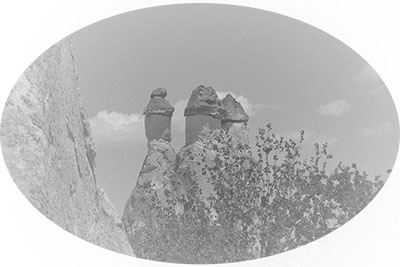
Rock-Cut Spatial Organization and Built Fabric of Zelve Open-Air Museum
Site Layout and Topographical Composition
Zelve is not a single monument but a multi-valley architectural complex excavated into volcanic tuff formations. The open-air museum occupies three principal valleys connected by narrow passages, sloping paths, terraces, and elevated ridges. Each valley contains clusters of carved chambers distributed according to the geometry of cliffs, cones, and freestanding rock masses. The overall composition is therefore determined by terrain rather than by a preconceived plan.
The settlement pattern follows natural slopes. Habitable cavities are concentrated where rock thickness allowed excavation, while circulation lines occupy saddles, ledges, and gentler inclines. Vertical organization is a defining feature. Many usable zones were created one above another, producing stacked levels linked by stairs cut directly into the stone. This gave the settlement a three-dimensional urban structure unlike surface villages built on horizontal parcels.
Open spaces between carved masses functioned as streets, courtyards, work areas, and points of access. Some widened naturally into communal areas, while others remained constricted corridors. Because each rock outcrop had a different shape, no two sectors are identical. The present visitor moves through a sequence of compressed passages and suddenly opened voids, revealing the logic of adaptation rather than symmetry.
Excavation Methods, Material Logic, and Structural Behavior
The essential building material is consolidated volcanic tuff. Its moderate softness made excavation practical with hand tools, while sufficient mass could remain stable if left thick enough. Architecture at Zelve was therefore produced by subtraction rather than assembly. Rooms, stairways, benches, niches, and windows were obtained by removing material from existing rock volumes.
Ceilings often follow the internal stress lines of the rock. Smaller rooms display rounded or slightly domed surfaces, while larger chambers sometimes retain central ribs or thicker ceiling bands where extra support was needed. Corners tend to be softened rather than sharply cut, partly because of working technique and partly because rounded transitions reduce fracture points.
Openings are generally rectangular or irregularly trapezoidal, depending on the natural face available. Doorways were sometimes shaped with rebates to receive timber closures. Beam sockets visible in certain areas indicate the use of wooden mezzanines, doors, lofts, or projecting platforms now lost. Masonry additions in some sectors suggest that carved interiors were occasionally combined with built exterior walls.
Structural limits remain visible throughout the site. Cracks, partial collapses, truncated chambers, and abandoned excavations show where geological weakness interrupted expansion. Zelve’s architecture therefore records both human intention and material resistance.
Domestic Quarters, Service Areas, and Movement Networks
Residential architecture at Zelve consists of repeated medium and small chambers rather than large integrated houses. Families likely occupied groups of rooms serving separate purposes: sleeping quarters, cooking areas, storage cells, stables, and seasonal workrooms. This dispersed household model can still be read in clusters of interconnected cavities.
Many interiors contain carved benches running along walls, shallow shelves, storage recesses, lamp niches, and low partitions left in relief. Floor levels are often uneven, reflecting original rock contours or deliberate separation of activity zones. Smoke-blackened ceilings in some rooms indicate former hearth use.
Circulation architecture is exceptionally important. Steps cut into steep rock faces connect terraces and upper rooms. Some staircases are narrow and direct; others are worn ramps with shallow risers adapted to animals or loads. Short tunnels pierce ridges to shorten movement between sectors. These links transformed fragmented geology into a functional settlement.
Pigeon houses form another recurring architectural category. Small cavities with multiple entry holes were cut into higher rock faces. Their position reduced predation and facilitated collection of manure used in agriculture. These specialized structures demonstrate how utility architecture was integrated into the broader carved environment.
Churches, Collective Spaces, and Symbolic Interiors
Several rock-cut churches survive within the complex. Their plans vary, but most consist of a nave-like chamber ending in an apse carved into the rear wall. Some include side annexes, subsidiary cells, or burial niches. Because they were excavated rather than built, spatial articulation depends on volumes left in place.
Columns and piers visible in certain churches are not added supports but residual masses intentionally retained during excavation. They divide interiors, carry ceiling loads, and establish axial order. Their proportions are often heavy and short, responding to structural necessity more than classical imitation.
Apses are usually semicircular or horseshoe-shaped according to the rock body available. Carved altar platforms, shallow icon niches, and liturgical recesses remain in some examples. Where painted decoration once existed, traces of plaster and pigment survive only fragmentarily. Even without extensive decoration, the churches preserve clear evidence of how sacred space was organized inside geological forms.
Collective architecture also includes exterior terraces and widened courts positioned near churches or major circulation nodes. These spaces likely served gathering, exchange, and communal tasks. Their value lies less in built ornament than in their relationship to carved interiors.
Architectural Transformation and Conservation Challenges
Because Zelve remained occupied into the twentieth century, its architecture reflects continuous modification rather than a single historical phase. Older chambers were enlarged, subdivided, or reassigned. Some entrances were widened, others blocked. Masonry walls, surface rooms, and repairs were introduced where carved spaces alone no longer met practical needs.
This layered evolution explains the coexistence of medieval churches, long-used domestic cavities, late rural adaptations, and modern stabilization measures. The abandonment of the village removed doors, floors, timber galleries, and movable partitions, leaving exposed rock volumes that now reveal the underlying spatial system more clearly than during habitation.
Conservation is complicated by the nature of tuff. Water infiltration, freeze-thaw cycles, wind erosion, vibration, and visitor traffic accelerate decay. Detached fragments, unstable cones, and fractured façades require constant monitoring. Some areas must remain inaccessible because intervention cannot guarantee long-term safety without excessive reconstruction.
Preservation strategy generally favors limited consolidation, drainage control, path management, and selective support rather than full rebuilding. Excessive restoration would erase the direct dialogue between natural formation and human excavation that defines Zelve. The site’s architectural importance lies precisely in its unfinished, adaptive, and visibly geological character.