

 Français (France)
  Nederlands (nl-NL)
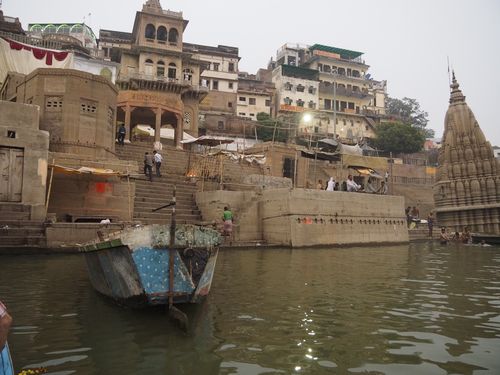
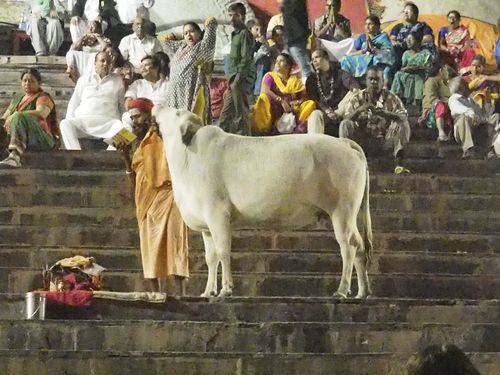
 The Ghats in Varanasi, located along the Ganges River in Uttar Pradesh, India, consist of a series of stone steps descending to the river. These structures primarily serve as venues for purification rituals and religious ceremonies. Integral to Hindu culture and spirituality, they host thousands of pilgrims daily who come to bathe in the sacred waters of the Ganges. Beyond their religious significance, the ghats are also centers for various social and cultural activities, including festivals and rites of passage.
Monument profile
Ghats
Monument categories: Pilgrimage site, Monumental staircase, Cremation place
Monument families: Pilgrimage site or memorial • Tomb, Necropolis, Mausoleum or Cenotaph • Civil engineering structures (bridges, wells, etc.) and factories
Monument genres: Religious, Funerary, Economic
Cultural heritage: Hindu
Geographic location: Varanasi • Uttar Pradesh • India
Construction period: before the 6th century BC
• Links to •
• Dynasties that contributed to the construction of the monument •


• List of videos about Varanasi on this site •
Varanasi (Benares), India's holiest city • Uttar Pradesh, India
• References •
Wikipedia EN: Ghats in Varanasi
UNESCO: Iconic Riverfront of the Historic City of Varanasi
The Ghats of Varanasi: A Reflection of Sociopolitical Shifts and Cultural Evolution
Historical and Sociopolitical Motivations for the Construction
The ghats of Varanasi, situated along the sacred Ganges River in India, were constructed to fulfill both spiritual and practical needs. Originally, their development was motivated by the desire to provide spaces for spiritual cleansing and rituals, which are central to Hinduism. The earliest recorded structures date back to ancient times, but significant expansions and reconstructions have been continuously made from the early medieval period onwards, notably during the reign of the Gupta dynasty around the 4th to 6th century AD and later by the Maratha empire in the 18th century.
Historical Events and Regional Impact
The ghats have borne witness to a series of historical events that have significantly influenced the political and social fabric of the region. During the medieval period, Varanasi was a focal point of Hindu renaissance and resistance against various invasions, including those by the Mughals, who later contributed to the city’s infrastructure. The ghats have also seen the rise of Bhakti movement, fostering a unique blend of culture and devotion which has solidified the city’s status as a spiritual hub.
Global Context and Comparisons
In a global context, the development of the ghats during the Gupta period can be likened to the construction of religious and public works in the Byzantine Empire, such as Hagia Sophia around the same time. Both served to signify religious devotion and political power. However, the continuous modification of the ghats also mirrors the evolutionary architectural trends seen in places like Europe, where structures like the Notre-Dame Cathedral were built and modified over centuries, reflecting shifts in power and artistic influences.
Transformations Through the Centuries
The architecture of the ghats has transformed significantly over the centuries. Initially simple and utilitarian, the structures became increasingly elaborate with sponsorship from powerful dynasties and wealthy patrons. This evolution reflects broader trends in Indian architecture, incorporating diverse influences from Islamic to Portuguese styles during the colonial era. Such changes underscore shifts in power and external cultural influences that have swept through Varanasi.
Cultural Significance and Current Conservation Status
Today, the ghats are not only a testament to Varanasi’s historical depth but also a living part of its cultural and religious life. Their importance as a site of pilgrimage and a symbol of India’s spiritual heritage attracts millions of visitors annually. However, this popularity comes with conservation challenges. The structures suffer from pollution, both from the river and the air, compounded by the wear and tear from constant use.
Preservation Challenges
Preserving the historical integrity of the ghats against modern threats involves combating environmental degradation and managing tourist impacts. Efforts by the Indian government and international organizations like UNESCO, although not yet a World Heritage Site, focus on sustainable tourism practices and infrastructural improvements to reduce pollution and ensure structural stability.
Conclusion
The ghats of Varanasi, with their rich history and cultural significance, offer a unique lens through which to view the interplay between religion, politics, and society in India. Their preservation is crucial not only for maintaining historical continuity but also for supporting the cultural identity and spiritual life of the region. As Varanasi continues to evolve, the ghats stand as a resilient symbol of India’s enduring heritage and spiritual tradition.
Architectural Mastery of the Varanasi Ghats: Echoes of the Mauryan Era
Technological Advances and Construction Techniques of the Mauryan Period
The ghats of Varanasi, though predominantly developed in later centuries, are seated on foundational engineering concepts that trace back to the Mauryan Empire (c. 322–185 BCE). The Mauryans were pioneers in structural engineering in ancient India, known for their use of baked brick and stone. While direct evidence linking the earliest ghats to Mauryan construction is scarce, the architectural ethos of that era—marked by durability and grandeur—resonates in the ghats’ robust designs that have withstood the test of time.
Materials and Methods
The Mauryan contributions to architecture included the use of locally sourced Chunar sandstone, known for its longevity and ease of carving. This material was instrumental in the construction of enduring structures, and similar materials have been identified in the foundational layers of some older ghats. Techniques such as interlocking stones without mortar, seen in other Mauryan works, likely influenced the initial construction phases of the ghats, designed to resist the erosive forces of the Ganges.
Unique Architectural Features
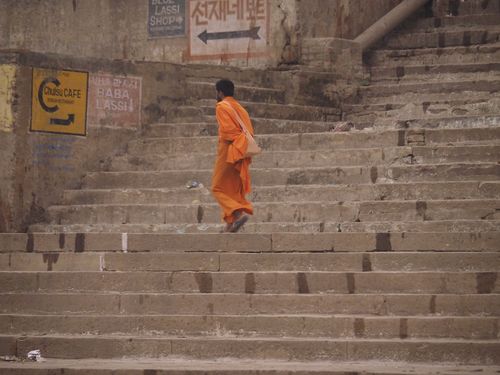
The Varanasi ghats showcase a distinctive amalgamation of regional artistic traditions and foreign influences. Architecturally, the ghats are a series of steps leading down to the river, facilitating both practical use for bathing and religious rites, and creating a visually striking tiered landscape. Decoratively, they feature an array of pavilions, palaces, and terraces, each reflecting the diverse cultural epochs they've survived through, including Islamic motifs introduced during the Mughal period and later European influences during the colonial era.
Notable Structure and Planning
A notable aspect of the ghats is their linear arrangement along the river, optimized for access to water—a plan that cleverly uses the natural topography to fulfill both spiritual and practical needs. This planning is reminiscent of the urban planning seen in Mauryan capitals, which were designed with functionality and accessibility in mind.
Cultural Impact and Global Recognition
While the ghats of Varanasi are not yet a UNESCO World Heritage Site, they are internationally recognized as a spiritual and cultural epicenter, drawing millions of pilgrims and tourists annually. This global attention underscores the ghats' profound cultural significance and showcases their architectural uniqueness on the world stage.
Conservation Challenges
The conservation of the ghats faces modern threats like pollution, commercialization, and the physical wear from constant use. The lack of a UNESCO World Heritage status means specific international protections and funds for preservation are limited, placing greater responsibility on national and local entities to manage these challenges effectively.
Conclusion
The ghats of Varanasi are not only an architectural marvel but also a historical canvas that narrates tales of India's evolving socio-cultural landscape. They reflect the ingenuity of Mauryan engineering and the adaptive nature of Indian architecture, absorbing various cultural influences over millennia. As they stand today, these ghats are a testament to India's rich past and its continual dialogue between tradition and modernity, underscoring their timeless relevance and the urgent need for their preservation.