

 Français (France)
  Nederlands (nl-NL)
 Yiga Choeling Monastery is located in the Ghoom area near Darjeeling, in the state of West Bengal, India. It is one of the best-known Buddhist monastic establishments in this Himalayan region and plays an important role in local religious life. The monastery is visited both by devotees and by travelers interested in Tibetan culture and Himalayan spiritual traditions. Situated within the historic monastic environment of Ghoom, it contributes to the cultural and religious identity of the area. The site also serves as a significant landmark in the wider Darjeeling region and continues to support the transmission of Buddhist practices and teachings among the local community.
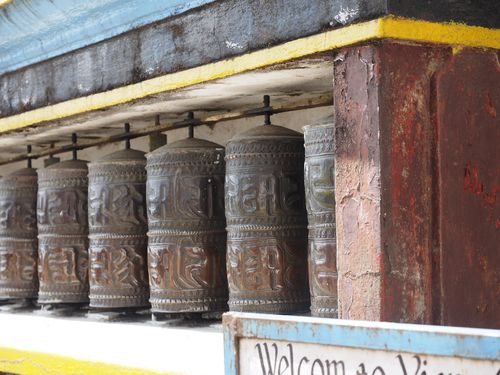
Darjeeling • Ghoom: Yiga Choeling Monastery
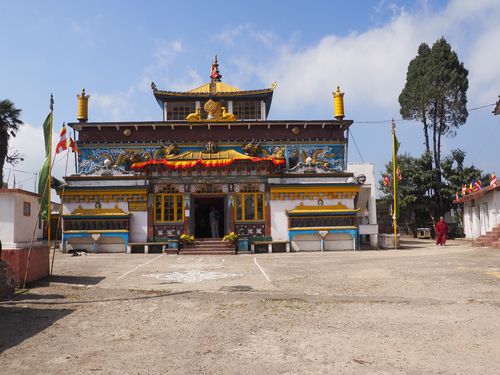
Darjeeling • Ghoom: Yiga Choeling Monastery

Darjeeling • Ghoom: Yiga Choeling Monastery
Monument profile
Ghoom: Yiga Choeling Monastery
Monument category: Monastery
Monument family: Monastery
Monument genre: Religious
Cultural heritage: Buddhist
Geographic location: Darjeeling • West Bengal • India
Construction period: 19th century AD
• Links to •
• List of videos about Darjeeling on this site •
Darjeeling • West Bengal, India
• References •
Wikipedia EN: Ghum Monastery
History of the Yiga Choeling Monastery, Ghoom, Darjeeling
A Monastery at the Crossroads of Colonial Himalaya
In 1850, Lama Sherab Gyatso, a Mongolian monk belonging to the Gelugpa tradition of Tibetan Buddhism, established the Yiga Choeling Monastery in Ghoom, a settlement situated at approximately 2,200 metres above sea level, a few kilometres from Darjeeling. The choice of location was deliberate: Darjeeling had been ceded by the kingdom of Sikkim to the British in 1835, and the region was rapidly transforming into a colonial hill station. Nepalese, Tibetan, Sikkimese and Bhutanese populations were settling in increasing numbers, forming a composite Himalayan community that lacked its own religious institutions.
The foundation of the monastery addressed this absence directly. For Tibetan and Himalayan communities in the region, it represented an act of cultural and spiritual continuity in a territory now administered by a foreign power. The Yiga Choeling became the first Tibetan monastery in Darjeeling, establishing a Gelugpa presence at the precise intersection of the British colonial world and the independent Himalayan kingdoms.
Political Context: Between Empires and Kingdoms
The monastery's foundation coincided with a period of intense geopolitical tension across the eastern Himalaya. The British Empire was consolidating its northern frontier and seeking to develop commercial routes toward Tibet and China. The kingdoms of Sikkim, Bhutan and Nepal were navigating between resistance and accommodation in the face of this pressure. Tibet, under Chinese suzerainty since the treaty of 1793, maintained its own religious and commercial networks throughout the region.
In this context, Buddhist monasteries fulfilled roles extending well beyond the religious sphere. They functioned as network nodes connecting dispersed communities, as centres of knowledge transmission, and occasionally as spaces for political negotiation. Local traditions suggest that the Yiga Choeling served as a neutral meeting ground during negotiations between Tibetan and British representatives in the late nineteenth and early twentieth centuries, though this diplomatic dimension remains difficult to document with precision.
The Gelugpa school to which the monastery belongs had been the dominant tradition of Tibetan Buddhism since the seventeenth century, when the Fifth Dalai Lama consolidated its authority with Mongol military support. The founder Lama Sherab Gyatso's Mongolian origins thus reflected this long-standing connection between the Gelugpa tradition and the Mongolian Buddhist world — a connection that gave the monastery an implicitly trans-regional character from its inception.
The Global Context of 1850
The year 1850 falls at the heart of a period of major institutional and monumental construction worldwide. In Europe, industrialisation was generating large-scale civic architecture — railway stations, national libraries, museums — while nationalist movements were investing in cultural monuments as expressions of collective identity. In Asia, several regional powers were responding to colonial pressure by reinforcing their cultural and religious institutions as markers of resistance and continuity.
In Japan, the decade preceding the Meiji Restoration saw a final consolidation of traditional Buddhist institutions before the state-enforced separation of Buddhism and Shinto in 1868. In China, the Taiping Rebellion (1850–1864) was causing massive destruction of religious and cultural sites, inadvertently reinforcing the importance of Tibetan Buddhist institutions as custodians of an alternative tradition. Across the Indian subcontinent, the years around 1850 marked a peak of tension between colonial authority and local cultural practices that would culminate in the uprising of 1857.
The Yiga Choeling fits within this broader global pattern: faced with an externally imposed modernity, Himalayan communities reaffirmed their identity through the construction of permanent religious institutions.
Major Historical Events
The monastery navigated the twentieth century without suffering the destructions that afflicted many Tibetan Buddhist institutions elsewhere. The independence of India in 1947 transformed the political framework of the region without directly disrupting its functioning. The community of monks continued its religious and educational activities under the new Indian administration.
The pivotal event came in 1959, when the Dalai Lama fled Tibet following the Chinese military crackdown and tens of thousands of Tibetan refugees began arriving in India. Darjeeling became one of the principal reception areas for displaced Tibetans. The Yiga Choeling, already established as a spiritual reference point for the local Himalayan community, saw its symbolic importance grow considerably. It became an anchor for uprooted populations, a place where the continuity of the Gelugpa tradition could be affirmed despite the political rupture in Tibet.
This period also brought increased attention to Tibetan cultural institutions from international observers, scholars and religious practitioners, gradually raising the monastery's profile beyond the immediate local community.
Transformations of the Site
The monastery has undergone several restoration campaigns since its foundation, driven primarily by the deteriorating effects of Darjeeling's exceptionally humid climate. Annual rainfall in the region can exceed 3,000 millimetres, accelerating the degradation of wooden structural elements, exterior plasterwork and interior murals. Restoration work has generally respected the original materials and techniques, focusing on the renewal of timber framing, the repair of rendered surfaces and the conservation of wall paintings.
The urban environment surrounding the monastery has changed profoundly. Ghoom, originally a small monastic settlement, has been absorbed into the expanding agglomeration of Darjeeling and now forms part of a densely inhabited urban corridor. The Darjeeling Himalayan Railway, a narrow-gauge steam railway built by the British between 1879 and 1881 and inscribed on the UNESCO World Heritage List in 1999, passes in close proximity to the monastery, making Ghoom a regular stop on tourist itineraries.
This integration into a touristic circuit has modified the monastery's relationship with its surrounding environment without fundamentally altering its function as a place of active religious practice.
The Monastery Today
The Yiga Choeling remains an active monastery. Monks continue to conduct daily ceremonies, collective prayers and the education of novices according to the Gelugpa tradition. The principal object of veneration is a 4.5-metre statue of Maitreya — the Buddha of the future — installed in the main prayer hall, which draws both religious visitors and tourists in significant numbers.
The monastery occupies a recognised place in the religious and cultural landscape of Darjeeling. For the local Tibetan and Himalayan community, it functions as a centre of collective identity and spiritual continuity. For the broader Indian public and for international visitors, it represents one of the most accessible examples of Tibetan Buddhist monastic culture on the subcontinent.
Several annual religious festivals are held at the monastery, including celebrations tied to the Tibetan Buddhist calendar. These events maintain the monastery's role as a focal point for community gathering and reinforce its visibility within the region.
Conservation and Contemporary Challenges
The primary conservation challenges facing the Yiga Choeling are climatic and urban. The persistent humidity of Darjeeling weakens timber structures and threatens the painted surfaces of both the exterior façades and the interior murals. The increasing urban density around the site reduces natural ventilation and raises ambient ground-level humidity.
The vibrations generated by the Darjeeling Himalayan Railway, which passes immediately adjacent to the monastery, present a long-term concern for the integrity of masonry structures, though no major structural damage attributable to this cause has been publicly documented.
The monastery does not hold an independent UNESCO classification, though it benefits indirectly from the attention generated by the World Heritage status of the Darjeeling Himalayan Railway corridor. Conservation efforts rest primarily with the monastic community and local religious authorities, without the support of a large-scale institutional preservation framework.
This relative distance from formal heritage protection mechanisms has, paradoxally, helped the Yiga Choeling remain a living place of religious practice rather than a museified monument — a form of authenticity that constitutes, in its own way, a significant dimension of its cultural value.
Architecture of the Yiga Choeling Monastery, Ghoom, Darjeeling
A Building Shaped by Altitude and Climate
The Yiga Choeling Monastery occupies a characteristic position for Himalayan religious establishments: built into a hillside at Ghoom, approximately 2,200 metres above sea level, the complex uses the natural terrain to ensure structural stability and effective water drainage. The orientation of the main façades provides protection from the prevailing winds while preserving views across the surrounding valleys. This integration into the slope is not primarily aesthetic — it responds directly to the constraints of an intense monsoon climate in which the management of surface water determines the long-term durability of any construction.
The complex follows a compact layout typical of Gelugpa monasteries in the lower Himalayan zone. Religious, educational and residential functions coexist within a grouping of adjoining or closely positioned buildings organised around the central prayer hall, which constitutes the architectural and spiritual core of the ensemble.
Construction Techniques and Structural Logic
The monastery's load-bearing walls are built in thick masonry, combining local stone with mortar. This thermal mass plays an essential role in regulating the interior climate: it dampens temperature fluctuations between the dry season and the monsoon and maintains relatively stable conditions within the worship spaces. Wall thickness also contributes to the building's seismic stability, a relevant consideration in a region subject to moderate tectonic activity along the eastern Himalayan arc.
The entire roof structure is carried by a timber frame. Beams and columns are assembled using mortise-and-tenon joinery without metal fixings, a technique that imparts a degree of flexibility to the structure, allowing it to absorb ground movement and thermal expansion without cracking. The timber used was most likely sourced from the forested foothills of the Himalaya, which were still largely accessible during the mid-nineteenth century before the deforestation that accompanied colonial-era development and tea plantation expansion in the Darjeeling hills.
Steeply pitched roofs ensure rapid evacuation of rainfall — a critical design requirement in Darjeeling, one of the wettest inhabited areas of the Indian subcontinent. Wide roof overhangs protect the exterior walls from direct precipitation, significantly slowing the erosion of rendered surfaces and painted decoration. This combination of steep pitch and generous overhang is one of the most consistent and functionally justified features of Himalayan monastic architecture across all traditions and altitudes.
Interior ventilation is regulated by the positioning of windows and by the ceiling height of the main assembly hall. This passive system promotes air circulation without mechanical intervention, a standard approach in traditional Himalayan monastic architecture that remains effective given the natural air movement characteristic of hillside sites.
Architectural and Artistic Influences
The Yiga Choeling sits firmly within the Tibetan monastic tradition, with adaptations reflecting the specific climatic conditions and available materials of the Darjeeling region. The façades display the characteristic features of Gelugpa architecture: simple whitewashed or ochre-rendered volumes, window frames painted in deep red and black, and decorative friezes running beneath the cornices. These visual codes are consistent across Gelugpa establishments from Lhasa to Ladakh, functioning as immediate markers of institutional and doctrinal identity recognisable to any practitioner of the tradition.
The wooden columns of the main hall follow the classical schema of Tibetan lhakhang interiors: painted shafts carrying carved capitals that support the principal beams. The colours employed — red, gold, cobalt blue, green — carry precise symbolic meaning within Tibetan Buddhist iconography. Red represents protection and power, gold signifies enlightenment, blue is associated with the Medicine Buddha and with wisdom. These are not decorative choices but a codified visual language that functions independently of aesthetic preference.
The interior mural programme depicts episodes from the life of the historical Buddha, protector deities and geometric mandalas. This iconographic scheme, standard in Gelugpa monasteries, fulfils a didactic function alongside its aesthetic one, providing visual support for meditation practice and religious instruction. The technique is distemper on plaster, a medium highly sensitive to moisture — which directly explains the frequency of restoration interventions required in Darjeeling's climate. The quality and coherence of the surviving murals suggest a relatively unified initial campaign of decoration, likely supervised by the founder or his immediate successors.
The synthesis of Tibetan architectural convention with local building materials and the particular topographic constraints of the Ghoom hillside represents a characteristic feature of eastern Himalayan monastic architecture: a shared formal vocabulary applied with pragmatic regional adjustments rather than rigid reproduction of metropolitan Tibetan models.
Spatial Organisation and Notable Elements
The main prayer hall forms the dominant volume of the complex. Its interior is structured by two rows of wooden columns defining a central nave and lateral aisles, a spatial arrangement recurring in the dukhang — assembly halls — of the Tibetan tradition. The ceiling height of this space, noticeably greater than that of the ancillary rooms, produces a measured vertical emphasis that contrasts with the predominantly horizontal profile of the building as seen from the exterior.
The most remarkable element of the monastery is the statue of Maitreya — the Buddha of the future — standing 4.5 metres high and installed as the visual and spiritual focal point of the main hall. Constructed in modelled clay over an internal armature and covered with gilding, the figure's scale relative to the proportions of the hall creates an immediate and commanding presence. This relationship between sculpture and architectural space — the statue nearly filling the vertical dimension of the room — is a deliberate design strategy common to Tibetan devotional architecture, in which the image does not merely occupy the space but effectively defines it for the worshipper upon entry.
Ancillary spaces — study rooms, storage for ritual objects, monastic living quarters — are arranged pragmatically around the central hall, connected by covered circulation routes that allow movement during the heavy monsoon rains. There are no domes, minarets or large towers; the architecture remains resolutely horizontal, adapted to the hillside terrain and consistent with the Tibetan monastic typology, which prioritises interior spatial quality over exterior vertical monumentality.
Entry to the complex is marked by painted gateway elements that signal the transition from secular to sacred space, a threshold condition treated with deliberate care in Tibetan monastic design. The perimeter walls, lower than the principal buildings, define the enclosure without visually isolating the complex from the surrounding landscape — an integration of built form and natural setting that characterises the best examples of Himalayan religious architecture.
Dimensions and Notable Facts
The Maitreya statue at 4.5 metres remains the single most cited dimensional feature of the monastery and one of the most significant examples of devotional sculpture in the Darjeeling region. The overall scale of the complex is modest by comparison with major Tibetan monastic institutions such as Tashilhunpo or Drepung, reflecting its original function as a community monastery serving a regional population rather than a seat of centralised ecclesiastical authority.
Local tradition holds that craftsmen from several parts of the Himalaya contributed to the decoration of the monastery, which may account for subtle variations in ornamental detail observable across different sections of the interior. This practice of assembling specialist artisans from dispersed locations was common in Himalayan monastic construction and reflects the trans-regional networks maintained by the Gelugpa institution across Tibet, Mongolia, Sikkim and Bhutan.
A notable characteristic of the Yiga Choeling relative to other Gelugpa establishments in the region is the apparent coherence of its interior iconographic programme, which appears to have been conceived as a unified whole rather than accumulated in successive uncoordinated layers — suggesting a degree of intentional planning in the original construction that distinguishes it from more organically developed monastic complexes.
Conservation and Architectural Integrity
The principal threat to the architectural fabric of the Yiga Choeling is moisture. Darjeeling's annual rainfall, which can exceed 3,000 millimetres, accelerates the deterioration of timber elements, exterior renders and interior wall paintings. Successive restoration campaigns have focused on the renewal of roof timbers, the repair of masonry and plasterwork, and the conservation of mural surfaces.
The proximity of the Darjeeling Himalayan Railway — whose tracks pass immediately adjacent to the monastery — generates regular low-level vibrations whose cumulative effect on masonry structures merits ongoing monitoring, though no major structural damage attributable to this cause has been formally recorded.
Restoration interventions have consistently maintained fidelity to original materials and construction methods, avoiding the introduction of modern materials that would compromise the building's structural behaviour or visual coherence. This approach reflects an understanding, within the monastic community, that the architectural integrity of the building is inseparable from its spiritual function — that the materials, proportions and visual language of the structure are not incidental features but constitutive elements of the religious environment it creates. This continuity of craft and intention over nearly two centuries is among the most significant, if least visible, dimensions of the monastery's architectural heritage.