

 Français (France)
  Nederlands (nl-NL)
 The Qalawun Complex is a prominent monument located in the historic city of Cairo, Egypt. Built in the 13th century, it exemplifies the splendor of Islamic architecture and underscores the significance of religious and funerary structures in the culture of the time. Housing both a madrasa and a mausoleum, it stands as one of the most representative landmarks of the Mamluk period. Its location on one of the city's most renowned streets makes it an essential destination for heritage enthusiasts.
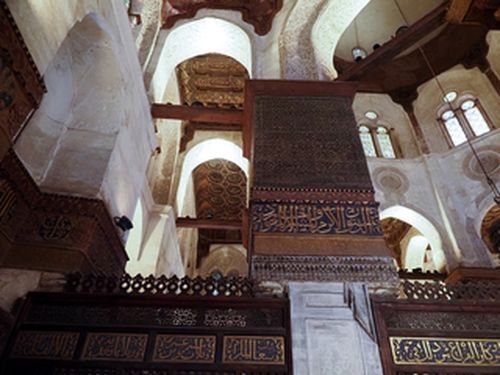
Cairo • Qalawun complex
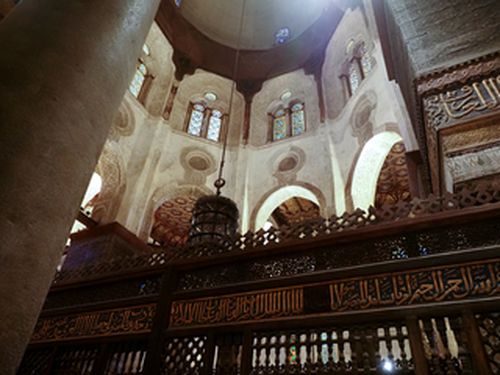
Cairo • Qalawun complex
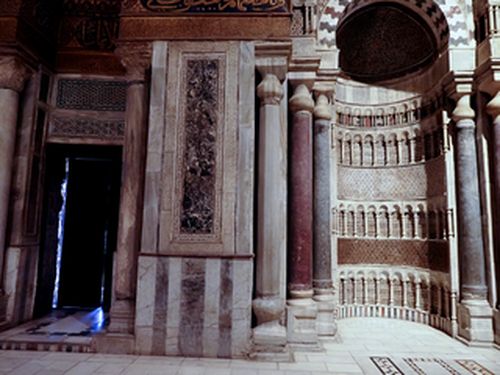
Cairo • Qalawun complex
Monument profile
Qalawun complex
Monument categories: Madrasa, Mausoleum
Monument families: Mosque, Minaret or Madrasa • Tomb, Necropolis, Mausoleum or Cenotaph
Monument genres: Religious, Funerary
Cultural heritage: Islamic
Geographic location: Cairo • Egypt
Construction period: 13th century AD
This monument in Cairo is inscribed on the UNESCO World Heritage List since 1997 and is part of the serial property "Historic Cairo".See the UNESCO monuments featured on this site
• Links to •
• This monument illustrates the following theme •
Architecture • Mausoleums : Muslim Mausoleums
• List of videos about Cairo on this site •
Cairo, Splendors of the Egyptian Museum • Egypt
Cairo, Two Mausoleums: Qalawun and Al Salih
The Qalawun Complex: Political Motives, Historical Evolution, and Preservation Challenges
Political and Social Motivations Behind Its Construction
The Qalawun Complex, constructed in 1284-1285 during the reign of Sultan Al-Mansur Qalawun, represents a deliberate political and social statement. The Mamluk dynasty, having recently established itself as a dominant power in Egypt after the decline of the Ayyubid dynasty, sought to legitimize its rule through monumental architecture. By commissioning this multifaceted complex—a madrasa, a mausoleum, and a bimaristan (hospital)—Qalawun not only demonstrated his devotion to Islam but also reinforced his role as a benevolent ruler providing for the spiritual, educational, and physical well-being of his subjects.
This approach was central to the Mamluk strategy of securing popular and religious support while showcasing their wealth and power. The complex also served as a tangible symbol of the sultan’s enduring legacy, as Qalawun intended his mausoleum to be his eternal resting place, placing him alongside other great Islamic rulers.
Historical Events and Their Influence
The Qalawun Complex is situated in Al-Muizz Street, a vital artery in Cairo’s historic Islamic quarter. Its construction followed a series of significant events, including the Mamluk victories over the Crusaders and their consolidation of power in the region. These events positioned Cairo as a political, cultural, and economic hub in the Islamic world.
The complex witnessed changes through successive periods. During Ottoman rule, parts of the site were repurposed to align with the new administrative structures, reflecting a shift in governance. In the colonial era, the complex's spiritual role diminished, but its architectural significance was recognized, initiating early conservation efforts.
The Global Context in the 13th Century
The construction of the Qalawun Complex occurred during a transformative period globally. In Europe, the late 13th century marked the conclusion of the Crusades and the rise of Gothic architecture, exemplified by cathedrals like Notre-Dame de Paris. In Asia, the Mongol Empire fostered unprecedented cultural and commercial exchanges across vast territories. Meanwhile, in the Americas, advanced civilizations like the Aztecs and Incas were developing monumental architecture independently.
Amid this dynamic global scene, Cairo emerged as a crossroads of trade and culture. The Qalawun Complex, blending local and foreign architectural influences, symbolized the city's central role in the Islamic world, rivaling cities like Baghdad and Constantinople in prestige.
Transformations Reflecting Power Shifts
The Qalawun Complex has undergone numerous changes, reflecting shifts in political authority and cultural influence. During Ottoman rule, certain decorative elements were added or altered, incorporating Ottoman aesthetic preferences. In the 19th century, as Egypt opened to European influence, the complex became a focus of academic study and preservation efforts.
Modern restorations have aimed to stabilize the structure while respecting its historical integrity. Efforts have included restoring intricate mosaics, repairing the dome of the mausoleum, and preserving the wooden ceilings of the madrasa. These transformations highlight the adaptive reuse of the site over time while preserving its core identity.
Cultural Significance and Current State
The Qalawun Complex remains a cultural landmark, recognized for its historical and architectural significance. It is an integral part of Cairo’s Islamic quarter, which is listed as a UNESCO World Heritage Site. This recognition has bolstered efforts to conserve the site, emphasizing its importance as a symbol of Mamluk innovation and urban planning.
Despite these efforts, the complex faces significant challenges. Urban encroachment, pollution, and tourism-related wear threaten its integrity. Managing these threats requires a balance between conservation and sustainable visitor access.
Preservation Challenges
The preservation of the Qalawun Complex involves addressing both environmental and human-induced factors. Pollution from the bustling city center accelerates the deterioration of stone and decorative elements. Vibrations from nearby traffic also pose structural risks. Additionally, balancing the influx of tourists with the need to protect fragile features is an ongoing challenge.
Efforts to mitigate these risks include implementing advanced conservation techniques, raising public awareness about the site’s significance, and promoting international collaboration.
Conclusion
The Qalawun Complex stands as a testament to the political ambition, technological innovation, and cultural richness of the Mamluk era. Its layered history reflects broader regional and global dynamics, while its architectural grandeur continues to inspire. As challenges to its preservation mount, sustained efforts will be essential to ensure this monumental legacy endures for future generations.
The Architectural Genius of the Qalawun Complex: Innovation, Materials, and Global Recognition
Architectural Innovation and Technological Advancements
The Qalawun Complex, constructed in 1284–1285 in Cairo, Egypt, stands as a remarkable example of Mamluk-era architectural and technological innovation. The design and execution of the structure demonstrate advanced engineering skills, particularly in the construction of the grand dome over the mausoleum. The dome's stability, achieved through precise calculations and finely crafted stone, reflects the ingenuity of the Mamluk builders.
The integration of multiple functions—education, healthcare, and religious practices—within one structure was also groundbreaking. Combining a madrasa, a bimaristan (hospital), and a mausoleum, the complex showcased an urban planning model that catered to spiritual, intellectual, and physical needs, reinforcing its societal importance.
Materials and Construction Techniques
The materials used in the Qalawun Complex highlight the opulence and resources of the Mamluk Sultanate. Local limestone formed the foundation of the structure, while high-quality marble, imported from regions such as Syria and Anatolia, adorned its interior. The decorative mosaics, featuring intricate geometric and floral designs, were crafted from colored glass, gold leaf, and mother-of-pearl, reflecting a commitment to artistic excellence.
Carved wooden ceilings and panels, often inlaid with ivory, demonstrate advanced craftsmanship. Techniques such as muqarnas (stalactite-like decorations) were used extensively, showcasing both functional and decorative brilliance. These elements not only emphasized the aesthetic appeal but also enhanced the acoustic and visual dynamics of the spaces.
A Unique Blend of Regional and Foreign Influences
The architecture of the Qalawun Complex embodies a synthesis of regional traditions and foreign influences. The use of pointed arches and intricate arabesques aligns with the broader Islamic architectural style, while the mosaics and domed structures suggest Byzantine and Syrian influences.
The complex's layout—arranged around a central courtyard—mirrors traditional Islamic design, fostering a sense of order and harmony. The mausoleum, positioned to reflect both spiritual significance and physical prominence, is aligned with the madrasa's mihrab, symbolizing the unity of religious and civic life.
Notable Features and Anecdotes
One of the most striking features of the Qalawun Complex is the large dome of the mausoleum, said to have been constructed in just thirteen months. Historical accounts note that Sultan Qalawun personally oversaw the selection of artisans, bringing in master craftsmen from across the Islamic world to ensure the monument's grandeur.
An anecdote of interest recounts that the mosaics within the complex were intended to rival those of the Dome of the Rock in Jerusalem, underlining the competitive and symbolic nature of such architectural projects during the Mamluk period.
Contribution to International Recognition
Although not individually listed as a UNESCO World Heritage Site, the Qalawun Complex forms part of the historic Islamic Cairo area, which holds UNESCO recognition. This association has elevated the complex's profile on a global scale, drawing attention to its architectural and cultural significance.
The recognition has spurred conservation efforts, including meticulous restorations of the mosaics, wooden panels, and stone carvings. These initiatives have preserved the monument's historical integrity and ensured its role as a cultural and educational landmark.
Preservation Challenges and Global Impact
The Qalawun Complex faces challenges common to historic urban sites, including pollution, structural wear from tourism, and encroaching urban development. Balancing conservation with accessibility remains a critical issue.
The international recognition of the complex as part of Cairo’s UNESCO listing has amplified awareness of its importance, attracting both scholars and tourists. This global interest underscores the monument’s role in representing Mamluk architectural achievements and Islamic cultural heritage.
Conclusion
The Qalawun Complex exemplifies the technological innovation, artistic mastery, and cultural synthesis of the Mamluk period. Through its use of advanced materials, innovative construction techniques, and integration of diverse artistic traditions, it stands as a testament to the era’s grandeur. Recognized globally as a cornerstone of Cairo’s Islamic heritage, the complex continues to inspire admiration while facing modern challenges that require ongoing attention and preservation efforts.