

 Français (France)
  Nederlands (nl-NL)
 The Basilica-Cathedral of San Giuliano is one of the main religious landmarks of the city of Caltagirone, located in Sicily in southern Italy. Dedicated to Saint Julian, it plays an important role in local religious life and in the historical urban structure of the town. The building illustrates the longstanding influence of ecclesiastical institutions in the development of Sicilian communities. Recognized as a major monument of Caltagirone, the cathedral remains an active place of worship while also serving as a significant cultural and heritage reference within the region.
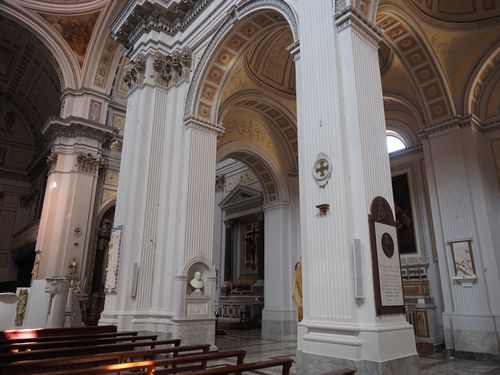
Caltagirone • Basilica-Cathedral San Giuliano
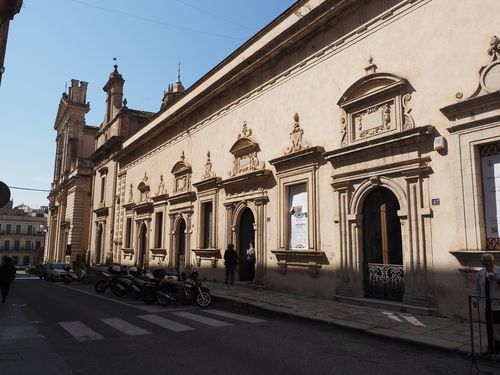
Caltagirone • Basilica-Cathedral San Giuliano
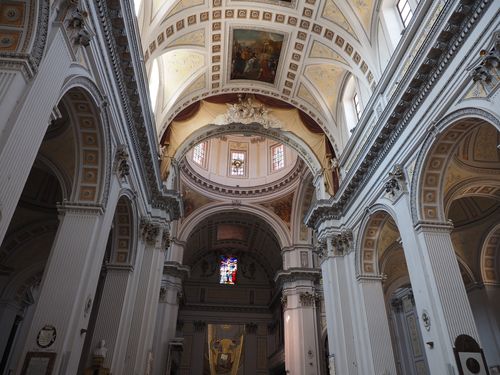
Caltagirone • Basilica-Cathedral San Giuliano
Monument profile
Basilica-Cathedral San Giuliano
Monument categories: Cathedral, Basilica
Monument family: Church, cathedral, basilica, chapel
Monument genre: Religious
Cultural heritage: Christian
Geographic location: Caltagirone • Sicily • Italy
Construction period: 11th century AD
• Links to •
• List of videos about Caltagirone on this site •
Caltagirone, capital of ceramics, Sicily • Italy
History of the Basilica-Cathedral of San Giuliano in Caltagirone
The Basilica-Cathedral of San Giuliano represents one of the principal historical and religious institutions of the city of Caltagirone, located in southeastern Sicily. Its development reflects the broader political, religious, and urban transformations that shaped Sicilian society from the medieval period to modern Italy. The monument’s history is closely linked to successive regimes governing the island, major natural disasters, and the evolving role of ecclesiastical institutions within urban communities.
Political and Social Context of the Foundation
The origins of devotion to Saint Julian in Caltagirone likely date back to the medieval consolidation of Christian institutions following centuries marked by Byzantine and Islamic administration in Sicily. After the Norman conquest in the eleventh century, rulers sought to reinforce Latin Christianity across the island as a means of political stabilization and territorial integration.
Church construction during this period served both spiritual and administrative purposes. Religious buildings functioned as centers of authority capable of organizing civic life, regulating social relations, and symbolizing loyalty to the ruling power. In inland Sicilian towns such as Caltagirone, ecclesiastical institutions contributed significantly to urban consolidation and demographic growth.
The establishment and later enlargement of a major church dedicated to San Giuliano reflected the ambitions of local elites aligned with royal authority. Norman and later Swabian administrations encouraged ecclesiastical patronage as part of broader governance strategies. Bishops, noble families, and municipal authorities collaborated in strengthening religious infrastructure, which also reinforced civic prestige.
Under Aragonese and subsequently Spanish rule between the fourteenth and seventeenth centuries, Sicilian cities increasingly expressed their political identity through monumental religious architecture. Patronage networks involving aristocratic families, confraternities, and clergy supported expansions and embellishments of important churches. These initiatives reflected competition among urban centers seeking recognition within the administrative hierarchy of the Kingdom of Sicily.
Major Historical Events Affecting the Monument
Like many historic structures in southeastern Sicily, the church dedicated to San Giuliano experienced repeated transformations caused by seismic activity and political change. The most decisive event occurred in 1693, when a catastrophic earthquake devastated large parts of eastern Sicily. Entire urban districts collapsed, and numerous religious buildings were either destroyed or severely damaged.
The earlier structure of San Giuliano suffered extensive destruction, making reconstruction unavoidable. This moment marked a fundamental turning point not only for the monument but also for the urban identity of Caltagirone itself.
Rebuilding efforts unfolded within the framework of Spanish administrative authority, which encouraged systematic reconstruction across affected territories. Rather than restoring buildings exactly as they had existed, planners often embraced new architectural and symbolic programs intended to demonstrate resilience and renewed order following disaster.
Throughout the eighteenth century, reconstruction progressed alongside economic recovery. Religious institutions regained prominence as stabilizing forces within communities recovering from demographic losses and material devastation.
Political transitions affecting Sicily during the eighteenth and nineteenth centuries also influenced the cathedral indirectly. Changes in sovereignty, including Bourbon administration and later incorporation into unified Italy, altered the financial structures supporting ecclesiastical institutions. Periods of reduced funding slowed maintenance or decorative programs, while renewed civic engagement later encouraged restoration initiatives.
Despite these fluctuations, the church maintained uninterrupted religious use, reinforcing continuity within the community across centuries of political transformation.
Global Context at the Time of Reconstruction
The rebuilding of San Giuliano after the late seventeenth-century earthquake coincided with a broader international phase of monumental construction shaped by religious and political developments across Europe. Following the Counter-Reformation, Catholic territories invested heavily in religious architecture intended to reaffirm institutional authority and spiritual presence.
Across Italy, Central Europe, and parts of the Iberian world, churches were redesigned to emphasize visual impact, ceremonial space, and urban prominence. Reconstruction in Sicily formed part of this wider movement, although it developed distinctive regional characteristics shaped by geography and local craftsmanship.
At the same time, expanding global trade networks connected Mediterranean territories with emerging colonial economies. Wealth circulating through imperial systems indirectly supported artistic and architectural patronage. Urban rebuilding programs in Sicily therefore paralleled similar initiatives occurring in cities recovering from fires, wars, or earthquakes elsewhere in Europe.
San Giuliano’s reconstruction reflects this broader historical moment in which monumental architecture served as both religious expression and civic affirmation during an era of political centralization and cultural competition.
Transformations and Urban Evolution
Over subsequent centuries, the cathedral underwent adaptations responding to evolving liturgical practices and urban development. Interior modifications accompanied reforms introduced after the Council of Trent, which emphasized clearer visibility of the altar and improved organization of worship spaces.
The nineteenth century brought significant institutional change following Italian unification. The redefinition of relations between church and state affected ecclesiastical property management throughout the country. While some religious institutions declined during this period, San Giuliano retained its importance within local religious life.
Urban expansion gradually altered the surrounding environment. Streets, civic buildings, and residential areas developed around the cathedral, reinforcing its role as a spatial and symbolic reference point within Caltagirone’s historic center.
Restoration campaigns during the twentieth century addressed structural wear caused by time, minor seismic activity, and environmental exposure. These interventions aimed primarily at stabilization while preserving historical integrity.
Contemporary Role and Cultural Importance
Today, the Basilica-Cathedral of San Giuliano remains an active religious center serving the local population. Major liturgical celebrations continue to take place within the building, particularly those associated with local devotional traditions and patronal festivities.
The monument also plays an important role in shaping civic identity. For residents of Caltagirone, the cathedral represents continuity between historical memory and contemporary community life. Religious processions and ceremonial gatherings reinforce longstanding social connections linked to the site.
Beyond its religious function, the cathedral contributes significantly to the cultural reputation of the city. Caltagirone is internationally recognized for its artistic heritage and historic urban landscape, and San Giuliano forms part of this collective architectural ensemble.
The building increasingly participates in cultural tourism while maintaining its primary spiritual role, illustrating the balance between heritage preservation and living tradition common in historic Italian cities.
Conservation Status and Modern Preservation Challenges
Preserving the cathedral presents ongoing technical challenges associated with Sicily’s environmental and geological conditions. Seismic risk remains a central concern, requiring periodic structural monitoring and reinforcement strategies compatible with historic construction methods.
The limestone materials used in construction are vulnerable to atmospheric erosion, humidity fluctuations, and pollution associated with modern urban activity. Conservation programs therefore focus on careful cleaning, consolidation of stone surfaces, and protection of decorative elements.
Tourism growth within historic centers introduces additional pressures related to visitor management and infrastructure adaptation. Authorities seek to maintain accessibility while preventing excessive wear on historic fabric.
Caltagirone forms part of the UNESCO-listed Late Baroque Towns of the Val di Noto, a designation recognizing the exceptional reconstruction undertaken after the 1693 earthquake. This international recognition strengthens conservation oversight and encourages coordinated preservation policies affecting major monuments within the urban landscape, including San Giuliano.
Through centuries marked by disaster, reconstruction, political transformation, and cultural continuity, the Basilica-Cathedral of San Giuliano has evolved into a lasting testimony to the historical resilience of Sicilian urban society. Its history illustrates the interaction between religious institutions, civic ambition, and environmental challenges that have shaped the architectural and social identity of southeastern Sicily.
Architectural features
Architecture of the Basilica-Cathedral of San Giuliano in Caltagirone
The Basilica-Cathedral of San Giuliano represents a significant example of ecclesiastical architecture developed in southeastern Sicily during the extensive rebuilding campaigns that followed the earthquake of 1693. Its present architectural form reflects technical adaptation to seismic conditions, the artistic language of Sicilian Baroque design, and the integration of monumental religious buildings within reorganized urban environments. The structure combines structural pragmatism with decorative ambition, illustrating the technical maturity achieved by Sicilian builders during the late seventeenth and eighteenth centuries.
Architectural and Technological Innovations
The reconstruction of the cathedral occurred during a period when architects and master builders across eastern Sicily sought solutions capable of reconciling monumentality with structural resilience. Experience gained from repeated seismic destruction influenced construction strategies adopted throughout the region.
One of the principal innovations visible in the cathedral lies in the distribution of structural loads. Thick masonry walls function as primary stabilizing elements, reducing vulnerability to lateral movement during earthquakes. Internal arches and reinforced vaulting systems distribute weight progressively toward supporting piers rather than concentrating pressure in isolated sections.
The articulation of vertical and horizontal volumes also reflects deliberate engineering considerations. Rather than excessively elongated spans, the interior proportions maintain structural equilibrium while preserving spatial continuity. This approach limited stress accumulation within vaulted ceilings.
Ventilation and illumination formed additional technical concerns. Window placement allows controlled penetration of daylight while avoiding excessive weakening of load-bearing walls. Openings positioned along elevated sections of the nave improve air circulation, an important factor in Mediterranean climates where humidity and temperature variations affect interior preservation.
Urban alignment equally influenced the design. The cathedral façade participates in the visual organization of surrounding streets, acting as an architectural anchor within the reconstructed city. The positioning enhances visibility while maintaining stability on uneven terrain characteristic of Caltagirone’s hillside setting.
Materials and Construction Methods
Local limestone constitutes the principal construction material. Widely available in the region, this stone offered advantages both practical and aesthetic. Its relative softness during extraction allowed precise carving, while exposure to air gradually increased hardness, improving durability.
The stone’s warm coloration contributes significantly to the visual identity of the building under changing daylight conditions. This interaction between material and light became a defining characteristic of Sicilian Baroque architecture.
Construction techniques combined carefully cut exterior blocks with internal masonry cores composed of smaller stones bonded using lime-based mortar. This composite system balanced strength and flexibility, allowing limited structural movement without catastrophic fracture during seismic events.
Foundation reinforcement received particular attention during reconstruction. Builders expanded base supports and improved ground adaptation to compensate for irregular subsoil conditions. These measures aimed to distribute weight evenly across the structure and reduce settlement over time.
Decorative architectural components such as cornices, sculptural frames, and balustrades were frequently produced separately before installation. Modular fabrication enabled artisans to achieve detailed workmanship while facilitating replacement or repair if deterioration occurred.
Wood also played an important structural and functional role, particularly in roofing systems and internal frameworks supporting certain decorative elements. Timber components introduced controlled elasticity within upper sections of the building.
Architectural and Artistic Influences
The architectural language of San Giuliano illustrates the synthesis characteristic of Sicilian Baroque culture. Local traditions inherited from medieval construction practices merged with artistic influences transmitted through Spanish administration and broader Italian architectural developments.
The façade demonstrates a carefully staged vertical composition structured through multiple architectural orders. Projecting elements create shadow contrasts that enhance visual depth throughout the day. This dynamic treatment reflects design principles developed in Rome but adapted locally through regional craftsmanship.
Spanish influence appears in the emphasis placed on institutional monumentality. Religious buildings constructed under Iberian governance frequently functioned as civic symbols as well as devotional spaces. The cathedral’s external composition conveys authority and permanence consistent with this tradition.
Decorative programs incorporate sculptural motifs typical of Sicilian workshops, characterized by expressive detailing rather than strict classical restraint. Ornamentation responds to local artistic preferences shaped by Mediterranean cultural exchanges over centuries.
Rather than direct imitation of mainland Italian models, the building demonstrates adaptation to regional materials, climate, and craftsmanship traditions. This synthesis distinguishes Sicilian Baroque architecture from contemporaneous developments elsewhere in Europe.
Spatial Organization and Structural Composition
The cathedral follows a longitudinal basilican plan aligned with post-Tridentine liturgical requirements emphasizing visibility and ceremonial clarity. The central nave forms the dominant spatial axis guiding movement toward the altar.
Side aisles provide circulation routes and accommodate chapels associated with devotional confraternities and patron families. These lateral spaces expand functional capacity without compromising structural coherence.
Vaulted ceilings reinforce both architectural unity and mechanical stability. Arches transfer loads toward massive supporting pillars positioned at regular intervals along the nave. This rhythm establishes structural predictability while organizing visual perception.
The crossing area beneath the dome represents a central architectural focus. The dome introduces vertical expansion within the interior composition while allowing controlled natural illumination from above. Structurally, it redistributes forces downward through transitional elements connecting circular and rectangular geometries.
The bell tower contributes significantly to the external silhouette of the cathedral. Beyond its religious function, the tower historically served as a civic landmark visible across the urban landscape. Its construction required careful balancing between height and seismic resistance, resulting in reinforced masonry proportions.
Interior surfaces emphasize continuity between architectural structure and decorative articulation. Columns, pilasters, and cornices create hierarchical transitions guiding attention through the space without interrupting structural logic.
Dimensions, Construction Details, and Notable Features
Although precise measurements vary according to restoration documentation, the cathedral ranks among the larger religious structures within Caltagirone’s historic center. Interior height plays a major role in spatial perception, amplifying light diffusion and acoustic resonance during liturgical ceremonies.
The façade’s vertical layering produces an impression of elevation exceeding the building’s actual structural height. This optical strategy was frequently employed in Baroque architecture to enhance monumentality within constrained urban environments.
Construction extended across multiple phases involving numerous artisans and specialized workshops. Stone carvers, engineers, and decorative sculptors collaborated under coordinated supervision, reflecting the collective organization typical of eighteenth-century reconstruction projects.
Local tradition attributes particular chapels to specific guilds or confraternities that contributed financially to construction efforts. These associations influenced decorative variations observable within different sections of the interior.
Accounts preserved in municipal memory also suggest that rebuilding efforts mobilized large segments of the population following the earthquake, reinforcing the cathedral’s symbolic association with communal recovery.
International Recognition and Conservation Challenges
The architectural significance of the Basilica-Cathedral of San Giuliano derives partly from its integration within the broader urban reconstruction of southeastern Sicily after the 1693 earthquake. Caltagirone belongs to the group of Late Baroque Towns of the Val di Noto recognized internationally for their coherent architectural transformation.
This context enhances the monument’s importance as part of a collective urban ensemble rather than as an isolated structure. Its architecture contributes to the continuity of streetscapes shaped during eighteenth-century planning initiatives.
Conservation presents ongoing technical challenges linked primarily to environmental exposure and seismic vulnerability. Limestone surfaces remain sensitive to atmospheric erosion and biological growth caused by humidity fluctuations.
Urban activity introduces additional stresses including vibration and pollution effects associated with modern traffic and tourism. Preservation strategies therefore emphasize periodic structural monitoring and minimally invasive restoration techniques.
Interventions carried out during recent decades aim to stabilize masonry while preserving original construction methods whenever possible. Conservation specialists seek compatibility between traditional materials and modern reinforcement technologies.
Through its engineering solutions, material choices, and spatial composition, the Basilica-Cathedral of San Giuliano demonstrates the capacity of Sicilian architecture to transform reconstruction necessity into architectural innovation. The building remains a coherent expression of technical adaptation, artistic ambition, and urban integration shaped by the specific environmental and historical conditions of southeastern Sicily.