

 Français (France)
  Nederlands (nl-NL)
 Map of places or practices featured in a video published on this site
• Use the markers to explore the content •
From the Mountains of the Tian Shan to an Independent Republic: The Historical Formation of Modern Kyrgyzstan
Early Human Settlement in the Tian Shan Region
The territory of present-day Kyrgyzstan has been inhabited since prehistoric times. Archaeological discoveries in the Tian Shan mountains and surrounding valleys indicate human presence dating back to the Paleolithic period. Early communities of hunters and gatherers occupied caves and river valleys, adapting to the demanding environment of Central Asia's high mountain systems.
During the Neolithic period, agriculture and animal husbandry gradually appeared alongside traditional hunting practices. By the Bronze Age, communities in the region had developed metallurgy and increasingly relied on pastoralism. The domestication of horses, sheep and cattle became central to the economy and social organization of local populations.
One of the most important archaeological sites in the country is Saimaluu-Tash, a vast collection of petroglyphs carved into mountain rocks. These engravings provide valuable insight into prehistoric beliefs, hunting practices and daily life in the region.
The development of seasonal migration between summer and winter pastures laid the foundations for the nomadic traditions that would shape Kyrgyz society for centuries.
Indo-European Peoples and the Cultures of the Steppe
During the first millennium BCE, the territory formed part of the wider cultural world of the Eurasian steppes. Iranian-speaking nomadic peoples, including the Scythians and later the Saka tribes, dominated much of Central Asia.
These horse-riding societies controlled trade routes crossing the mountains and maintained connections with Persia, China and other neighboring civilizations. Their mobility allowed the rapid circulation of goods, technologies and artistic influences.
Burial mounds discovered in various parts of Kyrgyzstan reveal a hierarchical society in which warrior elites occupied prominent positions. The artistic traditions of these peoples, particularly the so-called animal style associated with steppe cultures, influenced later societies across Central Asia.
The Silk Road and the Opening of Eurasian Trade
Beginning in the second century BCE, the opening of trade routes linking China to the Mediterranean transformed Central Asia into one of the world's major commercial crossroads.
Although the principal Silk Road cities lay farther west in Transoxiana, important branches of the trade network crossed the valleys and mountain passes of present-day Kyrgyzstan. Merchants transported silk, spices, precious metals, horses and textiles across these routes.
The region became a zone of contact between Chinese, Persian, Indian and Mediterranean civilizations. Trade encouraged not only economic exchanges but also the spread of religions, languages and artistic traditions.
Several settlements in the Chuy Valley and around Lake Issyk-Kul developed as stopping points for caravans traveling through the Tian Shan mountains.
The Rise of Turkic Peoples
The Turkic Khaganates
Beginning in the sixth century CE, the political landscape of Central Asia was transformed by the expansion of Turkic-speaking peoples.
The First Turkic Khaganate established control over a vast territory extending from Manchuria to the Caspian Sea. The spread of Turkic languages gradually reshaped the ethnic composition of Central Asia, including the ancestors of modern Kyrgyz populations.
The nomadic lifestyle based on horse breeding, seasonal migrations and tribal organization became increasingly important throughout the region.
The cultural traditions associated with the Turkic world, including epic poetry, oral transmission and clan structures, continue to influence Kyrgyz society today.
The Yenisei Kyrgyz
Historical records from Chinese sources mention the Kyrgyz people as early as the first centuries CE. At that time, they inhabited territories near the Yenisei River in southern Siberia rather than modern Kyrgyzstan.
In the ninth century, the Yenisei Kyrgyz defeated the Uyghur Khaganate and temporarily emerged as one of the dominant powers of Inner Asia. Although historians continue to debate the precise relationship between these early Kyrgyz and the present-day population, they occupy an important place in national historical memory.
The modern Kyrgyz nation traces significant elements of its identity to these early Turkic ancestors.
Religions and Cultural Exchanges in Central Asia
Prior to the spread of Islam, the peoples of the region practiced a variety of religious traditions, including animism, shamanism and ancestor worship.
The influence of the Silk Road introduced additional religions into Central Asia. Buddhism spread northward from India and China, while Nestorian Christianity and Manichaeism established communities in several parts of the region.
The coexistence of multiple religions reflected the cosmopolitan nature of Central Asian trade networks.
Islam began to spread into Central Asia following the Arab conquests of the eighth century. However, the mountainous and predominantly nomadic regions corresponding to modern Kyrgyzstan adopted Islam more gradually than the urban centers of Samarkand or Bukhara.
For many centuries, Islamic beliefs coexisted with older traditions associated with nomadic spirituality and local customs.
The Mongol Empire and Political Transformation
The arrival of Genghis Khan and the Mongol armies in the early thirteenth century marked a major turning point in Central Asian history.
The territory of modern Kyrgyzstan became incorporated into the Mongol Empire and later into the Chagatai Khanate, one of the successor states created after the fragmentation of the empire.
Mongol rule brought both destruction and opportunity. Military conquest caused widespread disruption, but the political unity of the empire also facilitated trade and communication across Eurasia.
The period known as the Pax Mongolica allowed merchants, scholars and travelers to move more safely between China, the Middle East and Europe.
The Mongol era accelerated processes of cultural exchange and contributed to the further spread of Turkic languages and Islamic traditions throughout the region.
The Formation of Kyrgyz Identity
Between the fifteenth and seventeenth centuries, Kyrgyz tribes gradually migrated toward the Tian Shan mountains and the valleys corresponding largely to the territory of modern Kyrgyzstan.
Society remained organized around tribal confederations and clan structures. Political authority was decentralized and based largely on the influence of tribal leaders and local assemblies.
Pastoral nomadism continued to dominate economic life. Seasonal migration between mountain pastures and lowland winter settlements shaped social relations and cultural practices.
One of the most important cultural developments during this period was the emergence of the Epic of Manas. This enormous oral tradition recounts the heroic deeds of Manas and his descendants and remains one of the central symbols of Kyrgyz national identity.
The epic, transmitted orally by specialist storytellers known as manaschis, is among the longest epic traditions in the world.
Regional Khanates and External Pressures
From the seventeenth century onward, Kyrgyz tribes found themselves increasingly influenced by neighboring powers competing for control of Central Asia.
The Dzungar Khanate, a powerful Oirat Mongol confederation, frequently threatened the populations of the Tian Shan region. Repeated conflicts encouraged closer cooperation among Kyrgyz tribes and strengthened collective identities.
At the same time, the Khanate of Kokand gradually expanded its authority into the Ferghana Valley and southern Kyrgyz territories.
The influence of Kokand introduced stronger administrative structures and increased the integration of southern Kyrgyz communities into the commercial networks of Central Asia.
These external pressures contributed significantly to the political consolidation of Kyrgyz tribal groups.
Russian Expansion and Imperial Rule
The nineteenth century witnessed the gradual expansion of the Russian Empire into Central Asia during the period often referred to as the Great Game between Russia and Britain.
Russian forces conquered the Khanate of Kokand and progressively incorporated Kyrgyz territories into the empire during the 1860s and 1870s.
Imperial administration encouraged the settlement of Russian and Ukrainian farmers in fertile valleys, particularly in northern Kyrgyzstan. New agricultural methods, urban centers and administrative institutions transformed local society.
However, Russian rule also generated tensions over land ownership and taxation. Many nomadic communities lost access to traditional grazing areas.
These tensions culminated in the Central Asian uprising of 1916, when resistance to military conscription and colonial policies led to widespread rebellion. The revolt was violently suppressed, causing large-scale population displacement and significant loss of life.
The memory of these events remains important in Kyrgyz historical consciousness.
Soviet Rule and the Creation of Modern Kyrgyzstan
Revolution and Territorial Reorganization
Following the Russian Revolution of 1917 and the subsequent civil war, Soviet authority gradually became established throughout Central Asia.
The Soviet government reorganized the region according to national principles. In 1924 an autonomous Kyrgyz entity was created, eventually becoming the Kyrgyz Soviet Socialist Republic in 1936.
The borders established during this period largely correspond to those of modern Kyrgyzstan.
Collectivization and Social Transformation
The Soviet period transformed Kyrgyz society profoundly. Nomadic populations were forcibly settled, and collective farms replaced traditional pastoral systems.
Education expanded rapidly, literacy rates increased dramatically and public healthcare became widely accessible. Urbanization accelerated, particularly in Bishkek, then known as Frunze.
Russian became the dominant language of administration, science and higher education.
At the same time, Soviet modernization came at a significant human cost. Political purges during the Stalinist era affected many intellectuals, political leaders and cultural figures.
Industrial Development
Following the Second World War, Soviet authorities promoted industrialization in the republic. Mining, hydroelectric power generation and manufacturing developed steadily.
Large infrastructure projects connected previously isolated regions and integrated Kyrgyzstan into the wider Soviet economy.
The republic's population became increasingly diverse, including Russians, Ukrainians, Uzbeks, Germans and other ethnic communities.
Independence and Political Change
Kyrgyzstan declared independence on 31 August 1991 following the dissolution of the Soviet Union.
The transition to a market economy proved difficult. Industrial production declined, unemployment increased and many Soviet-era economic connections disappeared.
Unlike several neighboring Central Asian states, Kyrgyzstan developed a relatively pluralistic political system. Nevertheless, political instability remained a recurring feature of public life.
Popular uprisings in 2005 and 2010 led to major political changes and demonstrated the importance of civic mobilization in the country's political culture.
Ethnic tensions, particularly in the south of the country, also emerged as significant challenges during the post-independence period.
Contemporary Kyrgyzstan in Regional Context
Modern Kyrgyzstan remains one of the world's most mountainous countries, with more than ninety percent of its territory located above 1,000 meters in elevation.
The country occupies an increasingly important strategic position between China and the states of Central Asia. Infrastructure projects and trade corridors linking East Asia with Europe have renewed interest in Kyrgyzstan's geographic location.
Islam is the principal religion, while Russian continues to play an important role alongside Kyrgyz in administration and public life.
Economic development depends heavily on mining, agriculture, hydroelectric resources and remittances sent by Kyrgyz citizens working abroad.
Historical Legacies and National Identity
The identity of modern Kyrgyzstan reflects multiple historical layers accumulated over centuries of migration, conquest and cultural exchange.
The traditions of the Eurasian steppes, the legacy of Turkic empires, the influence of Islam, the importance of the Silk Road and the experience of Soviet modernization all contributed to shaping contemporary society.
The persistence of nomadic traditions, the symbolic importance of horses and mountains and the enduring prestige of the Epic of Manas demonstrate the continuity of cultural practices that survived profound political transformations.
The history of Kyrgyzstan is therefore not simply the history of a modern state created in the twentieth century. It is the history of a mountainous crossroads of civilizations whose peoples adapted repeatedly to changing empires and trade routes while preserving a distinct cultural identity within Central Asia.

Contemporary Kyrgyzstan Between High Mountains, Nomadic Heritage and Regional Integration
A Mountain Nation in the Heart of Central Asia
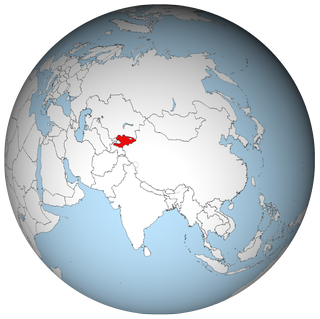
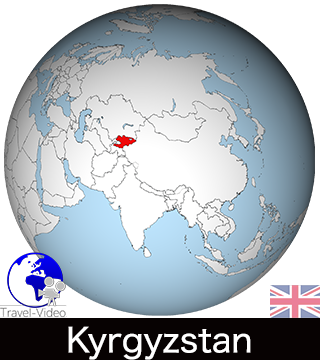
Kyrgyzstan is a landlocked country located in the centre of Asia, bordered by Kazakhstan to the north, Uzbekistan to the west, Tajikistan to the southwest and China to the east. Its strategic position between the Eurasian steppes, the Ferghana Valley and western China has historically made it an important crossroads for trade and cultural exchange.
The country is dominated by the Tian Shan mountain system, which covers most of its territory. More than ninety percent of Kyrgyzstan lies above 1,000 metres in elevation, making it one of the most mountainous countries in the world. High peaks, deep valleys and remote plateaus continue to shape patterns of settlement, transport and economic activity.
One of Kyrgyzstan's most remarkable natural features is Lake Issyk-Kul, one of the largest mountain lakes on Earth. Located at an altitude of approximately 1,600 metres, it remains largely ice-free throughout the winter despite its elevation. The lake plays an important role in tourism, agriculture and local economic development.
The country's principal rivers include the Naryn and the Kara Darya, both of which contribute to the Syr Darya river system that supports agriculture across much of Central Asia.
Climate and Environmental Conditions
Kyrgyzstan experiences a strongly continental climate influenced by altitude and mountain geography. Winters can be extremely cold, especially in high valleys and plateaus, while summers are often warm in lowland areas such as the Chuy Valley and the Ferghana Basin.
The country's ecosystems range from alpine meadows and glaciers to forests, steppes and semi-arid valleys. These diverse environments support species such as the snow leopard, the Siberian ibex and the Marco Polo sheep.
Climate change represents one of Kyrgyzstan's most significant environmental challenges. The gradual retreat of glaciers threatens long-term water supplies for agriculture and hydroelectric production. Soil degradation, overgrazing and increasing pressure on pasturelands also require careful management.
Because water resources originating in Kyrgyz mountains supply neighboring countries downstream, environmental policies increasingly possess both national and regional importance.
Population and Demographic Structure
Kyrgyzstan has a population of more than seven million inhabitants and remains one of the younger societies of the former Soviet Union. Population growth continues, although significant migration abroad affects demographic trends in some regions.
The majority of inhabitants are ethnic Kyrgyz, a Turkic people whose historical roots lie in the nomadic cultures of Inner Asia. Important minorities include Uzbeks, Russians, Dungans, Uighurs, Tajiks and several smaller communities that reflect the country's complex historical development.
Population distribution is uneven. Large concentrations are found in the Chuy Valley surrounding the capital and in the fertile Ferghana Valley in the south, while many mountain regions remain sparsely populated.
Internal migration toward urban centres, particularly Bishkek, has accelerated in recent decades as economic opportunities increasingly concentrate in cities.
Languages, Religion and Cultural Identity
Kyrgyz is the state language and occupies a central place in national identity. As a member of the Turkic language family, it shares linguistic links with Kazakh, Uzbek and other Central Asian languages.
Russian retains official status and continues to play a major role in administration, higher education, business and international communication. Bilingualism in Kyrgyz and Russian is common, particularly in urban areas and among younger generations.
Uzbek remains widely spoken in southern regions, especially around Osh and the Ferghana Valley.
Islam, predominantly of the Sunni tradition, is the principal religion of the country. Religious practice varies considerably according to region, age and social background. Islamic traditions coexist with elements inherited from nomadic customs and pre-Islamic beliefs associated with ancestor veneration and the natural environment.
The Epic of Manas remains one of the most important symbols of Kyrgyz identity. This monumental oral tradition recounts the deeds of the legendary hero Manas and continues to occupy an important place in education, literature and public life.
Major Cities and Administrative Organization
Bishkek, the capital and largest city, serves as the political, economic and educational centre of the country. Located in the Chuy Valley near the Kazakh border, it concentrates a large proportion of government institutions, universities and businesses.
Osh, the country's second largest city, occupies a strategic position in the Ferghana Valley and serves as the main commercial and cultural centre of southern Kyrgyzstan. Historically associated with the Silk Road, Osh remains one of Central Asia's oldest continuously inhabited urban settlements.
Other important cities include Jalal-Abad, Karakol, Naryn, Talas and Batken, each serving as regional administrative centres.
Kyrgyzstan is divided into seven regions, or oblasts, while Bishkek and Osh possess separate administrative status due to their national importance.
Transport and Infrastructure
Mountain geography creates significant challenges for transportation and infrastructure development. Roads remain the principal means of internal communication, and several strategic highways connect the country's major regions.
The route linking Bishkek and Osh crosses high mountain passes and constitutes one of the country's most important transport corridors.
The railway network remains relatively limited and largely reflects Soviet-era planning. Existing lines connect certain regions with Kazakhstan and Uzbekistan, but no fully integrated national railway system crosses the entire country.
International airports in Bishkek and Osh provide connections with neighboring countries, Russia, Turkey and other destinations across Eurasia.
Future infrastructure projects linking China, Kyrgyzstan and Uzbekistan could strengthen the country's role as a transit corridor between East Asia and Europe.
An Economy Based on Resources, Agriculture and Services
Kyrgyzstan possesses one of the smaller economies in Central Asia but has developed a relatively diversified economic structure.
Mining plays a major role in export revenues, particularly through gold production. The Kumtor gold mine is among the largest industrial enterprises in the country and has long represented a significant source of government income.
Agriculture continues to employ a large proportion of the population, especially in rural areas. Livestock breeding remains particularly important and reflects the country's nomadic heritage. Sheep, cattle and horses continue to occupy an important place in both economic activity and cultural traditions.
Agricultural production also includes cereals, potatoes, fruits, vegetables, cotton and tobacco.
Hydroelectric power represents another valuable resource. The country's rivers and mountain geography provide considerable potential for electricity generation and regional energy exports.
Remittances sent by Kyrgyz citizens working abroad, particularly in Russia and Kazakhstan, constitute an important component of household income and national economic stability.
Tourism and Cultural Heritage
Tourism has become an increasingly important sector of the economy. Kyrgyzstan attracts visitors interested in mountain landscapes, trekking, climbing and equestrian travel.
Lake Issyk-Kul remains the country's most important tourist destination, while the Tian Shan mountains attract hikers and mountaineers from around the world.
Traditional yurt camps offer opportunities to experience aspects of nomadic culture that continue to survive in rural areas.
Historical sites such as the Burana Tower, Tash Rabat caravanserai and the ancient city of Osh illustrate the country's role in the Silk Road networks that connected Asia and Europe.
Traditional crafts remain important in many communities. Felt-making, carpet production, embroidery and yurt construction continue to be practiced and represent significant elements of cultural heritage.
Education, Research and Modern Society
The educational system inherited from the Soviet period achieved high literacy rates and remains one of the country's strengths.
Bishkek hosts several important institutions of higher education, including Kyrgyz National University, Kyrgyz-Russian Slavic University and the American University of Central Asia.
Scientific research focuses particularly on mountain ecosystems, water management, geology and Central Asian studies.
The expansion of digital technologies and improved international connections have contributed to social and economic changes, especially among younger generations in urban centres.
Contemporary Challenges and Regional Relations
Kyrgyzstan faces several significant challenges in the twenty-first century. Economic diversification, employment creation and infrastructure development remain national priorities.
Regional inequalities between urban centres and remote mountain communities continue to influence social and economic opportunities.
Water management and border issues remain sensitive topics in the Ferghana Valley, where the borders of Kyrgyzstan, Uzbekistan and Tajikistan intersect in a complex geographical pattern.
On the international level, Kyrgyzstan maintains close relations with Russia, China, Kazakhstan and Uzbekistan while participating in several regional organizations.
Its location between major powers gives the country strategic importance but also requires careful diplomatic balancing.
Modern Kyrgyzstan therefore combines ancient nomadic traditions with the realities of a contemporary Central Asian state. Shaped by mountains, cultural diversity and historical connections across Eurasia, it continues to define its place between regional integration, economic modernization and the preservation of a distinctive national identity.