

 Français (France)
  Nederlands (nl-NL)
 The Siva Supramanian Temple, located in Saint-Paul on Réunion Island, is a Hindu place of worship dedicated to the deity Siva in the form of Muruga. It reflects the traditions and heritage of the Tamil community on the island. The temple is notable for its colorful architecture and intricate sculptures, typical of Dravidian-style temples. It hosts regular ceremonies and religious celebrations, playing an essential role in the spiritual life of its devotees. Its presence highlights the cultural diversity and religious heritage of Réunion.
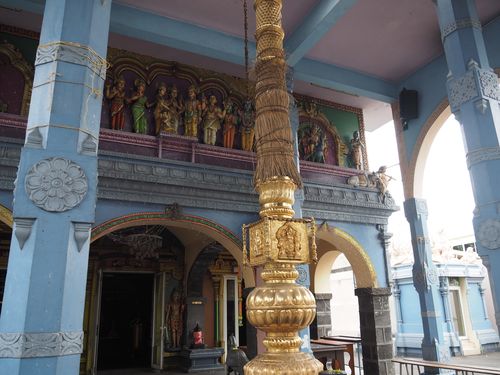
Reunion Island • Siva Supramanian Temple

Reunion Island • Siva Supramanian Temple

Reunion Island • Siva Supramanian Temple
Monument profile
Siva Supramanian Temple
Monument category: Hindu Temple
Monument family: Temple
Monument genre: Religious
Cultural heritage: Hindu
Geographic location: Saint Paul • Reunion Island
Construction period: 19th century AD
• Links to •
• List of videos about on this site •
Reunion: the volcano, the landscapes and the people • Reunion Island
History of the Siva Supramanian Temple in Saint-Paul, Réunion Island
Political and Social Context of Its Construction
The Siva Supramanian Temple, located in Saint-Paul on Réunion Island, is a key historical and religious site reflecting the cultural identity of the Tamil community. It was built in response to the social and political conditions of the 19th century when indentured laborers from India arrived in large numbers following the abolition of slavery in French colonies. These migrants, primarily from Tamil Nadu and Pondicherry, sought to preserve their religious traditions in a new land where Hinduism was initially marginalized by the colonial authorities.
At the time of its construction, French colonial policies largely favored Christianization, and Hindu worship was often restricted or practiced discreetly. However, as the Tamil community grew in numbers and influence, they gradually gained the right to establish temples. The construction of the Siva Supramanian Temple was, therefore, a symbol of resilience and identity, marking a significant step in the recognition of Hindu traditions in Réunion.
The temple was not built under royal patronage, unlike many Hindu temples in India. Instead, it was a collective effort by the Tamil community, who pooled resources and expertise to create a place of worship that reflected their spiritual and cultural needs. Over time, the temple became a focal point for religious practice, festivals, and communal gatherings, reinforcing social cohesion among the Tamil diaspora.
Major Historical Events Affecting the Site
Since its foundation, the Siva Supramanian Temple has witnessed several periods of change, adaptation, and restoration. Unlike many historical sites affected by wars or military conflicts, its challenges were primarily social and administrative.
During the early 20th century, Hindu temples in Réunion faced pressure from both the Catholic Church and the colonial administration, which continued to promote Christianization among the local population. Nevertheless, as Réunion progressed towards greater cultural inclusivity, Hindu temples like Siva Supramanian received formal recognition and protection.
The temple has undergone several restorations and expansions, particularly during the mid-20th century when the Tamil community gained increased social and political representation. These renovations ensured the preservation of its artistic and architectural elements while adapting it to the growing number of devotees.
In recent decades, the temple has benefited from improved legal protections under French heritage laws, ensuring its conservation as an integral part of Réunion’s cultural landscape.
Global Context at the Time of Construction
The 19th century was a period of major migrations driven by colonial labor demands. Similar to Réunion, other French and British territories, such as Mauritius, Trinidad, and South Africa, also saw the arrival of large Tamil populations who built Hindu temples to maintain their traditions. The Siva Supramanian Temple aligns with a broader global movement of temple construction by Tamil diasporic communities, reflecting the adaptation of South Indian architecture to diverse environments.
In India, the 19th century saw the decline of royal temple patronage due to British colonial rule, leading to greater reliance on community-driven temple construction, a trend mirrored in Réunion. This temple thus represents not only a religious monument but also a historical testimony to the self-sufficiency of Tamil migrants in preserving their heritage.
Transformations of the Monument
Over the years, the temple has undergone multiple changes, both in its physical structure and in its role within the community.
Initially a small shrine, it was expanded to accommodate a growing number of devotees. Architectural modifications included the enlargement of the main prayer hall, the addition of altars dedicated to other deities, and the construction of a gopuram (ornate entrance tower) in the Dravidian style, similar to those found in South Indian temples.
The urbanization of Saint-Paul has also influenced the temple’s surroundings. What was once a secluded place of worship is now part of a more densely developed area. Despite this, efforts have been made to preserve the temple’s spiritual ambiance, with careful urban planning that maintains its accessibility and sacred atmosphere.
Role and Cultural Importance of the Temple Today
The Siva Supramanian Temple remains a major spiritual and cultural landmark in Réunion. It serves as a center for Hindu worship, community events, and educational activities related to Tamil heritage.
Key religious festivals such as Thaipoosam Cavadee and Dipavali attract thousands of devotees and visitors. These events showcase the vibrancy of Hindu culture on the island, featuring elaborate rituals, music, and dance performances. The temple also plays a role in interfaith dialogue, promoting cultural understanding within the multi-ethnic society of Réunion.
Beyond religious activities, the temple has become a symbol of identity and heritage for the Tamil community, representing the endurance of their traditions despite historical challenges. It has also gained interest from historians, anthropologists, and tourists who wish to understand the island’s diverse cultural landscape.
Current Conservation Status and Modern Preservation Challenges
The temple’s conservation efforts focus on maintaining its structural integrity and artistic heritage while ensuring it remains functional for worship. Several factors pose challenges to its long-term preservation:
- Environmental Threats: Réunion’s tropical climate, characterized by heavy rains and cyclones, accelerates the deterioration of painted surfaces and stone carvings. Regular maintenance is required to prevent water damage and erosion.
- Urbanization: The expansion of infrastructure in Saint-Paul raises concerns about maintaining the temple’s traditional environment. Urban development pressures necessitate protective measures to ensure the temple is not encroached upon.
- Tourism and Public Access: While the temple attracts visitors, balancing tourism and religious sanctity is essential. Conservation efforts include guidelines for visitors to respect rituals and the temple’s sacred spaces.
Although not listed as a UNESCO World Heritage Site, the temple benefits from official heritage recognition at the regional and national levels in France. This status provides legal protection and funding opportunities for restoration projects. The local Tamil community remains actively involved in the temple’s upkeep, demonstrating a strong commitment to its preservation as both a spiritual and cultural treasure.
Conclusion
The Siva Supramanian Temple in Saint-Paul is more than a religious site; it is a living monument to Tamil history, migration, and cultural resilience. Its construction amid colonial restrictions, its evolution alongside the Tamil diaspora, and its continued role in modern Réunion society make it a key piece of the island’s heritage.
Through ongoing conservation efforts, active religious practice, and cultural events, the temple ensures that the legacy of the Tamil community remains vibrant. Despite the challenges posed by climate and urbanization, it stands as a testament to faith, identity, and the enduring power of cultural heritage in an ever-changing world.
Architectural Analysis of the Siva Supramanian Temple in Saint-Paul, Réunion Island
Technological and Architectural Innovations of the Era
The Siva Supramanian Temple, located in Saint-Paul on Réunion Island, is a significant example of Dravidian-style temple architecture adapted to the environmental and social conditions of the Indian Ocean region. Constructed following the Vastu Shastra, an ancient Hindu architectural guide, the temple incorporates advanced construction techniques that ensure both its spiritual and structural integrity.
One of the primary architectural innovations seen in the temple is the strategic orientation of its layout. According to Vastu principles, Hindu temples are aligned with cosmic energies, with specific entrances, sanctuaries, and towers arranged to enhance the divine presence. The temple was carefully positioned to ensure the optimal flow of air and natural light, essential for maintaining a comfortable climate inside the structure in Réunion’s tropical environment.
The ventilation system is another significant innovation. The temple’s high ceilings and open colonnades allow for a steady circulation of air, preventing excessive heat buildup. The roofing system, characterized by tiered structures and sloping designs, is engineered to facilitate the rapid drainage of heavy tropical rains, reducing the risk of water accumulation and structural damage.
The stability of the structure was also a key consideration. Located in a region prone to cyclones and occasional seismic activity, the temple’s foundations were reinforced using traditional masonry techniques combined with modern concrete reinforcements, ensuring resilience against extreme weather conditions.
Materials and Construction Methods
The temple was constructed using a combination of stone, concrete, and wood, chosen for their durability and aesthetic appeal.
- Stone: Used for the main structural elements, including the sanctuary walls, pillars, and base, stone provides longevity and resistance to environmental factors. The stones were locally sourced and hand-carved, ensuring that the temple maintains the traditional ornate detailing typical of South Indian temple architecture.
- Concrete: Modern restoration efforts incorporated reinforced concrete to enhance the strength of certain areas, particularly in the gopuram (entrance tower), while still preserving the original artistic integrity of the structure.
- Wood: Certain decorative elements and parts of the roof structure were crafted from wood, which was specially treated to withstand humidity, termites, and decay.
The construction techniques employed showcase a blend of traditional Tamil craftsmanship with modern engineering adaptations. Artisans utilized hand-carving for intricate sculptures and molded reliefs to create lighter yet detailed decorations on temple walls.
One of the most notable aspects of the temple’s construction process was the involvement of skilled Tamil artisans, some of whom were brought from India or Mauritius to ensure that the temple adhered to the highest standards of Dravidian temple-building traditions.
Architectural and Artistic Influences
The Siva Supramanian Temple reflects a harmonious fusion of Tamil Hindu architecture and local Réunionese adaptations. The most striking influence is the Dravidian architectural style, seen prominently in its gopuram, the entrance tower covered in vivid sculptures of deities, mythological figures, and floral motifs.
This ornamentation serves both a decorative and symbolic purpose. Each sculpted figure tells a story from Hindu mythology, reinforcing the spiritual messages conveyed within the temple. The murals and frescoes that adorn the interior walls are painted using natural pigments, a technique rooted in South Indian traditions.
Local influences can also be observed, particularly in the integration of tropical materials and climate-conscious design choices. The structure incorporates open-air spaces and shaded corridors, features that are reminiscent of Creole verandas, which provide protection from the intense sun while facilitating air circulation.
The use of vibrant colors—blues, reds, and golds—is another defining characteristic, reinforcing the temple’s spiritual energy while also serving as a cultural marker distinguishing it from surrounding colonial and modern structures.
Organization and Spatial Structure
The layout of the temple follows the classical Hindu temple structure, divided into several key areas:
- The Gopuram (Entrance Tower) – This elaborately carved tower serves as the gateway to the temple, symbolizing the transition from the material world to the divine realm. It is adorned with intricate carvings of gods, celestial beings, and auspicious motifs.
- The Mandapa (Prayer Hall) – This large, open-pillared hall acts as a gathering space for worshippers, processions, and musical performances. The hall is designed to enhance the acoustics for religious chants and mantras.
- The Garbhagriha (Sanctum Sanctorum) – The most sacred part of the temple, where the main deity, Muruga (a form of Siva), is enshrined. Access is restricted to priests and worshippers making special offerings.
- Secondary Shrines – Dedicated to other Hindu deities such as Ganesha, Durga, and Vishnu, these smaller sanctuaries are positioned in alignment with astrological and cosmological principles.
- The Sacred Water Tank – Used for ritual purification before entering the sanctum, following Hindu customs of cleanliness and spiritual preparation.
Notable Dimensions and Anecdotes
The Siva Supramanian Temple is one of the largest Hindu temples in Réunion, covering several hundred square meters. The gopuram stands at an impressive height, making it a visible landmark in Saint-Paul’s landscape.
One of the most fascinating aspects of the temple’s construction is the ritual consecration process known as Prana Pratishta, where priests performed intricate ceremonies to invoke divine presence within the temple's statues. This event was accompanied by festivities, music, and large community feasts, reinforcing the temple’s role as a center of Tamil identity.
International Recognition and Conservation Challenges
Though not designated as a UNESCO World Heritage Site, the Siva Supramanian Temple is protected under local heritage laws, ensuring its preservation as an important cultural and religious landmark.
The main challenges facing conservation include:
- Climatic threats – Tropical storms, humidity, and salt-laden winds from the Indian Ocean accelerate the deterioration of murals and sculptures.
- Urban encroachment – As Saint-Paul continues to expand, maintaining the sacred atmosphere of the temple amidst modern development poses challenges.
- Tourism vs. religious sanctity – The temple is increasingly visited by non-Hindu tourists. Efforts are needed to balance cultural appreciation and respectful engagement with the site.
Restoration efforts have included repainting sculptures, reinforcing structures with weather-resistant materials, and periodic deep-cleaning of stone reliefs to prevent moss and lichen growth.
Conclusion
The Siva Supramanian Temple in Saint-Paul is a masterpiece of Tamil temple architecture, adapted to the tropical realities of Réunion Island. Through its ingenious design, detailed craftsmanship, and religious significance, it stands as a testament to the resilience and cultural pride of the Tamil diaspora.
Despite urbanization and environmental threats, it remains a thriving center of worship and a beacon of Hindu heritage. Conservation efforts continue to ensure that future generations can experience its architectural splendor and spiritual significance in the years to come.