

 Français (France)
  Nederlands (nl-NL)
 Saint-Gilles Church is located in Saint Gilles les Hauts, a community on the island of Réunion, a French overseas department. This landmark is a central hub for the community's religious activities. It serves not only as a place of worship for local residents but also attracts visitors with its unobtrusive presence in the urban landscape. Religious services and events are frequently held here, reflecting the church's cultural and social significance in the region.
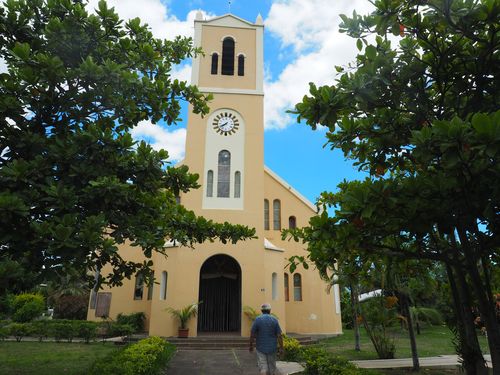
Reunion Island • Saint-Gilles Church
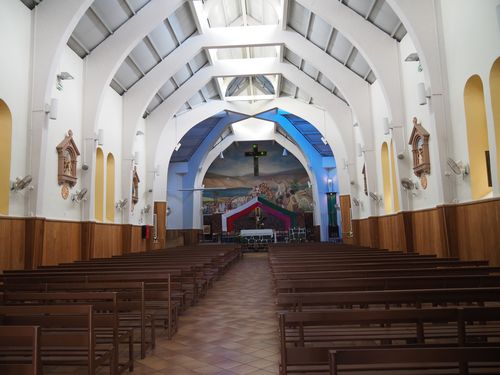
Reunion Island • Saint-Gilles Church
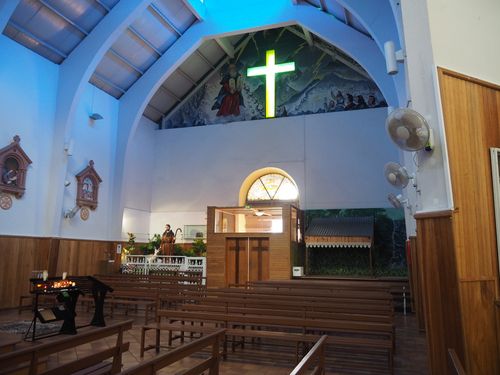
Reunion Island • Saint-Gilles Church
Monument profile
Saint-Gilles Church
Monument category: Church
Monument family: Church, cathedral, basilica, chapel
Monument genre: Religious
Cultural heritage: Christian
Geographic location: Saint Gilles les Hauts • Reunion Island
Construction period: 19th century AD
• Links to •
• List of videos about on this site •
Reunion: the volcano, the landscapes and the people • Reunion Island
The Historical and Cultural Significance of Saint-Gilles Church in Saint Gilles les Hauts, Réunion
Foundational Motives and Construction Timeline
Saint-Gilles Church, situated in Saint Gilles les Hauts on the island of Réunion, was constructed in the mid-19th century, with its inauguration occurring in 1863. The church was built during a period of significant socio-political transformation on the island, which was then a French colony. The primary motivation behind its establishment was to strengthen French colonial influence and integrate the local population into the colonial framework through religious and cultural assimilation. This was a common strategy by European powers during the era, as they sought to consolidate their control over their overseas territories.
Historical Events and Regional Development
Since its construction, Saint-Gilles Church has been at the epicenter of major socio-political changes in the region. The abolition of slavery in 1848, just a few years before the church’s construction, marked a profound shift in the island's social structure, influencing the church's role in society. The church provided a space for the newly freed population to integrate into a society still dominated by colonial hierarchies and Christian religious practices. Over the years, it has witnessed and adapted to changes in political power and social norms, reflecting the evolving identity of the island.
Transformations and External Influences
Over the centuries, Saint-Gilles Church has undergone significant architectural and functional transformations that mirror changes in power and external cultural influences. Originally constructed with materials like wood, stone, and coral-derived lime, the building techniques and materials used reflect both local adaptation to environmental conditions and the influence of French architectural styles. These transformations are indicative of broader trends in colonial territories where local and European elements merged to create unique cultural and architectural hybrids.
Current Conservation Status and Cultural Importance
Today, Saint-Gilles Church stands as a significant cultural monument in Réunion, not only as a place of worship but also as a historical and social landmark. Its current state of preservation is good, due to the community's and local government’s efforts to maintain its structural and aesthetic integrity. The church's architecture, with its simple yet elegant style, continues to attract both locals and tourists, serving as a vivid reminder of the island's colonial past and its journey towards a multicultural present.
Challenges to Historical Integrity
The preservation of Saint-Gilles Church faces specific challenges typical to tropical environments, including humidity, cyclones, and salt air, all of which can deteriorate building materials. Furthermore, modern urban development poses threats to its historical ambiance and setting. Preserving the church against these threats requires ongoing restoration efforts and careful management to ensure that its historical significance is not lost to future generations.
Global Context and Comparative Analysis
Comparatively, the experience of Saint-Gilles Church is not unique. In other regions of the world, such as Africa and Asia, similar churches constructed during the same period under European colonial rule have also served as focal points for both religious observance and cultural assimilation. These buildings often share similar stories of serving colonial agendas while adapting to post-colonial realities, reflecting a global pattern of cultural and political dynamics in colonial and post-colonial settings.
Conclusion
Saint-Gilles Church in Saint Gilles les Hauts, Réunion, represents a complex layering of history, culture, and architecture that speaks to the island's colonial past and its evolution into a diverse and dynamic community. Its preservation is crucial not only for maintaining the architectural heritage of Réunion but also for understanding the broader impacts of colonialism and cultural integration in similar regions around the world.
Architectural Innovation and Cultural Fusion at Saint-Gilles Church, Saint Gilles les Hauts, Réunion
Technological Advancements and Material Usage
Saint-Gilles Church in Saint Gilles les Hauts, Réunion, constructed in 1863, exemplifies the architectural sophistication and technological innovation of its era. The church's construction utilized locally sourced materials such as coral-derived lime for masonry and basalt stone, showcasing an adaptation to local environmental conditions. These materials were not only chosen for their availability but also for their durability in tropical climates, illustrating a thoughtful integration of local resources with advanced building techniques of the time.
Architectural Features and Cultural Integration
The architecture of Saint-Gilles Church reflects a distinctive blend of regional artistic traditions and foreign influences, characteristic of Réunion's multicultural heritage. The structure of the church, with its robust masonry walls and simplistic geometric forms, speaks to a European architectural influence, possibly inspired by neoclassical styles prevalent during the 19th century. Internally, the church features arched ceilings and stained glass windows, elements that incorporate both functional design and aesthetic beauty. The choice of vibrant colors and patterns in the glasswork reflects the island's diverse cultural palette, integrating influences from African, Indian, and Chinese art, which are significant aspects of Réunion's identity.
Notable Structure and Design
The layout of Saint-Gilles Church follows a traditional basilica plan, featuring a nave with aisles separated by columns, leading to a transept and an apse. This structure not only provides an impressive spatial experience but also enhances the acoustics within the church, suitable for the musical components of the liturgy. The bell tower, prominently positioned, serves as a visual focal point and is an iconic feature in the landscape of Saint Gilles les Hauts.
Historical Significance and Anecdotes
During its construction, the community of Saint Gilles les Hauts actively participated by contributing materials and labor, a testament to the church's importance as a community project. This collective effort is remembered and celebrated in local lore, reinforcing the church’s role as a symbol of communal unity and spirit.
International Recognition and UNESCO Impact
While Saint-Gilles Church is not listed as a UNESCO World Heritage Site, its architectural and cultural significance makes it a candidate worthy of recognition. The church's design and history provide a window into the colonial past of Réunion and its evolution into a culturally diverse society. Recognition by UNESCO could potentially elevate the church's profile, bringing more attention to its preservation needs and highlighting its role in the global narrative of cultural synthesis and architectural heritage.
Preservation Challenges and Global Reception
Currently, the main challenges in preserving Saint-Gilles Church involve combating the effects of tropical weather, such as humidity and cyclones, which can deteriorate its structural integrity. Efforts to maintain the church involve regular restoration and the use of modern technologies to protect the building materials from environmental damage. The church's preservation is crucial for maintaining its historical and architectural integrity, ensuring that it continues to serve as a beacon of cultural pride and historical continuity for Réunion.
Conclusion
Saint-Gilles Church stands as a remarkable example of how architectural design can bridge diverse cultural influences, reflecting the unique historical and social landscape of Réunion. As an emblem of innovation and cultural integration, the church not only serves its religious function but also acts as a custodian of the island's rich heritage, deserving of recognition and preservation on a global scale.