

 Français (France)
  Nederlands (nl-NL)
 The Shwezigon Pagoda, located in Nyaung U, Myanmar, is an iconic Buddhist stupa and a significant pilgrimage site. Known for its towering golden structure, it has symbolized faith and devotion since its construction during the Pagan Kingdom era. This monument draws visitors for its religious and cultural significance and stands as a prominent example of ancient Buddhist architecture.
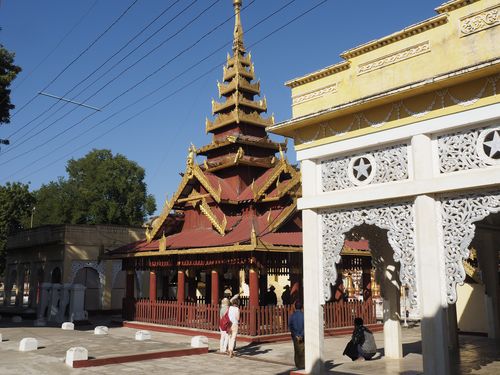
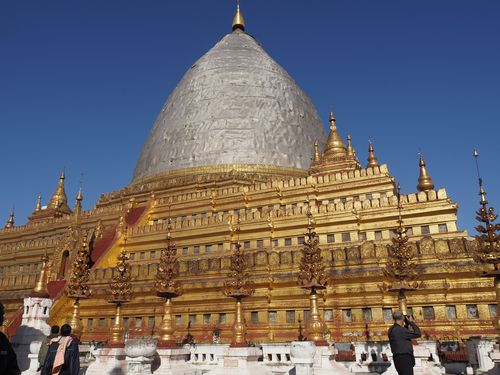
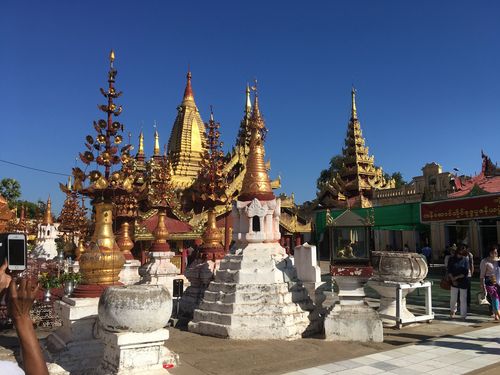
Monument profile
Shwezigon Pagoda
Monument categories: Pagoda, Stupa
Monument family: Pagoda or stupa
Monument genre: Religious
Cultural heritage: Buddhist
Geographic location: Nyaung U • Myanmar
Construction period: 11th century AD
This monument in Nyaung U is inscribed on the UNESCO World Heritage List since 2019 and is part of the serial property "Bagan".See the UNESCO monuments featured on this site
• Links to •
• This monument illustrates the following theme •
Buddhist architecture • Stupas : Diversity of Stupas in Asia
• List of videos about Nyaung U on this site •
Nyaung-U, Shwezigon pagoda - prototype of Burmese stupas • Myanmar
Nyaung-U, Mani Sithu market • Myanmar
• References •
Wikipedia EN: Shwezigon Pagoda
The Shwezigon Pagoda: Political, Social, and Historical Significance
The Shwezigon Pagoda, located in Nyaung U near Bagan, Myanmar, is a profound symbol of spiritual unity and political ambition. Its construction began during the reign of King Anawrahta in the 11th century and was completed under King Kyansittha. This magnificent golden stupa represents not only a religious edifice but also a testament to the cultural synthesis, administrative strength, and spiritual aspirations of the Pagan Kingdom during its golden age.
Political and Social Motivations Behind Its Construction
The construction of the Shwezigon Pagoda was a pivotal step in King Anawrahta's strategy to establish Theravāda Buddhism as the central religious tradition in his kingdom. This move aimed to unify diverse ethnic and cultural groups under a single spiritual ideology, thereby consolidating his political authority. The grandeur of the pagoda underscored the king's role as a protector of the faith and a patron of religious scholarship.
Socially, the pagoda played a vital role in fostering cohesion within the kingdom. By serving as a pilgrimage site, it drew devotees from various regions, creating a shared cultural and religious identity. The construction process itself mobilized large-scale labor and resources, showcasing the kingdom’s organizational capabilities. The project also acted as a medium for cultural exchange, incorporating artistic influences from neighboring regions, including India and Sri Lanka.
Historical Events and Global Context
The Shwezigon Pagoda was constructed during a transformative period in Myanmar’s history, marking the emergence of the Pagan Kingdom as a dominant political and cultural force in Southeast Asia. This era was characterized by extensive temple-building projects that solidified Theravāda Buddhism as the kingdom's guiding spiritual and political framework.
Globally, the 11th century was a time of significant cultural and architectural achievements. In Europe, the construction of Romanesque cathedrals symbolized the growing influence of Christianity. Meanwhile, the Islamic Golden Age saw advancements in science, art, and literature across the Middle East and Central Asia. In Southeast Asia, the Khmer Empire was constructing Angkor Wat, a monumental testament to its religious and political ideologies. The Shwezigon Pagoda’s construction places Myanmar within this broader context of global cultural and religious flourishing, highlighting the shared human drive to create enduring monuments of faith and power.
Transformations Over the Centuries
Over the centuries, the Shwezigon Pagoda has undergone numerous transformations, reflecting the evolving political dynamics and cultural influences of Myanmar. Initially simpler in design, the pagoda has been enriched with layers of gold leaf, intricate carvings, and expansions, demonstrating both the enduring devotion of successive monarchs and the site’s cultural significance.
Natural disasters, including several earthquakes, have left their mark on the pagoda. The 1975 earthquake, in particular, caused extensive damage, prompting major restoration efforts. These efforts not only repaired the physical structure but also reinforced its symbolic status as a resilient cultural landmark. Modern techniques and materials have been incorporated into the restoration process, ensuring the preservation of the pagoda for future generations.
Cultural Importance and Current Conservation Status
Today, the Shwezigon Pagoda remains a vibrant center of religious activity and a beacon of Myanmar’s cultural heritage. Its golden dome, visible from great distances, continues to attract pilgrims and tourists alike. The detailed inscriptions and decorative motifs on the structure offer invaluable insights into the artistic and spiritual practices of the Pagan era, serving as a bridge between Myanmar’s past and present.
Despite its relatively good condition, the pagoda faces ongoing challenges. Environmental factors such as humidity and temperature fluctuations contribute to the deterioration of materials, while the increasing pressures of tourism pose risks to its structural integrity. Conservation efforts have focused on balancing accessibility with preservation, employing modern technologies like 3D scanning to monitor the site’s condition and guide restoration initiatives.
Educational programs and outreach campaigns have been launched to raise awareness about the importance of sustainable tourism and heritage conservation. These initiatives aim to ensure that the pagoda remains not only a site of spiritual significance but also a well-preserved cultural landmark for generations to come.
Conclusion
The Shwezigon Pagoda is far more than a religious structure; it is a cornerstone of Myanmar’s historical, cultural, and spiritual identity. Its construction reflects the political foresight of the Pagan Kingdom, its design embodies artistic excellence, and its continued preservation highlights the enduring relevance of its message. As a symbol of unity, faith, and resilience, the Shwezigon Pagoda stands as a testament to human creativity and the timeless pursuit of spiritual and cultural expression. Its protection and conservation are vital not only for Myanmar but for the appreciation of shared global heritage.
Architectural Marvels of the Shwezigon Pagoda: Technological and Artistic Innovations
The Shwezigon Pagoda, located in Nyaung U near Bagan, Myanmar, is not only a symbol of religious devotion but also a testament to the architectural ingenuity of the Pagan Kingdom. Constructed during the 11th century under the reigns of Kings Anawrahta and Kyansittha, this iconic stupa reflects the era’s technological advancements, cultural synthesis, and spiritual aspirations. Its design and construction embody a remarkable fusion of engineering precision and artistic expression.
Materials and Construction Techniques
The Shwezigon Pagoda’s structure was primarily built using baked bricks bound by a lime-based mortar, materials carefully chosen for their resilience against the region’s tropical climate. These bricks, meticulously aligned, provided a robust foundation capable of enduring the test of time. The exterior was lavishly coated with gold leaf, a hallmark feature symbolizing purity and reverence, which also accentuated the pagoda’s grandeur. This extensive use of gold reflects the wealth and religious dedication of the Pagan Kingdom, making the pagoda a beacon of faith and prosperity.
Advanced masonry techniques were instrumental in constructing the massive dome, ensuring its stability across centuries, even in a region prone to earthquakes. Ventilation shafts and sophisticated drainage systems were seamlessly integrated into the structure, demonstrating a forward-thinking approach to architectural resilience and environmental adaptability. Such innovations underscore the advanced engineering knowledge of the builders.
Architectural Features and Decorative Elements
The Shwezigon Pagoda exemplifies a harmonious blend of regional traditions and external influences, particularly from Indian and Sri Lankan architecture. Its symmetrical, terraced design culminates in a gilded pinnacle (hti), symbolizing spiritual ascent. The square base, representing the earth, supports a circular dome that embodies the heavens, aligning with the Buddhist cosmological framework. This seamless integration of geometry and spirituality highlights the profound understanding of symbolic architecture in the Pagan era.
Elaborate carvings and reliefs adorn the pagoda, depicting scenes from the Jātaka tales that narrate the previous lives of the Buddha. These intricate decorations merge local artistic traditions with Indian iconographic styles, showcasing the cultural exchanges that enriched the region. The terraces and gateways feature intricate floral patterns and geometric motifs, reflecting the artisans’ exceptional skill and aesthetic sensibilities.
Shrine chambers within the pagoda house statues of the Buddha, each oriented towards a cardinal direction. These spatial alignments reinforce the monument’s role as a spiritual axis, connecting the physical and metaphysical realms. This design serves as a focal point for devotion and meditation, enhancing the pagoda’s spiritual significance.
Notable Statistics and Anecdotes
The Shwezigon Pagoda stands approximately 40 meters tall, making it one of the tallest and most prominent structures of its time.
Historical records suggest that King Anawrahta personally transported sacred relics, including a tooth and a collarbone of the Buddha, to enshrine them within the pagoda. This act elevated its religious importance and drew pilgrims from far and wide.
A legendary tale describes how a white elephant, carrying the relics, was allowed to roam freely, and the pagoda was constructed at the spot where the elephant knelt. This story symbolizes divine approval and enhances the monument’s spiritual aura.
Contributions to International Recognition
The Shwezigon Pagoda’s architectural brilliance and historical significance have garnered international admiration. While it has not yet been individually inscribed as a UNESCO World Heritage Site, it is an integral part of Bagan’s cultural landscape, which achieved UNESCO recognition in 2019. This acknowledgment has heightened global awareness of the pagoda’s value and spurred efforts to preserve its heritage.
Advanced preservation techniques, including 3D scanning and digital mapping, are employed to monitor the structure’s condition and guide restoration initiatives. These methods help protect the monument from environmental challenges, such as humidity and weathering, as well as the growing pressures of tourism. Collaboration between local authorities and international organizations has been crucial in ensuring the pagoda’s enduring legacy.
Expanded Cultural Importance
The Shwezigon Pagoda remains a vibrant center of religious activity, attracting pilgrims and tourists alike. Its golden dome, visible from afar, serves as a symbol of faith and unity. The inscriptions and decorative motifs on its surface offer invaluable insights into the artistic and spiritual practices of the Pagan era, serving as a bridge between Myanmar’s past and present.
The pagoda also plays a vital educational role, teaching visitors about the historical significance of Theravāda Buddhism and its impact on Southeast Asia. Cultural festivals and religious ceremonies held at the site continue to strengthen its relevance in contemporary society, reinforcing its position as a living monument.
Conclusion
The Shwezigon Pagoda is far more than an architectural wonder; it is a cornerstone of Myanmar’s cultural and spiritual identity. Its innovative construction techniques, intricate decorations, and profound symbolism encapsulate the ingenuity and devotion of the Pagan Kingdom. As global recognition of its significance grows, preserving this iconic monument remains essential. The Shwezigon Pagoda stands as a testament to human creativity, resilience, and the timeless pursuit of spiritual and cultural expression.