

 Français (France)
  Nederlands (nl-NL)
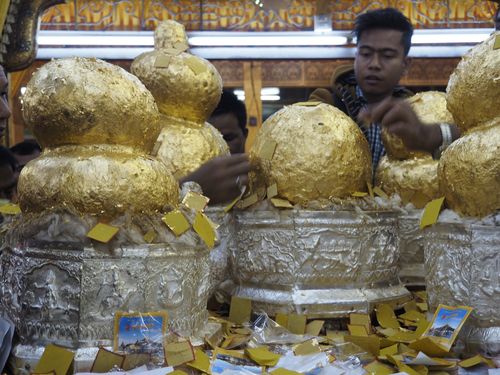
 Phaung Daw Oo Pagoda is one of the most important Buddhist sanctuaries on Inle Lake, located in Shan State, Myanmar. Situated in the village of Ywama, it serves as a major religious center for the local population, particularly the Intha community living in villages built on and around the lake. The complex houses several revered Buddha images that have been venerated for centuries and covered with layers of gold leaf offered by devotees. The pagoda plays a central role in the spiritual and communal life of the region. It is also known for the annual Phaung Daw Oo Festival, a major religious and cultural event that attracts pilgrims and visitors from across Myanmar.
Monument profile
Phaung Daw Oo Pagoda
Monument category: Pagoda
Monument family: Pagoda or stupa
Monument genre: Religious
Cultural heritage: Buddhist
Geographic location: Inle Lake • Myanmar
Construction period: 12th century AD
• Links to •
• List of videos about Inle Lake on this site •
Inle Lake, on the water • Myanmar
Inle Lake, on the banks • Myanmar
• References •
Wikipedia EN: Phaung Daw U Pagoda
• Sources •
The history and architecture of the Phaung Daw Oo Pagoda have been primarily based on general knowledge about Buddhist architecture in Southeast Asia and specific details related to Burmese culture.
Books and Publications
- "History of Myanmar: From Ancient Times to the Present" - Author: Jean-Pierre Aung, L'Harmattan Publishing.
- "Architecture and Society in Southeast Asia" - Author: Marc Askew, Routledge Publishing.
History of Phaung Daw Oo Pagoda at Inle Lake
Phaung Daw Oo Pagoda, located in the village of Ywama on Inle Lake in Shan State, Myanmar, is one of the most important Buddhist sanctuaries in the region. Revered for centuries by the communities living around the lake, the pagoda occupies a central place in the religious and cultural life of the Intha people and other ethnic groups of the Shan plateau. The history of this sanctuary reflects the broader political, religious, and social developments that shaped Upper Myanmar and the Shan States over the course of nearly a millennium. Its evolution illustrates the role of Buddhist institutions in consolidating regional authority, fostering communal identity, and linking remote territories with the religious traditions of the Burmese kingdoms.
Political and social context of the foundation
The origins of Phaung Daw Oo Pagoda are traditionally associated with King Anawrahta of Pagan, the ruler who reigned during the eleventh century and played a decisive role in the establishment of Theravāda Buddhism as the dominant religious tradition in Myanmar. According to local tradition, the king brought five sacred Buddha images to the Inle Lake region during his efforts to extend religious patronage across the territories influenced by the Pagan kingdom.
The distribution of sacred images and the establishment of shrines in distant regions were part of a broader political strategy. By promoting Buddhist worship and constructing religious monuments, rulers could strengthen their legitimacy and encourage loyalty among populations living far from the royal capital. In the Shan plateau, where local chiefs governed semi-autonomous territories, the introduction of revered Buddhist relics helped integrate these areas into a wider religious network associated with the Burmese court.
The shrine that eventually developed into the Phaung Daw Oo Pagoda served both spiritual and political purposes. It provided a sacred focal point for communities living around the lake while also reinforcing the prestige of rulers who supported the site through donations and restorations. For the Intha people, who migrated to the lake region centuries ago and developed a distinctive lacustrine culture, the sanctuary became an important symbol of collective identity and religious continuity.
Major historical events affecting the site
Following the decline of the Pagan kingdom in the late thirteenth century after the Mongol invasions, the political landscape of Upper Myanmar fragmented into a number of smaller states and principalities. In the Shan regions surrounding Inle Lake, authority often rested with local rulers known as saophas. During this period, the pagoda continued to function as a religious center supported by local elites who recognized the importance of Buddhist patronage in maintaining social cohesion.
Subsequent Burmese dynasties, including those based in Ava and later in Taungû, sought to maintain varying degrees of influence over the Shan States. Religious institutions such as Phaung Daw Oo played a role in these political relationships, as royal donations and ceremonial patronage reinforced ties between the central court and regional authorities.
During the Konbaung dynasty in the eighteenth and nineteenth centuries, renewed attention was given to many religious sites throughout the country. Restoration projects were undertaken at numerous pagodas, including those in the Shan plateau. These interventions reflected the continuing importance of Buddhist institutions in legitimizing royal authority and reinforcing cultural unity across diverse regions.
The arrival of British colonial rule after the Anglo-Burmese wars in the nineteenth century transformed the political structure of Myanmar. Despite these changes, Buddhist religious institutions generally remained under the supervision of local communities rather than colonial administrators. As a result, Phaung Daw Oo Pagoda continued to function as a pilgrimage center and retained its importance in the spiritual life of the lake region.
Global context at the time of the monument’s emergence
The development of Phaung Daw Oo Pagoda occurred within a broader historical period characterized by extensive religious construction across many parts of the world. In Southeast Asia during the eleventh and twelfth centuries, powerful kingdoms promoted monumental architecture to express religious devotion and political authority.
The Pagan kingdom itself became one of the most significant centers of Buddhist monument building, with thousands of temples and stupas erected across the plains near the Irrawaddy River. These structures reflected both the wealth of the kingdom and the central role of Buddhism in its political ideology. The distribution of sacred objects and the establishment of shrines in peripheral regions such as the Shan plateau formed part of this wider cultural and religious expansion.
Elsewhere in Asia, similar processes were unfolding. In India and Sri Lanka, Buddhist and Hindu monuments continued to shape sacred landscapes, while in Cambodia the Khmer Empire constructed vast temple complexes such as Angkor. At the same time, medieval Europe witnessed the rise of Romanesque and Gothic cathedrals, monumental expressions of religious authority comparable in symbolic importance to the great temples of Asia.
In this global context, Phaung Daw Oo Pagoda can be understood as part of a widespread historical pattern in which rulers and communities invested significant resources in sacred architecture as a means of expressing religious devotion and consolidating political legitimacy.
Transformations of the monument over time
Over the centuries, the sanctuary at Phaung Daw Oo underwent a series of architectural modifications and expansions. As the importance of the site increased, additional structures were constructed to accommodate growing numbers of pilgrims and to support the rituals associated with Buddhist worship.
The complex gradually evolved into a larger religious compound consisting of multiple halls, ceremonial spaces, and access points connecting the pagoda with the surrounding waterways of Inle Lake. These additions reflected both practical considerations and the growing symbolic significance of the site.
Periods of political instability occasionally affected the maintenance of religious buildings throughout the region, yet the enduring devotion of local communities ensured that the sanctuary continued to be repaired and renovated when necessary. The support of local donors, merchants, and religious leaders played an essential role in preserving the pagoda during periods when central political authority weakened.
The transformation of the surrounding environment also influenced the development of the site. As villages expanded and trade networks connected the lake with other regions of Myanmar, Phaung Daw Oo Pagoda became increasingly integrated into a broader cultural landscape characterized by floating markets, monastic communities, and agricultural activity.
Contemporary role and cultural significance
Today, Phaung Daw Oo Pagoda remains one of the most important religious landmarks of Shan State and a central element of the cultural life of Inle Lake. The sanctuary attracts pilgrims from across Myanmar who come to pay respect to the sacred Buddha images preserved within the pagoda.
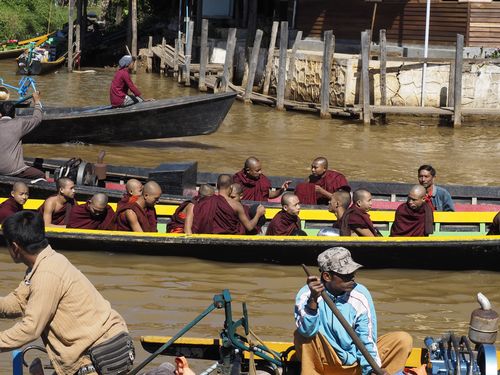
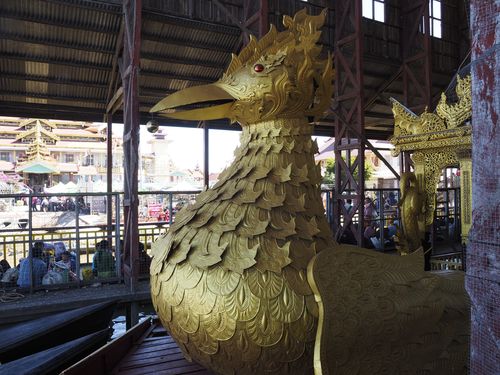
The site is particularly renowned for the annual Phaung Daw Oo Festival, one of the largest religious celebrations in the region. During this event, four of the sacred Buddha images are carried on an elaborately decorated ceremonial barge and transported across the lake to various villages. The procession strengthens social ties among communities and reaffirms the shared religious traditions of the lake region.
The pagoda also plays an important role in shaping local identity. For the Intha people, whose livelihoods are closely tied to the aquatic environment of Inle Lake, the sanctuary represents both spiritual continuity and cultural heritage. Its festivals, rituals, and traditions continue to influence the rhythms of community life.
Conservation and modern preservation challenges
Although the pagoda remains an active religious center, it faces several modern challenges related to environmental change and economic development. Inle Lake has experienced significant ecological pressures in recent decades, including sedimentation, water pollution, and alterations in agricultural practices. These changes affect the broader cultural landscape within which the pagoda exists.
Tourism has also grown rapidly in the region. While the presence of visitors contributes to the local economy and raises international awareness of the site, it also requires careful management to ensure that religious practices and the architectural integrity of the complex are preserved.
Local authorities and religious communities have undertaken restoration efforts to maintain the structures of the pagoda and to preserve its sacred objects. These initiatives aim to balance the preservation of traditional architecture with the practical needs of a living religious site that continues to serve large numbers of devotees.
Although the pagoda itself is not individually listed as a UNESCO World Heritage site, it forms part of the broader cultural landscape of Inle Lake, which is widely recognized for its unique combination of environmental, cultural, and religious heritage.
Through centuries of political change and social transformation, Phaung Daw Oo Pagoda has remained a central symbol of Buddhist devotion in the Shan plateau. Its history reflects the enduring relationship between sacred architecture, regional identity, and the cultural traditions that continue to shape the life of communities around Inle Lake.
Architecture of Phaung Daw Oo Pagoda at Inle Lake
Phaung Daw Oo Pagoda, located in the village of Ywama on Inle Lake in Shan State, Myanmar, is one of the most significant religious architectural complexes of the Shan plateau. Its architecture reflects a synthesis of Burmese Buddhist design principles and regional construction traditions adapted to a lacustrine environment. Over centuries of expansion and renovation, the complex has developed into a distinctive example of religious architecture shaped by environmental constraints, ritual practices, and the artistic traditions of the Shan region. The sanctuary illustrates how Buddhist architectural forms were adapted to local conditions while maintaining symbolic and ceremonial functions central to Theravāda religious practice.
Architectural innovations and construction techniques
The architectural design of Phaung Daw Oo Pagoda demonstrates an adaptation of traditional Burmese temple construction to the particular geographical conditions of Inle Lake. Because the site is located within a village built over water and marshland, the builders had to develop structural solutions capable of supporting substantial religious buildings on unstable ground.
One of the key structural techniques used throughout the complex involves the use of deep wooden piles driven into the lakebed. These piles create a stable foundation for the buildings while distributing weight across a wider area. This approach is widely employed in traditional Intha architecture and reflects local expertise in constructing durable structures in a lacustrine environment.
The superstructure of many buildings within the complex relies on timber frameworks designed to provide both flexibility and resistance to environmental stress. The region experiences significant seasonal humidity and occasional flooding, conditions that favor construction methods allowing slight structural movement rather than rigid masonry walls alone.
Ventilation also played an important role in the architectural design. Multi-tiered roofs and open-sided galleries facilitate natural airflow, helping to regulate interior temperatures in the tropical climate. Elevated floors and wide eaves provide additional protection from rain and moisture while maintaining shaded spaces suitable for religious gatherings.
Another architectural innovation lies in the integration of water-based access routes. Because transportation around Inle Lake traditionally occurs by boat, the pagoda complex was designed with landing areas and connecting walkways that accommodate pilgrims arriving from the lake. These features integrate the monument into the broader circulation system of the lacustrine settlements.
Materials and construction methods
The architectural materials used in the construction of Phaung Daw Oo Pagoda reflect both the natural resources available in the region and the symbolic importance attached to certain materials in Buddhist religious architecture.
Timber is one of the principal structural materials used in the complex, particularly in halls, pavilions, and connecting walkways. Hardwood species native to Myanmar were selected for their durability, resistance to humidity, and ability to withstand insect damage. These timbers support intricate carved elements that form an important part of the decorative scheme.
Brick and stucco were employed in the construction of the central pagoda structures and other more permanent elements of the complex. These materials provide structural stability and allow the creation of solid architectural volumes associated with Buddhist stupas and shrines.
The surfaces of many structures are coated with gilding, a characteristic feature of Burmese religious architecture. Gold leaf applied by devotees has gradually transformed the visual appearance of the pagoda, producing a luminous surface that reflects sunlight across the waters of the lake. This practice combines architectural aesthetics with religious merit-making, as applying gold leaf is considered a significant devotional act.
The decorative elements of the complex include carved wooden panels, stucco reliefs, and metal ornaments. These components demonstrate the skill of local artisans and illustrate the continuity of traditional craftsmanship within the region.
Architectural and artistic influences
The architecture of Phaung Daw Oo Pagoda reflects a combination of Burmese Buddhist traditions and artistic influences associated with the Shan cultural sphere. While the central pagoda follows architectural conventions found in other regions of Myanmar, the surrounding structures display features typical of the Shan States.
One of the most recognizable characteristics is the use of tiered roofs known as pyatthat. These roofs consist of several superimposed levels that gradually diminish in size toward the top of the structure. In Burmese architectural symbolism, the vertical progression of these tiers represents spiritual elevation and the hierarchical nature of sacred space.
Shan artistic influences appear in the decorative patterns and sculptural elements integrated into the buildings. Motifs depicting mythical creatures, lotus patterns, and protective figures are commonly found in the ornamentation. These designs reflect a visual language shared across Buddhist cultures in Southeast Asia.
The decorative program also includes glass mosaics and gilded reliefs that enhance the visual richness of the complex. Light reflected from these surfaces contributes to the ceremonial atmosphere of the sanctuary and reinforces its symbolic role as a sacred space associated with enlightenment and spiritual merit.
Although the pagoda belongs primarily to the Burmese architectural tradition, the broader artistic context of the Shan plateau historically incorporated influences from neighboring regions such as northern Thailand and Yunnan in southwestern China. These interactions contributed to the development of hybrid stylistic elements that distinguish Shan religious architecture from that of central Myanmar.
Spatial organization and structural layout
The spatial arrangement of Phaung Daw Oo Pagoda is organized around a central sanctuary that houses the revered Buddha images. This core structure functions as the primary focus of religious activity and is surrounded by a series of ancillary buildings that support ceremonial, devotional, and communal functions.
Access to the complex is facilitated by a network of wooden walkways and platforms connecting the various halls and pavilions. These walkways reflect the unique urban morphology of the Inle Lake settlements, where buildings are linked through elevated pathways above the water.
The central shrine is designed to emphasize the sacred status of the Buddha images preserved within. Elevated platforms and decorative altars create a hierarchical spatial arrangement in which the statues occupy the most prominent and protected area of the building.
Surrounding structures include prayer halls, assembly spaces, and covered corridors that guide the movement of pilgrims through the complex. Colonnades support broad roof structures that provide shade and shelter from seasonal rains. These architectural features enable large numbers of visitors to circulate through the sanctuary during festivals and religious ceremonies.
The layered composition of roofs and structures creates a visually dynamic skyline above the lake village. The repetition of tiered rooflines contributes to the monument’s architectural identity while reinforcing its symbolic connection to traditional Buddhist cosmology.
Dimensions and notable characteristics
Although the complex has grown through successive phases of construction, the architectural composition maintains a coherent spatial organization centered on the sacred images of the Buddha. The pagoda compound includes multiple halls and ceremonial spaces arranged to accommodate religious gatherings and ritual processions.
The five Buddha images preserved within the sanctuary are among the most distinctive features of the monument. Over centuries, the repeated application of gold leaf by devotees has altered the appearance of these statues to such an extent that their original sculptural details are no longer visible. The accumulation of devotional offerings has transformed them into rounded golden forms, illustrating how religious practices can directly influence the material evolution of sacred objects.
One of the most widely known narratives associated with the monument concerns the annual festival procession during which the Buddha images are transported on a ceremonial barge across Inle Lake. According to local tradition, a statue once fell into the water during a procession but later reappeared in the sanctuary, an event interpreted as a sign of the images’ spiritual power.
Such stories have reinforced the sacred reputation of the pagoda and contributed to its prominence as a pilgrimage destination.
Architectural significance and conservation challenges
The architectural significance of Phaung Daw Oo Pagoda lies in its successful integration of religious monumentality within the distinctive environmental context of Inle Lake. The complex demonstrates how traditional Buddhist architectural forms can be adapted to a landscape defined by water-based settlement patterns.
Although the pagoda itself is not individually listed as a UNESCO World Heritage monument, it forms part of the cultural landscape of Inle Lake, which has attracted international attention for its unique combination of environmental and cultural features.
The preservation of the monument presents several challenges related to both natural and human factors. The constant humidity of the lake environment affects wooden structural elements, requiring periodic maintenance and restoration. Seasonal fluctuations in water levels can also influence the stability of the foundations.
Tourism development in the Inle Lake region has increased the number of visitors to the pagoda complex. While this growth supports the local economy, it also requires careful management to prevent damage to the structures and to maintain the religious character of the site.
Conservation efforts typically involve collaboration between local monastic authorities, community groups, and national heritage organizations. These initiatives aim to preserve both the architectural integrity of the monument and the living religious traditions associated with it.
Through its architecture, Phaung Daw Oo Pagoda illustrates the enduring relationship between religious devotion, craftsmanship, and environmental adaptation. The complex remains a significant example of Buddhist architectural heritage in Myanmar and continues to serve as an active spiritual center within the cultural landscape of Inle Lake.