

 Français (France)
  Nederlands (nl-NL)
 The Chiesa Madre SS Annunziata e San Nicola is a Byzantine Rite parish church located in Contessa Entellina, Sicily. It plays a significant role in the religious life of the community, which has Albanian roots dating back to the 15th century. Beyond its liturgical function, the church represents the cultural and spiritual identity of the Arbëreshë, an ethnic minority in southern Italy. It belongs to the Eparchy of Piana degli Albanesi, the ecclesiastical jurisdiction for Byzantine Rite Catholics in the region. The church continues to serve as an active place of worship and a point of continuity for Eastern Christian traditions within the Italian religious landscape.
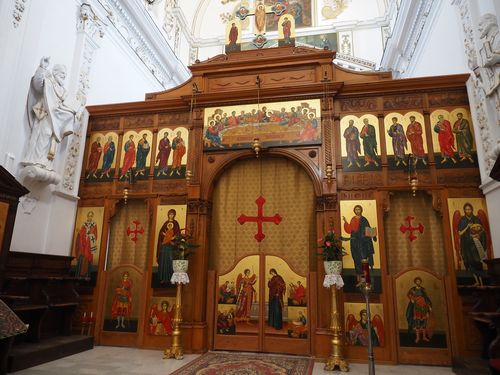
Contessa Entellina • Chiesa Madre SS. Annunziata
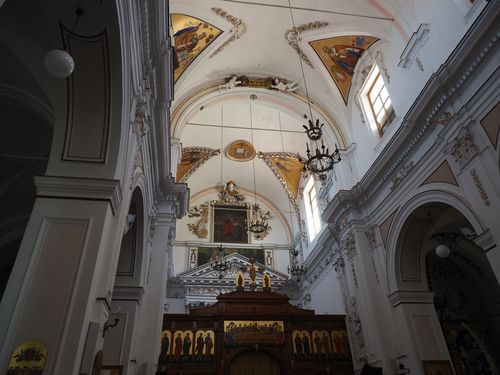
Contessa Entellina • Chiesa Madre SS. Annunziata
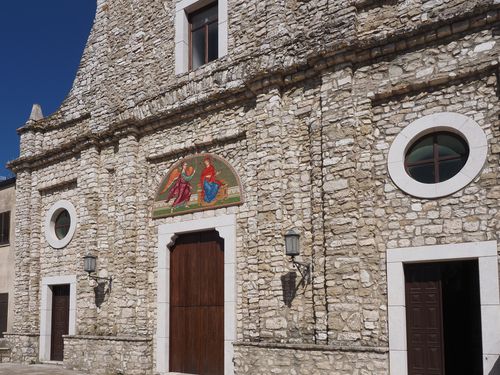
Contessa Entellina • Chiesa Madre SS. Annunziata
Monument profile
Chiesa Madre SS. Annunziata
Monument category: Church
Monument family: Church, cathedral, basilica, chapel
Monument genre: Religious
Cultural heritage: Christian
Geographic location: Contessa Entellina • Sicily • Italy
Construction period: 16th century AD
• Links to •
• List of videos about Contessa Entellina on this site •
Contessa Entellina, Albanian oasis in Sicily • Italy
History of the Chiesa Madre SS. Annunziata e San Nicola in Contessa Entellina
Political and Social Context of Construction
The Chiesa Madre SS. Annunziata e San Nicola was constructed in 1520 in Contessa Entellina, a small town in the province of Palermo, Sicily. Its origins are deeply tied to the settlement of the Arbëreshë (ethnic Albanians) who migrated to southern Italy between the 15th and 16th centuries to escape Ottoman expansion in the Balkans. These exiles were granted lands by local feudal lords under the broader approval of the Spanish Crown, which governed Sicily at the time as part of the Crown of Aragon.
The creation of the church responded to both religious and political imperatives. As Byzantine Rite Christians in communion with Rome, the Arbëreshë settlers required a dedicated place of worship that would respect their Eastern liturgical traditions. This made the church not just a religious structure but a political statement—an acknowledgment by the Spanish authorities of the cultural autonomy of these communities, in exchange for loyalty and military assistance against external threats.
From the Crown’s perspective, supporting the settlement of skilled, devout Eastern Christians in depopulated areas of Sicily had strategic value. The colonization helped repopulate the hinterlands, reinforce the Catholic presence, and create a buffer zone against raids from North Africa and the influence of Protestant movements emerging elsewhere in Europe. The construction of the church marked the consolidation of a stable community and symbolized its integration into the local sociopolitical fabric without erasing its identity.
Historical Events and Transformations
Over the centuries, the Chiesa Madre has remained the religious and cultural heart of Contessa Entellina. Although the village itself was spared from major invasions or destruction, Sicily was not immune to broader European conflicts. The island passed from Spanish to Austrian rule in 1713 (Treaty of Utrecht), before being incorporated into the Bourbon Kingdom of the Two Sicilies in the 18th century. These changes in sovereignty did not fundamentally alter the status of the Arbëreshë church, although attempts were made at different times to Latinize certain Eastern liturgical practices.
The church survived multiple earthquakes, including the devastating 1968 Belice Valley earthquake. Although not destroyed, the structure sustained significant damage, prompting extensive restoration campaigns in the latter half of the 20th century. These efforts aimed to preserve both the architectural and iconographic heritage of the building.
Throughout its history, the church adapted to liturgical reforms imposed by the Vatican, but it never abandoned its Byzantine identity. The establishment of the Eparchy of Piana degli Albanesi in 1937 provided formal ecclesiastical recognition of the Arbëreshë communities' unique status, further protecting the church’s traditions and structure.
Global Context at the Time of Construction
The early 16th century, when the church was built, was a period of transformation in Europe. The Renaissance was flourishing in northern Italy, influencing art and architecture. Meanwhile, the fall of Constantinople (1453) and the ongoing Ottoman conquest of Southeastern Europe triggered a wave of displacement, bringing thousands of Christian refugees to Italy.
In this global context, the construction of the Chiesa Madre aligns with broader patterns of diaspora architecture—religious buildings that blend the styles of the community’s homeland with those of their new environment. Similar developments occurred in Greek Orthodox communities in southern Italy, Armenian churches in Venice, and even Jewish synagogues adapted to Iberian architectural forms.
At the same time, the Counter-Reformation and growing religious tension in Europe prompted the Catholic Church to assert a clearer distinction between Catholic rites and Protestant practices. The Arbëreshë church, although Eastern in its liturgy, represented a valuable case of unity within diversity—a point often emphasized in later Vatican policy.
Architectural Changes and Evolution
Initially conceived as a modest parish church, the Chiesa Madre underwent several transformations. Over the centuries, side chapels, a bell tower, and various decorative elements were added, reflecting evolving tastes and the growing prosperity of the town. Elements of Baroque ornamentation, including stucco work and altarpieces, were introduced during the 17th and 18th centuries, although the core layout retained its Byzantine character.
The church’s interior layout evolved as well, adapting to the needs of a growing population while preserving key features such as the iconostasis, which separates the nave from the sanctuary. Frescoes and icons were restored and, in some cases, recreated based on traditional Byzantine models. Restoration after the 1968 earthquake included structural reinforcements using modern techniques that were discreetly integrated into the historical fabric of the building.
Urban development around the church remained limited, preserving its prominent position in the town’s layout. It continues to function as the main focal point of Contessa Entellina, visually dominating the surrounding streetscape.
Contemporary Role and Cultural Significance
Today, the Chiesa Madre SS. Annunziata e San Nicola is far more than a parish church. It is a living symbol of Arbëreshë identity, maintaining linguistic, liturgical, and cultural traditions that are centuries old. The church plays a central role in religious festivals such as Pasqua secondo il calendario giuliano (Easter according to the Julian calendar), the feast of Saint Nicholas, and traditional weddings and baptisms conducted in the Byzantine rite.
The church also serves as an educational and cultural hub, hosting iconography workshops, liturgical music concerts, and initiatives to preserve the Arbëreshë language (an archaic form of Albanian). It is frequently visited by scholars, clergy, and tourists interested in Eastern Christianity in the Western world.
Its influence extends beyond the local setting, as it embodies a unique liturgical synthesis—a community that is both fully Catholic and fully Eastern. In an era where ecumenical dialogue is increasingly emphasized, the church provides a practical example of liturgical coexistence and historical resilience.
Conservation Status and Preservation Challenges
The current state of conservation is good, largely due to successive restoration efforts and the support of both religious and civil institutions. However, the building faces several modern challenges:
– Demographic decline, with a shrinking and aging population reducing the number of active parishioners and volunteers;
– Environmental degradation, particularly humidity and seismic risks;
– Limited funding, which hampers regular maintenance and the preservation of artwork.
While the church is protected as a regional heritage site, it is not currently on the UNESCO World Heritage List. Inclusion in such a list could enhance funding opportunities and global recognition, but also bring challenges in terms of tourism management and preservation ethics.
Despite these issues, the Chiesa Madre remains a resilient and vibrant heritage site, actively used, culturally respected, and structurally preserved. Its architecture, history, and ongoing spiritual role make it a significant case study in the survival and adaptation of religious heritage in diaspora communities.
Architecture of the Chiesa Madre SS. Annunziata e San Nicola in Contessa Entellina
The Chiesa Madre SS. Annunziata e San Nicola, constructed in 1520 in the town of Contessa Entellina, Sicily, is one of the most notable examples of Italo-Albanian religious architecture in Italy. This parish church of the Byzantine Rite is not only a place of worship but also a cultural and artistic landmark that reflects centuries of craftsmanship, symbolic expression, and the fusion of Eastern and Western influences. Architecturally, it is a case study in how a religious minority adapted to its environment while preserving its liturgical identity.
Technological and Architectural Innovations of the Period
The early 16th century marked a period of architectural transition across Europe, characterized by the gradual shift from medieval Gothic structures to Renaissance-inspired designs that emphasized symmetry, order, and proportion. While major urban centers in northern Italy were at the forefront of these changes, rural Sicily adopted many of these advancements at a slower pace, often merging them with local traditions and practical needs.
The Chiesa Madre demonstrates a sophisticated understanding of structural engineering for its time, especially in seismic zones. The walls were built with considerable thickness, a common feature in both Byzantine and Mediterranean construction, to ensure durability and resistance to earthquakes—an ever-present risk in Sicily. The use of load-bearing walls combined with barrel vaults and a low central dome on pendentives was particularly suited for regions with seismic activity, helping the building absorb shocks without collapse.
In terms of ventilation and lighting, the architects skillfully incorporated clerestory windows and high-set oculi to allow natural airflow and sunlight to penetrate the interior. This passive ventilation was crucial in mitigating the effects of the island's hot, dry summers. The church was also strategically positioned on slightly elevated ground, optimizing its visibility and reducing exposure to flood risk, in line with early principles of rural urban planning.
Materials and Construction Techniques
The construction of the Chiesa Madre relied heavily on locally sourced materials, such as limestone and volcanic tuff, which were not only abundant but also well suited to the climatic and geological conditions of the region. Limestone provided structural strength and an attractive surface for carving, while tuff, a more porous and lighter material, was ideal for upper sections and vaults due to its insulating properties.
Mortar composed of lime, sand, and pozzolana (volcanic ash) was used to bond the masonry, offering both flexibility and durability—qualities essential in a seismically active area. The combination of these materials resulted in a structure that was both solid and aesthetically cohesive with the surrounding environment.
Interior elements like the iconostasis—a fundamental architectural component in Byzantine churches—were crafted from carved and painted wood, often gilded or adorned with icons in the Italo-Byzantine style. These icons, painted on wood panels, contributed not only to the sacred ambiance but also to the visual richness and liturgical symbolism of the space.
The roof structure was composed of wooden trusses, a common technique in Mediterranean ecclesiastical buildings. These were often painted or coffered, combining decorative value with functional lightness.
Architectural and Artistic Influences
The architecture of the Chiesa Madre embodies a unique synthesis of styles. The spatial organization and liturgical layout follow the Byzantine model: a central nave ending in a semicircular apse, a raised sanctuary, and the separation between clergy and laity through the iconostasis. Yet, the façade and external articulation borrow elements from the Renaissance vocabulary that had begun to influence Sicilian architecture by the early 16th century.
The church’s façade is austere yet elegant, featuring a gabled profile with a modest Renaissance-style entrance portal. The use of classical pilasters and entablatures around doors and windows shows an awareness of architectural currents coming from central Italy, while the emphasis on verticality in the bell tower aligns more closely with local Sicilian Gothic traditions.
Internally, the artistic program is deeply rooted in Byzantine iconography. The painted icons depict Christ Pantocrator, the Virgin Hodegetria, and various saints in frontal poses, surrounded by gold backgrounds and intricate border patterns. These visual elements were crucial not only for spiritual instruction but also as a means of preserving the community’s Albanian-Greek heritage across generations.
The decorative motifs, particularly the geometric and vegetal patterns found in the iconostasis, wall frescoes, and ceilings, echo both Eastern Orthodox traditions and Islamic ornamental styles absorbed into Sicilian art during the Norman period. This layering of cultural influences makes the church a rare example of syncretic ecclesiastical architecture in southern Europe.
Layout and Structural Features
The church follows a basilican plan, with a longitudinal nave and two lateral chapels forming a cross-like arrangement. The sanctuary, located at the eastern end, is elevated and separated from the nave by the iconostasis, which features three doors (the central “Royal Doors” and two side doors for liturgical processions). This strict division of sacred space is essential in the Byzantine tradition.
Above the sanctuary, a semi-dome or cul-de-four vault reflects traditional Eastern Christian architecture. The nave is covered by a flat wooden ceiling, often painted with religious scenes or ornamental motifs. The lateral chapels, added in later periods, are covered with small barrel vaults.
One of the most striking features is the bell tower, constructed in the 18th century. Standing at approximately 18 meters, it is integrated into the northwest corner of the church and culminates in an octagonal lantern, echoing Baroque campaniles found elsewhere in Sicily. This addition enhanced the visual prominence of the building without compromising its original Byzantine identity.
Dimensions and Anecdotes
The Chiesa Madre measures approximately 28 meters in length and 12 meters in width, with a nave height of about 8 meters. The structure accommodates around 200 seated worshippers, reflecting its role as a parish church for a relatively small but tight-knit community.
Local oral tradition suggests that the stone used for the high altar was taken from a pre-Christian shrine once located near the site, symbolizing a spiritual continuity from paganism to Christianity. Another anecdote claims that during the 1968 Belice earthquake, while surrounding buildings suffered significant damage, the church remained standing with only minor cracks—interpreted by locals as a sign of divine protection.
Recognition and Conservation Challenges
While the Chiesa Madre is not listed as a UNESCO World Heritage Site, it is recognized as a protected regional monument by the Sicilian cultural heritage authorities. This status ensures some level of funding and technical support for preservation, but challenges remain.
The main threats to the building’s integrity include humidity-related deterioration, particularly in frescoed areas, and limited local resources due to population decline. As younger generations move to urban centers, maintaining the church’s fabric and cultural vitality becomes increasingly difficult.
Restoration campaigns, particularly after the 1968 earthquake, have successfully preserved the structural stability and visual coherence of the church. However, ongoing maintenance is essential to prevent irreversible loss, especially of the wooden iconostasis and painted surfaces.
Despite these issues, the church remains a fully active site of worship and cultural expression. Its architecture contributes to its international importance as one of the few surviving examples of Byzantine liturgical space in Western Europe, preserved not as a museum but as a living monument of faith, memory, and resilience.