

 Français (France)
  Nederlands (nl-NL)
 Castillo de Cojímar is a historic coastal fortification located in the village of Cojímar, east of Havana in Cuba. Built during the Spanish colonial period, it formed part of a defensive network designed to monitor and protect the island’s coastline from maritime incursions. Its strategic location allowed surveillance of nearby sea routes and approaches to the surrounding bays. Over time the fortress became closely associated with the development of the fishing village of Cojímar and with the maritime history of the region. Today the site represents an element of local cultural heritage and attracts visitors interested in Cuba’s historical coastal landscapes.
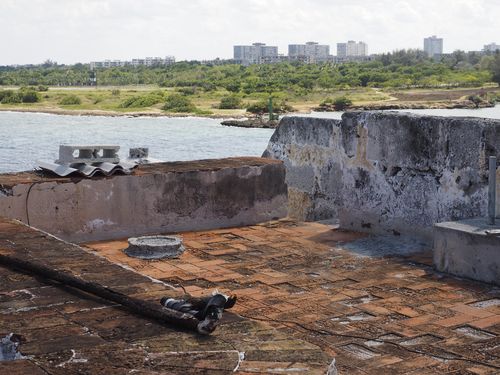
Cojimar • Castillo de Cojimar
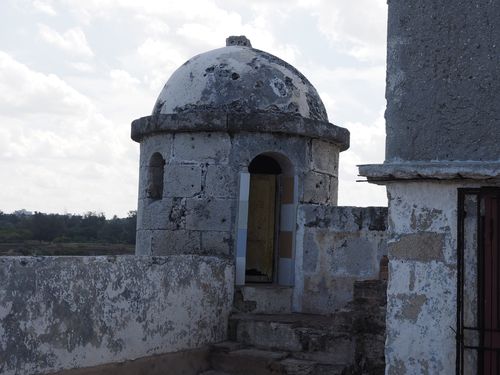
Cojimar • Castillo de Cojimar
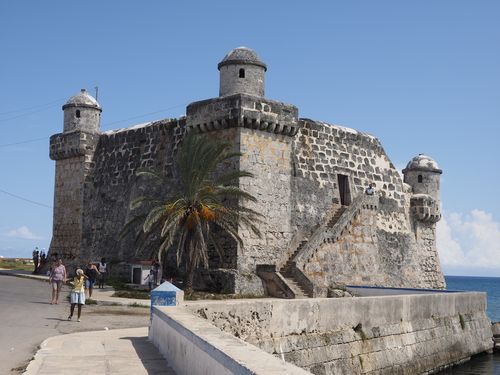
Cojimar • Castillo de Cojimar
Monument profile
Castillo de Cojimar
Monument category: Fort
Monument family: Fort, Fortifications or Citadel
Monument genre: Military
Geographic location: Cojimar • Cuba
Construction period: 17th century AD
• Links to •
• List of videos about Cojimar on this site •
Havana, Cojimar - fishing village • Cuba
History of the Castillo de Cojímar
Political and social context of its construction
The Castillo de Cojímar was constructed in the mid-seventeenth century in the coastal village of Cojímar, located east of Havana on the northern coast of Cuba. Its creation formed part of the broader defensive strategy implemented by the Spanish Empire in the Caribbean during a period marked by intense maritime competition and frequent attacks on colonial territories. Cuba occupied a central position in Spain’s transatlantic network, serving as a strategic waypoint for fleets transporting silver, agricultural products, and other valuable goods from the Americas to Europe.
The protection of these routes became a major priority for the Spanish Crown. Havana, with its deep natural harbor, developed into one of the most important naval ports in the Spanish colonial system. As a result, a complex defensive network was established to secure both the port itself and the surrounding coastline. While large fortresses guarded the entrance to Havana Bay, smaller coastal forts were constructed to monitor nearby maritime approaches and prevent enemy landings.
The Castillo de Cojímar was built around 1649 under the authority of the colonial government of Cuba. Its strategic purpose was to oversee the small bay of Cojímar and to control the maritime corridor along the northern coast leading toward Havana. The elevated site chosen for the fort provided a clear line of sight across the surrounding waters, enabling early detection of suspicious ships. In this way, the fortress contributed to a defensive chain that linked observation points and fortified positions along the coast.
Beyond its strictly military function, the construction of the fort also reflected broader social and political ambitions. Establishing visible defensive structures demonstrated the authority of the Spanish Crown and reinforced colonial control over coastal settlements. The presence of a garrison symbolized imperial protection for local inhabitants while simultaneously deterring foreign incursions.
Imperial rivalries and Caribbean militarization
The establishment of the Castillo de Cojímar occurred during a period when European powers were competing intensely for influence in the Caribbean. Spain, which had initially dominated the region following the voyages of Christopher Columbus, faced growing challenges from England, France, and the Netherlands during the seventeenth century. These rival powers established colonies on neighboring islands and frequently sponsored privateers to attack Spanish shipping.
Piracy and privateering posed a constant threat to maritime commerce. Ports, merchant vessels, and coastal towns were frequent targets of raids aimed at disrupting Spanish trade. In response, the Spanish authorities invested heavily in fortifications throughout their Caribbean territories.
The defensive strategy relied on a combination of large strongholds and smaller outposts. Major fortresses, such as those protecting Havana, were designed to withstand sieges and large-scale attacks. Smaller forts like the Castillo de Cojímar served complementary roles, providing surveillance and acting as early warning stations for approaching vessels.
This network of fortifications reflected the militarization of the Caribbean during the seventeenth and eighteenth centuries. Coastal watchtowers and small forts allowed Spanish authorities to monitor maritime traffic and coordinate defensive responses when necessary. The Castillo de Cojímar therefore played a part in a broader system designed to safeguard one of the most valuable colonial regions of the Spanish Empire.
Historical events and changing strategic importance
Although the Castillo de Cojímar was not the site of major battles, it remained integrated into the defensive framework of Havana’s coastline for many decades. Its primary role was to observe maritime movements and to protect the nearby bay from hostile landings. The presence of artillery allowed the garrison to intervene if enemy ships attempted to approach the shore.
One of the most dramatic episodes in the history of colonial Cuba occurred in 1762, when British forces captured Havana during the Seven Years’ War. This conflict demonstrated the vulnerability of Spanish colonial defenses and highlighted the strategic importance of Havana as a naval base. While the main fighting took place around the large fortifications guarding the entrance to Havana Bay, coastal surveillance points such as Cojímar contributed to the broader defensive efforts.
Following the return of Havana to Spain in 1763, the colonial authorities reinforced and modernized many of the island’s fortifications. Advances in artillery and military engineering gradually changed defensive priorities, however, and smaller forts like Cojímar lost some of their strategic significance.
During the nineteenth century, Cuba underwent major political and social transformations. The wars of independence against Spain profoundly reshaped the island’s political landscape. Although the Castillo de Cojímar was not directly involved in these conflicts, the broader upheavals influenced the role of military installations throughout the colony. As new technologies and military strategies emerged, older coastal forts became less essential to national defense.
Transformations and adaptation over time
With the decline of its military importance, the Castillo de Cojímar gradually shifted from an active defensive structure to a historical landmark. The surrounding village of Cojímar evolved into a small fishing community whose economic life revolved around maritime activities rather than military operations.
Throughout the twentieth century, growing interest in historical preservation led to renewed attention toward colonial fortifications in Cuba. Many of these structures were recognized as valuable reminders of the island’s past and were incorporated into heritage conservation initiatives. Restoration efforts aimed to stabilize the masonry and preserve the original architectural features of the fortress.
The fort also became closely associated with the cultural identity of the village. Cojímar gained international attention through literary connections and its enduring fishing traditions, and the presence of the castle overlooking the bay contributed to the distinctive character of the landscape.
Urban development around the site remained relatively limited, allowing the fortress to retain its visual dominance over the coastline. Its silhouette continues to define the entrance to the bay, reinforcing its historical role as a sentinel of the sea.
Global context and historical significance
The construction of the Castillo de Cojímar reflects broader global developments during the early modern period. Between the sixteenth and eighteenth centuries, European empires invested heavily in military architecture to secure colonial territories and protect trade networks. Coastal fortifications were erected throughout the Americas, Africa, and Asia as part of a global system designed to defend maritime routes.
In Spanish America, fortifications played a particularly important role because the empire depended heavily on transatlantic shipping. The protection of fleets carrying precious metals and colonial goods required a network of secure ports and coastal defenses.
The Castillo de Cojímar illustrates how even relatively small fortifications formed part of this global system. Although modest in scale, such structures contributed to the surveillance and defense of strategic coastlines. They also demonstrate the spread of European military engineering principles to distant colonial territories.
Present role and cultural importance
Today the Castillo de Cojímar stands as a historical monument that reflects the maritime and colonial history of Cuba. The fortress has become a recognizable landmark overlooking the bay and serves as a reminder of the strategic importance of the island during the era of European empires.
The site attracts visitors interested in the history of coastal defense and the development of Havana’s surrounding settlements. It also contributes to the identity of the village of Cojímar, where the fort remains a symbol of the community’s historical relationship with the sea.
Beyond its local significance, the castle forms part of the wider heritage of Cuban fortifications. Together with other defensive structures along the island’s coastline, it illustrates the complex network that once protected the Spanish Empire’s Caribbean territories.
Conservation and contemporary challenges
Preserving the Castillo de Cojímar presents several challenges related to environmental conditions and structural aging. The fortress is exposed to constant maritime winds, salt spray, and tropical storms, all of which contribute to the gradual deterioration of stone masonry.
Conservation efforts focus on stabilizing the structure and preventing further erosion. Maintenance work is required to repair damaged sections of wall, reinforce foundations, and protect the fort from environmental stress. These efforts aim to preserve the historical authenticity of the monument while ensuring its safety for visitors.
The balance between heritage preservation and tourism also requires careful management. While increased public interest helps promote awareness of the site’s historical value, it also creates pressures that must be addressed through responsible conservation policies.
Despite these challenges, the Castillo de Cojímar continues to stand as a testament to the defensive strategies of the Spanish colonial era. Its history illustrates how even modest fortifications played meaningful roles within the broader system of maritime defense that shaped the Caribbean world for centuries.
Architecture of the Castillo de Cojímar
Strategic design and coastal setting
The Castillo de Cojímar represents a characteristic example of a small Spanish colonial coastal fortification built to supervise maritime approaches rather than to withstand prolonged sieges. Located on a rocky promontory overlooking the entrance of the Bay of Cojímar, east of Havana, the structure was positioned to control navigation along a section of the northern Cuban coastline that formed part of the wider defensive perimeter protecting the capital of the island.
The site chosen for the construction reflects the strategic logic of seventeenth-century military engineering. Rather than relying solely on massive walls, Spanish engineers frequently exploited natural topography to enhance defensive efficiency. The elevation of the site allowed the garrison to maintain continuous visual surveillance over the surrounding waters while also providing a commanding field of fire for artillery pieces mounted on the upper platform.
This integration between architecture and landscape forms one of the most notable characteristics of the fortress. The structure appears closely adapted to the contours of the coastal terrain, using the natural slope of the land to reinforce defensive advantages. The elevated platform also reduced vulnerability to direct assault from the sea while allowing early detection of approaching vessels.
The architectural composition therefore emphasizes functionality and observation rather than monumental scale. Although smaller than the major fortifications protecting Havana Harbor, the Castillo de Cojímar formed an integral component of a broader defensive network that included watchtowers, batteries, and large citadels distributed along the coastline.
Military engineering and technological features
The architectural design of the fortress reflects the influence of early modern military engineering principles developed in Europe during the sixteenth and seventeenth centuries. As artillery became increasingly powerful, fortifications were designed to resist cannon fire while simultaneously providing efficient platforms for defensive artillery.
The structure of the Castillo de Cojímar was conceived as a compact defensive unit capable of housing a small garrison and supporting several artillery pieces. The upper terrace served as the main artillery platform, where cannons could be directed toward the sea. This elevated firing position ensured that the defenders could monitor and respond to any suspicious maritime activity approaching the bay.
Parapets and defensive walls were designed to protect the artillery crews while maintaining clear lines of fire. The thickness of the masonry walls provided resistance to impact while also reinforcing the structural stability of the building. The compact design minimized vulnerable points and simplified the defense of the fort in the event of attack.
Access to the structure was carefully controlled through a limited number of entry points. Such controlled access reduced the risk of infiltration and allowed the small garrison to maintain effective control over the fort. Internal circulation routes were designed for efficiency, enabling rapid movement between the storage areas, living quarters, and artillery platform.
Ventilation also formed an important architectural consideration in the Caribbean climate. The internal spaces were arranged in a way that allowed air circulation through openings in the walls, helping to regulate temperature and humidity in an environment characterized by intense heat and maritime moisture.
Construction materials and building techniques
The Castillo de Cojímar was built using materials commonly employed in colonial construction across the Caribbean. The primary material was locally quarried limestone, a resource abundant in the region and well suited to the construction of defensive structures.
Limestone blocks were carefully shaped and assembled using lime mortar, creating thick walls capable of withstanding both environmental stresses and potential artillery impacts. This masonry technique, widely used throughout Spanish colonial architecture, provided durability while allowing the structure to adapt gradually to minor ground movements and climatic variations.
The surfaces of the walls were often covered with protective lime plaster. This finishing layer served several functions: it reduced the penetration of moisture into the stone, limited the effects of salt carried by sea winds, and created a smoother exterior surface that helped protect the masonry from erosion.
Wood was used for certain interior structural components, including beams and roofing elements in sheltered sections of the fortress. These wooden components allowed for flexible interior spaces and facilitated repairs when necessary. The combination of stone masonry and timber elements reflected a pragmatic approach to construction that balanced durability with adaptability.
The overall construction method emphasized solidity and resilience. The walls were built thick enough to absorb the impact of projectiles while also providing insulation against temperature variations. This structural robustness allowed the fort to endure the harsh environmental conditions typical of the Caribbean coastline.
Architectural influences and stylistic characteristics
Although the Castillo de Cojímar lacks elaborate decorative elements, its architectural form reflects broader traditions of Spanish military architecture. The design corresponds to the practical adaptations of European fortification principles developed during the Renaissance and later applied throughout colonial territories.
Unlike the large star-shaped bastioned fortresses that characterized major military installations, smaller coastal forts such as Cojímar adopted simplified defensive layouts. These structures focused on observation and rapid response rather than prolonged resistance to siege warfare.
The visual appearance of the fort is therefore dominated by functional elements: thick masonry walls, defensive parapets, and an elevated artillery terrace. Decorative ornamentation is minimal, as the architectural emphasis lies on durability and defensive capacity.
Nevertheless, the structure illustrates the diffusion of European military design principles into the Caribbean colonial environment. Spanish engineers adapted their knowledge of fortification design to the specific geographic and climatic conditions of the region, resulting in structures that combine European engineering concepts with local materials and environmental adaptations.
The fortress also reflects the broader architectural language of Spanish colonial infrastructure, characterized by geometric clarity, structural simplicity, and careful adaptation to site conditions.
Spatial organization and internal layout
The internal layout of the Castillo de Cojímar follows a compact and efficient spatial arrangement typical of small defensive outposts. At the center of the structure lies a courtyard or open space that facilitated internal circulation and allowed light and air to reach the surrounding rooms.
Around this central area were located the essential functional spaces of the garrison. These included storage rooms for ammunition and supplies, modest quarters for soldiers stationed at the fort, and areas designated for administrative or operational tasks related to coastal surveillance.
The upper level of the structure formed the principal observation and artillery platform. From this elevated position, defenders could monitor the coastline and communicate with other defensive installations in the region. The panoramic visibility offered by the terrace was one of the key advantages of the site.
The spatial organization reflects a balance between defensive efficiency and practical needs. Every section of the structure was designed to support the primary function of maritime observation and protection of the nearby bay.
Dimensions and notable architectural characteristics
Although the Castillo de Cojímar is smaller than the major fortifications surrounding Havana, its proportions reflect the defensive priorities of its time. The height of the walls and the thickness of the masonry provided both protection and structural stability.
The elevated position of the artillery platform allowed defenders to extend their line of sight across the sea. This vantage point was essential for identifying approaching ships and coordinating defensive measures if necessary.
One of the most distinctive aspects of the structure is its relationship with the surrounding coastal landscape. The fort appears as a natural extension of the rocky terrain on which it stands, reinforcing the impression that the architecture was designed in close dialogue with its environment.
The visual impact of the fortress is further enhanced by its position above the entrance to the bay. From the sea, the structure would have served as a visible symbol of Spanish authority and vigilance along the Cuban coastline.
Local narratives have sometimes associated the site with maritime traditions and with the identity of the fishing community that developed around the bay. The fort therefore occupies not only a strategic location but also a symbolic place within the cultural landscape of Cojímar.
Heritage value and conservation challenges
Today the Castillo de Cojímar is recognized as an important historical structure illustrating the defensive architecture of the Spanish colonial period in the Caribbean. Its design demonstrates how relatively small fortifications contributed to the protection of maritime routes and coastal settlements.
The preservation of the monument faces several challenges related to its coastal environment. Constant exposure to sea winds, salt spray, and tropical storms gradually affects the stone surfaces and mortar joints. Over time, these environmental factors can weaken masonry structures if maintenance and conservation measures are not carefully implemented.
Restoration efforts have focused on stabilizing the walls, repairing damaged sections of masonry, and preserving the original architectural features of the fortress. Maintaining the historical integrity of the structure remains a priority in conservation strategies.
The surrounding village has retained much of its traditional character, which helps preserve the historical setting of the fortress. At the same time, increased tourism and urban development require careful management to ensure that the monument continues to be protected.
Despite these challenges, the Castillo de Cojímar remains an enduring example of colonial coastal defense architecture. Its compact design, strategic location, and robust construction illustrate the practical ingenuity of early modern military engineering applied in the Caribbean context.