

 Français (France)
  Nederlands (nl-NL)
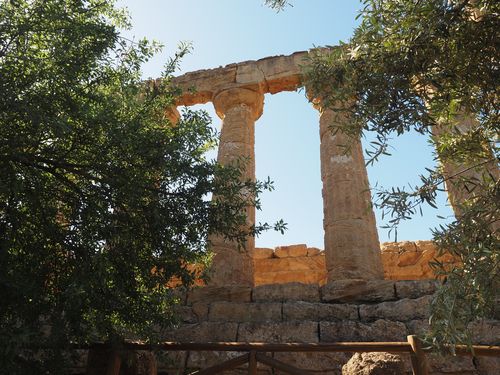
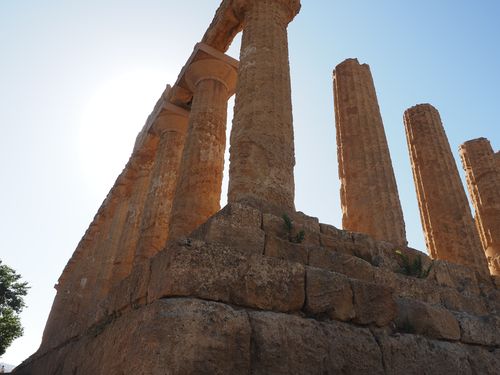
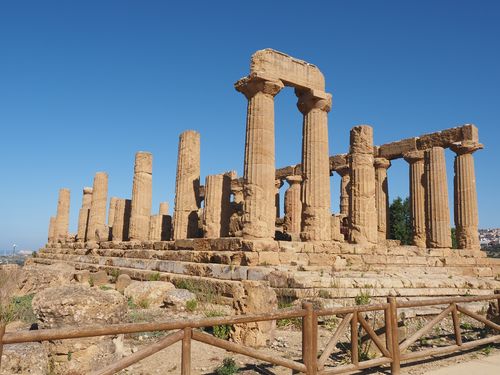
 The Temple of Juno, located in the Valley of the Temples in Agrigento, Sicily, is a remarkable example of Doric architecture from the 5th century BCE. Dedicated to the goddess Hera, known as Juno in Roman mythology, this ancient temple reflects the grandeur of Greek civilization in Sicily. Though partially in ruins, it retains significant architectural elements, including its columns and main structure. The site is a UNESCO World Heritage Site and a key destination for history and archaeology enthusiasts.
Monument profile
Temple of Juno
Monument categories: Ancient, Greek temple
Monument families: Temple • Archaeological
Monument genres: Religious, Archaeological site
Cultural heritage: Greek antiquity
Geographic location: Agrigento • Sicily • Italy
Construction period: 5th century BC
This monument in Agrigento is inscribed on the UNESCO World Heritage List since 1997 and is part of the serial property "Archaeological Area of Agrigento".See the UNESCO monuments featured on this site
• Links to •
• List of videos about Agrigento on this site •
Agrigento, the Valley of the Temples, Sicily • Italy
• References •
Sicile-Sicilia: Temple d’Héra ou de Junon
UNESCO: Zone archéologique d’Agrigente
Wikipedia EN: The Temple of Juno in Agrigento
The Temple of Juno in Agrigento: Political Motivations, Historical Transformations, and Preservation Challenges
The Temple of Juno, located in the Valley of the Temples in Agrigento, Sicily, is a remarkable example of ancient Greek architecture. Built in the 5th century BCE, this temple was dedicated to Hera, the goddess of marriage and childbirth, known as Juno in Roman mythology. Its construction was deeply tied to the political and social aspirations of Agrigento (then known as Akragas), a thriving city of Magna Graecia.
Political and Social Motivations Behind Its Construction
The construction of the Temple of Juno reflected the ambition of Akragas to assert its power and cultural prominence within Magna Graecia. The temple served as a symbol of the city's prosperity and religious devotion, reinforcing the unity of its citizens through shared worship. Dedicating the temple to Hera underscored the societal emphasis on marriage and family, key pillars of stability and growth in the ancient Greek world.
Additionally, the temple showcased the wealth and sophistication of Akragas to neighboring cities and rivals, serving as a statement of political power and cultural refinement.
Historical Events and Regional Influence
The Temple of Juno has witnessed significant historical events that shaped its role in the region. In 406 BCE, during the Second Punic War, Akragas was invaded and sacked by the Carthaginians, who caused extensive damage to the city and its monuments, including the temple. Evidence of this destruction, such as scorch marks on the stones, remains visible today.
Under Roman rule, the temple and its surroundings experienced partial restoration, reflecting its enduring significance as a cultural and religious site. During the medieval period, the temple’s stones were repurposed for new constructions, a common practice that further altered its original structure.
Contextualizing the Temple in a Global Framework
The 5th century BCE marked a period of cultural and architectural flourishing in various parts of the world. In Greece, the Parthenon was being constructed in Athens, while the Persian Empire was erecting monumental palaces in Persepolis. Similarly, the Temple of Juno reflects the global tendency of ancient civilizations to build grand structures as symbols of power, culture, and religious devotion.
While comparable to these iconic structures in purpose, the Temple of Juno is distinguished by its integration into the Sicilian landscape and its adaptation to local materials and climate.
Transformations and Cultural Influences
Over centuries, the Temple of Juno has undergone numerous transformations that mirror shifts in power and cultural influences. Its initial construction followed the Doric order, characterized by simplicity and strength, while its layout and proportions adhered to the classical Greek architectural standards.
Later modifications and damages, particularly during the Roman and medieval periods, highlight the evolving use of the temple and the cultural exchange within the Mediterranean region. These transformations reflect not only the passage of time but also the interactions between different civilizations that left their mark on the site.
Current Cultural Importance and State of Conservation
Today, the Temple of Juno stands as a central feature of the Valley of the Temples, a UNESCO World Heritage Site since 1997. It is celebrated as a symbol of ancient Greek heritage and Sicilian identity. While partially in ruins, the temple retains key architectural elements, such as several intact Doric columns, which provide insight into its original grandeur.
Conservation efforts have focused on stabilizing the remaining structures and protecting the site from further degradation. The temple’s status as a UNESCO site has brought international recognition and resources, enhancing its preservation and accessibility.
Preservation Challenges
The preservation of the Temple of Juno faces several modern challenges. The limestone used in its construction is particularly vulnerable to weathering and erosion, exacerbated by changes in climate and air pollution. Additionally, the increasing influx of tourists poses risks to the integrity of the site, requiring careful management to balance accessibility with conservation.
Limited funding and the complexity of restoring ancient materials further complicate efforts to maintain the site, highlighting the need for sustainable preservation strategies.
Conclusion
The Temple of Juno is more than an architectural relic; it is a testament to the cultural, political, and religious significance of ancient Akragas. Through its history of transformation and resilience, the temple embodies the interconnectedness of Mediterranean civilizations and their shared heritage. As preservation efforts continue, the Temple of Juno remains a source of inspiration and a valuable reminder of the importance of safeguarding humanity’s cultural legacy.
Sources
Archaeological and Landscape Park of the Valley of the Temples - Official site.
UNESCO World Heritage Centre - Valley of the Temples inscription.
Hansen, M. H., & Nielsen, T. H. (2004). An Inventory of Archaic and Classical Poleis. Oxford University Press.
Wilson, R. J. A. (1990). Sicily under the Roman Empire: The Archaeology of a Roman Province, 36 BC – AD 535. Oxford University Press.
Architectural Excellence of the Temple of Juno: Technological Innovation and Cultural Fusion
The Temple of Juno, located in Agrigento’s Valley of the Temples, is a stunning example of ancient Greek architecture. Built in the 5th century BCE, this temple reflects the technological advancements, cultural synthesis, and artistic achievements of its time. Dedicated to Hera (Juno in Roman mythology), it stands as a testament to the grandeur of Akragas, one of the most prosperous cities of Magna Graecia.
Technological Innovation and Materials Used
The construction of the Temple of Juno showcases the advanced engineering and architectural expertise of ancient Greek builders. The primary material used was local limestone, which was meticulously cut and assembled to form the temple’s robust Doric columns and walls. Despite its softness compared to marble, the limestone was treated and coated to withstand weathering and retain its structural integrity.
Iron clamps were employed to join blocks of stone seamlessly, a technique that provided stability and durability. The construction also incorporated a crepidoma, a stepped platform that raised the structure, enhancing its visual prominence and protecting it from ground-level moisture.
Structural and Layout Features
The Temple of Juno follows a peripteral layout, a hallmark of Doric temple design. It features 34 fluted columns, with six on the shorter sides and thirteen along the longer sides. This configuration creates a harmonious balance between width and length, showcasing the Greeks’ mastery of proportion and symmetry.
The inner sanctum, or cella, housed the cult statue of Hera and served as the focal point for worship. The roof, originally made of terracotta tiles, was adorned with ornamental acroteria that added an aesthetic flair. These architectural details underscored the temple’s role as both a religious sanctuary and a symbol of civic pride.
Artistic and Cultural Synthesis
The Temple of Juno exemplifies a unique fusion of regional and foreign influences. While its design adheres to the classical Doric style originating in mainland Greece, adaptations were made to suit the Sicilian environment and resources. The use of local limestone instead of imported marble reflects this practical approach, while the decorative motifs suggest artistic exchanges with neighboring cultures, including the Phoenicians and Etruscans.
This blending of influences is evident in the temple’s sculptural elements and overall aesthetic, which combine Greek ideals of harmony with local artistic traditions.
Noteworthy Facts and Anecdotes
One remarkable feature of the temple is the visible damage caused by the Carthaginian invasion of 406 BCE. Burn marks on the limestone blocks bear witness to the conflict, providing a tangible connection to the temple’s tumultuous history.
Additionally, during the Roman era, the temple underwent partial restoration, further illustrating its enduring significance. In medieval times, its stones were repurposed for other constructions, a common practice that contributed to the temple’s current ruined state.
Contribution to International Recognition
The Temple of Juno is a central attraction within the Valley of the Temples, which was designated a UNESCO World Heritage Site in 1997. This recognition underscores its architectural and cultural importance, positioning it as a key example of ancient Greek innovation and influence.
The UNESCO designation has enhanced global awareness and facilitated conservation efforts, ensuring the temple’s preservation for future generations. The site’s popularity among tourists and scholars alike highlights its universal appeal and educational value.
Conservation Challenges
Preserving the Temple of Juno presents ongoing challenges. The limestone, while durable, is susceptible to erosion caused by wind, rain, and fluctuating temperatures. Modern air pollution further accelerates the deterioration of its surfaces.
Tourism, while vital to the temple’s recognition, places physical stress on the site, necessitating measures to manage visitor access. Restoration projects focus on stabilizing the remaining structures and protecting them from environmental damage, but these efforts require significant financial and technical resources.
Conclusion
The Temple of Juno is a masterpiece of ancient architecture that embodies the technological ingenuity and cultural richness of its era. Through its harmonious design, innovative construction techniques, and artistic elements, it reflects the spirit of Akragas as a thriving cultural and political hub. As a UNESCO World Heritage Site, it continues to inspire admiration and underscores the importance of preserving historical monuments as treasures of human heritage.