

 Français (France)
  Nederlands (nl-NL)
 Akhileshwar Temple is a Hindu sanctuary located in Maheshwar in the Indian state of Madhya Pradesh, on the banks of the Narmada River. It forms part of a broader religious landscape that contributes to the spiritual significance of the city, which is well known for its temples and ritual ghats visited by pilgrims. The temple is dedicated to Shiva under the name Akhileshwar, a form associated with the universal dimension of the deity. Devotees visit the site for prayer, offerings, and various religious ceremonies. The temple also plays a role in the cultural and religious life of the local community, especially during major Hindu festivals.
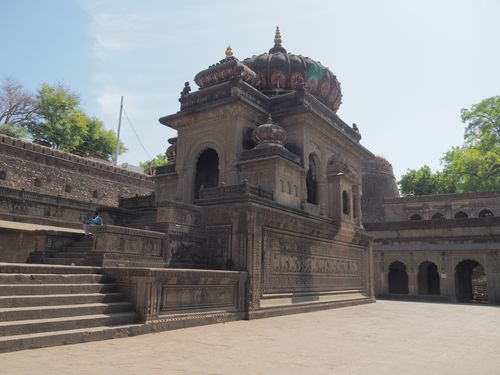
Maheshwar • Akhileshwar Temple
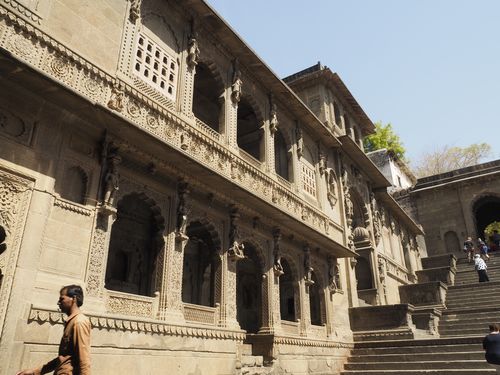
Maheshwar • Akhileshwar Temple
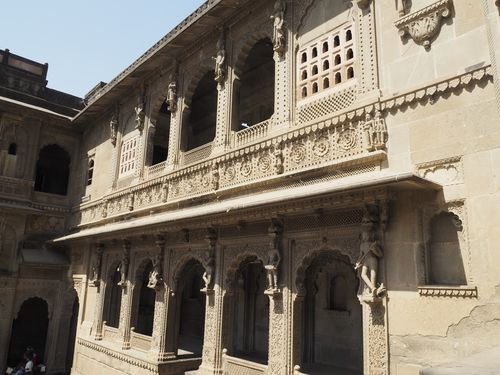
Maheshwar • Akhileshwar Temple
Monument profile
Akhileshwar Temple
Monument category: Hindu Temple
Monument family: Temple
Monument genre: Religious
Cultural heritage: Hindu
Geographic location: Maheshwar • Madhya Pradesh • India
Construction period: Unknown era
• Links to •
• Dynasties that contributed to the construction of the monument •


• List of videos about Maheshwar on this site •
Maheshwar, former capital of Malwa • Madhya Pradesh, India
History of the Akhileshwar Temple in Maheshwar
Political and social context of construction
The Akhileshwar Temple in Maheshwar, located in the present-day Indian state of Madhya Pradesh, belongs to a broader historical and religious landscape shaped by the political transformations of central India during the eighteenth century. Maheshwar lies on the banks of the Narmada River, a waterway that holds considerable spiritual importance in Hindu tradition. The sacred status of the river encouraged the development of religious centres, pilgrimage routes, and temple complexes along its course over many centuries.
The construction of the Akhileshwar Temple is generally associated with the period when the Holkar dynasty established its authority over the Malwa region. The Holkars were part of the Maratha confederacy, which expanded its influence across large parts of the Indian subcontinent during the decline of Mughal imperial power. By the mid-eighteenth century, the weakening of Mughal authority allowed regional rulers to assert greater autonomy, leading to the emergence of new political centres.
Maheshwar became especially significant under the rule of Queen Ahilyabai Holkar, who governed the Holkar state from 1767 to 1795. After the death of her husband and son, Ahilyabai assumed leadership of the kingdom and established Maheshwar as her administrative and religious capital. Her reign is remembered for a large program of religious patronage, including the construction, renovation, and maintenance of numerous temples, ghats, and pilgrimage facilities across India.
Within this context, temples such as Akhileshwar were not merely religious structures but also instruments of political legitimacy. Patronage of sacred architecture helped reinforce the ruler’s image as a defender of Hindu traditions and a benefactor of religious institutions. These initiatives also strengthened alliances with Brahmin communities and temple authorities, whose influence in religious and social life remained considerable.
The construction of temples in Maheshwar also served economic and social purposes. Pilgrimage activity stimulated local commerce, hospitality services, and ritual occupations connected with religious ceremonies. By encouraging the growth of a pilgrimage centre along the Narmada, the Holkar administration contributed to the development of a religious economy that supported the prosperity of the city.
Major historical events and evolution of the site
During the eighteenth century Maheshwar experienced a period of relative prosperity. The Holkar court invested in the construction of ghats along the Narmada River, residential quarters, fortifications, and religious monuments. The Akhileshwar Temple formed part of this urban transformation that reshaped Maheshwar into both a political capital and a religious centre.
Despite these developments, the broader political environment of central India remained unstable. The Maratha confederacy was composed of several powerful families whose alliances and rivalries periodically resulted in military conflicts. At the same time, the growing influence of the British East India Company created new political pressures throughout the region.
In the early nineteenth century the Maratha states entered a series of wars with the British, culminating in the defeat of the Maratha confederacy. The Holkar state survived as a princely entity under British supervision, but its political authority was reduced. During this period the administrative centre of the Holkar state gradually shifted to Indore, which became the principal seat of government.
Although Maheshwar lost its status as the main political capital, its religious importance remained intact. The temples of the city, including Akhileshwar, continued to function as places of worship and pilgrimage. Local communities and temple authorities ensured the continuity of religious practices and periodic maintenance of the buildings.
Throughout the nineteenth and early twentieth centuries the site experienced gradual changes associated with urban development and demographic growth. The riverfront ghats remained active spaces for ritual bathing, religious gatherings, and ceremonies connected with the worship of Shiva and other Hindu deities.
Global historical context
The construction of the Akhileshwar Temple during the eighteenth century took place within a broader global period of political transformation. Across the Indian subcontinent, the decline of the Mughal Empire created opportunities for regional powers such as the Marathas, the Sikhs, and several southern kingdoms to assert independence.
At the same time European trading companies expanded their influence in Asia. The British East India Company gradually transformed from a commercial enterprise into a territorial power, ultimately establishing colonial control over much of the Indian subcontinent.
Despite these geopolitical changes, many regional rulers continued to invest heavily in religious architecture. Monumental temples, mosques, and palaces built during this period expressed both spiritual devotion and political authority. Similar patterns can be observed in other parts of the world during the same era. In Europe, monarchs sponsored large architectural projects to reinforce their prestige, while in the Ottoman and Persian realms monumental religious buildings remained important symbols of political legitimacy.
The temple-building initiatives of rulers such as Ahilyabai Holkar therefore formed part of a broader global tradition in which sacred architecture served both devotional and political purposes.
Transformations and later developments
Over the course of the nineteenth and twentieth centuries the Akhileshwar Temple underwent periodic repairs and renovations. Like many religious structures in India, it benefited from the patronage of local donors, temple trusts, and religious communities who ensured its maintenance.
The urban environment surrounding the temple evolved gradually as Maheshwar developed into a regional town. New residential areas, markets, and transport routes appeared, but the historic core of the city, including the temples and ghats, remained a focal point of religious life.
In the decades following Indian independence in 1947, increasing attention was given to the preservation of historical monuments. The architectural heritage of Maheshwar, including its temples and riverfront structures, began to attract scholars, pilgrims, and visitors interested in the cultural history of the region.
The Akhileshwar Temple continued to function primarily as a religious institution rather than as a purely historical monument. Ritual worship, festivals dedicated to Shiva, and daily offerings remained central to the life of the temple.
Contemporary role and cultural significance
Today the Akhileshwar Temple remains an active place of worship within the religious landscape of Maheshwar. Devotees visit the temple for prayer, ritual offerings, and participation in religious ceremonies. The temple’s association with Shiva connects it to a broader network of Shaivite pilgrimage traditions across India.
The presence of the temple also contributes to the cultural identity of Maheshwar. Together with the Holkar fort, the riverfront ghats, and other historic temples, it forms part of a historic urban ensemble that reflects the religious and political history of the region.
Religious festivals and ceremonial gatherings regularly take place in and around the temple. These events bring together local residents, pilgrims, and visitors, reinforcing the role of the temple as a centre of communal and spiritual activity.
In recent decades Maheshwar has also gained recognition as a cultural tourism destination. Visitors are drawn to the historic riverfront, the architectural heritage of the Holkar period, and the continuing religious traditions of the city. The Akhileshwar Temple forms part of this broader cultural environment.
Conservation and modern challenges
The preservation of the Akhileshwar Temple involves several challenges typical of historical monuments located within active urban and religious environments. Climatic conditions such as monsoon rains, temperature fluctuations, and humidity from the nearby Narmada River can gradually affect the stone structures.
Urban expansion and increased visitor numbers may also create pressures on the surrounding infrastructure and on the physical condition of the monument. Foot traffic, environmental pollution, and natural weathering contribute to the gradual deterioration of architectural surfaces.
Local authorities and heritage organisations have undertaken periodic conservation efforts to maintain the structural integrity of historic buildings in Maheshwar. These measures include maintenance of stone structures, improvement of drainage systems, and preservation of surrounding public spaces.
Although the Akhileshwar Temple is not currently listed as a UNESCO World Heritage Site, it remains an important element of the cultural and religious heritage of the Malwa region. Its history reflects the interaction between political authority, religious devotion, and urban development in central India over the past several centuries.
Architecture of the Akhileshwar Temple in Maheshwar
Architectural context and technological characteristics
The Akhileshwar Temple in Maheshwar belongs to the architectural landscape developed during the eighteenth century under the Holkar dynasty in the Malwa region of central India. Its design reflects the architectural traditions associated with Hindu temple construction in northern and central India while also incorporating stylistic elements linked to Maratha patronage. The monument forms part of a wider urban composition that includes the fortified palace complex of the Holkars and the monumental riverfront ghats descending toward the Narmada River.
The positioning of the temple within this urban ensemble indicates a carefully planned relationship between religious architecture and the surrounding environment. Maheshwar is built along a sloping terrain that descends toward the river, and the layout of temples in the historic district reflects a deliberate adaptation to this topography. The Akhileshwar Temple is integrated into this spatial framework through elevated platforms and terraces that protect the structure from seasonal water fluctuations while visually connecting the sanctuary with the riverfront.
From a technological perspective, the temple illustrates the continuation of advanced stone-building techniques that had been refined over centuries in the Indian subcontinent. Builders relied on carefully cut stone blocks arranged in stable structural configurations. The distribution of weight across thick masonry walls and aligned columns allowed the structure to maintain stability without the need for complex reinforcing systems. These construction methods ensured durability while allowing the architectural composition to remain visually balanced.
The design also incorporates passive environmental adaptations suited to the climatic conditions of central India. Open porticoes, columned halls, and strategically placed openings facilitate natural airflow, reducing heat accumulation inside the structure. This form of climatic adaptation demonstrates an architectural approach that integrates spiritual function with practical environmental considerations.
Materials and construction methods
The Akhileshwar Temple was primarily constructed using locally available stone, particularly varieties of sandstone and basalt common to the Malwa region. These materials offered a combination of structural strength and workability that made them suitable for both architectural and decorative purposes.
Sandstone, in particular, allowed artisans to carve decorative elements directly into structural surfaces. Blocks were extracted from regional quarries and transported to the construction site, where they were shaped using traditional chisels and stone-working tools. Each element was carefully measured and adjusted so that adjoining blocks fitted together precisely. This technique minimized the need for binding mortar and created a stable structural framework.
The temple stands on a raised plinth, a feature commonly found in many Hindu temples. This elevated platform performs several functions. Structurally, it protects the building from moisture and occasional flooding caused by seasonal variations in the river’s water level. Symbolically, the plinth marks a transition between the everyday world and the sacred space of the temple.
Roof structures and upper architectural components were built using heavy stone slabs supported by beams and columns. This system was widely used in temple architecture across northern India, as it allowed large interior spaces to be covered without relying on timber frameworks. Stone construction also improved resistance to fire and long-term weathering.
Although stone is the dominant material, certain secondary elements such as doors or ornamental fittings may incorporate wood or metal. These materials provide functional flexibility while complementing the overall stone architecture.
Architectural and artistic influences
The architectural form of the Akhileshwar Temple reflects the influence of the Nagara style of Hindu temple architecture, which predominates across northern India. One of the defining features of this style is the presence of a shikhara, the tower rising above the sanctum. The shikhara symbolically represents the cosmic axis linking the earthly realm with the divine sphere.
In the Akhileshwar Temple the vertical emphasis of the shikhara creates a focal point that dominates the skyline of the surrounding temple complex. Its upward progression of architectural layers reinforces the symbolic association between sacred space and cosmic order.
At the same time, the temple’s architectural expression reflects Maratha-era aesthetic preferences. Compared with earlier medieval temples characterized by dense sculptural decoration, many eighteenth-century structures sponsored by Maratha rulers display a more restrained decorative approach. Architectural harmony and proportion are often emphasized over elaborate sculptural programs.
Regional artistic traditions from the Malwa region are also visible in the temple’s decorative vocabulary. Carved motifs include stylized floral patterns, geometric compositions, and symbolic elements associated with Hindu cosmology. These decorative features are typically concentrated around entrances, column capitals, and cornices, highlighting key architectural zones without overwhelming the overall composition.
The blending of these influences demonstrates how temple architecture in the eighteenth century combined long-standing religious traditions with regional stylistic developments shaped by political patronage.
Spatial organization and structural layout
The spatial arrangement of the Akhileshwar Temple follows the conventional layout of Hindu temples. The most sacred part of the structure is the garbhagriha, or sanctum, where the principal representation of the deity Shiva is installed. This inner chamber is typically compact and dimly lit, creating an atmosphere conducive to ritual concentration and spiritual contemplation.
In front of the sanctum lies the mandapa, a pillared hall where devotees gather for worship and ceremonies. The mandapa serves as the primary congregational space within the temple and is supported by rows of stone columns arranged in symmetrical alignment. These columns help distribute the structural load while also establishing a rhythmic architectural pattern within the interior.
The entrance sequence plays an important symbolic role in the temple’s design. Visitors typically ascend a series of steps leading to the elevated platform, then pass through a gateway or portico before entering the interior halls. This progression from open exterior space to increasingly sacred interior zones reflects traditional Hindu architectural symbolism.
Circulation within the temple complex may also include pathways allowing circumambulation around the sanctum. This ritual movement, known as pradakshina, is an important element of Hindu devotional practice and is accommodated through the spatial organization of the structure.
The orientation of the temple follows traditional cosmological principles, with the main entrance often facing east so that the rising sun illuminates the entrance axis. This alignment reflects the symbolic relationship between temple architecture and celestial cycles.
Dimensions and notable architectural features
Although the Akhileshwar Temple is not among the largest temple structures in India, its proportions are carefully balanced within the urban environment of Maheshwar. The height of the shikhara and the scale of the mandapa create a visually prominent landmark within the historic riverfront area.
One of the most notable architectural aspects of the temple is its relationship with the surrounding ghats that descend toward the Narmada River. The stepped riverfront forms a ceremonial axis that connects the temple with ritual bathing areas used by pilgrims and residents. This integration of temple architecture with riverfront infrastructure reflects a broader urban design characteristic of Maheshwar.
Architectural details such as column carvings, doorway frames, and decorative cornices contribute to the aesthetic identity of the temple. Sculpted motifs may include symbolic animals, stylized vegetation, and religious iconography associated with Shiva worship.
Local traditions also attribute the construction of several temples in Maheshwar to networks of skilled artisans invited by the Holkar court. Craftsmen from different regions are believed to have participated in these projects, bringing diverse artistic techniques that enriched the architectural vocabulary of the city.
Architectural significance and conservation challenges
The Akhileshwar Temple contributes to the architectural coherence of Maheshwar’s historic centre, where temples, ghats, and palace structures form a unified cultural landscape. The monument represents an example of eighteenth-century religious architecture associated with Maratha patronage in central India.
Although the temple is not currently included on the UNESCO World Heritage List, it forms part of a historically significant ensemble that illustrates the urban and religious development of Maheshwar during the Holkar period. The architectural continuity between temples and riverfront structures enhances the cultural value of the entire site.
Preserving the temple presents several conservation challenges. The stone surfaces are exposed to environmental factors such as monsoon rainfall, temperature fluctuations, and humidity from the nearby river. Over time these conditions can lead to surface erosion or structural deterioration in vulnerable areas.
Increased tourism and religious activity also create pressures on the monument’s physical fabric. Heavy foot traffic can accelerate wear on stone steps, floors, and sculpted surfaces. Conservation programs implemented by local authorities aim to maintain structural stability while respecting the temple’s continuing religious function.
Despite these challenges, the Akhileshwar Temple remains an important architectural element within Maheshwar’s historic landscape. Its design reflects the interaction of regional craftsmanship, religious symbolism, and urban planning associated with the Holkar dynasty’s vision for the city during the eighteenth century.