

 Français (France)
  Nederlands (nl-NL)
 The Qutb Shahi Tombs form a monumental funerary complex located in Hyderabad, in the Indian state of Telangana. The site contains the tombs of the rulers of the Qutb Shahi dynasty, which governed the kingdom of Golconda between the sixteenth and seventeenth centuries. The monuments are arranged within a large enclosure that includes several commemorative structures associated with the memory of the dynasty. The complex reflects the political and cultural significance of the Qutb Shahi rulers in the history of the Deccan region. Today the tombs represent an important heritage site that attracts visitors and researchers interested in the historical development of Hyderabad.
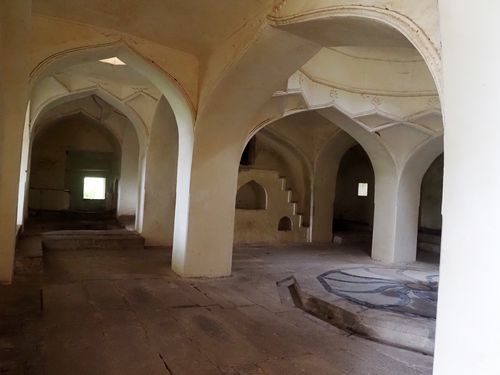
Hyderabad • Qutb Shahi Mausoleums
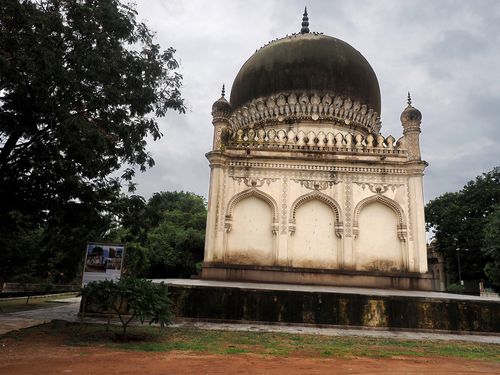
Hyderabad • Qutb Shahi Mausoleums
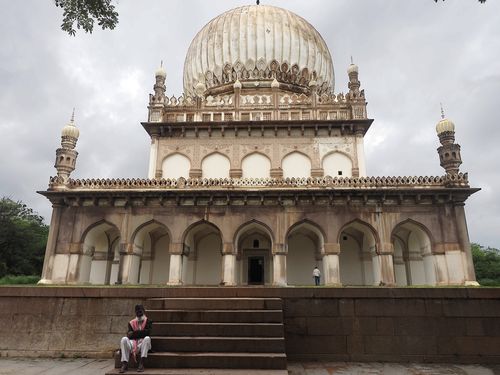
Hyderabad • Qutb Shahi Mausoleums
Monument profile
Qutb Shahi Mausoleums
Monument category: Mausoleum
Monument family: Tomb, Necropolis, Mausoleum or Cenotaph
Monument genre: Funerary
Cultural heritage: Islamic
Geographic location: Hyderabad • Telangana • India
Construction period: 16th century AD
• Links to •
• Dynasties that contributed to the construction of the monument •

• This monument illustrates the following theme •
Architecture • Mausoleums : Muslim Mausoleums
• List of videos about Hyderabad on this site •
Hyderabad, Charminar Square and its surroundings • India, Telangana
Hyderabad, Golconda fort • India, Telangana
Hyderabad • Hidden Gems: Ashoorkhana, Chowmahalla, Bhagyalakshmi
Hyderabad, mausoleums and remarkable tombs • India, Telangana
History of the Qutb Shahi Tombs in Hyderabad
Political and Social Context of the Construction
The Qutb Shahi Tombs were constructed between the sixteenth and seventeenth centuries as the dynastic necropolis of the rulers of the Qutb Shahi Sultanate, a regional kingdom that controlled large parts of the Deccan plateau from 1518 until 1687. The tomb complex stands near the historic fortress of Golconda, which served as the political center of the dynasty before the foundation of the city of Hyderabad in 1591.
The construction of monumental tombs for rulers and members of the royal family was an important political statement in the Islamic courts of the Deccan. Such structures served not only as burial places but also as symbols of dynastic legitimacy, continuity, and prestige. By establishing an elaborate funerary landscape for successive rulers, the Qutb Shahi dynasty reinforced its authority over a diverse population composed of Persian administrators, local elites, merchants, soldiers, and artisans.
The rulers of the Qutb Shahi state were originally governors under the Bahmani Sultanate, which had dominated the Deccan during the fifteenth century. When the Bahmani realm fragmented into several successor states, Sultan Quli Qutb-ul-Mulk declared independence and founded the Qutb Shahi dynasty. The creation of monumental tombs for the ruling family reflected the dynasty’s ambition to establish itself as a legitimate and enduring sovereign power.
Political rivalries within the Deccan also played an important role in shaping this architectural patronage. The Qutb Shahi rulers competed with neighboring states such as the Adil Shahis of Bijapur and the Nizam Shahis of Ahmadnagar, each of which invested in monumental architecture to display wealth, religious devotion, and cultural prestige. The construction of grand mausoleums therefore formed part of a broader strategy of symbolic competition among Deccan sultanates.
The Qutb Shahi court was also characterized by a cosmopolitan culture shaped by connections with Persia, Central Asia, and the wider Islamic world. Persian administrators, poets, architects, and scholars were invited to the court, contributing to the development of a distinctive Deccani cultural identity. The tomb complex reflects this environment in which royal patronage combined political authority with artistic ambition.
Major Historical Events Affecting the Site
Throughout the existence of the Qutb Shahi Sultanate, the tomb complex functioned as the principal burial place for the dynasty’s rulers. Each successive sultan commissioned his own mausoleum during his lifetime or shortly after his death, gradually expanding the site into a large funerary landscape that included tombs, mosques, pavilions, and gardens.
The most important political turning point in the history of the site occurred in the late seventeenth century during the expansion of the Mughal Empire into the Deccan. In 1687 the Mughal emperor Aurangzeb conquered Golconda after a prolonged siege, bringing the Qutb Shahi Sultanate to an end. The fall of the kingdom resulted in the integration of the region into the Mughal imperial system.
Although the Mughal conquest transformed the political structure of the region, the tomb complex itself was not systematically destroyed. However, the disappearance of the ruling dynasty that had maintained the site led to a gradual decline in its upkeep. Over time the structures began to suffer from neglect, weathering, and the encroachment of vegetation.
During the eighteenth century the political landscape of the Deccan changed again with the emergence of the Asaf Jahi dynasty, whose rulers became known as the Nizams of Hyderabad. Under their authority the city of Hyderabad developed into a major regional capital. While the Qutb Shahi Tombs remained important historical landmarks, they no longer functioned as active dynastic burial monuments.
Despite this shift in political authority, the site retained symbolic importance. The tombs continued to represent the memory of the earlier sultanate that had shaped the cultural and urban development of the region.
Global Context of Monumental Construction
The construction of the Qutb Shahi Tombs occurred during a period in which many major dynasties across Asia and Europe were investing in monumental architecture to reinforce political authority. In the Islamic world, royal tombs and funerary complexes had long served as important expressions of sovereignty and religious legitimacy.
In Persia and Central Asia, rulers sponsored elaborate mausoleums that combined monumental architecture with garden landscapes symbolizing the concept of paradise. Similar traditions existed in the Ottoman Empire and in the Mughal Empire of northern India. The Qutb Shahi tomb complex reflects these broader architectural traditions while adapting them to the cultural environment of the Deccan.
The sixteenth and seventeenth centuries also witnessed a wider global pattern of monumental construction. In Mughal India, emperors commissioned grand architectural projects such as imperial forts, mosques, and funerary monuments. In Europe, Renaissance rulers and princely states invested in palaces, cathedrals, and urban redesigns that symbolized political power and cultural ambition.
The Qutb Shahi Tombs therefore form part of a global historical moment in which architecture served as a key instrument for expressing dynastic identity and political authority.
Transformations and Periods of Decline
After the Mughal conquest of Golconda, the tomb complex entered a long period during which maintenance was irregular. Without the patronage of the ruling dynasty, many structures deteriorated gradually due to weathering, structural damage, and the natural aging of building materials.
In the nineteenth century, when Hyderabad was ruled by the Nizams under indirect British influence, interest in the region’s historical monuments increased. However, restoration efforts during this period were limited and focused primarily on preventing further structural damage.
The twentieth century marked a turning point in the preservation of the site. After the integration of Hyderabad into the Republic of India in 1948, the Archaeological Survey of India and regional heritage authorities began to recognize the importance of the Qutb Shahi Tombs as part of the country’s architectural heritage. Conservation initiatives gradually improved the structural stability of several monuments.
In recent decades, restoration programs have aimed to recover elements of the original landscape design and architectural features. These projects have involved structural repairs, cleaning of decorative surfaces, and efforts to manage vegetation and environmental damage.
At the same time, the urban expansion of Hyderabad has brought the historic site into closer proximity with modern residential and commercial districts. The transformation of the surrounding landscape has altered the historical context in which the tomb complex was originally conceived.
Cultural Role and Significance in the Present Day
Today the Qutb Shahi Tombs represent one of the most important historical landmarks of Hyderabad and a major symbol of the city’s multicultural past. The monuments illustrate the legacy of the Deccan sultanates and their role in shaping the political and cultural history of southern India.
The site is visited by historians, researchers, and tourists interested in the architectural and historical heritage of the region. The tomb complex also forms part of the broader network of historical monuments associated with the former kingdom of Golconda.
For local communities, the site continues to carry cultural and symbolic significance. Certain tombs are associated with historical figures remembered in regional traditions, and the complex sometimes serves as a setting for cultural events and heritage activities.
The preservation of the site also contributes to the historical identity of Hyderabad, a city known for its layered history involving Islamic sultanates, Mughal rule, and the later princely state governed by the Nizams.
Conservation Status and Modern Preservation Challenges
The conservation of the Qutb Shahi Tombs presents several challenges typical of large historical monuments located within expanding urban environments. Exposure to environmental conditions such as humidity, temperature fluctuations, and biological growth can gradually damage building materials.
Urban pollution and increased visitor numbers also require careful management in order to prevent deterioration of delicate architectural features. Heritage authorities must balance the need for public access with the long-term preservation of the structures.
In recent years, collaborative conservation projects involving governmental institutions and international heritage organizations have sought to improve the management of the site. Restoration programs have focused on stabilizing damaged structures, repairing masonry, and improving drainage systems to protect foundations.
Efforts have also been made to enhance the historical landscape of the complex by restoring gardens and improving visitor infrastructure. These initiatives aim to present the site in a manner that reflects its historical significance while ensuring its preservation for future generations.
The Qutb Shahi Tombs are widely recognized as one of the most important examples of dynastic funerary architecture in the Deccan. Their historical significance extends beyond the architectural domain, offering insight into the political ambitions, cultural exchanges, and urban development that shaped the history of Hyderabad and the wider region.
Architecture of the Qutb Shahi Tombs in Hyderabad
Architectural Innovations and Engineering Principles
The Qutb Shahi Tombs form one of the most extensive royal funerary complexes in India and represent a distinctive architectural tradition that emerged in the Deccan during the sixteenth and seventeenth centuries. Built for the rulers of the Qutb Shahi dynasty and members of the royal court, the complex illustrates the technical capabilities and aesthetic ambitions of a regional Islamic kingdom that integrated multiple cultural influences into its architectural production.
A defining innovation of the complex lies in its systematic planning as a dynastic necropolis rather than a collection of isolated monuments. Each mausoleum was conceived as a monumental structure within a larger landscaped environment, combining architectural geometry with symbolic spatial organization. The buildings stand on elevated platforms, which serve both structural and symbolic purposes. From an engineering perspective, these platforms distribute the weight of the structure across a broad foundation, ensuring stability on the rocky terrain surrounding Golconda. At the same time, the elevation enhances the monumentality of each tomb by visually separating it from the surrounding landscape.
Structural stability was achieved through the use of thick load-bearing masonry walls combined with carefully proportioned arches and vaults. The architects employed a system of intersecting arches to transfer the weight of the domes toward the outer walls. This technique allowed the construction of large interior chambers without the need for internal columns, creating spacious and visually unified interiors.
Ventilation and climatic adaptation were also significant considerations. Many of the tombs include open arcaded galleries surrounding the central chamber. These galleries promote natural airflow, reducing internal heat accumulation in the tropical climate of the Deccan plateau. The shaded arcades also create transitional zones between the interior and exterior spaces, enhancing thermal comfort while preserving the monument’s architectural symmetry.
Urban planning considerations are visible in the alignment of the monuments within the complex. The tombs are arranged with clear spatial intervals, allowing each structure to maintain visual prominence. Pathways and garden layouts further reinforce the sense of order and ceremonial progression through the site.
Materials and Construction Techniques
The construction of the Qutb Shahi Tombs relied primarily on materials available in the Deccan region, combined with building techniques derived from Persian and Central Asian traditions. Granite, a durable stone widely found in the surrounding landscape, was used extensively for the structural foundations and lower sections of the buildings. Its strength and resistance to weathering made it suitable for supporting the considerable weight of the superstructures.
The upper portions of the tombs, including the domes and decorative architectural elements, were often constructed using brick masonry. Brick offered greater flexibility in shaping curved forms such as domes and vaults while reducing the overall structural load. These brick structures were then coated with lime plaster, which created a smooth surface suitable for architectural decoration.
The lime mortar used in the complex played an essential role in ensuring structural cohesion. Traditional Deccan construction techniques frequently incorporated organic additives into the mortar mixture, increasing durability and elasticity. This property allowed the buildings to accommodate minor structural shifts without cracking, an important feature for monuments exposed to seasonal temperature variations.
Surface treatments were applied to enhance both durability and aesthetic quality. Fine lime plaster coverings provided a protective layer over masonry surfaces while also serving as a base for ornamental carvings and stucco decorations. Over time, some of these surfaces were painted or finished with decorative patterns, although many original finishes have weathered.
The construction process itself required highly skilled artisans capable of executing complex masonry, carving, and plastering work. The scale and technical sophistication of the mausoleums indicate the presence of organized construction teams operating under royal patronage.
Architectural Influences and Artistic Synthesis
The architectural style of the Qutb Shahi Tombs reflects the cosmopolitan environment of the Deccan Sultanates, where Persian, Central Asian, and Indian artistic traditions converged. The Qutb Shahi rulers maintained strong cultural connections with Persia, which influenced the design of royal buildings and funerary monuments.
One of the most recognizable features of the complex is the large hemispherical dome that crowns each mausoleum. This architectural element derives from Persian and Central Asian traditions in which domed tombs symbolized both royal authority and spiritual transcendence. The domes of the Qutb Shahi Tombs rest on square or octagonal bases, creating a visual transition between geometric forms that emphasizes structural balance.
The façades of the tombs display symmetrical arcades composed of pointed or slightly curved arches. These arches frame the entrances and galleries, producing a rhythm of openings that defines the exterior appearance of the buildings. The repetition of these arches contributes to the monumentality of the structures while also providing functional circulation spaces.
Local Indian artistic traditions are visible in the decorative motifs incorporated into the monuments. Floral patterns, geometric ornamentation, and stylized vegetal designs appear on stucco surfaces and carved elements. These motifs demonstrate the interaction between Persian artistic forms and the decorative vocabulary of the Deccan region.
The architectural synthesis visible in the tomb complex reflects the broader cultural identity of the Qutb Shahi kingdom. Rather than reproducing a single architectural tradition, the builders combined diverse influences into a distinctive regional style.
Spatial Organization and Structural Layout
The Qutb Shahi Tombs are arranged within a large walled garden complex that functions both as a ceremonial landscape and as a dynastic burial ground. Each mausoleum occupies a defined position within the grounds, contributing to a coherent spatial composition.
The typical tomb structure follows a clear architectural sequence. A large square platform forms the base of the monument, often accessed by staircases on multiple sides. Above this platform rises the main structure, which contains the central burial chamber.
Surrounding the chamber is an arcaded corridor supported by a series of arches. This gallery creates a circumambulatory passage around the tomb and visually expands the building’s footprint. The open design of the gallery also allows natural light to enter the interior spaces.
At the corners of many tombs stand slender minaret-like towers or decorative turrets. Although these elements are not functional minarets in the traditional sense, they reinforce the vertical composition of the structure and enhance its visual symmetry.
Inside the central chamber lies the cenotaph of the ruler, positioned beneath the dome. The actual burial typically occurs in a subterranean crypt directly below the visible cenotaph. This architectural arrangement reflects common funerary practices in Islamic architecture.
The broader complex includes several ancillary structures, such as mosques, pavilions, and smaller tombs belonging to members of the royal family or prominent court officials. Together these buildings form a monumental funerary landscape that commemorates the Qutb Shahi dynasty.
Dimensions, Architectural Features, and Notable Details
Many of the mausoleums in the complex are remarkable for their scale. The largest tombs rise several tens of meters above ground level when the height of the dome is included. Their elevated platforms further increase their visual dominance within the surrounding gardens.
The tomb of Sultan Muhammad Quli Qutb Shah, the founder of Hyderabad, stands among the most imposing structures in the complex. Its large dome, multiple arcaded façades, and prominent platform exemplify the architectural ambition of the dynasty.
Another distinctive feature of several tombs is the presence of accessible internal stairways. These passages allow movement within the thickness of the structure and sometimes lead to upper levels or roof terraces. Such design elements illustrate the complexity of the architectural planning.
Decorative elements also contribute to the individuality of each monument. Some tombs include elaborate stucco ornamentation or carved panels featuring geometric and vegetal designs. These decorations emphasize the ceremonial nature of the buildings while maintaining the formal restraint characteristic of Islamic funerary architecture.
Local traditions and historical narratives are associated with certain tombs in the complex, particularly those belonging to the most influential rulers. These stories reinforce the cultural memory surrounding the site and contribute to its historical significance.
International Significance and Conservation Challenges
The Qutb Shahi Tombs are widely recognized as one of the most important examples of Islamic funerary architecture in southern India. Their architectural design demonstrates the synthesis of Persian, Central Asian, and Indian traditions that characterized the cultural environment of the Deccan Sultanates.
Today the complex is protected as a heritage site and forms an integral part of the historical landscape associated with Golconda and Hyderabad. The monuments attract historians, architects, and visitors interested in the architectural heritage of the region.
Conservation efforts have focused on stabilizing structural elements, restoring damaged masonry, and preserving decorative surfaces. Lime plaster repairs, drainage improvements, and vegetation management have been essential components of recent restoration programs.
However, the preservation of the tomb complex faces several challenges. Environmental exposure, biological growth, and pollution gradually affect the materials used in the construction of the monuments. In addition, the expansion of modern Hyderabad has brought urban development closer to the historic landscape of the site.
Visitor management also represents an important aspect of conservation. While tourism contributes to the recognition and protection of the site, increased foot traffic can accelerate the deterioration of fragile architectural surfaces.
Despite these challenges, the Qutb Shahi Tombs remain one of the most significant architectural legacies of the Deccan Sultanates. Their monumental scale, structural sophistication, and cultural synthesis illustrate the architectural achievements of a dynasty that played a crucial role in shaping the historical development of Hyderabad and the wider Deccan region.