

 Français (France)
  Nederlands (nl-NL)
 Chowmahalla Palace is a large palace complex located in Hyderabad, in the Indian state of Telangana. For many years it served as one of the principal residences of the Nizams, the rulers of the former princely state of Hyderabad. The complex includes several buildings, courtyards, gardens and ceremonial halls that were used for official functions and court activities. Designed as a center of political representation and royal administration, the palace hosted formal audiences, state ceremonies and important court events. Today the site is preserved as a major heritage landmark and provides insight into the political and cultural history of Hyderabad and its former ruling dynasty.
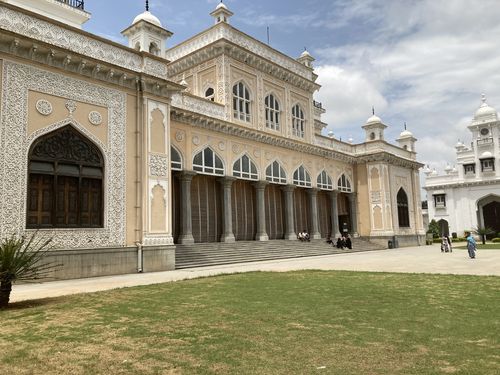
Hyderabad • Chowmahalla Palace
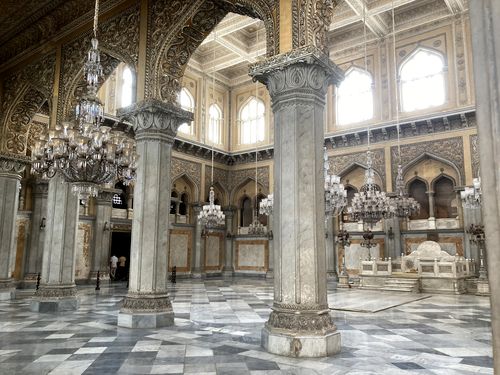
Hyderabad • Chowmahalla Palace
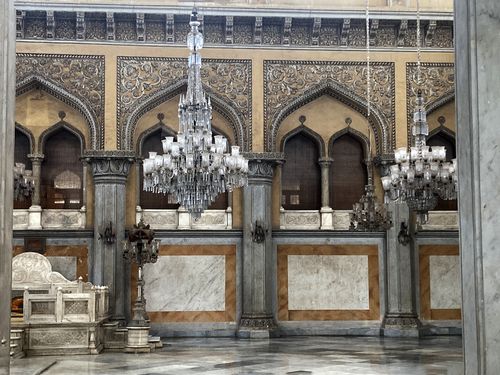
Hyderabad • Chowmahalla Palace
Monument profile
Chowmahalla Palace
Monument category: Palace
Monument family: Palace and Annexes
Monument genre: Residential
Cultural heritage: Islamic
Geographic location: Hyderabad • Telangana • India
Construction period: 18th century AD
• Links to •
• Dynasties that contributed to the construction of the monument •

• List of videos about Hyderabad on this site •
Hyderabad, Charminar Square and its surroundings • India, Telangana
Hyderabad, Golconda fort • India, Telangana
Hyderabad • Hidden Gems: Ashoorkhana, Chowmahalla, Bhagyalakshmi
Hyderabad, mausoleums and remarkable tombs • India, Telangana
• References •
Wikipedia EN: Chowmahalla Palace
History of Chowmahalla Palace in Hyderabad
Political and Social Context of Construction
Chowmahalla Palace in Hyderabad was developed as the principal ceremonial residence of the Nizams of Hyderabad, rulers of one of the most powerful princely states in the Indian subcontinent during the eighteenth and nineteenth centuries. The palace complex emerged in a period of profound political transformation in the Deccan, following the decline of the Mughal Empire and the rise of regional powers that sought to assert autonomy while maintaining elements of imperial legitimacy.
The Asaf Jahi dynasty, founded by Mir Qamar-ud-Din Khan, known as Asaf Jah I, established its authority over the Deccan in 1724. Initially appointed as a Mughal governor, Asaf Jah gradually consolidated his independence as Mughal authority weakened. Hyderabad became the administrative and political center of the new state, and the ruling court required a palace complex capable of hosting ceremonial functions, royal audiences, and administrative operations.
The creation of Chowmahalla Palace was therefore closely tied to the political ambitions of the Asaf Jahi rulers. The palace served as a visible representation of dynastic authority and stability at a time when the Deccan was characterized by shifting alliances and regional rivalries. The Nizams had to navigate complex political relationships with neighboring powers such as the Maratha Confederacy, the Mysore kingdom under rulers such as Hyder Ali and Tipu Sultan, and the expanding influence of the British East India Company.
The palace complex functioned not only as a residence but also as a center of court life and governance. Formal audiences, diplomatic receptions, and administrative consultations were conducted within its ceremonial halls. By constructing an architectural complex dedicated to royal representation, the Nizams aimed to project an image of power, refinement, and continuity that reinforced their legitimacy as sovereign rulers.
The name “Chowmahalla,” often interpreted as meaning “four palaces,” reflects the arrangement of the complex around a group of major buildings that served different functions within the court. The palace developed gradually over several decades, with successive rulers expanding and modifying the complex to accommodate evolving political and ceremonial needs.
Major Historical Events Associated with the Palace
During the nineteenth century, Chowmahalla Palace became the ceremonial heart of the Hyderabad state. The palace hosted important state rituals, including coronations, diplomatic receptions, and courtly gatherings attended by nobles, military officers, and foreign representatives.
The Khilwat Mubarak, the grand ceremonial hall within the palace complex, served as the location of the Nizam’s throne and functioned as the primary space for official audiences. From this hall, the Nizam would preside over state functions and receive dignitaries. The architecture of the hall was designed to reinforce the hierarchical structure of the court and to emphasize the authority of the ruler.
The political situation of Hyderabad during the nineteenth century was shaped by its relationship with the British Empire. Hyderabad remained formally autonomous as a princely state, but the Nizams entered into subsidiary alliances with the British. These arrangements ensured military protection while also increasing British influence over regional politics.
As a result, the palace occasionally served as a setting for diplomatic exchanges between the Nizam’s court and British officials. Ceremonial receptions held at Chowmahalla Palace symbolized the status of Hyderabad as one of the most prominent princely states within the British Indian political system.
The twentieth century brought dramatic political change. Following the independence of India in 1947, Hyderabad initially attempted to maintain its political autonomy. However, tensions between the princely state and the newly formed Indian government culminated in a military intervention in 1948 known as Operation Polo. After this operation, Hyderabad was integrated into the Indian Union.
The end of princely rule marked a turning point in the history of Chowmahalla Palace. The complex ceased to function as the political center of the state and gradually lost its role as the primary residence of the ruling dynasty.
Global Context at the Time of Construction
The construction and expansion of Chowmahalla Palace occurred during a period when royal courts across the world invested heavily in monumental architecture as a means of expressing political authority and cultural prestige. The eighteenth and nineteenth centuries witnessed the transformation of many imperial systems and the rise of regional powers seeking to assert their legitimacy.
In the Indian subcontinent, several princely states developed elaborate palace complexes that served as both administrative centers and symbols of royal authority. These structures often combined indigenous architectural traditions with elements introduced through cultural exchange with Persia, Central Asia, and Europe.
Beyond India, similar patterns of palace construction could be observed in Europe and the Middle East, where rulers used monumental residences to project political power and social hierarchy. The architectural development of Chowmahalla Palace can therefore be understood within a broader global context in which architecture functioned as a central instrument of statecraft and ceremonial representation.
Hyderabad itself was an important center of commerce and culture. The city attracted merchants, artisans, and intellectuals from different regions, contributing to a cosmopolitan environment that influenced the artistic and cultural life of the court.
Transformations Over Time
After the integration of Hyderabad into the Republic of India in 1948, the political role of the palace complex declined significantly. The Nizams retained certain ceremonial titles and private properties, but the structures associated with royal governance no longer served their original functions.
Parts of the palace fell into a period of neglect during the mid-twentieth century. Changing urban conditions and reduced royal patronage affected the maintenance of the complex. Some buildings deteriorated, and portions of the palace grounds were repurposed or adapted for different uses.
In the late twentieth and early twenty-first centuries, renewed interest in the preservation of historical monuments led to restoration efforts. Members of the Asaf Jahi family, along with heritage organizations, initiated programs to restore the palace and preserve its historical features.
These restoration projects focused on stabilizing structures, repairing decorative elements, and restoring ceremonial halls. The Khilwat Mubarak hall in particular received significant attention, as it represents one of the most important architectural spaces within the complex.
Meanwhile, the urban environment surrounding the palace changed dramatically as Hyderabad developed into a major metropolitan center. Modern infrastructure, transportation networks, and commercial districts expanded around the historic core of the city.
Contemporary Cultural Role and Significance
Today Chowmahalla Palace is recognized as one of Hyderabad’s most important historical monuments. The complex functions as a heritage site and museum open to visitors, offering insight into the history of the Asaf Jahi dynasty and the political culture of the princely state of Hyderabad.
The palace also plays an important role in the cultural identity of the city. Hyderabad is widely known for its layered historical heritage, which includes Islamic sultanates, Mughal influences, and the later princely state governed by the Nizams. Chowmahalla Palace represents one of the most visible symbols of this historical legacy.
Public access to the palace allows visitors to experience spaces that once served as the center of political authority in the region. Exhibitions and cultural programs organized at the site contribute to public awareness of Hyderabad’s historical heritage.
In addition to its educational role, the palace occasionally serves as a venue for cultural events and heritage initiatives that highlight the historical traditions of the city.
Conservation Status and Modern Preservation Challenges
The preservation of Chowmahalla Palace presents a range of challenges associated with the conservation of historic monuments located within rapidly growing urban environments. Environmental factors such as humidity, temperature fluctuations, and air pollution can affect the structural integrity of historical buildings.
Urban expansion also places pressure on heritage sites, as surrounding development can alter the historical landscape in which monuments were originally situated. Managing visitor access while protecting fragile architectural elements is another important aspect of preservation.
Conservation initiatives have focused on restoring architectural features, reinforcing structural elements, and maintaining the decorative surfaces that characterize many parts of the complex. These efforts require specialized expertise in traditional building materials and restoration techniques.
Although Chowmahalla Palace is not currently listed as an individual UNESCO World Heritage Site, it forms part of the broader cultural heritage of Hyderabad and contributes to international recognition of the city’s historical significance.
Through ongoing conservation and public engagement, the palace continues to serve as an important link between the political history of the Nizams and the cultural landscape of modern Hyderabad.
Architecture of Chowmahalla Palace in Hyderabad
Architectural Innovations and Technical Principles
Chowmahalla Palace represents one of the most significant palace complexes associated with the princely state of Hyderabad and illustrates the evolution of courtly architecture in the Deccan during the eighteenth and nineteenth centuries. Designed as the ceremonial and administrative center of the Asaf Jahi dynasty, the complex reflects the architectural requirements of a princely court that combined political authority, ceremonial display, and residential functions within a single planned environment.
A central architectural innovation of the palace lies in its spatial organization around a series of large courtyards. These open spaces structured the circulation of the court and allowed for the staging of ceremonial gatherings, military parades, and official receptions. The courtyards functioned as transitional spaces between public and private zones of the palace, enabling a clear hierarchy of access. Visitors and dignitaries could be received in outer courtyards, while inner sections of the complex remained reserved for members of the royal household.
The palace architecture demonstrates careful attention to climatic adaptation. Hyderabad’s hot and semi-arid climate required building solutions that promoted natural ventilation and thermal regulation. High ceilings, open arcades, and colonnaded verandas allowed warm air to circulate freely through the buildings. Large doorways and tall windows facilitated airflow, while shaded galleries protected interior spaces from direct sunlight.
Structural stability was achieved through a combination of thick masonry walls and a system of columns supporting large roof spans. In ceremonial halls, particularly the Khilwat Mubarak durbar hall, the roof structure relies on rows of slender columns arranged symmetrically to distribute loads evenly across the building. This structural system allowed the creation of large, unobstructed interior spaces suitable for court ceremonies and official assemblies.
The planning of the palace complex also reflects principles of visual hierarchy. The main ceremonial hall was positioned as the architectural focal point of the ensemble. Approaches to the building were designed to emphasize axial views and controlled movement through the courtyards, reinforcing the symbolic authority of the Nizam during official appearances.
Materials and Construction Techniques
The construction of Chowmahalla Palace relied on a combination of traditional Deccan building materials and techniques adapted to the needs of large palace structures. The main structural elements were built using stone and brick masonry bonded with lime mortar.
Granite and other locally available stones were employed for the foundations and lower walls of the buildings. These materials provided strong structural support and ensured durability under the climatic conditions of the region. The use of stone also allowed the builders to create stable platforms capable of supporting extensive palace structures.
Brick masonry formed the upper walls and many of the architectural volumes. Bricks were lighter and more flexible than large stone blocks, making them particularly suitable for constructing arches, vaulted ceilings, and curved surfaces. Lime mortar was used extensively as a binding material. Traditional lime mixtures often incorporated organic additives, which improved elasticity and reduced cracking caused by temperature changes.
Exterior surfaces were typically coated with lime plaster, producing smooth façades that could be decorated with ornamental details. This plaster also provided protection against moisture and weathering. Interior surfaces were finished with stucco, painted decoration, and ornamental moldings that enhanced the ceremonial character of the palace interiors.
Wood was used in roof structures, doors, and decorative elements. Timber beams supported portions of the roofing systems, while intricately carved wooden panels and screens added aesthetic richness to interior spaces.
The construction of the palace required the coordinated work of skilled artisans, including masons, plaster specialists, carpenters, and decorative craftsmen. Their techniques combined regional traditions with influences drawn from broader architectural networks extending across the Indian Ocean world.
Architectural Influences and Artistic Synthesis
The architectural character of Chowmahalla Palace reflects a complex synthesis of stylistic traditions. Hyderabad’s court culture was shaped by interactions between Persian, Indo-Islamic, and later European architectural influences. The palace architecture embodies this cultural diversity.
Indo-Islamic architectural traditions are evident in the use of arcades, symmetrical courtyards, and monumental gateways. Arched openings define many of the palace façades and verandas, creating rhythmic sequences that structure the external appearance of the buildings. These features also serve practical functions by providing shaded circulation spaces.
Persian influences appear in the spatial arrangement of the complex and the emphasis on axial symmetry in ceremonial areas. Courtyard planning and garden layouts reflect concepts associated with Persian palace architecture, where built structures were integrated with open landscaped spaces.
During the nineteenth century, increasing contact with European architectural styles introduced additional elements. Neoclassical features such as slender columns, decorative balustrades, and symmetrical façade compositions became integrated into the palace design. These elements are particularly visible in the Khilwat Mubarak hall, whose interior columns and decorative features show strong European stylistic inspiration.
The decorative program of the palace combines geometric patterns, floral motifs, and ornamental plasterwork. These decorative elements reflect both Indo-Islamic artistic traditions and aesthetic preferences of the Nizam’s court. The integration of European chandeliers and decorative furnishings further illustrates the cosmopolitan character of Hyderabad’s royal culture.
Spatial Organization and Structural Layout
Chowmahalla Palace is organized as a complex of interconnected courtyards and buildings serving different functions within the royal court. The spatial arrangement reflects the ceremonial hierarchy of the Nizam’s administration and the practical needs of palace life.
The Khilwat Mubarak durbar hall forms the central architectural element of the complex. This grand hall functioned as the throne room where the Nizam conducted official audiences and state ceremonies. The hall is distinguished by a series of elegant columns that support the roof structure while maintaining an open and spacious interior.
Around the central ceremonial zone stand several palace buildings known as mahal structures. These pavilions served residential and administrative purposes and were arranged symmetrically around the courtyards. Their architectural forms are more restrained than the main ceremonial hall but maintain stylistic coherence with the overall complex.
The courtyards connecting these structures act as organizing elements that define circulation paths through the palace. They allow visitors to move progressively from outer areas toward the central ceremonial spaces.
Gardens and landscaped areas were incorporated into the palace layout to provide visual relief and climatic comfort. These gardens also reinforced the ceremonial character of the complex by framing the architectural structures within a carefully designed environment.
Dimensions and Notable Architectural Features
The Chowmahalla Palace complex occupies a substantial area within the historic core of Hyderabad. The scale of the site reflects its role as the ceremonial center of a princely state that governed a large territory in the Deccan.
The Khilwat Mubarak hall is one of the most remarkable architectural spaces in the palace. Its large dimensions and symmetrical colonnades create an impressive interior environment capable of accommodating large gatherings. The hall is illuminated by several monumental chandeliers, which emphasize the ceremonial importance of the space.
The palace pavilions generally rise one or two stories above ground level and are arranged to maintain balanced proportions within the complex. Verandas and balconies provide views over the courtyards and contribute to the architectural rhythm of the ensemble.
Decorative plasterwork, molded cornices, and ornamental details enrich the façades and interiors. These elements demonstrate the craftsmanship of artisans who worked under the patronage of the Nizam’s court.
Among the most notable architectural features are the elaborate chandeliers in the durbar hall, some of which are among the largest of their kind used in palace interiors in India. Their presence reflects the ceremonial function of the hall and the cosmopolitan taste of the ruling dynasty.
Local historical narratives often highlight the ceremonial life of the palace, recalling the elaborate court rituals that once took place within these architectural spaces.
International Significance and Conservation Challenges
Today Chowmahalla Palace is recognized as one of the most important surviving palace complexes associated with the princely states of India. Its architecture provides valuable insight into the political and ceremonial culture of the Asaf Jahi dynasty and the urban history of Hyderabad.
The palace has undergone several restoration programs aimed at preserving its architectural features and stabilizing aging structures. Conservation efforts have focused on repairing masonry, restoring plaster surfaces, and maintaining decorative interiors.
However, preserving the complex presents ongoing challenges. Environmental factors such as humidity, temperature fluctuations, and biological growth can gradually damage historic materials. Air pollution associated with urban development also affects the condition of architectural surfaces.
The rapid expansion of Hyderabad has transformed the surrounding landscape, placing the historic palace within a dense urban environment. Managing visitor access while protecting fragile architectural features is therefore an important aspect of heritage management.
Despite these challenges, Chowmahalla Palace remains an outstanding example of princely architecture in the Deccan. Its combination of Indo-Islamic spatial planning, Persian influences, and European stylistic elements illustrates the cultural diversity that shaped Hyderabad during the height of the Nizam’s rule. Today the palace continues to serve as a key architectural and historical landmark, preserving the legacy of a court that played a major role in the political history of southern India.