

 Français (France)
  Nederlands (nl-NL)
 Ta Prohm Temple, located in Angkor, Cambodia, is one of the most iconic monuments of the Angkor site. Built in the late 12th century during the reign of King Jayavarman VII, this Buddhist temple was part of a large monastic complex. What makes Ta Prohm stand out from other temples in Angkor is the way nature has taken over, with towering trees and massive roots enveloping the stone structures. Although Ta Prohm has largely been left in the condition in which it was found, conservation efforts have been made to preserve this unique balance between human architecture and lush vegetation. The temple is now a major tourist attraction in Angkor, offering visitors a striking view of the fusion between human craftsmanship and the forces of nature.
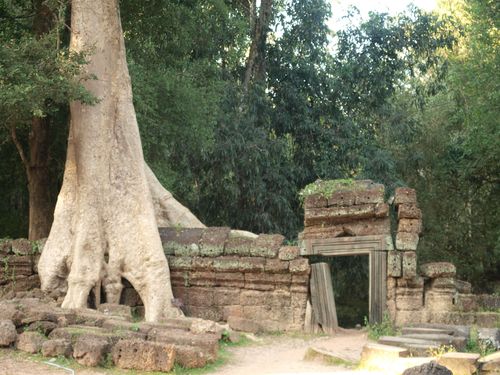
Angkor • Ta Prohm temple
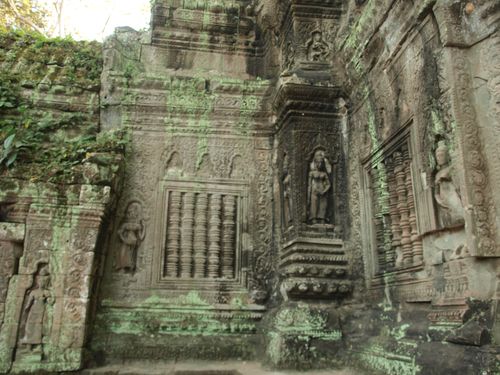
Angkor • Ta Prohm temple
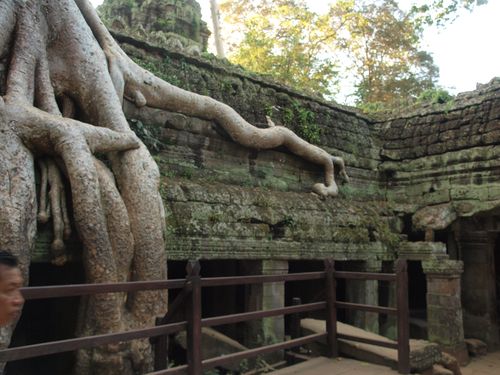
Angkor • Ta Prohm temple
Monument profile
Ta Prohm temple
Monument categories: Hindu Temple, Monastery, Buddhist temple
Monument families: Temple • Monastery
Monument genres: Religious
Cultural heritages: Buddhist, Hindu
Geographic location: Angkor • Cambodia
Construction period: 12th century AD
This monument in Angkor is inscribed on the UNESCO World Heritage List since 1992 and is part of the serial property "Angkor".See the UNESCO monuments featured on this site
• Links to •
• Dynasties that contributed to the construction of the monument •

• List of videos about Angkor on this site •
Angkor, the Preah Khan temple • Cambodia
Angkor, Ta Prohm temple • Cambodia
Angkor Thom, the Great City • Cambodia
Angkor Wat, masterpiece of Khmer architecture • Cambodia
• References •
Wikipedia FR: Ta Prohm
UNESCO: Angkor
Political and Social Motivations Behind the Construction of Ta Prohm at Angkor and Its Historical Evolution
The Temple of Ta Prohm, located in Angkor, Cambodia, was constructed in the late 12th century under the reign of King Jayavarman VII, one of the most powerful monarchs of the Khmer Empire. Built around 1186 CE, the temple served as a Buddhist monastery and university, dedicated to the king’s mother, symbolizing both personal devotion and a larger political statement. The motivations behind its construction were deeply intertwined with Jayavarman VII’s efforts to solidify his reign and promote Buddhism, specifically the Mahayana branch, as a unifying religious force in his empire.
Political and Social Motivations for Ta Prohm's Construction
Jayavarman VII's decision to build Ta Prohm was not only a religious act but also a political one. Following the Cham invasion of Angkor in 1177, which severely destabilized the Khmer Empire, Jayavarman VII sought to reassert his power and restore order. Through monumental architecture, including the construction of Ta Prohm, he reinforced the legitimacy of his rule. The temple's dedication to his mother was a symbolic gesture, intertwining personal reverence with state propaganda, portraying the king as both a filial son and a protector of his people.
Moreover, the adoption of Mahayana Buddhism, which emphasized compassion and enlightenment, was a deliberate political move. By embracing this religious philosophy, Jayavarman VII distanced his reign from earlier rulers who had practiced Hinduism, thus establishing a new socio-political order. This strategic religious shift helped unite the empire’s diverse population, as the king presented himself as a Bodhisattva, a figure working for the well-being of all sentient beings, thereby consolidating his power over the vast and varied Khmer Empire.
Historical Events and Their Impact on Ta Prohm
The Cham invasion in the late 12th century marked a pivotal moment in the history of the Khmer Empire. Jayavarman VII’s ascension to power and the subsequent construction of Ta Prohm were responses to this crisis. His architectural projects, including Ta Prohm, were not merely devotional, but also aimed to demonstrate the empire’s recovery and newfound strength. By building grand temples, Jayavarman VII sought to remind his subjects and potential rivals of his authority and the empire's resurgence after a period of upheaval.
As the centuries passed, Angkor's decline began in the 15th century, leading to the eventual abandonment of Ta Prohm and other major temples. Regional shifts in power, including the rise of neighboring powers like Ayutthaya in present-day Thailand, weakened the Khmer Empire’s influence. This gradual political and military decline meant that Angkor's temples, including Ta Prohm, fell into disrepair, becoming engulfed by the jungle.
Ta Prohm in the Global Context
In the global context of the 12th and 13th centuries, Ta Prohm was constructed during a time of significant cultural and political developments across the world. In Europe, this era witnessed the height of the Crusades, while in China, the Song Dynasty was advancing in the fields of technology and trade. In the Islamic world, the rise of the Abbasid Caliphate had led to flourishing intellectual and cultural achievements.
The construction of grand monuments like Ta Prohm mirrored trends in other regions, where monumental architecture symbolized political power and religious devotion. For instance, the Gothic cathedrals of Europe, such as Notre-Dame in Paris, reflected similar ambitions of rulers and religious institutions to showcase their authority and spiritual devotion. In this sense, Ta Prohm, though geographically distant, fits into a broader global pattern of rulers using architecture to legitimize their rule and leave a lasting cultural legacy.
Transformations of Ta Prohm and Cultural Influences
Over the centuries, Ta Prohm underwent significant transformations. Initially a vibrant center of religious and intellectual activity, the temple, like many others in Angkor, was abandoned after the fall of the Khmer Empire. The slow encroachment of the jungle, particularly the iconic silk-cotton trees whose roots now entwine the temple's ruins, transformed Ta Prohm into a symbol of nature reclaiming human creations.
In the 20th century, the global rediscovery of Angkor's temples, including Ta Prohm, ignited renewed interest in its conservation. French archaeologists played a significant role in its restoration, but they made the deliberate choice to leave Ta Prohm largely as they found it, with its trees and roots intact, creating the picturesque ruin seen today. This decision reflects a shift in conservation philosophy, where the relationship between nature and architecture is preserved as part of the temple’s historical narrative.
Cultural influences from different periods are visible in Ta Prohm’s architecture. While it was built as a Buddhist monastery, its design incorporates elements from earlier Hindu traditions, demonstrating the syncretism of Khmer religious and cultural practices. Additionally, trade and interaction with neighboring cultures, such as India and China, are reflected in some of the artistic motifs found within the temple.
Current State of Conservation and Challenges
Today, Ta Prohm is one of the most visited temples in the Angkor complex, largely due to its atmospheric appearance of being "frozen in time" with tree roots enveloping its walls. Its inscription as a UNESCO World Heritage site in 1992 has contributed to its global fame, but this has also introduced new challenges in terms of conservation. The sheer number of visitors poses risks to the temple’s fragile structure, and managing tourism while preserving its integrity remains a delicate balance.
Furthermore, environmental threats, such as climate change and natural wear, continue to threaten the temple’s structural stability. The roots of the trees, while visually striking, also exert pressure on the stonework, leading to gradual deterioration. Conservation efforts, therefore, focus on stabilizing the structures without removing the natural elements that have become an integral part of the site’s identity.
Conclusion
The Temple of Ta Prohm is not only a monument of architectural innovation but also a symbol of political power and religious devotion in the Khmer Empire. Its construction reflects the socio-political context of 12th-century Cambodia, a time of recovery and consolidation after foreign invasion. Over the centuries, Ta Prohm has transformed from a royal monastery into a cultural icon, representing the interplay between nature and human achievement. As modern conservationists strive to preserve its delicate balance, Ta Prohm continues to captivate the world with its beauty and historical significance, reminding us of the impermanence of even the most grandiose human endeavors.
Architectural features
Architectural Innovation and Technological Mastery at Ta Prohm: A Testament to Khmer Grandeur
The Temple of Ta Prohm, located in the Angkor complex in Cambodia, stands as a symbol of the Khmer Empire's technological and architectural achievements during the late 12th century. Built by King Jayavarman VII around 1186 CE, it was constructed as a Mahayana Buddhist monastery and university. The architecture of Ta Prohm not only reflects the grandeur of the era but also illustrates the Khmer Empire’s ability to innovate and incorporate diverse artistic and cultural influences into its monumental structures.
Technological Innovation and Materials Used in Construction
Ta Prohm’s construction was a remarkable feat of engineering, utilizing sandstone as the primary building material. The use of sandstone, quarried from distant locations and transported to the site, showcases the Khmer Empire’s ability to mobilize vast resources and labor forces. The temple was meticulously assembled without mortar, relying on precise stone cutting and tight-fitting joints, demonstrating advanced knowledge of construction techniques.
One of the key innovations seen in the construction of Ta Prohm is the extensive use of laterite, a locally sourced stone that was both durable and easier to work with compared to sandstone. Laterite formed the core structure of the temple, while sandstone was used for the more decorative elements. The temple’s layout is complex, with a series of rectangular enclosures, galleries, and towers connected by corridors, illustrating a highly developed sense of spatial planning and architectural symmetry.
The temple also features complex drainage systems designed to manage the region’s heavy monsoon rains. This system helped to preserve the structural integrity of the temple over centuries, showcasing the Khmer’s advanced understanding of hydrological engineering. Additionally, Ta Prohm's structures were strategically placed on elevated platforms to protect them from floods, further reflecting the empire’s innovative approach to construction in a challenging environment.
Architectural Features and Decorative Motifs: A Blend of Traditions
The architecture of Ta Prohm is characterized by intricate bas-reliefs and carvings that highlight a unique fusion of regional artistic traditions and foreign influences. Many of the motifs are deeply rooted in Khmer culture, such as the depictions of apsaras (celestial dancers) and devatas (guardian spirits), which are sculpted in great detail along the temple walls. These motifs are emblematic of Khmer religious iconography, representing the integration of Hindu and Buddhist elements that were central to the religious life of the empire.
However, the influence of Indian and Chinese artistic traditions is also evident in the temple’s design. The portrayal of religious narratives in the bas-reliefs, as well as the architectural forms of the temple's gopuras (entrance towers), reflect stylistic elements from Indian temple architecture. At the same time, certain decorative patterns, particularly in the use of floral designs and scrollwork, indicate Chinese influence through trade and cultural exchanges.
A notable feature of Ta Prohm is its integration with the surrounding environment. The temple was built with an awareness of the natural landscape, and today, the intertwining of giant silk-cotton tree roots with the temple's stonework has become one of its most iconic features. This blend of architecture and nature not only adds to the aesthetic of the site but also symbolizes the enduring power of the temple despite the encroachment of nature over the centuries.
The Layout of Ta Prohm: Monumental Design
Ta Prohm was originally designed as a large, sprawling complex, covering an area of approximately 60 hectares. Its layout follows the traditional Khmer temple-mountain design, symbolizing Mount Meru, the mythical home of the gods in Hindu and Buddhist cosmology. The central sanctuary is surrounded by several enclosures, with each successive layer becoming more sacred as one moves towards the center.
The temple’s plan is symmetrical, with large rectangular enclosures built around the central sanctuary. These enclosures were intended to represent the universe, with the innermost sanctum symbolizing the spiritual core. The corridors and passageways that connect the different parts of the temple are lined with ornate carvings, while the temple towers are crowned with lotus-shaped finials, a motif often associated with both Hinduism and Buddhism.
One of the most remarkable statistics regarding Ta Prohm is that it was originally home to over 12,000 people, including priests, monks, and students. This reflects the temple's significant role not only as a religious center but also as a center of learning and scholarship during the Khmer Empire.
International Recognition and UNESCO World Heritage Status
Ta Prohm is one of the most internationally recognized monuments of the Angkor complex, largely due to its atmospheric appearance as a ruin entwined with jungle growth. Its unique aesthetic, with tree roots interwoven with the temple’s stone structures, has made it a favorite among visitors and a symbol of the mysterious allure of Angkor. This distinctive appearance also gained global attention through its feature in films such as Tomb Raider, further boosting its fame.
The inclusion of Ta Prohm, along with the rest of Angkor, on the UNESCO World Heritage list in 1992 has played a crucial role in the temple’s conservation. The international recognition brought by UNESCO has attracted global efforts and funding aimed at preserving the integrity of the temple. Conservationists have faced the challenge of stabilizing the temple's structure while maintaining the picturesque ruins that draw tourists. The delicate balance between preserving the natural growth and protecting the architectural remains is a key focus of ongoing restoration projects.
Challenges in Preserving Ta Prohm
Preserving Ta Prohm presents unique challenges due to the very elements that make it famous. The giant trees that have grown into the temple structures exert tremendous pressure on the stone walls, causing gradual damage over time. Additionally, the region’s tropical climate and high humidity contribute to the wear and erosion of the temple’s surfaces.
Furthermore, the massive influx of tourists, drawn by the temple’s iconic fusion of nature and architecture, adds to the strain on the structure. Conservationists must manage the impact of tourism while ensuring that the site remains accessible and enjoyable for visitors.
Efforts to preserve Ta Prohm focus on stabilizing the most at-risk sections of the temple, using modern techniques to reinforce the stonework while keeping the natural elements intact. These efforts are supported by both local and international organizations dedicated to safeguarding this cultural treasure for future generations.
Conclusion
The architecture of Ta Prohm stands as a testament to the technological and artistic achievements of the Khmer Empire during its height. Its use of advanced construction techniques, integration with nature, and unique blend of regional and foreign influences have earned it global recognition. As a monument deeply embedded in both the cultural and natural landscape of Cambodia, Ta Prohm continues to captivate the world with its beauty and mystery. Its UNESCO World Heritage status ensures that efforts to preserve this remarkable site will continue, even in the face of modern challenges.