Français (France)
  Nederlands (nl-NL)
 Himalayan Region – Geographic and Historical Overview
India’s Himalayan region includes Jammu & Kashmir, Ladakh, the northern areas of Himachal Pradesh and Uttarakhand, as well as Sikkim and Arunachal Pradesh. Stretching along the northern and northeastern borders, it is characterized by the Himalayan mountain ranges, with snow-covered peaks, deep valleys, and rivers like the upper Indus, Teesta, and Subansiri. The region is marked by ecological, linguistic, and religious diversity.
Historically, it served as a crossroads between India, Tibet, and Central Asia. Religions such as Hinduism, Vajrayana Buddhism, and Islam (Shia in Ladakh, Sunni in Kashmir), along with local traditions, coexist here. Its border position, strategic passes, and symbolic role in India’s sacred geography have long made it central to the cultural and geopolitical history of the subcontinent.
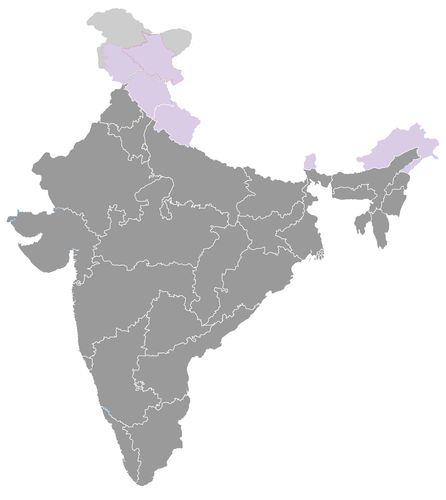
Arunachal Pradesh, Himachal Pradesh, Jammu & Kashmir, Sikkim, Uttarakhand and Ladakh
Power and Religion in the Himalayan Region of India
In the Himalayan region of India, religion played a central role in political legitimacy. Dynasties generally adopted the dominant faith of their territory—Hinduism, Buddhism, or, more rarely, Islam—to assert authority over lands often isolated by terrain and marked by strong local identities. Supporting the official religion allowed rulers to rely on monasteries, temples, or shrines, which functioned both as spiritual centers and administrative hubs.
However, patronage was not limited to the majority faith. Some rulers financed places of worship from other traditions for strategic purposes, to maintain trade alliances, or to appease influential minorities. For example, Buddhist leaders sometimes supported the construction of Hindu sanctuaries, and vice versa.
India did not experience religious wars in the European sense, and tensions were usually linked to political issues. In certain cases, cults considered unacceptable or subversive saw their shrines closed, converted, or destroyed, but such actions were more often the result of power struggles than purely theological disputes.
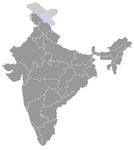
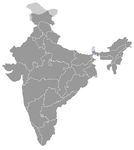
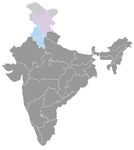
This page organises the dynasties of the Himalayan region, according to a chronological structure based on millennia and centuries. The associated maps indicate the present-day location of the relevant states and link to the detailed pages.
1st millennium BCE
4th century BCE
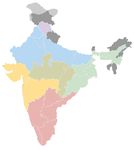
Dominant religions, depending on the period: Hinduism, Buddhism
Supported or encouraged religion: Jainism.
( Assam, Bihar, Delhi (NTC), Goa, Gujarat, Himachal Pradesh, Karnataka, Kerala, Madhya Pradesh, Maharashtra, Odisha, Punjab, Rajasthan, Tamil Nadu, Telangana, Uttar Pradesh, Andhra Pradesh, Chhattisgarh, Haryana, Jharkand, Manipur, Meghalaya and Uttarakhand )
1st millennium
1st century
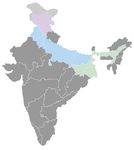
Dominant religion: Buddhism
Supported or encouraged religions, depending on the period: Hinduism, zoroastrianism.
( Bihar, Delhi (NTC), Himachal Pradesh, Punjab, Uttar Pradesh, West Bengal, Haryana, Jammu & Kashmir and Jharkand )
6th century
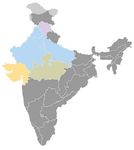
Dominant religion: Hinduism
Supported or encouraged religion: Jainism.
( Delhi (NTC), Gujarat, Himachal Pradesh, Madhya Pradesh, Punjab, Rajasthan, Uttar Pradesh and Haryana )
2nd millennium
13th century
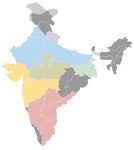
Dominant religion: Islam
Supported or encouraged religions, depending on the period: Hinduism, Buddhism, Jainism.
( Bihar, Delhi (NTC), Gujarat, Karnataka, Madhya Pradesh, Maharashtra, Punjab, Rajasthan, Tamil Nadu, Telangana, Uttar Pradesh, West Bengal, Haryana, Jharkand and Uttarakhand )
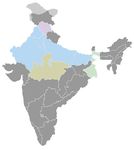
Dominant religion: Islam
( Bihar, Delhi (NTC), Himachal Pradesh, Madhya Pradesh, Punjab, Rajasthan, Uttar Pradesh, West Bengal and Haryana )
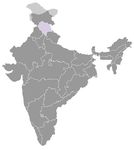
Dominant religion: Hinduism
( Himachal Pradesh )
16th century
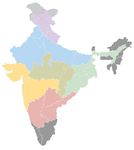
Dominant religion: Islam
Supported or encouraged religions, depending on the period: Hinduism, Jainism, Christianity, zoroastrianism.
( Assam, Bihar, Delhi (NTC), Gujarat, Himachal Pradesh, Karnataka, Ladakh, Madhya Pradesh, Maharashtra, Odisha, Punjab, Rajasthan, Telangana, Uttar Pradesh, West Bengal, Andhra Pradesh, Chhattisgarh, Haryana, Jammu & Kashmir, Jharkand and Uttarakhand )
17th century
18th century
19th century

( Assam, Bihar, Delhi (NTC), Gujarat, Himachal Pradesh, Karnataka, Kerala, Madhya Pradesh, Maharashtra, Odisha, Punjab, Rajasthan, Tamil Nadu, Telangana, Uttar Pradesh, West Bengal, Andhra Pradesh, Chhattisgarh, Haryana, Jharkand, Meghalaya, Mizoram, Nagaland, Tripura and Uttarakhand )
20th century
( Assam, Bihar, Delhi (NTC), Goa, Gujarat, Himachal Pradesh, Karnataka, Kerala, Madhya Pradesh, Maharashtra, Odisha, Punjab, Rajasthan, Sikkim, Tamil Nadu, Telangana, Uttar Pradesh, West Bengal, Andhra Pradesh, Chhattisgarh, Haryana, Jharkand, Meghalaya, Mizoram, Tripura and Uttarakhand )
 Links to the main sections of the site