

 Français (France)
  Nederlands (nl-NL)
 Le temple Wat Ong Teu se situe à Vientiane, capitale du Laos, et compte parmi les principaux établissements bouddhiques de la ville. Connu pour sa grande statue du Bouddha, dont le nom du temple dérive, le site occupe une place importante dans la vie religieuse locale. Le monastère accueille des activités spirituelles, des cérémonies et des rassemblements de fidèles tout au long de l’année. Il joue également un rôle dans l’enseignement et la formation religieuse des moines. Par sa présence durable dans le paysage urbain de Vientiane, Wat Ong Teu contribue à la continuité des traditions bouddhiques et au patrimoine culturel de la capitale.
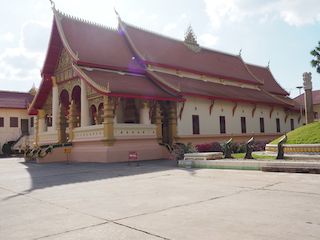
Vientiane • Wat Ong Teu temple
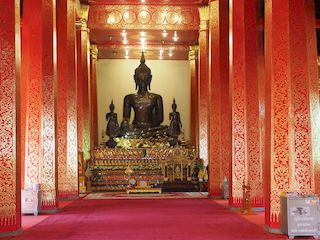
Vientiane • Wat Ong Teu temple
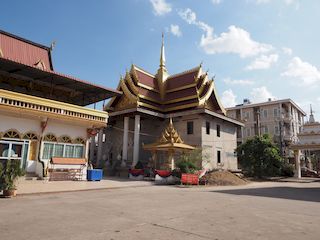
Vientiane • Wat Ong Teu temple
Monument profile
Wat Ong Teu temple
Monument category: Buddhist temple
Monument family: Temple
Monument genre: Religious
Cultural heritage: Buddhist
Geographic location: Vientiane • Laos
Construction period: 16th century AD
• Links to •
• List of videos about Vientiane on this site •
Vientiane, Sacred Architectures • Laos
Laos • Fabric Arts
Vientiane, the Triumphal Arch Patuxay • Laos
• Sources •
Digital sources
Books and publications
- Michel, R. (2010). *History and Heritage of Laos*. Mekong Editions.
- Vientiane Heritage Trust. (2008). *Temples of Vientiane: Cultural Legacy*. Vientiane Publications.
History of Wat Ong Teu Temple in Vientiane
Foundation during the Lan Xang Kingdom
Wat Ong Teu Mahawihan is one of the historic Buddhist monasteries established in Vientiane during the period of the Lan Xang kingdom. The temple is generally attributed to the sixteenth century, when the city became an important political and religious center. Its construction is associated with the reign of King Setthathirath, who moved the royal capital from Luang Prabang to Vientiane around 1560.
The relocation of the capital initiated an extensive phase of urban and religious development. Several monasteries were founded in order to organize monastic life and reinforce the religious legitimacy of the new political center. Wat Ong Teu formed part of this network of temples built to support the growing monastic community of the capital and to provide spaces for worship and instruction.
The name of the temple refers to the large bronze Buddha image housed inside the main sanctuary. The term “Ong Teu” is linked to the exceptional weight of this statue, which became the defining feature of the temple. The presence of this monumental image established the sanctuary as a significant place of religious devotion within the capital.
Religious role and monastic functions
During the Lan Xang period, Wat Ong Teu developed as an active monastic institution serving the religious community of Vientiane. The temple functioned both as a place of worship and as a residence for monks belonging to the Theravāda Buddhist tradition practiced throughout the kingdom.
The large Buddha statue placed in the main hall served as the central focus for ritual activity. Lay devotees visited the temple to make offerings, participate in ceremonies, and listen to sermons delivered by the resident monks. The temple also played a role in religious education. Monasteries in the capital often served as places where novices studied Buddhist teachings and monastic discipline.
Wat Ong Teu gradually became known for its role in the transmission of Buddhist knowledge. Monks attached to the temple contributed to the preservation of religious texts and participated in the broader intellectual life of the monastic community in Vientiane. This educational function strengthened the temple’s importance within the religious landscape of the city.
Destruction during the Siamese invasion
The historical development of Wat Ong Teu was severely disrupted during the early nineteenth century. In 1828 the city of Vientiane was destroyed after the failed rebellion of King Anouvong against Siam. Siamese forces occupied the city and carried out widespread destruction of buildings, including many religious monuments.
Numerous monasteries were damaged, abandoned, or dismantled during this period. Wat Ong Teu was among the temples affected by the devastation that followed the military campaign. Structures belonging to the monastic complex suffered destruction, and the resident monastic community was dispersed.
Despite these events, the temple was not entirely erased. The survival of the large Buddha statue helped preserve the memory of the site and facilitated later reconstruction efforts. The presence of this image maintained the symbolic importance of the temple even after the physical destruction of much of the surrounding city.
Reconstruction and revival in the modern period
The reconstruction of Wat Ong Teu began gradually during the late nineteenth and early twentieth centuries as Vientiane was reoccupied and redeveloped. During the period of French colonial administration in Laos, several historical temples in the capital were restored or rebuilt in order to reestablish religious life and preserve the cultural heritage of the city.
The temple structures were reconstructed around the surviving Buddha image that remained at the center of the sanctuary. New buildings were erected to restore the functions of the monastic complex, including the assembly hall and residential spaces for monks.
In the twentieth century the temple acquired renewed importance as a center for Buddhist education. Wat Ong Teu became associated with monastic training and religious scholarship. Students and monks from different regions of Laos came to study Buddhist doctrine and monastic discipline within the temple’s institutional framework.
Today the monastery continues to function as an active religious site. It hosts ceremonies, serves the local Buddhist community, and maintains its role as a place of monastic learning within the capital.
Global historical context
The foundation of Wat Ong Teu in the sixteenth century coincided with significant developments in other parts of the world. In Southeast Asia, regional powers such as Ayutthaya and Burmese dynasties were expanding their influence. On the Indian subcontinent, the Mughal Empire consolidated authority under Emperor Akbar. In Europe, the Renaissance and early maritime exploration were reshaping political and commercial networks. These contemporary developments formed the broader historical environment during the period in which the temple emerged in Vientiane.
Architecture of Wat Ong Teu Temple in Vientiane
Site layout and spatial organization
Wat Ong Teu Mahawihan occupies a rectangular monastic compound within the historic urban fabric of Vientiane. The complex is enclosed by a low perimeter wall that separates the sacred precinct from surrounding streets and residential buildings. Access to the temple is provided through an entrance gate aligned with the main axis of the compound, leading directly into an open courtyard that organizes circulation within the monastery.
The principal architectural structure is the viharn, or assembly hall, which stands prominently at the center of the complex. This building dominates the spatial arrangement and establishes the visual focus of the site. Secondary buildings are distributed around the courtyard and include monastic residences, small pavilions, and auxiliary religious structures associated with ritual practice and daily monastic life.
The arrangement of buildings follows a hierarchical pattern typical of urban monasteries in Vientiane. The viharn occupies the central axis and is positioned slightly apart from surrounding structures, allowing open space around the hall. The courtyard serves both as a circulation area and as a gathering space for religious ceremonies and communal activities.
Structural configuration of the viharn
The viharn of Wat Ong Teu is characterized by its substantial rectangular volume and elongated horizontal proportions. The structure stands on a slightly elevated base that raises the building above the surrounding courtyard. This platform is accessed by a staircase located at the front façade, creating a transition between the ground level and the interior of the hall.
The façade is organized through a regular sequence of columns that support the extended roof structure. These columns form a covered portico in front of the entrance and define the rhythm of the exterior elevation. The spacing between columns allows for wide openings that facilitate both ventilation and natural lighting within the interior space.
The roof structure consists of multiple tiers that descend steeply toward the outer edges of the building. Each tier projects beyond the walls, creating deep eaves that protect the façade and entrances from rainfall. The roofline is accentuated by ornamental elements at the gable ends, including stylized naga forms that extend along the ridges and corners of the roof.
Interior space and monumental Buddha image
The interior of the viharn is organized as a large rectangular hall designed to accommodate gatherings of monks and lay worshippers. A series of structural columns arranged in parallel rows supports the roof framework and divides the interior into longitudinal bays. This structural arrangement allows the central portion of the hall to remain relatively open.
At the eastern end of the hall stands the principal altar, which supports the monumental bronze Buddha image that gives the temple its name. This statue forms the central visual and spiritual focus of the building. Its large scale establishes a clear orientation within the interior space, directing the attention of visitors toward the altar area.
Additional Buddha images are placed on secondary platforms around the main statue. These elements create a layered arrangement of sacred imagery within the hall. Decorative murals and painted panels on the interior walls contribute to the visual articulation of the space while framing the central altar.
Construction materials and building techniques
The viharn combines masonry construction with structural timber elements. The walls of the building are built from brick and finished with plaster, creating smooth surfaces suitable for painted decoration. These masonry walls provide the primary enclosure for the hall while supporting portions of the roof structure.
The roof framework is constructed from wooden beams and rafters assembled through traditional joinery techniques. This timber structure distributes the weight of the multi-tiered roof and transfers structural loads to the supporting columns. The roof covering consists of ceramic tiles arranged in overlapping rows to ensure protection against heavy rainfall.
Columns positioned along the exterior and interior play an important structural role by supporting the extended roof surfaces. Their regular spacing contributes to the stability of the building while defining the architectural rhythm of the façades and interior space.
Architectural restoration and preservation
The present architectural form of Wat Ong Teu reflects reconstruction and restoration carried out after the destruction of Vientiane in the early nineteenth century. Damage caused during the Siamese attack of 1828 affected many religious buildings in the city, including this temple.
Subsequent reconstruction campaigns rebuilt the viharn and restored the surrounding monastic structures. These interventions preserved the overall spatial organization of the temple while replacing damaged structural elements such as roof frameworks and decorative components.
Later maintenance and restoration work focused on stabilizing the masonry walls, repairing roof structures, and renewing decorative surfaces. Today the temple remains an active monastery, and periodic conservation efforts continue to maintain the architectural integrity of the viharn and the surrounding complex.