Français (France)
  Nederlands (nl-NL)
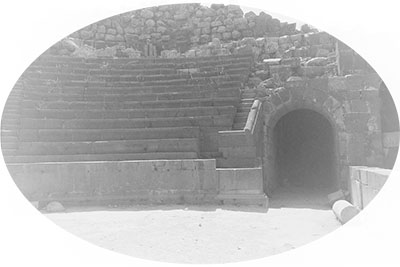
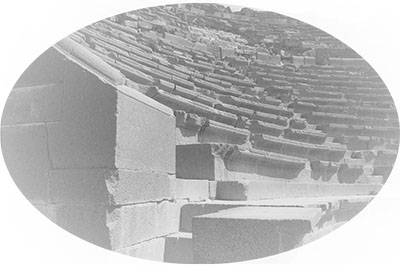
 The Roman theater in Umm Qais, located in northern Jordan, is a structure built from black basalt, characteristic of the region. Designed to accommodate approximately 3,000 spectators, it demonstrates the advanced acoustic techniques and landscape integration of the Roman Empire. It is part of the remains of the ancient city of Gadara, known for its cultural and strategic importance in the area.
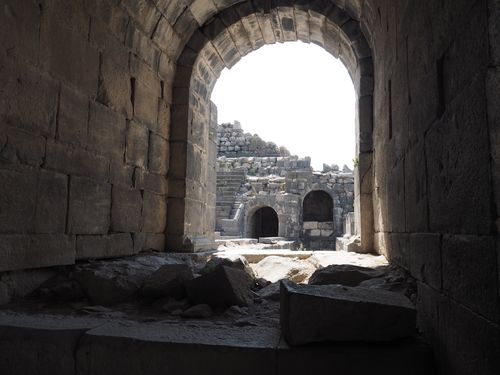
Umm Qais • Roman theater
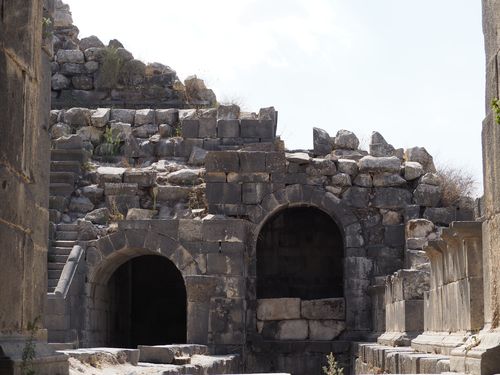
Umm Qais • Roman theater
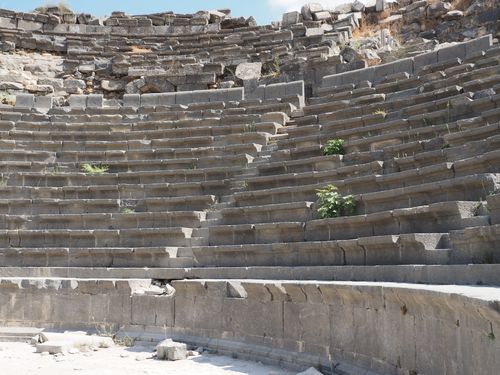
Umm Qais • Roman theater
Monument profile
Roman theater
Monument categories: Archaeological, Amphitheatre
Monument families: Archaeological • Monument for cultural purposes
Monument genres: Archaeological site, Cultural or scientific
Cultural heritage: Roman antiquity
Geographic location: Umm Qais • Jordan
Construction period: 1st century BC
• Links to •
• List of videos about Amman, Jerash, Umm Qais on this site •
Jordan • the Roman Jordan
Um Qais, the ancient Gadara • Jordan
The Roman Theater of Umm Qais: Political Motivations, Historical Transformations, and Modern Challenges
The Roman Theater of Umm Qais, located in the ancient city of Gadara in northern Jordan, stands as a testament to the architectural ingenuity and cultural integration of the Roman Empire. Built in the 2nd century CE, this iconic structure played a pivotal role in the social and political life of the region. This article explores the motivations behind its construction, the historical events that shaped its legacy, and the challenges it faces today.
Political and Social Motivations for Construction
The Roman Theater of Umm Qais was constructed during the height of Roman influence in the Levant, specifically under the Antonine or Severan dynasties in the 2nd century CE. Gadara was a prominent city in the Decapolis, a league of ten cities that served as cultural, economic, and political hubs in the eastern provinces of the Roman Empire.
The construction of the theater served several key purposes:
- Political: It showcased Roman authority and sophistication, integrating the local population into the cultural and administrative framework of the empire.
- Social: The theater provided a venue for performances, civic gatherings, and celebrations, fostering a sense of community and promoting Roman traditions in a local context.
Gadara was also renowned as an intellectual center, home to philosophers and poets such as Meleager of Gadara. The theater reflected the city’s cultural prominence and served as a symbol of its connection to the wider Roman world.
Historical Context and Global Comparisons
The 2nd century CE marked a period of prosperity and stability in the Roman Empire, often referred to as the Pax Romana. During this time, large-scale public works, including theaters, aqueducts, and temples, were constructed to demonstrate Roman technological and cultural superiority.
Globally, this period saw other civilizations undertaking similar monumental projects. In China, the Han Dynasty was expanding its influence through the Silk Road, while in the Americas, the Maya civilization was developing complex urban centers with grand architectural designs. These parallels underscore the universal role of monumental architecture in asserting power and fostering cultural identity.
Major Transformations Over the Centuries
The Roman Theater of Umm Qais has experienced significant transformations that mirror the shifting political and cultural dynamics of the region:
- Byzantine Period: Following the decline of Roman authority, Gadara came under Byzantine control. The theater may have been repurposed for civic or religious gatherings, reflecting the Christianization of the region.
- Islamic Conquest: With the arrival of the Umayyads in the 7th century CE, the region underwent significant cultural and administrative changes. The theater likely fell into disuse as new architectural and cultural priorities emerged.
- Natural Disasters: A series of devastating earthquakes in the 8th century CE caused widespread destruction, including to the theater, contributing to the eventual abandonment of Gadara.
- Modern Rediscovery: The theater was rediscovered in the 19th century and has since become a focus of archaeological research and restoration efforts.
Cultural Importance and Current Conservation Status
The Roman Theater of Umm Qais is a cultural and historical landmark, exemplifying the fusion of Roman engineering with local materials and traditions. Its construction from black basalt, a material native to the region, sets it apart from other Roman theaters typically built from marble or limestone. The use of basalt reflects the adaptability of Roman architects and their respect for local resources.
Today, the theater is partially restored and serves as a major tourist attraction and educational site. While it is not yet listed as a UNESCO World Heritage Site, it is included on Jordan’s tentative list, highlighting its global significance.
Challenges to Preservation
Preserving the Roman Theater of Umm Qais poses several challenges:
- Natural Erosion: The basalt structure is vulnerable to weathering caused by rain, wind, and temperature fluctuations.
- Seismic Activity: The region’s history of earthquakes remains a significant threat to the stability of the monument.
- Tourism Impact: Increasing visitor numbers can accelerate wear and tear on the structure if not carefully managed.
- Funding and Expertise: Ongoing restoration and conservation require substantial financial and technical resources.
Efforts to address these challenges include protective measures, regulated access, and educational initiatives to raise awareness about the importance of the site.
Conclusion
The Roman Theater of Umm Qais is a remarkable example of ancient innovation and cultural synthesis. Its construction reflects the political and social ambitions of the Roman Empire, while its transformations over the centuries tell a story of resilience and adaptation. Preserving this iconic monument is essential not only for understanding the history of the Levant but also for celebrating the shared heritage of humanity. Through continued conservation and potential UNESCO recognition, the theater can remain a source of inspiration and education for generations to come.
The Roman Theater of Umm Qais: Technological Innovation and Artistic Synthesis
The Roman Theater of Umm Qais, located in the ancient city of Gadara in northern Jordan, is a remarkable example of Roman engineering and artistic achievement. Built in the 2nd century CE, it showcases the advanced construction techniques and cultural integration of the Roman Empire. This article examines the materials, methods, and architectural features that define this monument and its significance in the broader historical and cultural context.
Materials and Construction Techniques
The theater at Umm Qais is unique due to its construction from black basalt, a volcanic rock that is abundant in the region. This material, known for its durability, was challenging to work with but provided a striking aesthetic and structural integrity. The use of basalt highlights the adaptability of Roman architects in utilizing local resources to meet both functional and artistic needs.
Key construction techniques included:
- Arches and Vaults: These features were critical in distributing weight and providing stability, enabling the construction of large open spaces while maintaining structural strength.
- Integration with Natural Topography: The theater was built into the slope of a hill, which not only minimized the need for extensive foundation work but also enhanced acoustics and provided an elevated view for spectators.
- Tiered Seating (Cavea): The semi-circular seating arrangement was designed for optimal visibility and sound projection, accommodating approximately 3,000 spectators.
Architectural Features and Artistic Influences
The design of the theater reflects a blend of Roman architectural principles and regional influences:
- Orchestra and Stage: The central orchestra served as the focal point for performances, while the elevated stage (scaenae frons) provided a backdrop with decorative columns and niches.
- Decorative Elements: Although limited by the hardness of basalt, the theater features Corinthian capitals and geometric patterns that blend Roman styles with local artistic traditions.
- Urban Connectivity: Positioned near the Decumanus Maximus (the main east-west street of Gadara), the theater was a central feature of the city, illustrating its importance in social and cultural life.
Notable Structural Features and Anecdotes
- Material Distinction: The exclusive use of black basalt sets this theater apart from others in the Roman Empire, where marble and limestone were more common. This choice underscores the ingenuity of the architects in adapting to regional conditions.
- Cultural Role: The theater was not only a venue for performances but also a gathering place for civic and religious events, reinforcing its role as a cultural hub in Gadara.
- Acoustics: The design leveraged natural acoustics, allowing performers' voices to carry clearly to the uppermost seats without amplification.
International Recognition and UNESCO Status
The Roman Theater of Umm Qais is a testament to the engineering prowess and cultural adaptability of the Roman Empire. Although it is not yet a UNESCO World Heritage Site, the theater is on Jordan’s tentative list for consideration. This acknowledgment highlights its importance as a site of universal cultural value and its potential for further preservation and promotion.
Inscription as a UNESCO site would enhance global awareness of the theater’s significance and provide additional resources for its conservation. This recognition would also place the theater in the context of other iconic Roman structures, emphasizing its unique features and historical importance.
Challenges and Conservation Efforts
Preserving the Roman Theater of Umm Qais faces several challenges:
- Natural Erosion: The basalt material is susceptible to weathering, particularly from rain, wind, and temperature fluctuations.
- Seismic Activity: The region’s history of earthquakes poses a significant risk to the stability of the theater.
- Tourism and Urban Development: Increased visitor numbers and modern construction nearby threaten the physical integrity and authenticity of the site.
Current conservation efforts include protective measures, controlled access, and restoration projects aimed at stabilizing the structure and maintaining its aesthetic and historical value.
Conclusion
The Roman Theater of Umm Qais stands as a powerful symbol of technological innovation and cultural synthesis in the ancient world. Its use of local materials, advanced construction techniques, and artistic integration make it a unique monument within the Roman architectural tradition. By preserving and promoting this site, it can continue to serve as a source of inspiration and education, connecting modern audiences with the rich history of Gadara and the broader Roman Empire.