

 Français (France)
  Nederlands (nl-NL)
 The Badshahi Ashoorkhana mosque, located in Hyderabad in the state of Telangana, is a religious structure linked to Shiite traditions of Ashura commemoration. It functions both as a place of prayer and as a ceremonial space where standards and ritual objects used during processions are kept and displayed. Established during the rule of the Qutb Shahi dynasty, it holds an important place in the religious and cultural life of the city. Today, the monument remains an active center of devotion, visited by worshippers during major events of the Islamic calendar.
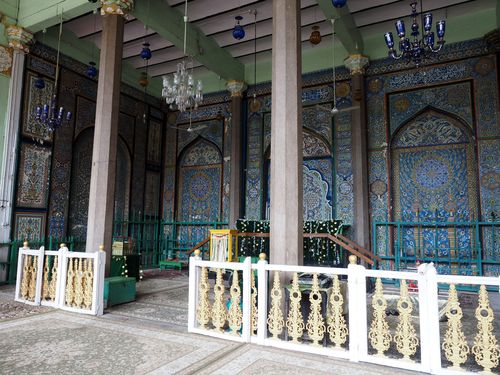
Hyderabad • Badshahi Ashoorkhana Mosque
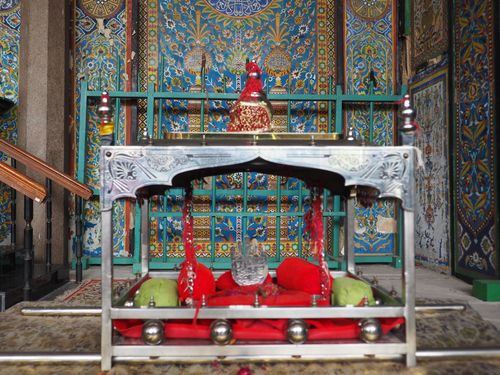
Hyderabad • Badshahi Ashoorkhana Mosque
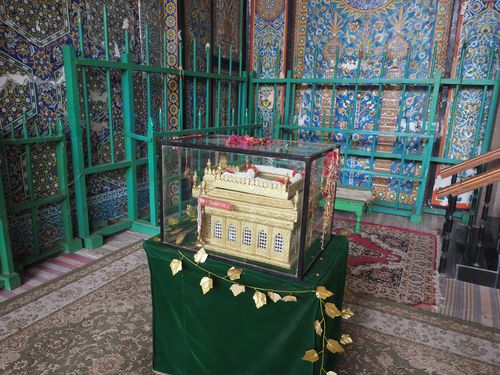
Hyderabad • Badshahi Ashoorkhana Mosque
Monument profile
Badshahi Ashoorkhana Mosque
Monument categories: Mosque, Memorial monument
Monument families: Mosque, Minaret or Madrasa • Monument for cultural purposes
Monument genres: Religious, Cultural or scientific
Cultural heritage: Islamic
Geographic location: Hyderabad • Telangana • India
Construction period: 16th century AD
• Links to •
• Dynasties that contributed to the construction of the monument •

• List of videos about Hyderabad on this site •
Hyderabad, Charminar Square and its surroundings • India, Telangana
Hyderabad, Golconda fort • India, Telangana
Hyderabad • Hidden Gems: Ashoorkhana, Chowmahalla, Bhagyalakshmi
Hyderabad, mausoleums and remarkable tombs • India, Telangana
• References •
Wikipedia EN: Badshahi Ashurkhana
History of the Badshahi Ashoorkhana, Hyderabad
The Badshahi Ashoorkhana, located in the historic core of Hyderabad in the Indian state of Telangana, is one of the oldest surviving Shiite ceremonial structures in the Deccan. Established in the late sixteenth century during the rule of the Qutb Shahi dynasty, it served as an official sanctuary for the commemoration of the martyrdom of Imam Husayn and became closely associated with the political and religious identity of the ruling elite. Over more than four centuries, the monument has remained a center of ritual practice while undergoing several historical transitions linked to the shifting powers that controlled the Deccan.
Political and social context of construction
The Badshahi Ashoorkhana was founded around 1594 during the reign of Sultan Muhammad Quli Qutb Shah, the fifth ruler of the Qutb Shahi dynasty and the founder of the city of Hyderabad. At that time, the Deccan was a politically fragmented region, divided among several independent sultanates such as Ahmadnagar, Bijapur, and Golconda. These states were in constant rivalry with each other and faced growing pressure from the expanding Mughal Empire to the north.
The Qutb Shahi rulers were of Turco-Persian origin and adhered to Twelver Shiism, a confession that distinguished them from the predominantly Sunni political powers of North India. The promotion of Shiite institutions and ceremonial architecture formed part of a broader strategy to consolidate their authority and reinforce their ideological legitimacy. By constructing ashoorkhanas—ceremonial halls dedicated to the mourning rituals of Muharram—the rulers affirmed their religious affiliation and strengthened ties with Persian scholars, administrators, and artisans who had migrated to the Deccan.
The foundation of Hyderabad itself was a political act. The new city was intended to replace the fortified capital of Golconda with a more spacious and symbolically charged urban center. It was planned with monumental avenues, palaces, mosques, and ceremonial structures. Within this framework, the Badshahi Ashoorkhana was conceived as a royal sanctuary, intended to host official mourning ceremonies and to serve as a visible symbol of the ruler’s devotion to Shiite traditions.
Major historical events affecting the site
During the seventeenth century, the Badshahi Ashoorkhana functioned as the principal ceremonial space for Muharram observances sponsored by the Qutb Shahi court. Royal processions, ritual displays of alams, and mourning ceremonies were held at the site, reinforcing the connection between political authority and religious expression.
The fall of the Qutb Shahi dynasty in 1687 marked a decisive turning point. The Mughal emperor Aurangzeb laid siege to Golconda and annexed the sultanate after a prolonged military campaign. Hyderabad was incorporated into the Mughal Empire, and the former courtly institutions lost their political patronage. However, the Badshahi Ashoorkhana continued to function as a religious center for the local Shiite community. Despite the Mughal rulers’ Sunni orientation, the sanctuary was not destroyed, reflecting a pragmatic approach to religious diversity in the Deccan.
In the early eighteenth century, the weakening of Mughal authority allowed the rise of the Asaf Jahi dynasty, commonly known as the Nizams of Hyderabad. Although the Nizams were Sunni, they governed a diverse population that included significant Shiite communities. To maintain social balance, they continued to support Shiite religious institutions. The Badshahi Ashoorkhana thus retained its ceremonial importance and received periodic maintenance and repairs.
During the nineteenth and early twentieth centuries, Hyderabad remained a princely state under indirect British rule. The city expanded significantly, and the old ceremonial spaces became integrated into a dense urban environment. The ashoorkhana remained active, hosting annual Muharram rituals and processions.
In 1948, the princely state of Hyderabad was annexed by the Indian Union. Following this political transition, the monument came under the protection of Indian heritage authorities while continuing to serve its religious function. Its status as both a living shrine and a historical monument shaped subsequent conservation policies.
Global context at the time of construction
The late sixteenth century was a period of intense architectural activity across much of the Islamic world and beyond. In Safavid Iran, Shah Abbas I was transforming Isfahan into a grand imperial capital, commissioning monumental mosques, palaces, and public squares. In the Ottoman Empire, imperial mosques were being erected in Istanbul and other major cities, reflecting the political and religious authority of the sultans.
In the Indian subcontinent, the Mughal Empire was entering a phase of major architectural production. Emperor Akbar had already established Fatehpur Sikri as an imperial capital, and his successors would go on to construct some of the most celebrated monuments of the Mughal era.
Within this global context, the Qutb Shahi rulers sought to assert their own legitimacy and cultural prestige. The creation of Hyderabad and its associated monuments, including the Badshahi Ashoorkhana, formed part of this broader pattern of dynastic urbanism and monumental patronage. By promoting Shiite ceremonial architecture, the Qutb Shahi court aligned itself culturally with Safavid Iran while maintaining its political independence in the Deccan.
Transformations over time
Over the centuries, the Badshahi Ashoorkhana underwent several phases of repair and modification. Under the Nizams, maintenance efforts were carried out to preserve the structure and its decorative elements. The sanctuary continued to function as a ceremonial space, ensuring its continuous use and preventing abandonment.
The growth of Hyderabad during the nineteenth and twentieth centuries altered the monument’s surroundings. What had once been part of a royal ceremonial zone became embedded within the dense fabric of the old city. Streets, markets, and residential quarters developed around it, changing the spatial context of the monument.
In the twentieth century, conservation initiatives were undertaken by Indian heritage authorities. These efforts focused on stabilizing the structure, preserving its painted surfaces, and managing visitor access. Some decorative elements were restored, although the need to balance conservation with active religious use posed ongoing challenges.
Present-day role and cultural importance
Today, the Badshahi Ashoorkhana remains one of the most important Shiite ceremonial sites in Hyderabad. During the month of Muharram, thousands of devotees gather at the sanctuary for mourning rituals, processions, and the display of sacred alams. The monument thus continues to serve the same ritual function for which it was originally constructed.
Beyond its religious significance, the site represents a key element of Hyderabad’s historical identity. It reflects the city’s origins as a Qutb Shahi capital and its long-standing tradition of cultural and religious plurality. For local communities, it is both a place of devotion and a symbol of historical continuity.
The monument also attracts visitors interested in the heritage of the Deccan sultanates. Its painted interiors and ceremonial objects provide insight into the ritual practices and artistic traditions of the period.
Conservation status and modern challenges
The Badshahi Ashoorkhana is protected as a monument of national importance. This status ensures legal protection and periodic conservation work, usually under the supervision of heritage authorities.
However, the site faces several modern challenges. The dense urban environment of the old city exposes the structure to pollution, vibration from traffic, and increased humidity. Large gatherings during Muharram place additional stress on the building and its decorative surfaces.
Conservation policies attempt to reconcile the needs of preservation with the monument’s active religious role. Periodic restoration campaigns aim to stabilize the structure, clean the painted surfaces, and improve drainage and ventilation.
Although the monument is not included on the UNESCO World Heritage List, it forms part of the broader historical landscape of Hyderabad, which contains numerous Qutb Shahi and later monuments. Its continued use as a living religious site contributes to its cultural significance and ensures its central place in the city’s ceremonial life.
Architecture of the Badshahi Ashoorkhana, Hyderabad
The Badshahi Ashoorkhana in Hyderabad stands as one of the most significant Shiite ceremonial structures of the Qutb Shahi period in the Deccan. Built in the late sixteenth century, it was conceived not as a congregational mosque but as a ritual hall dedicated to the observances of Muharram. Its architectural form reflects both the technical practices of the Deccan sultanates and the artistic influences of the Persianate world, resulting in a structure whose spatial organization is closely tied to its ceremonial function.
Technological and architectural innovations
The monument demonstrates the construction techniques developed in the Deccan during the height of Qutb Shahi power. Builders relied on a system of thick load-bearing walls made of stone and brick, a method that allowed for large, unobstructed interior halls. This approach eliminated the need for complex support systems, creating broad ceremonial spaces suitable for processions, gatherings, and the display of sacred objects.
Structural stability was achieved through the mass of the masonry rather than through elaborate vaulting systems. The use of continuous walls distributed weight evenly and reduced the risk of structural failure. Flat or slightly vaulted roofing systems were supported directly by the walls, ensuring both strength and simplicity in construction.
The building also incorporates passive climatic adaptations. High arched openings and ventilated upper sections allow warm air to rise and escape, improving internal comfort. The substantial thickness of the walls acts as a thermal buffer, limiting the impact of the intense heat typical of the Deccan plateau. These features demonstrate an understanding of environmental conditions and their integration into architectural design.
Unlike major imperial mosques, the ashoorkhana does not feature monumental minarets or a dominant central dome. The absence of such vertical elements reflects its specialized ceremonial function. The emphasis is placed on horizontal space and interior circulation, essential for ritual gatherings rather than congregational prayer.
Materials and construction methods
The monument was built primarily with materials sourced from the surrounding region. The foundations and lower walls were constructed in stone, chosen for its durability and structural strength. Stone provided a stable base capable of supporting the upper sections of the building.
The upper walls and roofing elements were built with baked bricks. Bricks were lighter than stone and easier to shape, allowing builders to form arches, niches, and other architectural features with greater precision. This combination of stone and brick construction was typical of the Deccan and reflected practical considerations of weight, cost, and availability.
Mortar composed of lime mixed with organic additives was used to bind the masonry. This type of mortar offered flexibility and resistance to cracking, which was important in a climate characterized by seasonal humidity and temperature variations. The lime-based plaster applied to the interior surfaces created a smooth finish suitable for painted decoration.
The finishing techniques were particularly advanced for the period. Walls were coated with fine lime plaster, polished to a smooth surface, and then painted using mineral pigments. This method, derived from Persian decorative traditions, produced durable and vivid ornamentation.
Architectural and artistic influences
The Badshahi Ashoorkhana illustrates the synthesis of regional and foreign influences typical of the Qutb Shahi architectural style. The overall structural layout, with its broad halls and simple arches, reflects the traditions of Islamic architecture in the Deccan. At the same time, the decorative program reveals strong Persian influence.
Interior wall panels are adorned with floral motifs, geometric compositions, and Arabic calligraphy. These painted decorations resemble those found in Safavid Iran, where painted and calligraphic ornament played a major role in religious architecture. The presence of such decorative elements suggests the involvement of Persian artisans or artists trained in that tradition.
The ceremonial use of alams, or sacred standards, also influenced the architectural design. The halls were conceived as spaces capable of accommodating these ritual objects and the processions associated with them. As a result, the building’s interior is arranged to provide clear visual axes and open floor areas.
Spatial organization and structural features
The Badshahi Ashoorkhana consists of a sequence of rectangular halls organized around a principal ceremonial space. The exterior façade is relatively austere, marked by a rhythm of arched openings that provide access to the interior.
The main hall forms the core of the complex. It is designed as a large, unobstructed space intended to host the display of alams and the participation of large numbers of devotees. The absence of structural columns in the central area enhances the sense of openness and facilitates movement during ceremonies.
Arches are the dominant structural motif throughout the monument. They appear in doorways, windows, and internal passages. These arches are generally simple in form, either semicircular or slightly pointed, reflecting the architectural vocabulary of the Qutb Shahi period.
The building does not include the large domes or towering minarets typical of imperial mosques. Instead, its silhouette remains relatively low and horizontal. This design reflects both the functional requirements of an ashoorkhana and the architectural preferences of the Deccan, where ceremonial halls often emphasized interior space over external monumentality.
Dimensions and notable features
The principal hall of the Badshahi Ashoorkhana is notable for its balanced proportions and clear spatial organization. The walls are thick and solid, providing structural stability and contributing to the interior climate control.
One of the most distinctive features of the monument is its painted wall decoration. These panels, some of which date back to the Qutb Shahi period, are among the rare surviving examples of religious mural painting from the Deccan sultanates. The decorative program includes floral scrolls, geometric frames, and inscriptions, arranged in carefully structured compositions.
The sanctuary houses several historic alams, regarded as sacred objects by the Shiite community. Some are traditionally associated with the Qutb Shahi rulers themselves, linking the architectural space directly to the ceremonial life of the court.
Transformations and restorations
Over time, the Badshahi Ashoorkhana has undergone several phases of repair and restoration. Under the Nizams of Hyderabad, maintenance efforts were carried out to preserve the structure and its decorative surfaces. These interventions focused on reinforcing walls, repairing roofs, and renewing plaster surfaces.
In the twentieth century, conservation work became more systematic under government supervision. Restoration campaigns addressed structural stability and sought to preserve the painted decorations, which are particularly vulnerable to moisture and environmental damage.
Some sections of plaster and paint were repaired or retouched, while other areas were left in their original condition. The challenge has been to maintain the authenticity of the decoration while ensuring the building remains safe for continued use.
Architectural significance and conservation challenges
The architectural importance of the Badshahi Ashoorkhana lies in its specialized function and its decorative program rather than in monumental scale. It represents a rare surviving example of a ceremonial Shiite structure from the Qutb Shahi period that remains in active use.
The monument is protected as a structure of national importance, which provides a legal framework for its preservation. However, its location within a dense urban environment presents ongoing challenges. Pollution, humidity, and heavy foot traffic during major religious events can affect both the structural elements and the painted surfaces.
Conservation efforts aim to balance preservation with continued ritual use. This dual function—as both a historical monument and an active sanctuary—defines the architectural character of the Badshahi Ashoorkhana and contributes to its enduring significance within the cultural landscape of Hyderabad.