

 Français (France)
  Nederlands (nl-NL)
 The Hazrati Imam architectural complex is one of the main Islamic religious and cultural centers in Tashkent, the capital of Uzbekistan. Located in the historic part of the city, the complex includes several buildings associated with religious education, worship, and the preservation of Islamic heritage in Central Asia. The site plays an important role in the contemporary spiritual life of Tashkent while also attracting visitors interested in the religious and cultural history of the region. The complex is also connected with the preservation of manuscripts and historical objects related to Islamic tradition, reinforcing its symbolic and cultural significance within Uzbekistan.
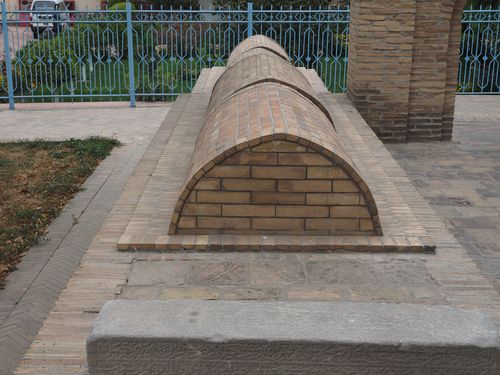
Tashkent • Hazrati Imam architectural ensemble
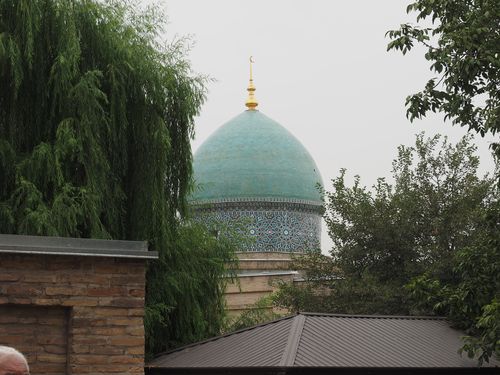
Tashkent • Hazrati Imam architectural ensemble
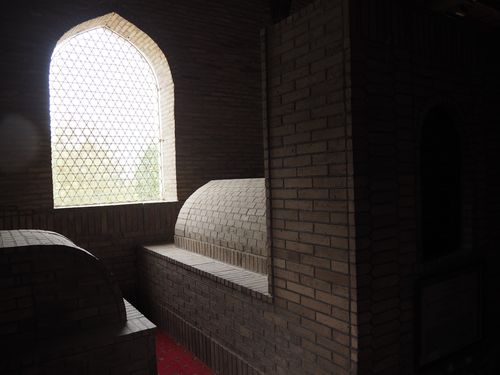
Tashkent • Hazrati Imam architectural ensemble
Monument profile
Hazrati Imam architectural ensemble
Monument categories: Mosque, Mausoleum
Monument families: Mosque, Minaret or Madrasa • Tomb, Necropolis, Mausoleum or Cenotaph
Monument genres: Religious, Funerary
Cultural heritage: Islamic
Geographic location: Tashkent • Uzbekistan
Construction period: 16th century AD
• Links to •
• This monument illustrates the following theme •
Architecture • Mausoleums : Muslim Mausoleums
• List of videos about Tashkent on this site •
Tashkent, the capital • Uzbekistan
• References •
Central Asia Guide: Hazrati Imam Complex
The Hazrati Imam Complex and the Religious History of Tashkent
Formation of the Religious Complex in the Historic City
The Hazrati Imam architectural complex developed in the historic section of Tashkent around the mausoleum traditionally associated with Kaffal Chachi, a tenth-century Islamic scholar and theologian regarded as one of the major religious figures of the region. The presence of this tomb gradually transformed the site into an important spiritual and intellectual center within Islamic Central Asia.
Over subsequent centuries, rulers and religious authorities expanded the complex through the construction of mosques, madrasas, and buildings connected with Islamic education. The ensemble developed particularly during the period of the Central Asian khanates, when Tashkent occupied an important strategic position along regional trade routes linking different parts of the Islamic world.
The complex fulfilled religious, educational, and social functions simultaneously. Madrasas accommodated students studying Islamic sciences, while the mosques served for collective prayers and important ceremonies connected with the religious life of the city.
Historical Transformations and Periods of Decline
The history of the Hazrati Imam complex was marked by repeated periods of damage, reconstruction, and restoration linked to political changes and regional instability affecting Tashkent. Conflicts, shifts in political authority, and natural disasters periodically influenced the condition of the site.
The major earthquake that struck Tashkent in 1966 had significant consequences for several historic districts of the city. Although parts of the complex survived, restoration and structural consolidation became necessary in the following decades to preserve the older sections of the ensemble.
During the Soviet period, religious activities were heavily restricted and controlled by state authorities. Despite these limitations, the Hazrati Imam complex retained symbolic importance for local Muslim communities. Some religious functions continued on a limited scale, while other structures were preserved primarily as historical and cultural monuments.
Religious Revival and Contemporary Role
Following the independence of Uzbekistan in 1991, the Hazrati Imam complex entered a new phase of restoration and cultural rehabilitation. Uzbek authorities launched several projects aimed at preserving historic Islamic monuments and reinforcing the religious and cultural significance of the site within the capital.
The complex gradually became one of the principal Islamic centers of Uzbekistan. Today it hosts religious ceremonies, educational activities, and official events while also attracting visitors from both Uzbekistan and abroad. The site continues to play an important role in the preservation of Islamic heritage in Central Asia.
The complex is especially associated with the conservation of historical manuscripts and religious artifacts. Among the most significant objects preserved there is a celebrated Quran manuscript traditionally linked to the period of Caliph Uthman, an element that greatly reinforces the symbolic importance of the site within the Islamic world.
The Hazrati Imam Complex in Its Wider Historical Context
The development of the Hazrati Imam complex took place during the broader expansion of Islamic intellectual and religious centers across Central Asia between the medieval and early modern periods. During this era, cities such as Samarkand, Bukhara, and Tashkent participated actively in commercial and cultural exchanges linking the Middle East, Central Asia, India, and China. The trade networks of the Silk Road facilitated the movement of goods, scholars, and religious traditions across large parts of Asia.
Architectural Organization of the Hazrati Imam Complex in Tashkent
Position of the Complex Within the Historic Urban Fabric
The Hazrati Imam architectural complex is located within the historic district of Tashkent, in an urban environment shaped by the traditional spatial organization of Central Asian Islamic cities. The ensemble occupies a large area structured around open courtyards, ceremonial spaces, and religious buildings arranged according to a hierarchical composition. This organization separates educational, devotional, and commemorative functions while preserving strong visual coherence throughout the complex.
The overall layout combines mosques, madrasas, mausoleums, and auxiliary structures distributed around circulation areas and open plazas. The relatively spacious arrangement allows the monumental façades and domes to remain visually dominant within the ensemble. These open spaces also facilitate religious gatherings and movement between the principal buildings.
The integration of the complex within the older sections of Tashkent reinforces its role as a major Islamic center while maintaining a distinct visual identity separate from the modern urban districts of the Uzbek capital.
Spatial Composition and Principal Structures
The Hazrati Imam complex includes several structures serving different religious and educational functions but connected through a unified architectural composition. Mosques occupy the most open areas of the site in order to accommodate collective prayer, while the madrasas are organized around interior courtyards designed for teaching activities and student circulation.
The mausoleum associated with Kaffal Chachi forms one of the central architectural elements of the ensemble. Its position contributes significantly to the organization of circulation routes and symbolic orientation within the complex. Commemorative spaces are integrated into the religious environment without disrupting the continuity of the architectural composition.
Monumental entrance portals define the principal access points of the complex. Their strong verticality contrasts with the more horizontal arrangement of surrounding courtyards and galleries. Iwans, covered passageways, and open spaces create successive architectural perspectives characteristic of major Islamic ensembles in Central Asia.
Domes occupy an important role in the visual composition of the site. They cover the principal religious spaces and function as visual markers within the skyline of historic Tashkent.
Materials, Decorative Programs, and Stylistic Influences
The Hazrati Imam complex relies primarily on brick construction, consistent with long-established architectural traditions of Central Asia. Exterior surfaces are covered with plaster, ceramic decoration, and geometric ornamentation that strongly define the visual identity of the ensemble.
Blue and turquoise tilework forms one of the most recognizable features of the complex. Decorative programs combine geometric compositions, calligraphic inscriptions, and stylized vegetal motifs. These decorative elements appear mainly on portals, domes, drum sections, and principal façades.
The architecture reflects multiple periods of construction and restoration while maintaining stylistic continuity derived from Timurid and post-Timurid architectural traditions. The proportions of the monumental portals, the massing of the domes, and the organization of the façades recall the major Islamic monuments of Samarkand and Bukhara.
Interior spaces generally remain more restrained than the richly decorated exterior surfaces. Prayer halls emphasize volumes, light distribution, and liturgical orientation rather than continuous ornamental density. Architectural balance is achieved through the interaction between structural forms and decorative surfaces.
Restoration and Preservation of the Complex
The Hazrati Imam complex has undergone several phases of restoration related to structural deterioration, earthquakes, and urban transformation in Tashkent. Some conservation work was undertaken during the Soviet period in order to preserve important historical monuments within the old city.
Following the independence of Uzbekistan, major rehabilitation projects were implemented to reinforce the religious and cultural role of the complex. Restoration campaigns focused on structural stabilization, ceramic decoration, domes, façades, and visitor circulation areas.
The preservation of the site requires continuous maintenance of exterior decorative surfaces exposed to the continental climate of Central Asia. Despite partial reconstructions and modern interventions, the Hazrati Imam complex retains strong architectural coherence and remains one of the principal examples of monumental Islamic architecture in Tashkent.