

 Français (France)
  Nederlands (nl-NL)
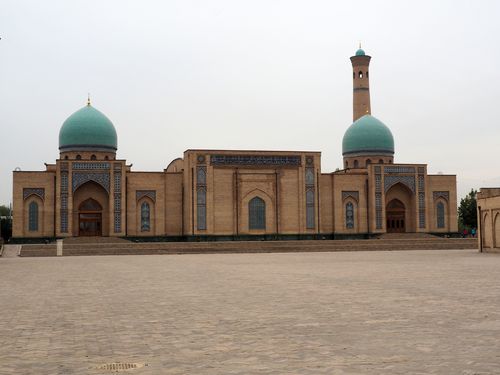
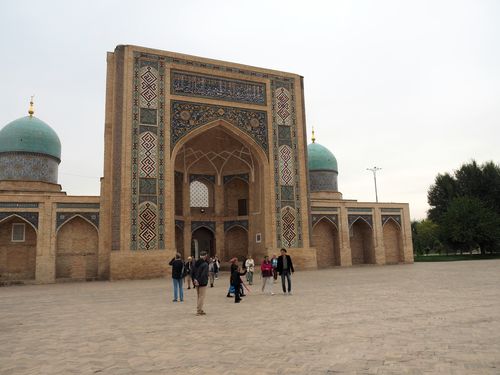
 The Barakhan Madrasa in Tashkent, Uzbekistan, is an architectural complex reflecting the cultural and religious significance of the region. Historically serving as a center for learning and knowledge transmission, it showcases traditional Uzbek architectural features, with decorative elements and a layout designed for education and communal activities. Today, the madrasa is recognized as a site of interest, attracting visitors seeking insight into the spiritual and educational heritage of Central Asia.

Monument profile
Madrassa Barakhan
Monument category: Madrasa
Monument family: Mosque, Minaret or Madrasa
Monument genre: Religious
Cultural heritage: Islamic
Geographic location: Tashkent • Uzbekistan
Construction period: 16th century AD
• Links to •
• List of videos about Tashkent on this site •
Tashkent, the capital • Uzbekistan
• Sources •
Soucek, Svat. A History of Inner Asia. Cambridge University Press, 2000. Golombek, Lisa & Wilber, Donald N. The Timurid Architecture of Iran and Turan. Princeton University Press, 1988. Michell, George & Martin, Susan. Architecture of the Islamic World: Its History and Social Meaning. Thames & Hudson, 1978. UNESCO Reports on Central Asian Heritage, 2022.
The Barakhan Madrasa in Tashkent: Political Significance, Historical Transformations, and Conservation Challenges
The Barakhan Madrasa, located in Tashkent, Uzbekistan, stands as a remarkable example of Central Asian Islamic architecture and a reflection of the region’s political and social history. Built during the 16th century, its construction was closely linked to the political strategies of the Shaybanid dynasty, which sought to consolidate its rule over the region and establish Tashkent as a key center of Islamic learning. Over the centuries, the madrasa has undergone significant transformations, reflecting shifts in political power and cultural influences. Today, the monument remains an important symbol of Uzbekistan’s heritage, though it faces several challenges related to preservation and urban development.
Political and Social Motivations Behind Its Construction
The Barakhan Madrasa was constructed in the mid-16th century under the patronage of Navruz Ahmadkhan, a ruler of the Shaybanid dynasty that controlled much of Central Asia following the decline of the Timurid Empire. The motivations behind its construction were deeply rooted in the political and social dynamics of the period:
- Legitimization of Shaybanid Rule: The Shaybanids, of Uzbek origin, sought to establish their dominance over the region by constructing religious and educational institutions that emphasized their commitment to Islamic governance. The madrasa served as a visible representation of their authority.
- Intellectual and Religious Influence: Tashkent, strategically positioned on the Silk Road, was becoming an important Islamic center. The madrasa aimed to attract scholars, theologians, and students, strengthening the city's role in the dissemination of Islamic knowledge.
- Urban and Economic Development: The construction of such an institution contributed to the urbanization of Tashkent, increasing its prestige and encouraging trade and settlement in the surrounding areas.
The establishment of religious and educational centers as a means of consolidating power was a common practice across the Islamic world. Similar patterns can be seen in the Ottoman Empire, where grand madrasas such as the Süleymaniye Complex in Istanbul played a crucial role in reinforcing imperial authority, and in the Safavid Empire, where institutions like the Chahar Bagh Madrasa in Isfahan symbolized Persian-Islamic identity.
Historical Events and Their Impact on the Madrasa
Throughout its history, the Barakhan Madrasa has witnessed numerous political and social transformations that have influenced its function and significance:
- Shaybanid Era (16th century): The madrasa flourished as an intellectual and religious institution, attracting scholars and students from across the region.
- Kazakh Invasions (17th-18th centuries): The city of Tashkent experienced multiple invasions by the Kazakhs, leading to periods of decline in the madrasa’s role as a learning center.
- Russian Conquest (19th century): In 1865, Tashkent was annexed by the Russian Empire. Many Islamic institutions lost their prominence as Tsarist policies promoted secular education. While some madrasas continued to function, they were gradually marginalized.
- Soviet Era (20th century): Under Soviet rule, religious institutions were systematically closed or repurposed. The Barakhan Madrasa ceased to operate as a religious school and was instead transformed into a museum or cultural site, mirroring the fate of many religious buildings across the Soviet Union.
- Post-Independence Revival (1991-present): Following Uzbekistan’s independence, the madrasa underwent significant restoration efforts, reflecting the government’s commitment to reviving Islamic heritage and national identity.
These historical shifts demonstrate how the madrasa evolved alongside broader political changes in Central Asia. Similar trends were observed in other regions, such as Al-Azhar University in Egypt, which experienced fluctuations in its role due to colonial and post-colonial governance, and madrasas in India, which saw varying levels of state intervention during British rule and post-independence policies.
Architectural Transformations and Cultural Influences
The architectural features of the Barakhan Madrasa illustrate a fusion of regional traditions and external influences:
- Traditional Central Asian Elements: The madrasa follows the classic rectangular courtyard plan, surrounded by student cells and lecture halls, a design seen in Samarkand’s Ulugh Beg Madrasa and Bukhara’s Mir-i-Arab Madrasa.
- Persian and Timurid Influence: The large entrance pishtaq (portal), adorned with majolica tilework and calligraphic inscriptions, reflects Persian architectural aesthetics, inherited from the Timurid period.
- Islamic Geometric and Floral Patterns: The madrasa’s decoration features intricate arabesques and kufic inscriptions, demonstrating the high level of craftsmanship that flourished in the region during the Shaybanid era.
- Use of Double-Domed Structures: The madrasa’s domes incorporate a double-layered system, allowing for improved insulation and stability, a technique also seen in Safavid and Ottoman religious architecture.
These architectural characteristics highlight the madrasa’s role as a bridge between different Islamic architectural traditions while preserving unique elements of Uzbek craftsmanship.
Conservation Efforts and Current Challenges
Today, the Barakhan Madrasa stands as an important historical landmark, but its preservation faces several challenges:
- Urbanization and Modernization: The rapid expansion of Tashkent poses a threat to the integration of historical sites within the modern cityscape. The madrasa’s surroundings have undergone extensive redevelopment, raising concerns about maintaining its historical context.
- Material Erosion and Climate Factors: The structure, built with baked brick and glazed tiles, is susceptible to erosion due to temperature variations and humidity. Periodic restoration is necessary to prevent degradation.
- Tourism Management: The increasing number of visitors, while beneficial for cultural awareness, also necessitates careful regulation to prevent structural damage from excessive foot traffic.
- Balancing Religious and Cultural Functions: As Uzbekistan embraces its Islamic heritage, historical madrasas are sometimes repurposed for religious activities. Striking a balance between historical preservation and contemporary use remains a challenge.
Although the Barakhan Madrasa is not listed as a UNESCO World Heritage Site, its significance within Uzbekistan’s national heritage framework has ensured ongoing conservation efforts. International partnerships in restoration projects, similar to those undertaken for Timurid monuments in Samarkand and Bukhara, could further enhance its long-term preservation.
Conclusion
The Barakhan Madrasa is a vital representation of Central Asian Islamic architecture and political history. Built under the Shaybanid dynasty, it served as a center of learning and a testament to the rulers’ legitimacy. Over the centuries, it has reflected the region’s changing power dynamics, from Kazakh invasions to Russian colonization and Soviet secularization.
Its architectural features, influenced by Persian, Timurid, and regional Uzbek styles, highlight its cultural significance. Although it faces challenges from urbanization and environmental factors, ongoing restoration efforts aim to safeguard its historical integrity.
As Uzbekistan continues to embrace its historical and religious heritage, the Barakhan Madrasa remains a key monument that embodies the rich and complex history of Tashkent and the broader Central Asian region.
The Architecture of the Barakhan Madrasa in Tashkent: Technological Innovation, Materials, and Cultural Fusion
The Barakhan Madrasa, located in Tashkent, Uzbekistan, stands as a significant architectural achievement of the 16th century, reflecting the technological advancements and artistic synthesis of its time. Constructed under the rule of the Shaybanid dynasty, the madrasa was designed as a center for religious and scientific learning. Its architectural composition illustrates the ingenuity of Central Asian builders, incorporating durable materials, advanced construction techniques, and a sophisticated blend of local and foreign artistic influences.
Technological Innovations and Construction Techniques
The construction of the Barakhan Madrasa showcases the expertise of Central Asian artisans who integrated advanced building strategies to ensure the durability and functionality of the structure.
Key Construction Materials:
- Baked Brick: The primary material used was baked clay bricks, which were lightweight yet robust, suitable for withstanding Tashkent’s seismic activity and extreme weather conditions.
- Mortar and Lime Plaster: To enhance the strength of the structure, lime-based mortar was used, which provided elasticity and longevity, particularly against environmental wear.
- Glazed Ceramics: The use of majolica tiles for decoration added not only aesthetic value but also a protective layer against erosion.
- Wood for Structural Reinforcement: Wooden beams were strategically placed to absorb seismic shocks, an innovation widely used in Central Asian and Persian architecture.
Structural Innovations:
- Double-Domed Design: The madrasa incorporates a double-shell dome system, improving insulation and weight distribution, a technique also found in Persian and Ottoman architecture.
- Arched Corridors and Vaults: These features reinforced the building’s structural integrity while providing ample space for students and scholars.
- Intricate Water Drainage Systems: Integrated within the walls, these systems protected the structure from water damage, ensuring long-term preservation.
These techniques demonstrate the sophistication of Shaybanid-era architecture, comparable to similar advancements seen in Timurid monuments in Samarkand and Ottoman madrasas in Istanbul.
Architectural Design and Layout
The layout of the Barakhan Madrasa follows a rectangular courtyard design, a common feature in Islamic educational institutions.
- Grand Entrance Portal (Pishtaq): The madrasa features a towering pishtaq, decorated with calligraphy and geometric patterns, symbolizing the gateway to knowledge.
- Central Courtyard: The spacious courtyard serves as the heart of the complex, surrounded by lecture halls and dormitory cells for students.
- Two Domes: These domes, covered in ceramic tiles of vibrant blue hues, serve as prominent visual markers, drawing influence from Timurid and Safavid architecture.
- Symmetrical Iwans: Large vaulted iwans face the courtyard, serving as prayer halls and study areas, reminiscent of Persian madrasa designs.
The Barakhan Madrasa’s layout is similar to other monumental Islamic educational institutions, such as the Madrasa Mir-i-Arab in Bukhara and the Madrasa of Sultan Hassan in Cairo.
Decorative Elements: A Fusion of Cultural Influences
The artistic style of the madrasa reflects a unique blending of Central Asian, Persian, and Ottoman influences.
Key Decorative Features:
- Calligraphic Inscriptions: Arabic script featuring Quranic verses and Persian poetry adorns the entrance and interior walls.
- Geometric and Floral Motifs: These are intricately woven into ceramic tile mosaics, inspired by Persian, Timurid, and Mughal aesthetics.
- Muqarnas (Stalactite-like Ornamentation): Found in the entrance archway, this decorative technique originates from Persian and Andalusian architecture.
- Contrasting Colors: The use of turquoise, cobalt blue, and gold tiles creates a striking contrast, a hallmark of Timurid-era decorative arts.
The Barakhan Madrasa stands as an architectural bridge between different Islamic traditions, incorporating motifs from regions as diverse as Persia, Anatolia, and India.
Notable Historical Anecdotes and Statistics
- Patronage of Navruz Ahmadkhan: The madrasa was built under the patronage of Navruz Ahmadkhan, a key figure in the Shaybanid dynasty’s expansion in Central Asia.
- 16th Century Learning Hub: At its peak, the madrasa housed hundreds of students studying Islamic jurisprudence, mathematics, astronomy, and philosophy.
- Soviet-Era Transformation: During the Soviet period, religious institutions were repurposed, and the madrasa was converted into a museum before being restored after Uzbekistan’s independence.
Recognition and Conservation Efforts
While the Barakhan Madrasa is not a UNESCO World Heritage Site, it is recognized as a nationally significant heritage monument in Uzbekistan. Restoration efforts, particularly after Tashkent’s 1966 earthquake, have been crucial in maintaining its architectural integrity.
Challenges in Conservation:
- Urban Development Pressures: Rapid modernization of Tashkent poses challenges for integrating historic sites into the contemporary cityscape.
- Environmental Factors: Variations in temperature and humidity contribute to the deterioration of brickwork and tile surfaces.
- Tourism Management: Increased visitor traffic requires strict conservation protocols to protect fragile decorative elements.
- Material Preservation: The restoration of majolica tiles and calligraphic inscriptions demands skilled artisans and traditional craftsmanship techniques.
By implementing long-term preservation projects, Uzbekistan aims to balance cultural heritage conservation with urban development and tourism growth.
Conclusion
The Barakhan Madrasa is an architectural testament to 16th-century Central Asian innovation and artistic excellence. Built using advanced engineering techniques and durable materials, it embodies a fusion of Shaybanid, Timurid, and Persian influences, positioning Tashkent as a historic intellectual and spiritual center.
Despite challenges from modernization and environmental factors, conservation efforts continue to preserve this landmark, ensuring its significance as a cultural and historical treasure for future generations.