

 Français (France)
  Nederlands (nl-NL)
 The Shah-i-Zindah necropolis in Samarkand, Uzbekistan, is a distinctive funerary complex consisting primarily of mausoleums from the 14th and 15th centuries. Known for its cultural and spiritual significance, the site showcases monuments adorned with intricate geometric and floral tilework. Shah-i-Zindah is both a pilgrimage destination and a notable example of Timurid architecture, distinguished by its harmonious blend of azure and turquoise hues. This complex represents a remarkable achievement in the artistic craftsmanship of its time and is a must-see for visitors to Samarkand.
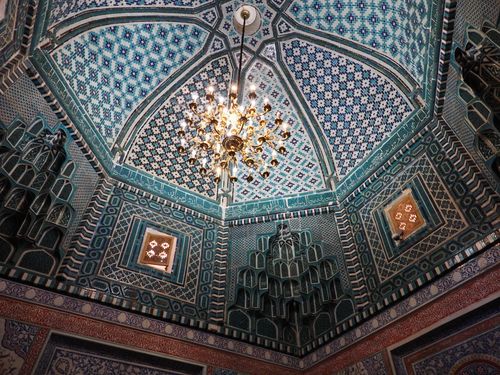
Samarkand • Shah-i-Zindah Necropolis
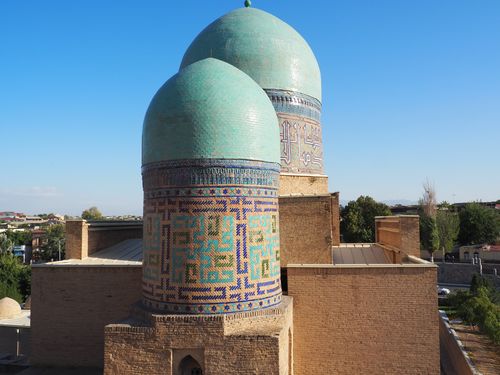
Samarkand • Shah-i-Zindah Necropolis

Samarkand • Shah-i-Zindah Necropolis
Monument profile
Shah-i-Zindah Necropolis
Monument category: Necropolis
Monument family: Tomb, Necropolis, Mausoleum or Cenotaph
Monument genre: Funerary
Cultural heritage: Islamic
Geographic location: Samarkand • Uzbekistan
Construction period: 11th century AD
This monument in Samarkand is inscribed on the UNESCO World Heritage List since 2001 and is part of the serial property "Samarkand – Crossroad of Cultures".See the UNESCO monuments featured on this site
• Links to •
• This monument illustrates the following theme •
Architecture • Mausoleums : Muslim Mausoleums
• List of videos about Samarkand on this site •
Samarkand, the city of Amir Timur • Uzbekistan
• References •
Wikipedia EN: Shah-i-Zinda
ArchNet: Shah-i Zinda Complex
UNESCO: Samarkand – Crossroad of Cultures
Shah-i-Zindah: Political and Social Significance of a Timurid Masterpiece
The Shah-i-Zindah necropolis in Samarkand, Uzbekistan, is a historical and architectural treasure that reflects the political, social, and cultural ambitions of the Timurid dynasty. Constructed primarily between the 11th and 15th centuries, this complex of mausoleums embodies the convergence of religious devotion, dynastic pride, and artistic innovation. Its story is interwoven with the history of Samarkand as a cultural and political hub of Central Asia.
Political and Social Motivations Behind Its Construction
The construction of Shah-i-Zindah served multiple purposes. Politically, it was a statement of power and prestige by the rulers of Samarkand, particularly during the Timurid period. The necropolis, featuring tombs of royal family members and close allies of Timur (Tamerlane), solidified the dynasty’s association with religious sanctity and cultural superiority. Its central feature, the mausoleum of Qutham ibn Abbas—a cousin of the Prophet Muhammad reputedly buried at the site—lent the necropolis immense spiritual significance, attracting pilgrims from across the Islamic world.
Socially, Shah-i-Zindah was a focal point for religious practices and communal identity. The necropolis became a center of pilgrimage and a symbol of the city’s status as a spiritual and cultural beacon. Its elaborate architecture and decorative artistry also showcased the wealth and technical expertise of the region, reinforcing the social hierarchy and emphasizing the rulers’ role as patrons of the arts.
Historical Events Shaping the Site
Shah-i-Zindah has been shaped by centuries of historical upheaval and cultural exchange. Its origins date back to the 11th century, but it flourished during the 14th and 15th centuries under Timur and his successors. The necropolis mirrored Samarkand’s transformation into a capital of the Timurid Empire, a city celebrated for its monumental architecture and intellectual achievements.
The Mongol invasion in the 13th century brought destruction to Samarkand, but the Timurid renaissance in the following centuries revived and expanded the city’s infrastructure. Shah-i-Zindah became a testament to the resilience and ambition of the Timurid rulers, incorporating Persian, Turkish, and local artistic traditions into its design.
During the 16th and 17th centuries, as the power of the Timurid dynasty waned and new political entities emerged, the necropolis fell into relative neglect. The Russian Empire’s annexation of the region in the 19th century further diminished its religious role, though it gained recognition as a historical and cultural site.
Context in the Global Landscape
The era of Shah-i-Zindah’s prominence coincided with significant developments in other parts of the world:
- Europe: The 14th and 15th centuries marked the transition from the Middle Ages to the Renaissance, with flourishing art, architecture, and scientific inquiry. Cities like Florence and Venice were asserting their cultural dominance, much like Samarkand in Central Asia.
- China: The Ming dynasty was consolidating power, commissioning monumental projects such as the Forbidden City and expanding trade networks along the Silk Road, which included connections to Samarkand.
- The Islamic World: Cities like Cairo and Isfahan were centers of artistic and intellectual activity, producing architectural masterpieces comparable to Shah-i-Zindah.
These parallels underscore Shah-i-Zindah’s role as part of a global tradition of monumental architecture used to project political power and cultural identity.
Transformations Over the Centuries
Shah-i-Zindah underwent significant transformations reflecting shifts in political power and cultural influence. The original 11th-century structures were gradually replaced or supplemented by Timurid-era mausoleums, each bearing intricate tilework, calligraphy, and geometric patterns emblematic of the period. The "Street of Mausoleums," the central walkway linking the tombs, became a symbolic passage reflecting the spiritual journey of the faithful.
Neglect during the post-Timurid era left parts of the necropolis in disrepair. Soviet-era policies suppressed its religious function, but efforts to preserve its architectural heritage began in the mid-20th century. Recent restorations, driven by its UNESCO World Heritage status since 2001, have focused on stabilizing the structures and reviving their original splendor.
Challenges to Preservation
Despite restoration efforts, Shah-i-Zindah faces several preservation challenges:
- Environmental Factors: Extreme temperature variations and exposure to the elements threaten the integrity of the delicate tilework and masonry.
- Tourism: Increased visitor numbers can lead to wear and tear, requiring careful management to balance access and conservation.
- Urban Development: The expansion of modern Samarkand risks encroaching on the historical site’s surroundings, potentially altering its context and aesthetic.
- Resource Limitations: High-quality restoration requires specialized materials and expertise, both of which can be scarce.
Current Importance and Global Recognition
Shah-i-Zindah’s designation as a UNESCO World Heritage Site has elevated its profile internationally, fostering appreciation for its cultural significance and attracting resources for its preservation. The monument stands as a symbol of Central Asia’s rich history and serves as a reminder of the region’s pivotal role in connecting and shaping civilizations along the Silk Road.
In conclusion, Shah-i-Zindah is not only an architectural marvel but also a cultural and historical landmark that embodies the ambitions and achievements of its time. Its preservation and continued study offer valuable insights into the interplay of politics, religion, and art in shaping human history.
Shah-i-Zindah: A Testament to Technological Innovation and Artistic Fusion
The Shah-i-Zindah necropolis in Samarkand, Uzbekistan, is a monumental example of medieval Islamic architecture, celebrated for its technological advancements, innovative construction techniques, and harmonious blend of regional and foreign artistic influences. Built primarily during the Timurid period (14th–15th centuries), it showcases the grandeur of a bygone era while embodying the cultural and technological achievements of the time.
Technological Advancements and Construction Techniques
The architecture of Shah-i-Zindah reflects the advanced building technologies of the Timurid era. The necropolis is renowned for its intricate decorative features and robust structural elements, which were made possible through the use of sophisticated materials and construction methods:
- Ceramic Tiles: One of the most striking features is the extensive use of glazed tiles, which include mosaic panels, majolica, and faience. Artisans employed vibrant hues of turquoise, azure, and deep blue, along with gold and white, creating visually stunning patterns.
- Brickwork: High-quality fired bricks were used for both the core structures and decorative detailing. These bricks were often carved or molded with inscriptions and motifs before being glazed.
- Domes and Arches: The construction of double-shell domes and pointed arches demonstrated the era's mastery of engineering. These features provided both structural stability and visual grandeur.
Calligraphy: Inscriptions in Arabic, often Quranic verses, were integrated into the decoration using carved tiles and stucco, reflecting both technical skill and spiritual devotion.
These techniques required skilled artisans and craftsmen, many of whom were brought from different parts of the Timurid Empire, underscoring the importance of Samarkand as a cultural and technological hub.
Architectural Features and Artistic Fusion
The Shah-i-Zindah necropolis illustrates a remarkable fusion of regional traditions and external influences, reflecting the cosmopolitan nature of the Timurid Empire:
- Regional Traditions: The layout of the complex follows a linear progression along a central "Street of Mausoleums," symbolizing a spiritual journey. This design element is deeply rooted in the Islamic funerary tradition of guiding pilgrims through sacred spaces.
- Persian Influence: The use of intricate floral and geometric motifs, as well as the preference for glazed tile decoration, is inspired by Persian architectural styles.
- Turkic and Mongol Elements: The grand domes and symmetrical layouts reflect the architectural heritage of the Turkic-Mongol regions, showcasing influences from nomadic traditions.
- Indian Inspiration: The integration of vibrant color palettes and detailed mosaics points to interactions with Indian artisans, highlighting the Timurid Empire's wide-reaching cultural exchanges.
Notable Structure and Design
The necropolis is composed of over 20 mausoleums, each designed with unique decorative and architectural features. The Street of Mausoleums, a narrow pathway flanked by richly adorned facades, is the most iconic element of the complex. This arrangement creates a dramatic visual experience for visitors, with each mausoleum showcasing distinct artistic expressions while contributing to the overall harmony of the site.
One of the most significant structures is the mausoleum of Qutham ibn Abbas, believed to be a cousin of the Prophet Muhammad. This tomb is considered the spiritual heart of the complex, attracting pilgrims for centuries and enhancing the site's religious importance.
Anecdotes and Statistics
- Collaborative Craftsmanship: According to historical accounts, Shah-i-Zindah’s construction involved artisans from Persia, India, and the broader Timurid Empire, making it a collaborative masterpiece.
- Diversity in Design: Each mausoleum features unique decorative motifs, ranging from arabesques to epigraphic inscriptions, demonstrating the personalization of these tombs for the individuals buried within.
- Historical Layers: The site spans several centuries of development, with some structures dating back to the 11th century, while others were added during later periods of the Timurid dynasty.
International Recognition and Conservation Efforts
Shah-i-Zindah’s designation as a UNESCO World Heritage Site in 2001 has significantly elevated its global profile. This recognition has facilitated international support for conservation projects aimed at preserving the intricate tilework and stabilizing the aging structures. Restoration efforts have sought to balance the preservation of original elements with the need to accommodate increasing tourism.
The necropolis’s inscription has also highlighted the importance of Samarkand as a cultural crossroads of the Silk Road, attracting scholars, historians, and visitors from around the world.